
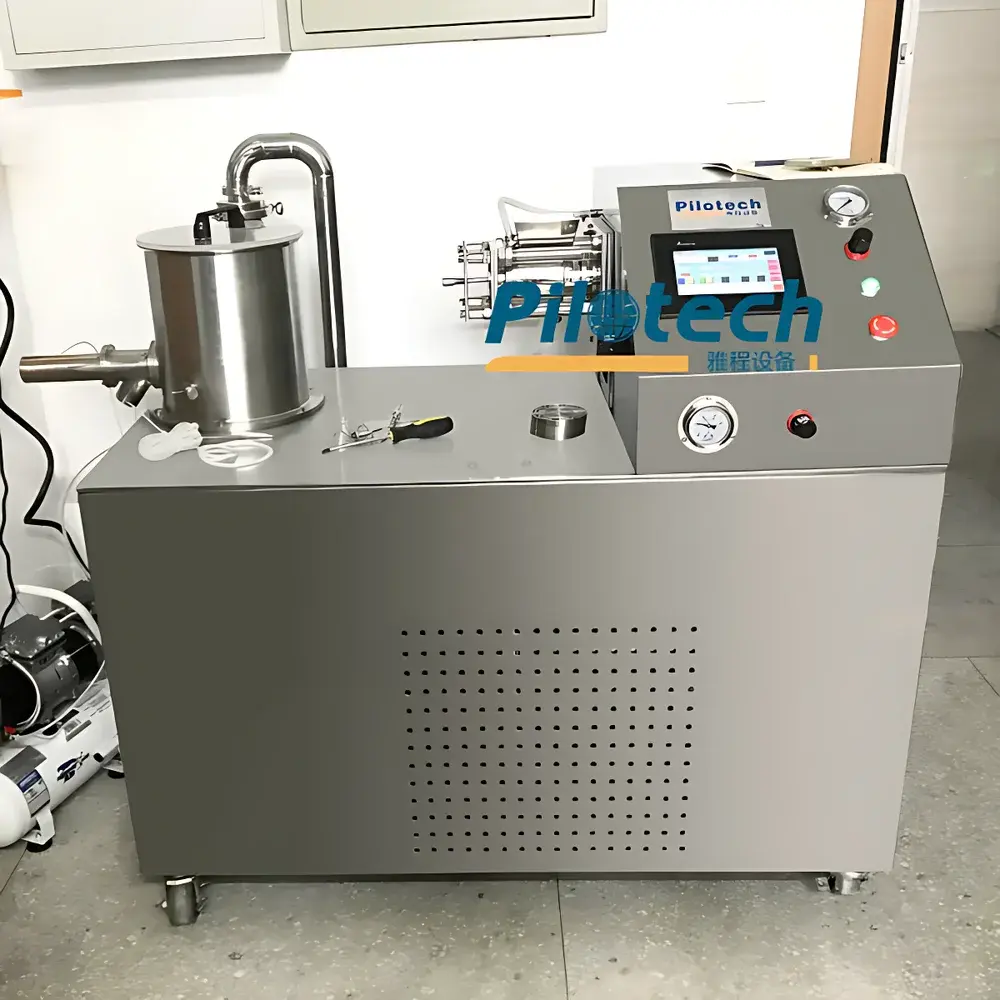
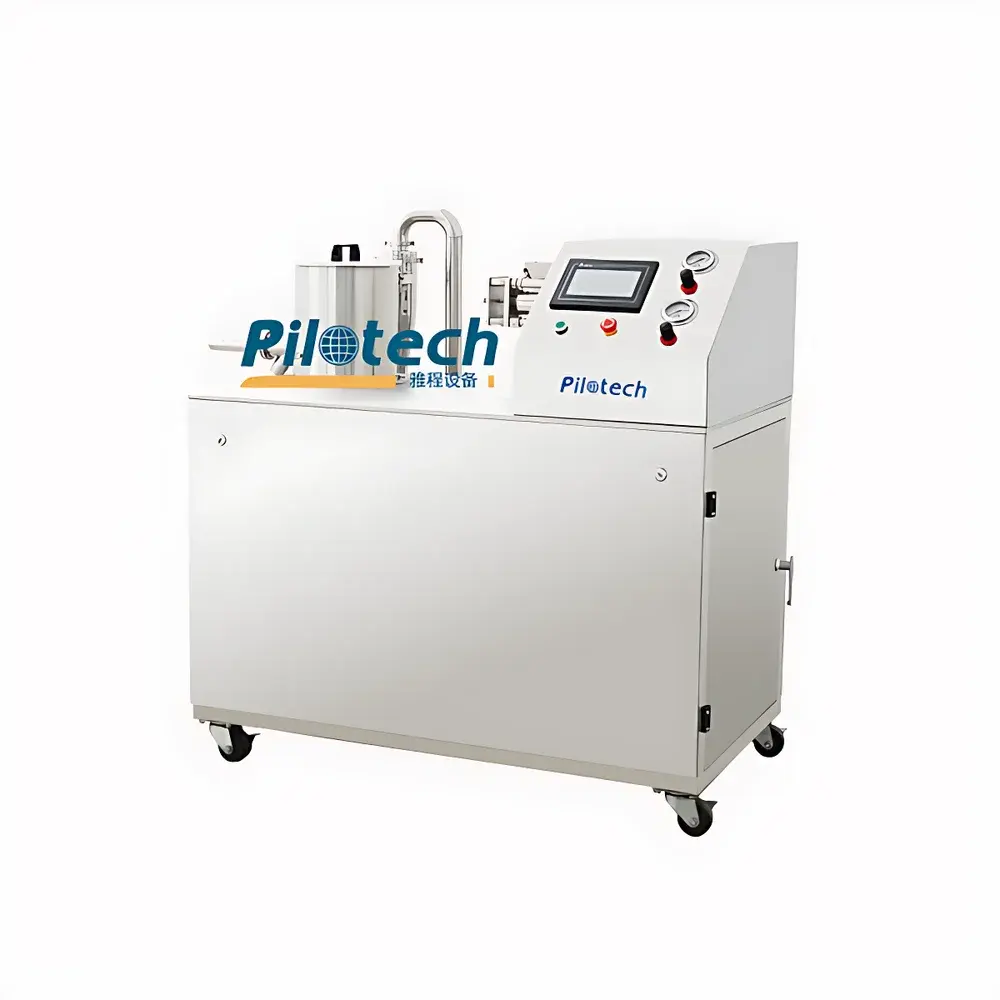
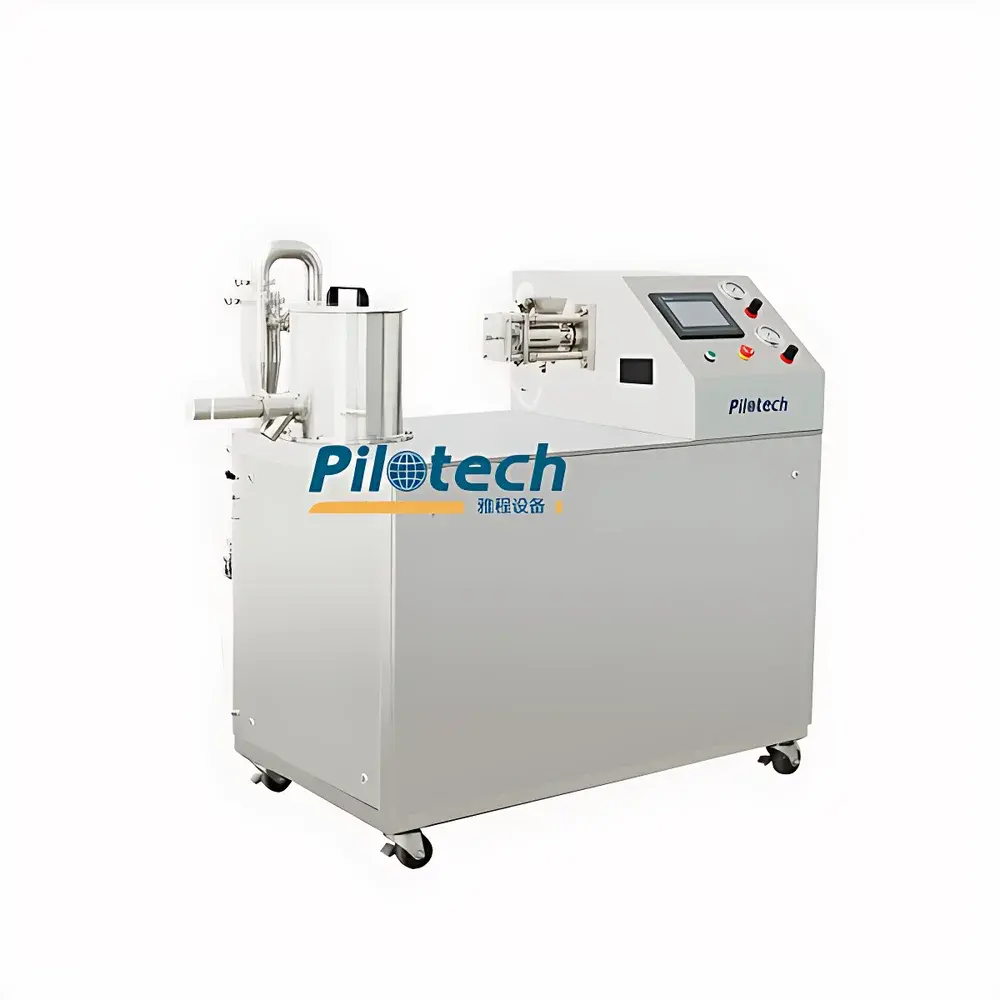
Yacheng YC-910 Desktop Extrusion-Spheronization System
| Brand | Yacheng / PILOTECH |
|---|---|
| Origin | Shanghai, China |
| Manufacturer Type | Direct Manufacturer |
| Origin Category | Domestic (China) |
| Model | YC-910 |
| Pricing | Upon Request |
| Throughput | 1–3 kg/hr |
| Extruder Screw Speed | 50 rpm |
| Spheronizer Disc Speed | 1400 rpm |
| Pellet Diameter Range | 0.3–3 mm |
| Disc Diameter | 250 mm |
| Power Rating | 3 kW |
| Compressed Air Requirement | 0.3 m³/h |
Overview
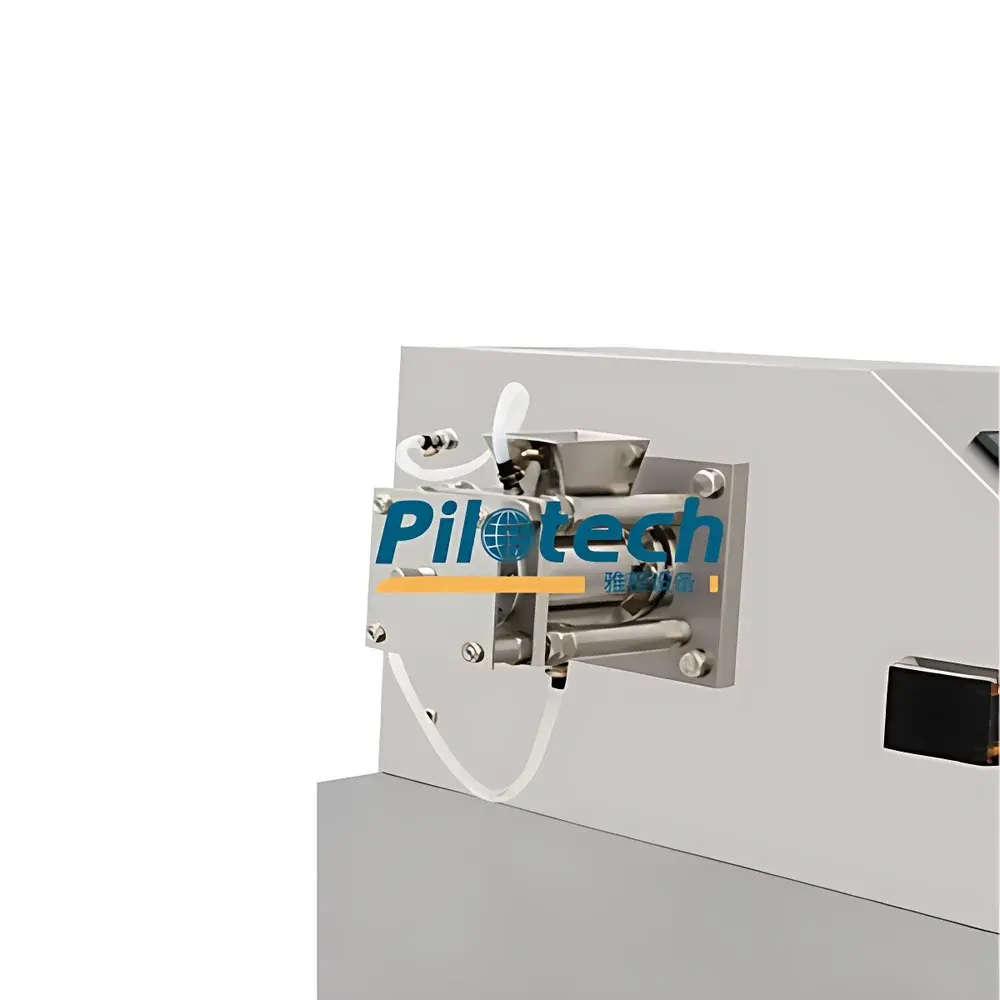
The Yacheng YC-910 Desktop Extrusion-Spheronization System is an integrated, benchtop-scale unit engineered for the controlled production of spherical pellets via sequential extrusion and spheronization — a well-established two-step process widely adopted in pharmaceutical solid dosage form development. This system implements the principle of plastic mass extrusion followed by mechanical spheroidization under centrifugal and shear forces. Material — typically a wet mass composed of active pharmaceutical ingredient (API), excipients, and binder solution — is fed into a temperature-controlled extruder barrel, where a rotating screw conveys and compresses the paste through a perforated die plate to generate uniform cylindrical extrudates. These extrudates are then transferred directly into a high-speed rotating spheronizer disc, where they undergo repeated collisions, rolling, and surface coalescence under controlled hydrodynamic conditions. The integrated ice-water cooling system maintains barrel and screw temperatures below critical thresholds, preserving thermal integrity of heat-sensitive APIs, polymers, or biologics. Unlike batch fluid-bed granulation, this method delivers narrow particle size distribution (PSD), high sphericity (>95%), excellent flowability, and superior content uniformity — essential attributes for downstream processes including film coating, capsule filling, and continuous manufacturing integration.
Key Features
- Integrated extrusion-spheronization architecture eliminates intermediate handling, minimizing cross-contamination risk and operator exposure — compliant with ICH Q5A and WHO TRS 961 Annex 2 requirements for aseptic and containment-sensitive operations.
- Programmable dual-speed control: independent adjustment of extruder screw speed (0–50 rpm) and spheronizer disc rotation (0–1400 rpm) enables precise optimization of extrudate morphology and final pellet roundness.
- Onboard recirculating ice-water chiller (±0.5 °C stability) actively cools both extruder barrel and feed screw — validated for sustained operation at ≤25 °C surface temperature during 30-minute continuous runs, critical for thermolabile peptides and amorphous solid dispersions.
- Modular sieve plate system accepts interchangeable stainless-steel mesh inserts (0.3–3 mm aperture), supporting scalable process development from feasibility screening to Phase I clinical batch production.
- GMP-aligned wet-processing design eliminates airborne dust generation; all contact parts conform to ASTM F899 316L stainless steel specifications and are fully traceable per ASME BPE-2022 surface finish standards (Ra ≤ 0.4 µm).
- Self-cleaning geometry of the spheronizer bowl and disc minimizes residue carryover between batches; cleaning validation protocols support multi-product facility use under FDA 21 CFR Part 211 and EU GMP Annex 15 guidelines.
Sample Compatibility & Compliance
The YC-910 accommodates a broad range of formulation matrices including direct-compression blends, high-viscosity polymer melts (e.g., HPMC, EC, Eudragit®), microcrystalline cellulose (MCC)-based pastes, and low-moisture API-excipient systems. It supports both aqueous and organic solvent-based binders (e.g., PVP in ethanol/IPA). The system meets mechanical safety requirements per ISO 12100 and electrical safety per IEC 61000-6-2/6-4. All control logic complies with IEC 62061 SIL1 functional safety architecture. Documentation packages include FAT/SAT reports, IQ/OQ templates aligned with ASTM E2500-13, and raw material traceability dossiers for 316L SS components.
Software & Data Management
Equipped with a CE-certified industrial PLC (Siemens S7-1200 series) and 7-inch HMI touchscreen interface, the YC-910 logs real-time operational parameters — including torque load, motor current, temperature setpoints, runtime, and speed profiles — with timestamped CSV export capability. Audit trail functionality satisfies FDA 21 CFR Part 11 requirements for electronic records and signatures. Optional Ethernet/IP connectivity enables integration into MES platforms (e.g., Siemens Opcenter, Rockwell FactoryTalk) for batch record synchronization and automated deviation flagging.
Applications
- Early-stage formulation screening of multiparticulate dosage forms (e.g., extended-release pellets, taste-masked beads, colon-targeted microspheres)
- Process characterization studies supporting QbD implementation per ICH Q8(R2) and Q5E
- Preclinical and Phase I clinical supply manufacturing under cGMP conditions
- Excipient compatibility testing and binder optimization trials
- Development of hot-melt extrusion (HME)-compatible pellet cores for downstream coating
- Food ingredient microencapsulation (e.g., probiotics, flavors, omega-3 oils)
FAQ
Is the YC-910 suitable for sterile processing?
No — it is designed for non-sterile R&D and pilot-scale manufacturing. Sterile applications require integration with isolator or RABS infrastructure.
Can the system be validated for regulatory submissions?
Yes — full qualification documentation (DQ/IQ/OQ/PQ templates), calibration certificates, and material traceability records are provided upon order.
What maintenance intervals are recommended?
Daily visual inspection of seals and cooling lines; monthly lubrication of drive gearboxes; annual recalibration of temperature sensors and speed encoders per ISO/IEC 17025-accredited service provider.
Does the unit support PAT integration?
Yes — analog 4–20 mA outputs and Modbus TCP ports enable connection to NIR probes, torque sensors, or inline particle analyzers for real-time process monitoring.
Is remote diagnostics available?
Optional remote access module supports secure VPN-based troubleshooting and firmware updates via encrypted TLS 1.2 communication.






