
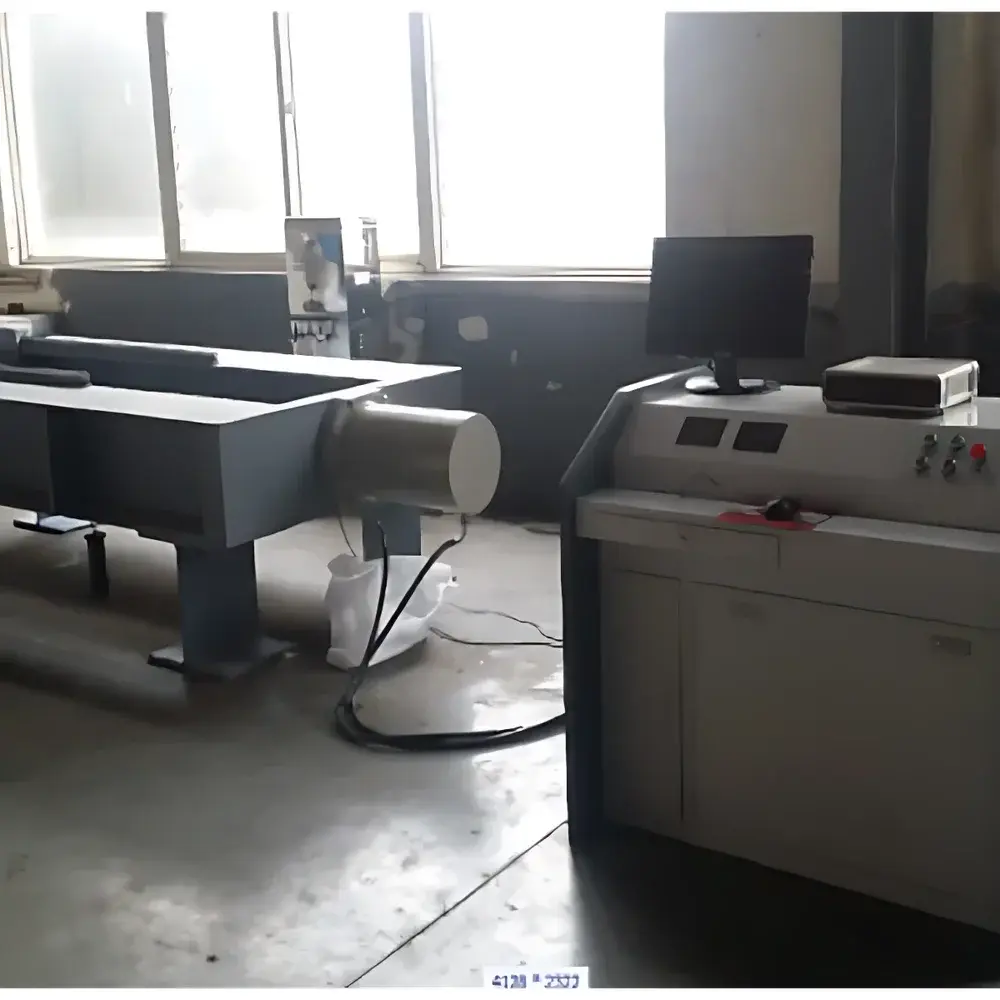
YANRUN LAW-100 Hydraulic Tensile Testing Machine
| Brand | YANRUN |
|---|---|
| Origin | Shanghai, China |
| Manufacturer Type | Direct Manufacturer |
| Region of Origin | Domestic (China) |
| Model | LAW-100 |
| Instrument Type | Hydraulic Tensile Testing Machine |
| Maximum Test Load | 100 kN |
| Load Measurement Range | 4–100% FS |
| Load Accuracy | ≤ ±1% FS |
| Piston Stroke | 500 mm |
| Piston Idle Speed | ≥ 100 mm/min |
| Loading Speed | 5–50 mm/min |
| Display Interface | PC-based GUI |
| Control System | Electro-hydraulic Servo Automatic Control |
| Actuator | 100 kN Hydraulic Cylinder |
| Load Cell | 100 kN Precision Load Sensor |
| Pump Station Components | Electro-hydraulic Servo Valve, Hydraulic Tubing, Cooling Unit, Low-Voltage Starter Cabinet, Industrial Control Computer (Advantech P4), A4 Thermal Printer |
Overview
The YANRUN LAW-100 Hydraulic Tensile Testing Machine is a robust, electro-hydraulically servo-controlled universal testing system engineered for high-force static mechanical characterization of metallic, polymeric, composite, and elastomeric materials. Operating on the principle of controlled displacement-driven loading via a high-stiffness hydraulic actuator, the LAW-100 delivers stable force application across its full 100 kN capacity range. Its design conforms to fundamental requirements of ISO 7500-1 (Class 1 accuracy for force measurement systems), ASTM E4 (standard practices for force verification of testing machines), and ASTM E8/E8M (tensile testing of metallic materials). The system integrates a precision 100 kN load cell with traceable calibration certification, enabling reliable determination of tensile strength, yield strength, elongation at break, modulus of elasticity, and proof stress—parameters critical for quality assurance in manufacturing, R&D labs, and third-party testing facilities.
Key Features
- Electro-hydraulic servo control architecture ensures precise, repeatable load and displacement profiles with closed-loop feedback from both load cell and extensometer (optional) signals.
- Wide dynamic load range: validated measurement from 4% to 100% of full scale (4–100 kN), supporting both low-force ductility evaluation and high-load structural validation.
- High-resolution piston positioning: 500 mm stroke with adjustable loading speed (5–50 mm/min) and rapid idle traverse (≥100 mm/min), optimizing throughput for multi-specimen test sequences.
- Dedicated pump station includes integrated cooling unit and low-voltage starter cabinet, ensuring thermal stability and safe motor startup under varying ambient conditions.
- Industrial-grade control hardware: Advantech P4-based IPC with real-time Windows OS, providing deterministic response for synchronized data acquisition at up to 100 Hz sampling rate.
- Comprehensive safety interlocks including overload protection, emergency stop circuitry compliant with IEC 60204-1, and hydraulic pressure relief valves rated to 125% of maximum working pressure.
Sample Compatibility & Compliance
The LAW-100 accommodates standardized tensile specimens per ISO 6892-1, ASTM E8/E8M, GB/T 228.1, and JIS Z 2241, including flat sheet, round bar, wire, and welded joint configurations (with appropriate grips). Optional accessories include wedge-action tensile grips (self-tightening), pneumatic side-acting clamps, and video extensometers for non-contact strain measurement. All mechanical and software functions support GLP/GMP-aligned operation: audit trails, user-level access control (admin/operator/guest), electronic signatures, and data immutability features are configurable to meet FDA 21 CFR Part 11 readiness requirements when deployed with validated software modules.
Software & Data Management
Control and analysis are executed via proprietary YANRUN TestSuite v3.x—a Windows-based application supporting real-time curve plotting (load vs. displacement, stress vs. strain), automatic peak detection, modulus calculation (secant/tangent), and batch report generation in PDF/Excel formats. Raw data files (.tdm binary + .csv export) retain full metadata: operator ID, timestamp, environmental conditions (if connected to optional hygrometer/thermometer), calibration history, and machine configuration parameters. Software architecture supports database integration (ODBC-compliant) for enterprise LIMS or MES linkage, and all test records are timestamped and digitally signed to satisfy ISO/IEC 17025 documentation requirements.
Applications
- Mechanical validation of structural steels, aluminum alloys, and titanium grades in aerospace and automotive supply chains.
- Quality conformance testing of fasteners, springs, and forged components per DIN 267 and ISO 898 standards.
- Research-grade tensile behavior analysis of thermoplastics (e.g., PA6, PEEK), fiber-reinforced composites, and rubber compounds under controlled temperature environments (when paired with environmental chamber).
- Weldment integrity assessment—including tensile testing of butt-welded plates per AWS D1.1 and ISO 15614-1.
- Calibration reference use for secondary force standards laboratories operating within national metrology frameworks.
FAQ
What is the certified force accuracy class of the LAW-100 according to ISO 7500-1?
The system meets ISO 7500-1 Class 1 requirements, with verified load measurement uncertainty ≤ ±1% of indicated value across 4–100% FS.
Can the LAW-100 perform compression or flexural tests?
Yes—when equipped with appropriate fixtures (e.g., compression platens or three-point bending assemblies), it functions as a universal testing machine per ISO 7500-1 Annex B.
Is the control software compliant with FDA 21 CFR Part 11?
Out-of-the-box functionality includes audit trail logging and role-based access; full Part 11 compliance requires site-specific validation documentation and digital signature implementation.
What maintenance intervals are recommended for the hydraulic system?
Hydraulic oil replacement every 2,000 operational hours or biannually; servo valve inspection annually; load cell recalibration recommended every 12 months or after 5,000 test cycles.
Does the system support external extensometry?
Yes—standard RS-232 and analog voltage inputs allow integration with clip-on, video, or laser extensometers meeting ASTM E83 Class B2 specifications.



