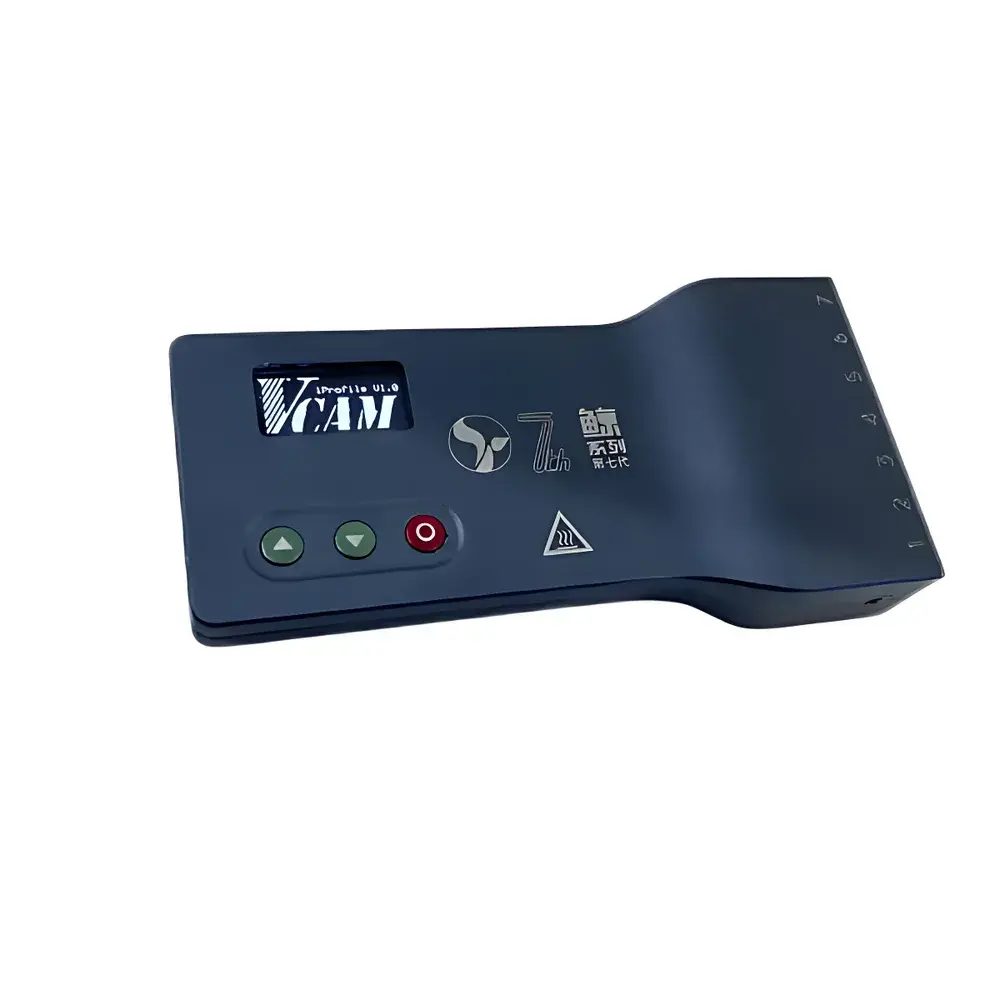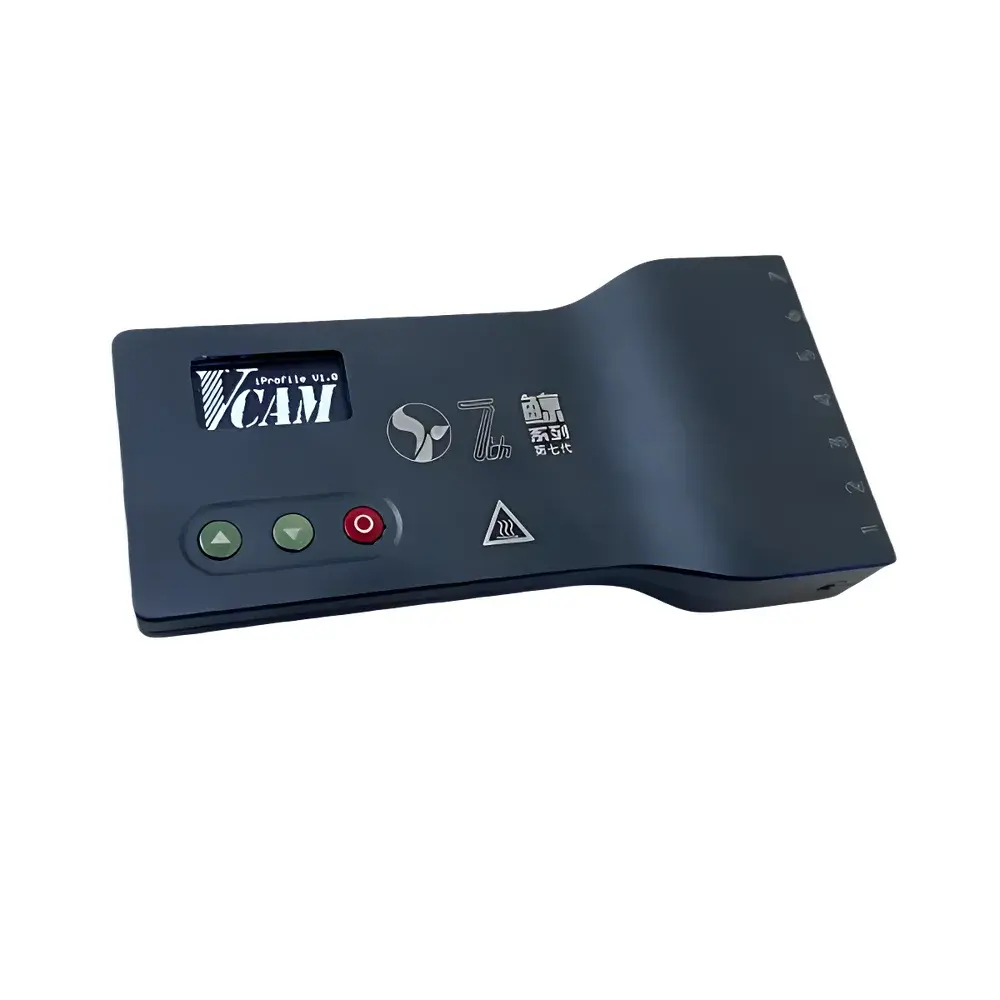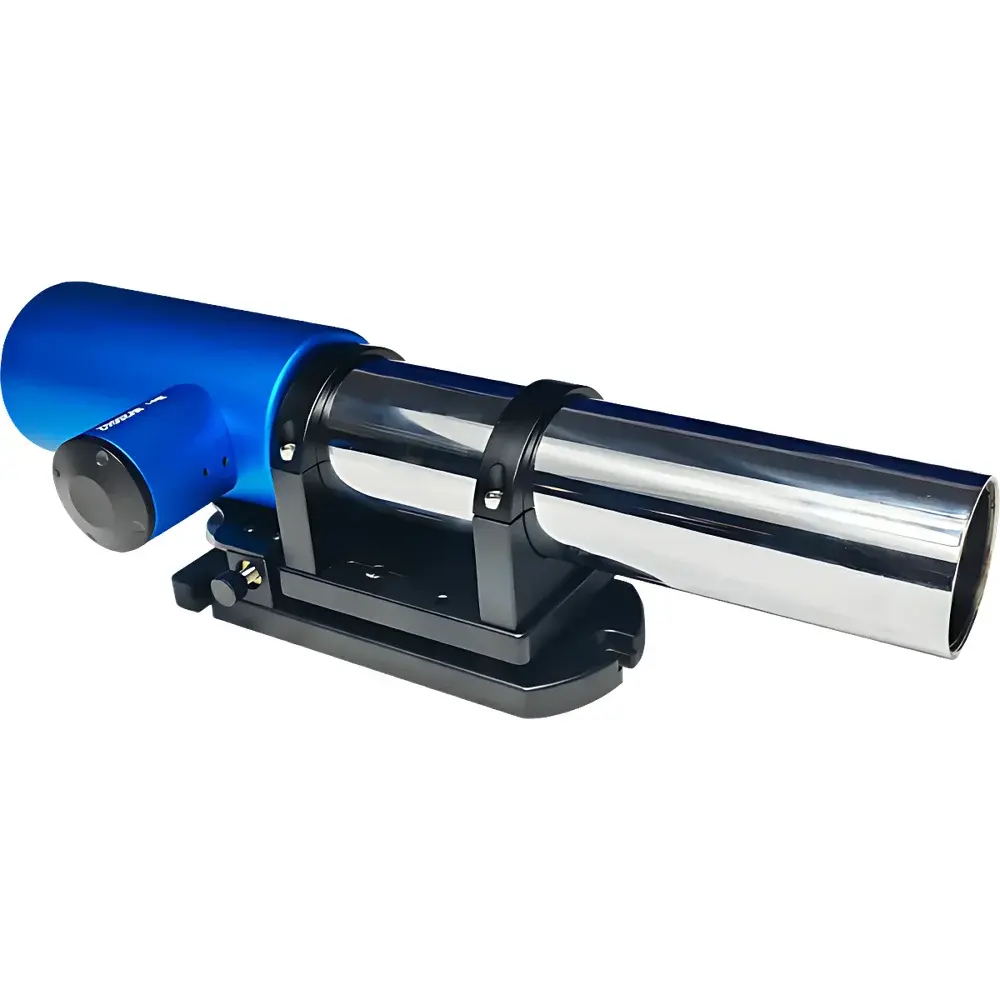
YANRUN MAT300/48/0.3 Photoelectric Autocollimator
| Brand | YANRUN |
|---|---|
| Origin | Shanghai, China |
| Manufacturer Type | Manufacturer |
| Model | MAT300/48/0.3 |
| Focal Length | 300 mm |
| Aperture | 48 mm |
| Light Source | High-Stability Semiconductor LED |
| Measurement Range | 0–30 m |
| Detector | High-Resolution Photodiode Array |
| Angular Resolution | Adjustable to 0.1″ / 0.01″ / 0.001″ / 0.0001″ (arc seconds) |
| Field of View (X/Y) | 2200″ × 1800″ (arc seconds) |
| Accuracy (Center) | ±0.3″ @ ±60″ range |
| Frequency Response | ≤30 Hz (typ.) |
| Interface | USB 2.0 |
| OS Compatibility | Windows 7 or later, 64-bit only |
| Compliance | Chinese Utility Model Patent Certified |
Overview
The YANRUN MAT300/48/0.3 Photoelectric Autocollimator is a precision angular metrology instrument engineered for high-reproducibility measurement of minute angular deviations in optical and mechanical systems. Based on the fundamental principle of optical autocollimation, it projects collimated light—generated by an LED source illuminating a reticle positioned precisely at the focal plane of a 300 mm focal length objective lens—onto a reflective surface. The returning beam, deflected by angular displacement α of the target mirror, produces a linear shift ΔS on a calibrated photodiode array located at the same focal plane. This shift corresponds to 2α (in radians), enabling direct, traceable angular quantification with sub-arcsecond resolution. Designed for laboratory-grade stability and industrial robustness, the system eliminates subjective human alignment error through real-time electronic imaging and digital centroid detection—replacing traditional eyepiece-based observation with quantitative, repeatable data acquisition.
Key Features
- Simultaneous dual-axis (X and Y) angular measurement within a single optical axis, eliminating sequential repositioning and improving throughput in multi-degree-of-freedom alignment tasks.
- Real-time electronic viewfinder with auto-targeting algorithm, minimizing operator-induced parallax and aiming uncertainty inherent in manual visual autocollimators.
- High-stability imported semiconductor LED light source with >50,000-hour operational lifetime, ensuring consistent illumination intensity and spectral output over extended calibration cycles.
- Adjustable angular resolution down to 0.0001 arc seconds (0.005 µrad), configurable via software to match application-specific sensitivity requirements without hardware modification.
- Modular architecture supporting interchangeable accessories—including rotary stage adapters, retroreflector mounts, and beam-splitting modules—for extended functionality across alignment, tilt sensing, and dynamic motion analysis.
- Native multilingual UI (English, Chinese, Russian, Korean) compliant with international deployment requirements in global R&D and manufacturing environments.
Sample Compatibility & Compliance
The MAT300/48/0.3 is compatible with standard optical flats, kinematic mirror mounts, precision goniometers, and air-bearing rotation stages used in aerospace component verification and optical assembly. Its measurement methodology aligns with ISO 21098:2019 (Optics and photonics — Test methods for autocollimators) and supports traceable calibration per ISO/IEC 17025 when operated with certified reference mirrors and environmental monitoring (temperature, vibration). While not FDA- or GLP-certified out-of-the-box, its USB 2.0 interface and deterministic sampling rate (≤30 Hz) allow integration into validated QA/QC workflows where audit trails are maintained externally. The instrument holds a Chinese Utility Model Patent (ZL2022XXXXXXX.X), confirming its novel mechanical-optical layout and signal processing architecture.
Software & Data Management
Bundled Windows-native software (64-bit, Win7+) provides full instrument control, real-time waveform visualization, automatic curve fitting, and deviation error mapping. Raw angular displacement data (X/Y, time-stamped) is exported natively to CSV and Excel (.xlsx) formats, preserving metadata including timestamp, resolution setting, and environmental conditions logged via optional external sensors. All measurement sessions support user-defined templates, pass/fail thresholds, and statistical process control (SPC) parameters—enabling direct import into enterprise MES or LIMS platforms. Audit-ready logs record operator ID, session start/end time, configuration changes, and export events—meeting foundational requirements for ISO 9001 and internal quality documentation protocols.
Applications
- Precision alignment of large-aperture optical benches and laser cavities in photonics R&D laboratories.
- Verification of straightness, flatness, perpendicularity, and parallelism in coordinate measuring machine (CMM) granite tables and machine tool guideways (per ISO 230-1 and ASME B89.1.10).
- In-process angular monitoring of high-precision rotary stages used in semiconductor lithography equipment and synchrotron beamline instrumentation.
- Calibration of inertial navigation system (INS) gyros and attitude determination subsystems in aerospace ground-test facilities.
- Dynamic tilt characterization of adaptive optics deformable mirrors under closed-loop actuation.
- Educational use in university optics and precision engineering labs for teaching autocollimation theory, error budgeting, and uncertainty propagation in angular metrology.
FAQ
What is the maximum measurable distance for this autocollimator?
The instrument supports collimated beam operation up to 30 meters, assuming adequate reflectivity (>85%) and minimal atmospheric turbulence. At longer distances, beam divergence and thermal drift may affect repeatability—environmental compensation is recommended beyond 10 m.
Does the system support real-time data streaming to third-party DAQ platforms?
Yes, via USB 2.0 HID-compliant protocol; SDK documentation and DLL libraries are provided for integration with LabVIEW, MATLAB, and Python-based control environments.
Is NIST-traceable calibration available from the manufacturer?
YANRUN offers factory calibration against a master autocollimator referenced to NIST-traceable angle standards; certificate includes expanded uncertainty (k=2) and temperature-controlled test conditions.
Can the resolution be changed during live measurement?
Yes—resolution switching is software-controlled and dynamically applied without interrupting acquisition, enabling adaptive sensitivity tuning for coarse alignment followed by fine error quantification.
What environmental conditions are required for specified accuracy?
For ±0.3″ accuracy at ±60″ range, ambient temperature must be stabilized within ±1°C/hour and vibration levels below 25 µm/s RMS (1–100 Hz); active isolation is recommended for sub-arcsecond work.