
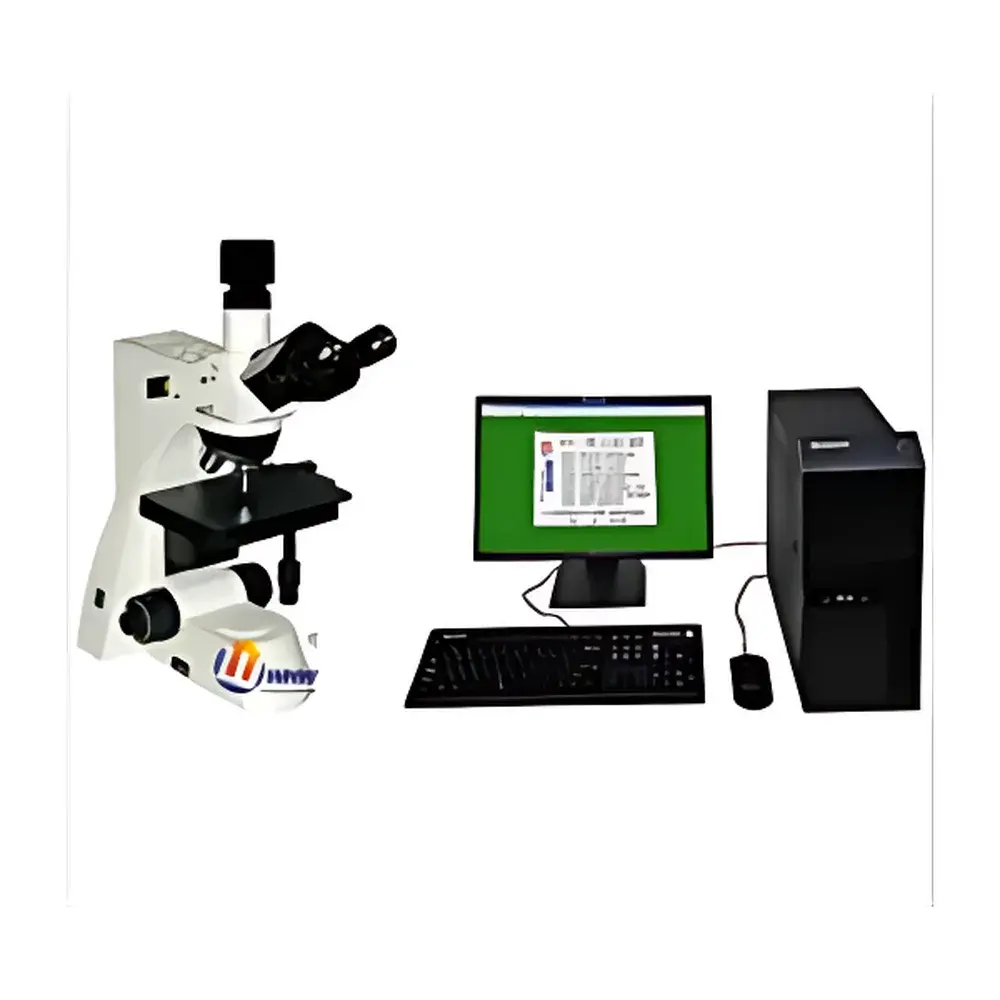
YANRUN MMAS-16 Upright Metallurgical Microscope with Integrated Image Analysis System
| Brand | YANRUN |
|---|---|
| Origin | Shanghai, China |
| Manufacturer Type | Direct Manufacturer |
| Product Category | Domestic (PRC) |
| Model | MMAS-16 |
| Configuration | Upright |
| Image Analysis System Included | Yes |
| Total Magnification Range | 50× to 500× |
| Eyepieces | Wide-Field WF10X (Φ18 mm) |
| Objectives | PL 5X/0.12, PLL10X/0.25, PLL20X/0.40, PLL50X/0.70 (Long Working Distance, No Cover Slip) |
Overview
The YANRUN MMAS-16 is an upright metallurgical microscope engineered for high-fidelity microstructural analysis of opaque, reflective specimens—primarily metals, alloys, ceramics, and advanced composites. Unlike transmitted-light biological microscopes, the MMAS-16 employs episcopic (incident) illumination, enabling high-contrast observation of polished or etched surfaces without sectioning or mounting in transparent media. Its optical architecture integrates a precision MOS (Modular Optical System) platform featuring long-working-distance, parfocal, plan achromatic objectives optimized for cover-slip-free imaging—a critical requirement for metallurgical sample preparation where surface integrity must be preserved. The system delivers calibrated magnifications from 50× to 500× via a four-position objective turret and wide-field WF10X eyepieces (18 mm field number), ensuring consistent resolution across the entire visual field. Designed for routine quality control, failure analysis, and R&D validation, the MMAS-16 conforms to fundamental metrological principles outlined in ASTM E3–22 (Standard Guide for Preparation of Metallographic Specimens) and ISO 4967 (Steel—Determination of Content of Non-Metallic Inclusions—Micrographic Method Using Standard Diagrams).
Key Features
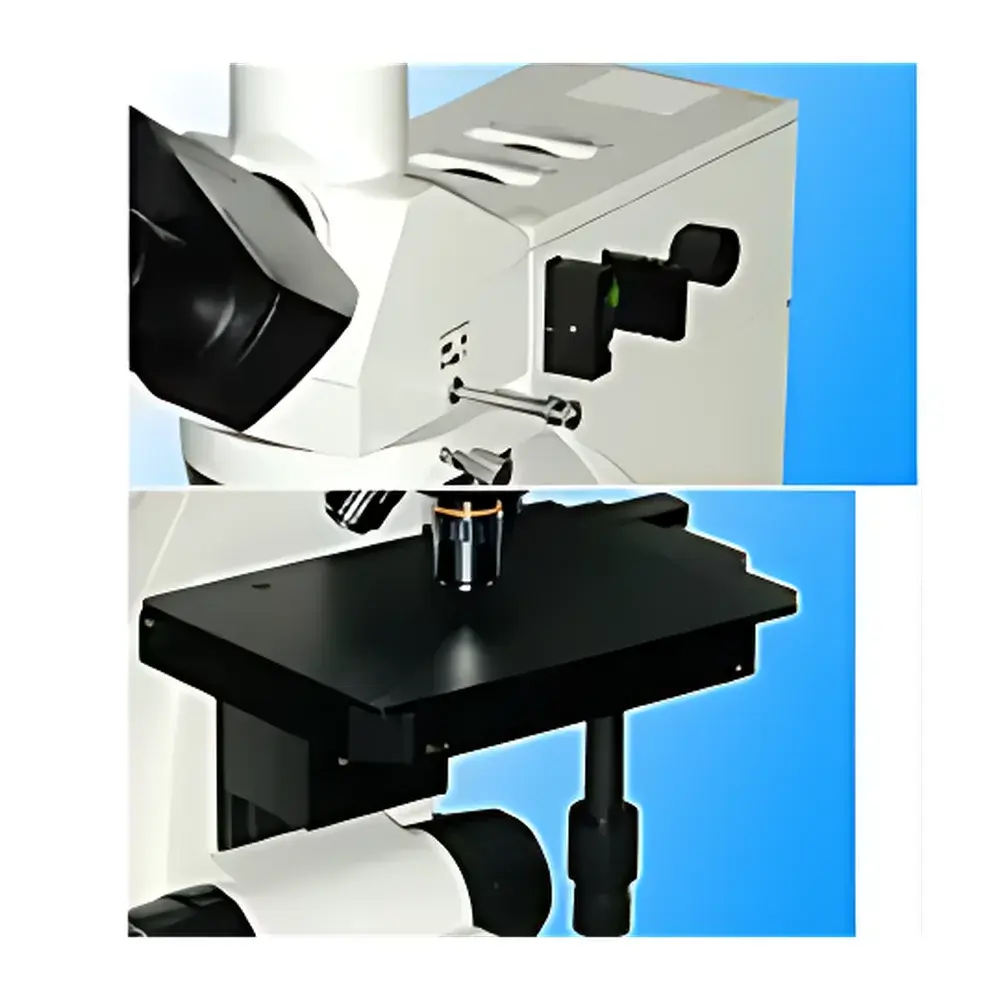
- Upright, ergonomic design with 30° inclined trinocular head and interpupillary adjustment; built-in analyzer for polarized light observation with push-pull polarizer mechanism.
- Four-position inward-rolling ball-bearing objective nosepiece ensuring precise, repeatable positioning and minimal axial shift during objective changes.
- Dual-layer mechanical stage (210 × 140 mm) with 63 × 50 mm travel range, calibrated X–Y movement for systematic grid-based scanning and feature localization.
- Adjustable 6 V / 20 W halogen episcopic illuminator with independent field and aperture diaphragms, integrated neutral density filter (ground glass), and selectable interference filters (yellow, green, blue) for contrast enhancement in phase-sensitive imaging.
- Coaxial coarse/fine focusing mechanism with 2 µm fine-focus graduation, adjustable coarse-focus tension, upper/lower mechanical stop limits, and locking capability for stable image acquisition during digital capture.
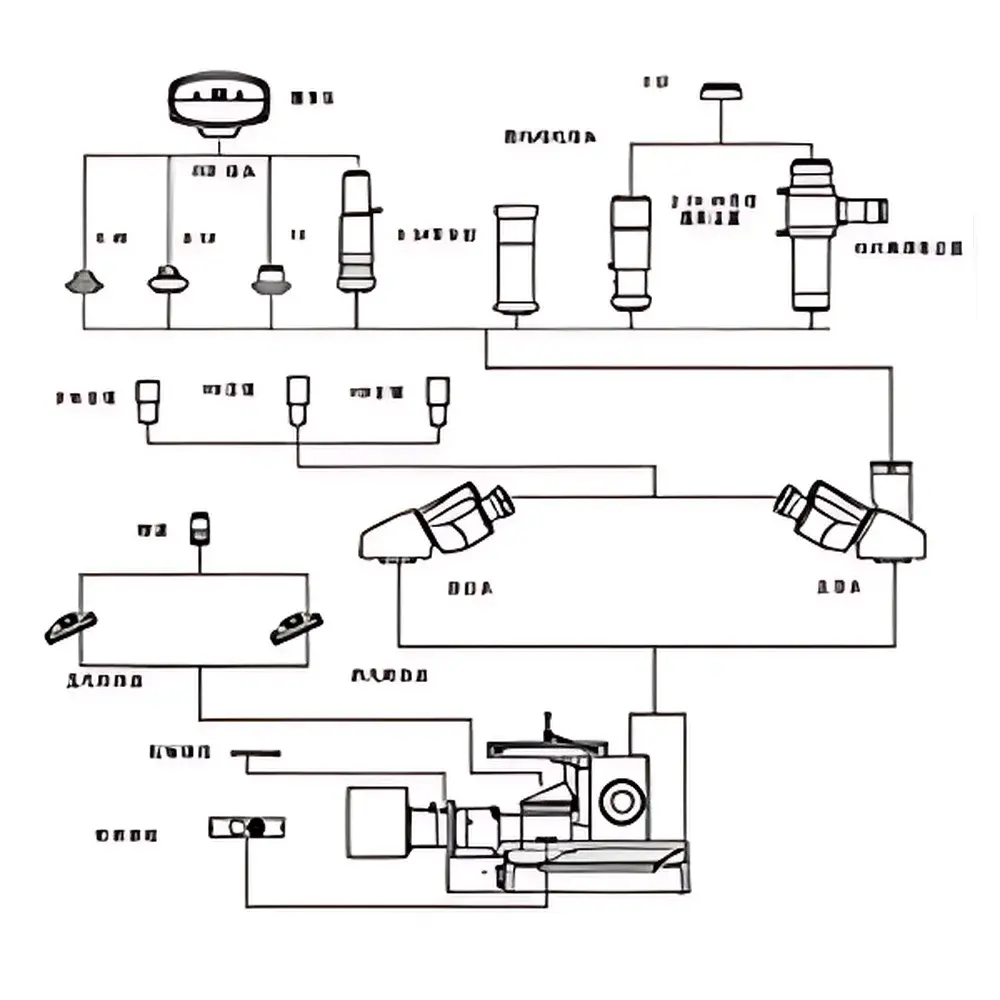
- Optical path split ratio configurable for simultaneous visual observation and camera output (standard 0%–100% beam splitter option available).
Sample Compatibility & Compliance
The MMAS-16 accommodates standard metallographic specimens up to 30 mm in height and 75 mm in diameter, compatible with common mounting resins (phenolic, epoxy, acrylic) and polishing protocols per ASTM E407 and ISO 14488. Its long-working-distance objectives (minimum 10.2 mm at 50×) permit unobstructed access to rough or topographically complex surfaces—including as-cast, heat-treated, or fractured sections—without risk of lens contact. Polarization optics support birefringence evaluation of duplex steels, titanium alloys, and non-metallic inclusions per ASTM E1122. All optical components comply with ISO 10110 surface quality standards (scratch-dig 60–40), and mechanical tolerances meet ISO 2768-mK general fabrication specifications. The instrument supports GLP-compliant documentation workflows when paired with MMAS software audit-trail logging.
Software & Data Management
The MMAS measurement and analysis system is a validated Windows-based application designed for quantitative metallography in regulated environments. It interfaces with USB 3.0 or PCIe frame grabbers and supports industry-standard cameras (including monochrome CMOS sensors with ≥12-bit dynamic range). Core capabilities include:
- Automated grading against 400+ standardized modules aligned with ASTM E112 (grain size), ASTM E1245 (inclusion rating), ISO 643 (steel microstructure), and GB/T 10561 (Chinese inclusion classification).
- Geometric measurement suite with sub-pixel edge detection: line length, circularity, area fraction, angular deviation, and multi-point distance mapping—all traceable to NIST-calibrated reference scales.
- Report generation engine supporting customizable templates, electronic signatures, PDF export, and embedded metadata (operator ID, timestamp, instrument serial, calibration status).
- Image stitching algorithm for seamless mosaicking of large-area scans (e.g., weld cross-sections or coating thickness profiles).
- Extended depth-of-field synthesis via Z-stack fusion (image co-focusing) and optional 3D optical profilometry module using structured light projection.
Data integrity safeguards include user-level permissions, change history logs, and optional 21 CFR Part 11 compliance packages with electronic signature validation and audit trail encryption.
Applications
The MMAS-16 serves as a primary tool in metallurgical laboratories for:
- Grain size determination and ASTM E112/E1122 compliance reporting.
- Non-metallic inclusion assessment (Type A, B, C, D, DS) per ASTM E45 and ISO 4967.
- Carbide distribution analysis in tool steels and stainless grades.
- Porosity and defect quantification in castings, additive-manufactured parts, and thermal spray coatings.
- Polarized-light characterization of crystallographic texture in aluminum alloys and nickel-based superalloys.
- Educational instruction in materials science curricula, supporting hands-on training in specimen preparation, optical contrast optimization, and quantitative microstructural interpretation.
FAQ
What types of specimens can be observed with the MMAS-16?
The system is optimized for polished, etched, or as-ground opaque samples—including ferrous and non-ferrous metals, sintered powders, refractory ceramics, and semiconductor packaging materials.
Is the MMAS software compliant with regulatory documentation requirements?
Yes—the software supports audit-trail logging, user authentication, and electronic signature workflows; optional 21 CFR Part 11 and ISO/IEC 17025 alignment packages are available upon request.
Can third-party cameras be integrated with the MMAS system?
Yes—provided the camera SDK supports TWAIN or DirectShow protocols and offers programmable exposure, gain, and white balance controls.
Does the microscope support oil immersion objectives?
A dedicated 100×/1.25 NA oil-immersion plan achromat (PLL100X/Oil) is available as an optional objective for enhanced resolution in high-magnification particle analysis.
What calibration standards are recommended for routine verification?
NIST-traceable stage micrometers (0.01 mm division) and resolution test targets (e.g., USAF 1951) are recommended for daily focus and magnification verification per ISO 9001 internal calibration procedures.




