
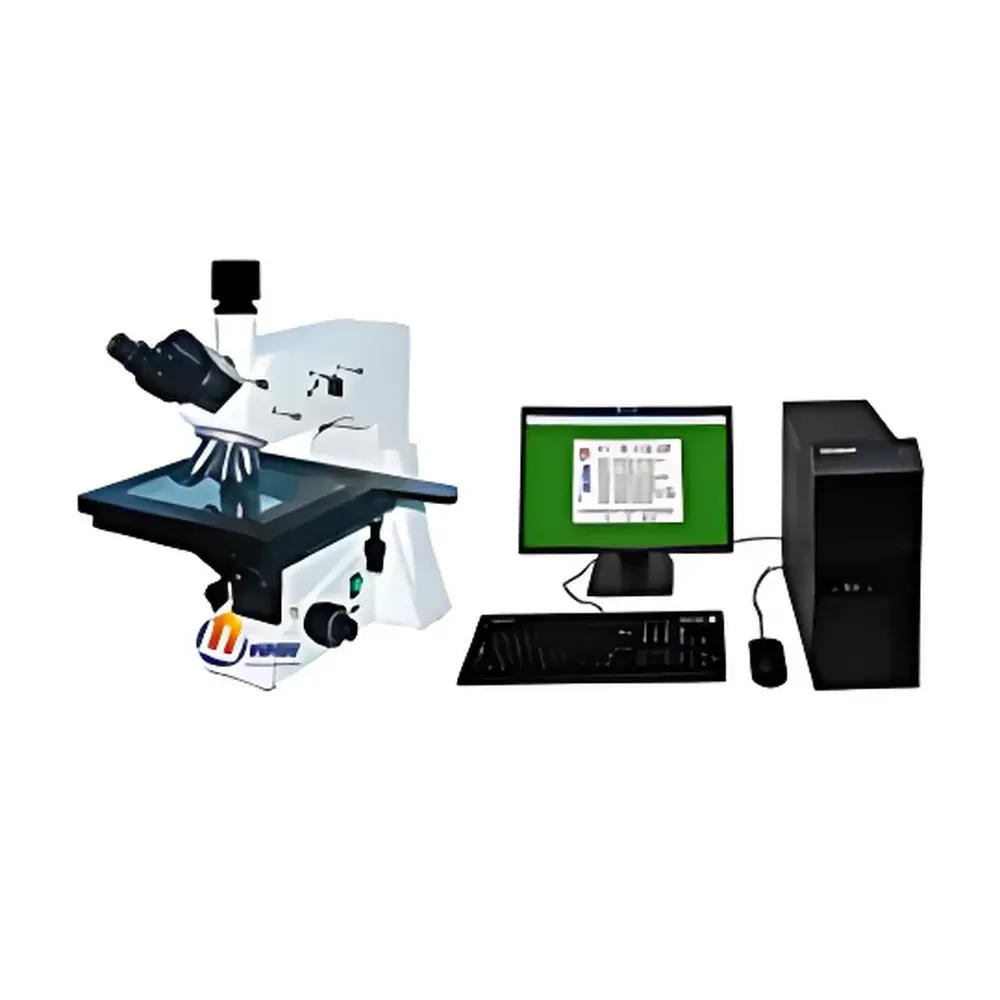
YANRUN MMAS-9 Upright Reflected-Light Polarizing Metallurgical Microscope Measurement & Analysis System
| Brand | YANRUN |
|---|---|
| Origin | Shanghai, China |
| Manufacturer Type | Direct Manufacturer |
| Product Type | Upright Metallurgical Microscope |
| Imaging Analysis System Included | Yes |
| Total Magnification Range | 50× to 800× |
| Eyepieces | Wide-Field WF10X (Φ18 mm) |
| Objectives | PL 5X/0.12, PLL10X/0.25, PLL20X/0.40, PLL40X/0.60, PLL80X/0.80 (all long-working-distance, achromatic, coverslip-free) |
Overview
The YANRUN MMAS-9 is an upright reflected-light polarizing metallurgical microscope system engineered for high-fidelity microstructural characterization of opaque, polished, and etched metallic and alloy specimens. It operates on the principle of episcopic (incident) illumination combined with polarization contrast—enabling both brightfield and polarized light observation modes without specimen repositioning. The system integrates Köhler illumination optics, long-working-distance plan-achromat objectives optimized for cover-slip-free operation, and a rigid T-shaped anti-vibration mechanical architecture. Designed for industrial metallography laboratories, quality control departments, and academic materials science facilities, the MMAS-9 delivers consistent optical resolution across its full 50×–800× magnification range while maintaining ergonomic accessibility for extended daily use.
Key Features
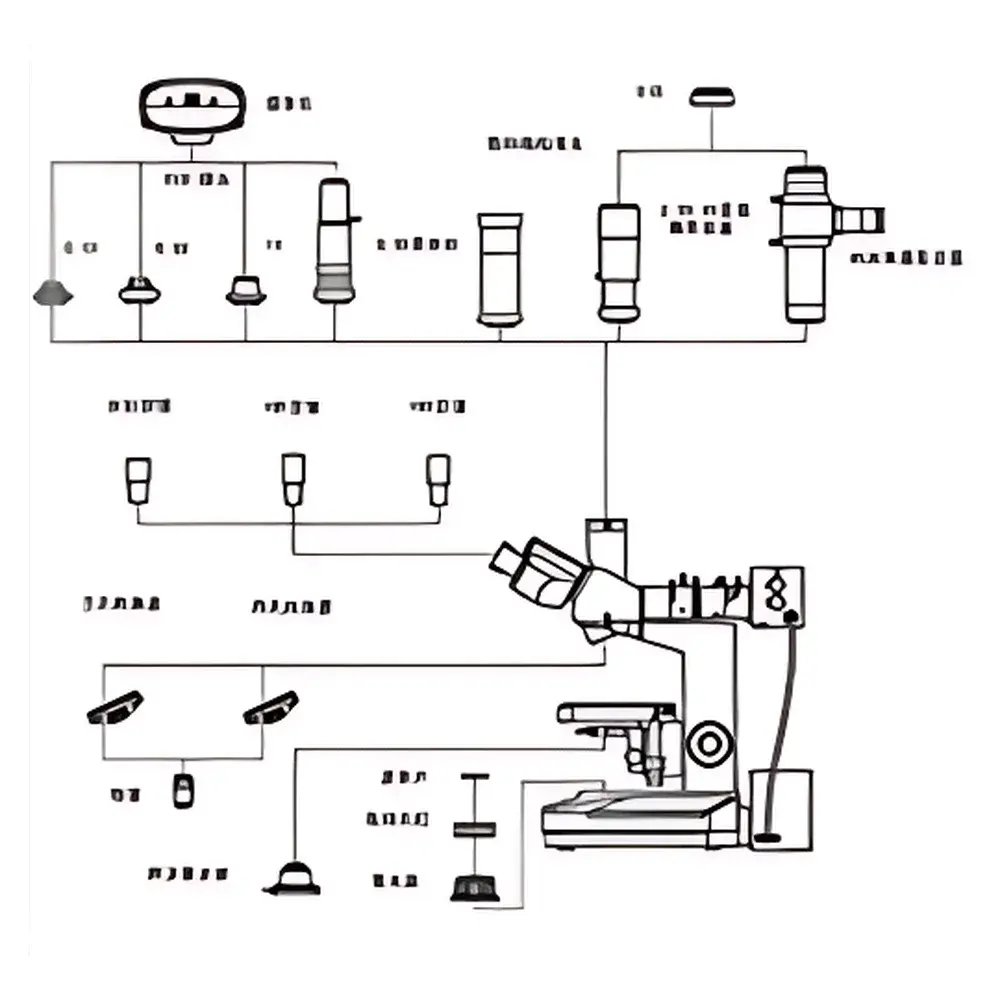
- Optical Architecture: Equipped with a trinocular head inclined at 30°, featuring built-in analyzer for seamless switching between standard and polarized observation. The eyepiece tube supports simultaneous visual inspection and digital imaging via C-mount adapter.
- Objective Suite: Five-position inward-rolling ball-bearing objective turret accommodates five long-working-distance plan-achromat objectives (5×, 10×, 20×, 40×, 80×), all corrected for chromatic and spherical aberrations without cover glass—critical for thick or uneven metallographic samples.
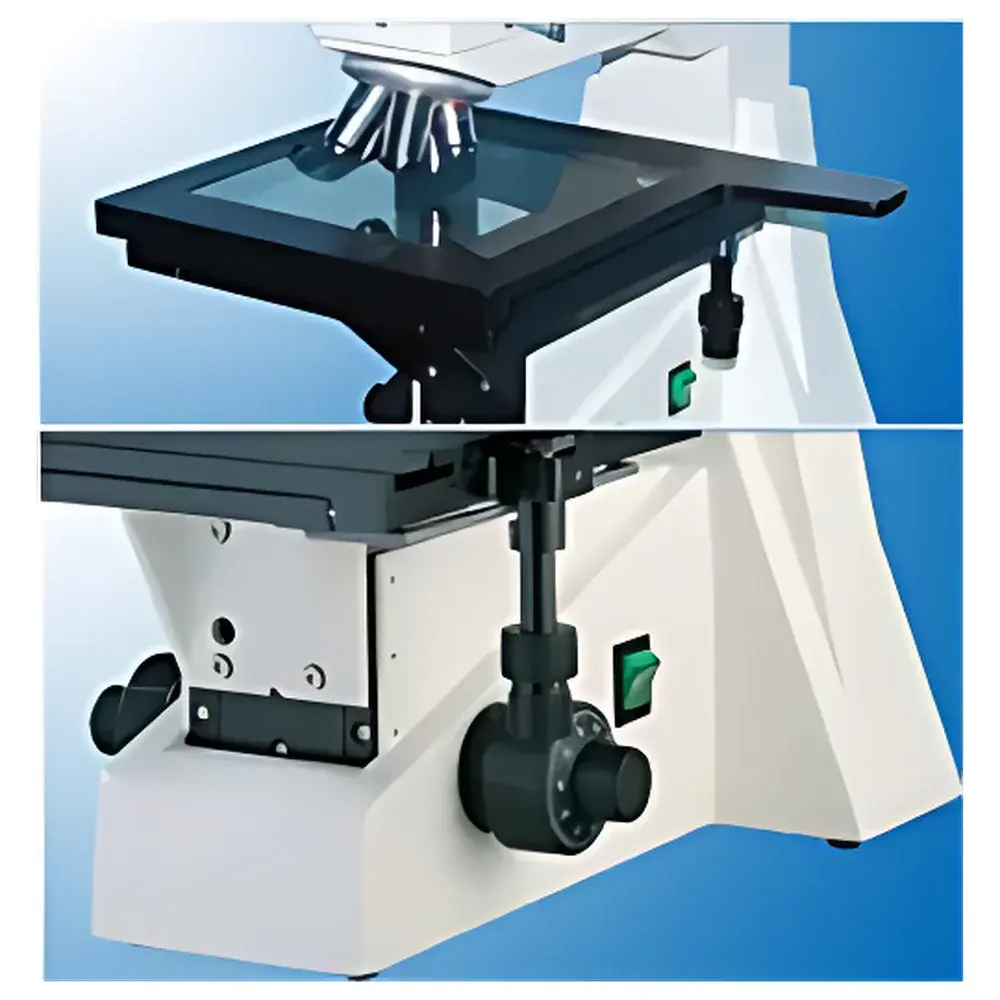
- Mechanical Stage: Triple-layer mechanical stage (250 × 230 mm footprint) with 154 × 154 mm travel range; precision micrometer-driven X/Y movement ensures repeatable positioning during multi-field analysis and image stitching workflows.
- Illumination System: 6 V / 20 W halogen lamp with continuously adjustable intensity, integrated field and aperture diaphragms, removable color filters (yellow, green, blue), and ground-glass diffuser for uniform illumination and optimal contrast control.
- Polarization Module: Built-in polarizer and analyzer with center-adjustable field diaphragm and variable aperture control—enabling quantitative birefringence assessment of anisotropic phases such as martensite, ferrite, or intermetallic compounds.
- Focusing Mechanism: Coaxial coarse/fine focus with 0.7 µm fine-focus graduation, adjustable coarse-focus tension, mechanical stop limits, and locking mechanism—optimized for reproducible focusing in ASTM E3, ISO 643, and GB/T 13298-compliant metallographic evaluations.
Sample Compatibility & Compliance
The MMAS-9 is validated for routine and advanced metallographic examination of ferrous and non-ferrous alloys—including steels, aluminum, titanium, copper, and nickel-based superalloys—following standardized preparation protocols (grinding, polishing, etching). Its large-stage configuration accommodates specimens up to 100 mm in diameter and 50 mm in thickness. The system complies with core requirements for GLP/GMP-aligned laboratories: stable optical alignment, traceable calibration paths (via included stage micrometer), and documentation-ready output from the MMAS software. While not certified to ISO/IEC 17025 out-of-the-box, the hardware platform supports audit-ready workflows when paired with validated SOPs and instrument qualification records (IQ/OQ/PQ).
Software & Data Management
The bundled MMAS measurement and analysis software is a Windows-based application designed specifically for metallurgical image evaluation. It provides over 400 standardized modules aligned with ASTM E112 (grain size), ASTM E1245 (inclusion rating), ISO 4967 (non-metallic inclusions), and Chinese national standards (e.g., GB/T 10561). Core capabilities include automated grain boundary detection, phase area fraction quantification, inclusion classification per ASTM E45, linear intercept measurements, and customizable report generation compliant with internal QA/QC templates. All operations support full audit trail logging (user ID, timestamp, parameter settings), and raw image metadata (magnification, objective ID, exposure time) is embedded in TIFF exports. Optional modules—including extended-depth-of-field (EDF) image fusion, z-stack reconstruction, and topographic height mapping—extend analytical utility for failure analysis and R&D applications.
Applications
- Quantitative metallography for heat-treated steel microstructures (pearlite, bainite, retained austenite)
- Inclusion rating and morphology analysis in bearing steels and stainless grades
- Grain size distribution mapping in cast and forged components
- Phase identification and volume fraction measurement in duplex stainless steels and Ni-based alloys
- Polarized light assessment of crystallographic texture in rolled sheet and extruded profiles
- Failure analysis of fracture surfaces, weld zones, and corrosion-affected regions
- Educational demonstration of solid-state phase transformations and recrystallization kinetics
FAQ
Does the MMAS-9 support oil-immersion objectives?
Yes—optional 100×/1.25 NA oil-immersion plan-achromat objectives are available and compatible with the five-hole nosepiece.
Is the MMAS software compliant with FDA 21 CFR Part 11?
The base MMAS software does not include electronic signature or audit-trail encryption features required for Part 11 compliance; however, it can be deployed within validated IT environments using third-party document management systems.
Can the system perform automatic grain size measurement per ASTM E112?
Yes—the MMAS software includes fully automated grain counting and intercept-based grain size calculation with manual override and validation tools.
What camera interfaces are supported?
The system accepts standard C-mount cameras (1/2″ or 2/3″ sensors); USB 3.0 and GigE machine vision cameras are supported via optional frame grabbers.
Is technical support and calibration documentation provided?
YANRUN supplies factory calibration certificates for mechanical stage travel and focus scale, along with English-language user manuals, maintenance guides, and remote troubleshooting assistance.





