
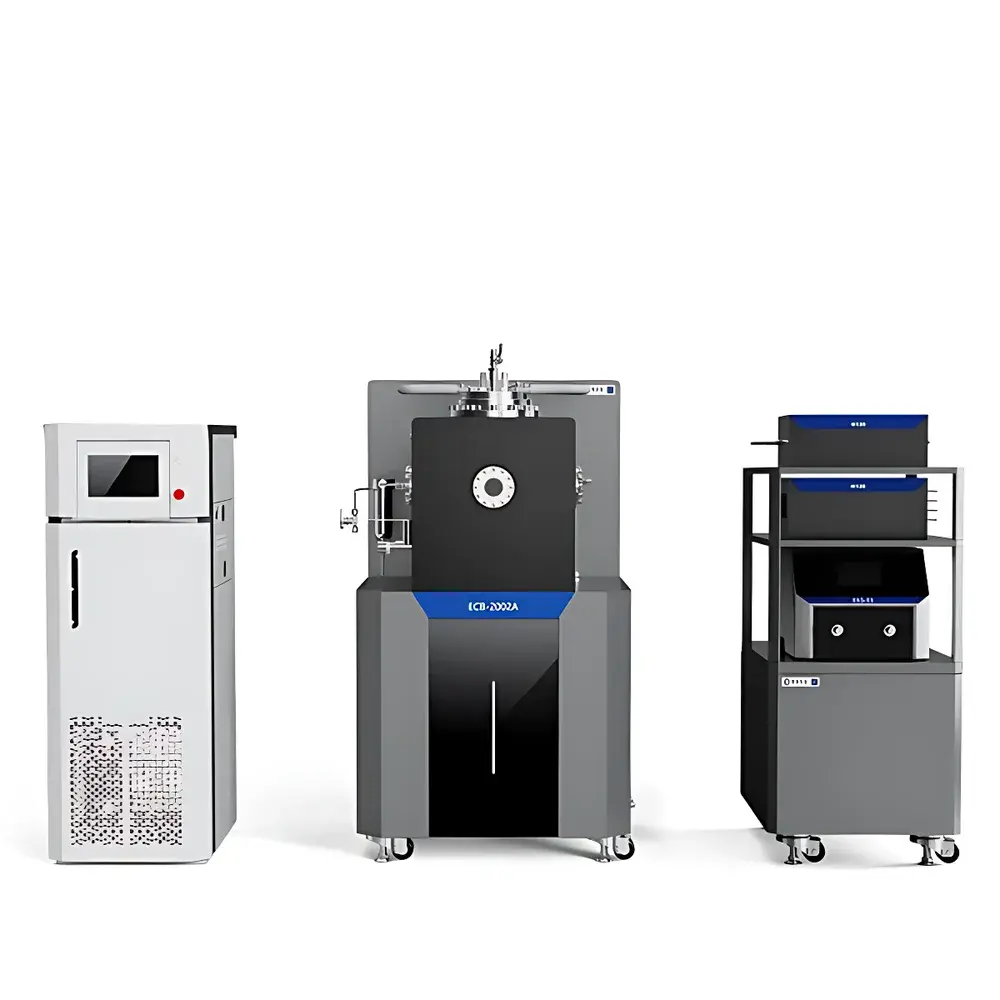
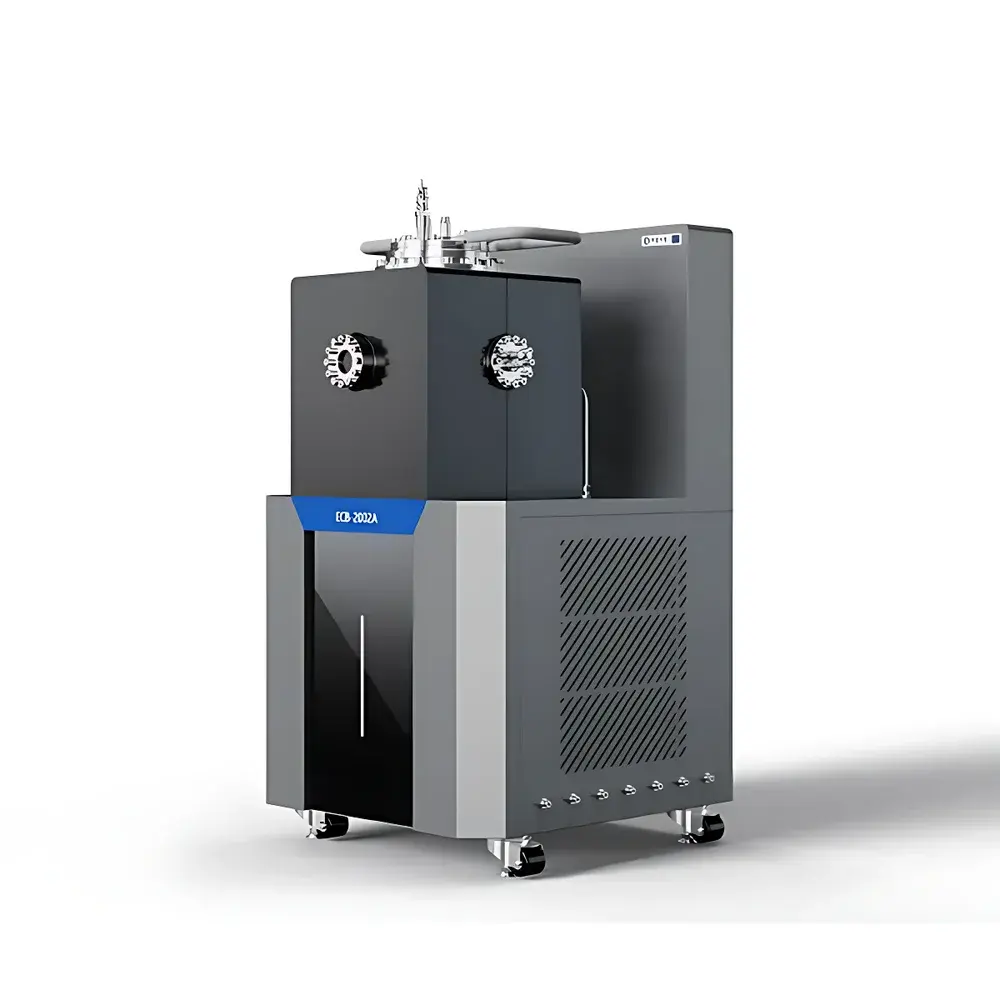
Young Instruments ECB-2002A Multiphase High-Temperature High-Pressure Explosibility Limit Analyzer
| Brand | Young Instruments |
|---|---|
| Origin | Zhejiang, China |
| Manufacturer Type | Direct Manufacturer |
| Region of Origin | Domestic (China) |
| Model | ECB-2002A |
| Price | Upon Request |
| Test Vessel Temp. Range | Ambient to 200 °C |
| Max. Design Pressure | ≥2.0 MPa |
| Explosion Pressure Sensor Range | ≥5.0 MPa, Linearity: ±1.0% FS |
| Pressure Sampling Rate | ≥5 kHz |
| Data Points per Test | ≥10,000 |
| Gas Inlet Channels | 3 |
| Max. Stirring Speed | 400 rpm (adjustable) |
| Operating Environment | −5–45 °C, <95% RH |
| Gas Pressure Control Accuracy | ±0.1% FS |
Overview
The Young Instruments ECB-2002A Multiphase High-Temperature High-Pressure Explosibility Limit Analyzer is a rigorously engineered test platform designed for quantitative determination of flammability and explosibility boundaries under non-ambient thermobaric conditions. It operates on the fundamental principle of controlled ignition within a sealed, temperature- and pressure-regulated reaction vessel, followed by high-fidelity dynamic measurement of pressure rise kinetics during deflagration or detonation events. The system complies with internationally recognized standards including EN 1839 (determination of explosion limits of gases and vapors), ASTM E918 (standard test method for determining limits of flammability of chemical substances), ASTM E2079 (standard test method for determining the limiting oxygen concentration), EN 15967 (explosibility testing of dust–gas mixtures), and UL 9540A (evaluation of thermal runaway fire propagation in battery energy storage systems). Its core capability lies in delivering reproducible, traceable measurements of key safety-critical parameters: lower/upper explosion limits (LEL/UEL), limiting oxygen concentration (LOC), maximum explosion pressure (Pmax), and maximum rate of pressure rise ((dP/dt)max) — all under programmable elevated temperatures (up to 200 °C) and initial pressures (up to 1 atm absolute).
Key Features
- Modular architecture enabling configuration flexibility for gas-only, vapor-only, or multiphase (e.g., aerosol, mist, or dust–gas hybrid) explosibility testing
- Fully programmable experimental workflow: users define temperature ramp profiles, pressure equilibration durations, gas mixing sequences, ignition timing, and data acquisition windows via intuitive software interface
- 316L stainless steel test vessel with electropolished interior surface, ensuring corrosion resistance against aggressive halogenated, acidic, or oxidizing test atmospheres
- Double-jacketed temperature control system delivering rapid thermal response and stability ≤±0.5 °C over the full 200 °C operating range
- Integrated high-efficiency vacuum pump with user-configurable purge cycles, minimizing carryover between sequential tests
- Gas dosing subsystem featuring mass flow controllers with active compensation algorithms to achieve ±0.1% full-scale concentration accuracy across all three independent inlet channels
- In-vessel magnetic stirring (0–400 rpm, adjustable) ensuring homogeneous gas-phase mixing prior to ignition, critical for eliminating stratification artifacts
- Dedicated high-temperature piezoresistive explosion pressure transducer (rated ≥5.0 MPa, linearity ±1.0% FS), optimized for transient response and thermal stability up to 200 °C
- Real-time pressure acquisition at ≥5 kHz sampling frequency, capturing ≥10,000 data points per test for robust (dP/dt)max derivation
- Hardware-enforced safety interlocks: pressure-triggered shutdown, temperature over-limit cutoff, door-open inhibition, and ignition circuit validation prior to each test
- Redundant mechanical protection: certified rupture disc (burst pressure calibrated to vessel MAWP) and spring-loaded safety valve compliant with PED 2014/68/EU
Sample Compatibility & Compliance
The ECB-2002A supports testing of pure gases (e.g., H2, CH4, C2H2), volatile organic compounds (VOCs), solvent vapors, aerosolized fuels, and combustible dust–gas suspensions. Its design conforms to functional safety requirements outlined in IEC 61508 (SIL2-capable architecture) and incorporates hardware-level fail-safes aligned with ISO/IEC 17025:2017 clause 6.4.2 (safety of equipment). All pressure-bearing components are ASME Section VIII Div. 1 code-stamped, and the vessel undergoes hydrostatic certification at 1.5× design pressure. Test reports generated comply with GLP documentation standards and support audit readiness for regulatory submissions under OSHA 29 CFR 1910.119 (Process Safety Management) and EU ATEX Directive 2014/34/EU Annex II conformity assessment.
Software & Data Management
The proprietary YI-ExploSoft v3.x platform provides ISO/IEC 17025-compliant data governance: full electronic audit trail (user actions, parameter changes, calibration logs), role-based access control (administrator/operator/auditor profiles), and 21 CFR Part 11-ready digital signatures. Raw pressure-time traces are stored in HDF5 format with embedded metadata (test ID, ambient conditions, calibration certificates, operator ID). Automated calculation modules compute LEL/UEL via interpolation of ignition/no-ignition boundaries, derive (dP/dt)max using Savitzky–Golay differentiation, and generate standardized output reports conforming to EN 1839 Annex B templates. Export options include CSV, PDF/A-2, and XML for integration into enterprise LIMS or PHA (Process Hazard Analysis) databases.
Applications
- Quantitative hazard classification of new chemical entities under GHS Category 1 (flammable gases) and UN Transport Regulations
- Design basis input for explosion relief vent sizing (per NFPA 68 / EN 14491)
- Validation of inerting strategies via LOC determination for pharmaceutical fluid-bed dryers and solvent recovery units
- Thermal stability assessment of battery electrolyte vapors under abuse conditions (UL 9540A compliance testing)
- Supporting QRA (Quantitative Risk Assessment) models for offshore oil & gas facilities handling multiphase hydrocarbon streams
- Research into flame propagation mechanisms in high-pressure hydrogen infrastructure (e.g., refueling stations, pipelines)
FAQ
What standards does the ECB-2002A natively support?
It implements test protocols aligned with EN 1839, ASTM E918, ASTM E2079, EN 15967, and UL 9540A — with software wizards guiding users through standard-specific setup and reporting.
Can the system test dust–gas mixtures?
Yes. The modular gas delivery and optional dispersion module enable precise suspension of combustible particulates (e.g., aluminum, coal, lactose) in carrier gases for hybrid explosibility mapping.
Is remote operation and monitoring supported?
The system features Ethernet connectivity with TLS 1.2-secured web interface, allowing real-time pressure/temperature visualization, alarm notifications, and supervised start/stop from off-site locations.
How is calibration traceability maintained?
All sensors ship with NIST-traceable calibration certificates; on-board verification routines validate pressure transducer zero/span and MFC flow accuracy before each test series.
What safety certifications apply to the instrument?
The ECB-2002A carries CE marking per Machinery Directive 2006/42/EC and PED 2014/68/EU; electrical safety complies with IEC 61010-1:2010 Ed.3.






