
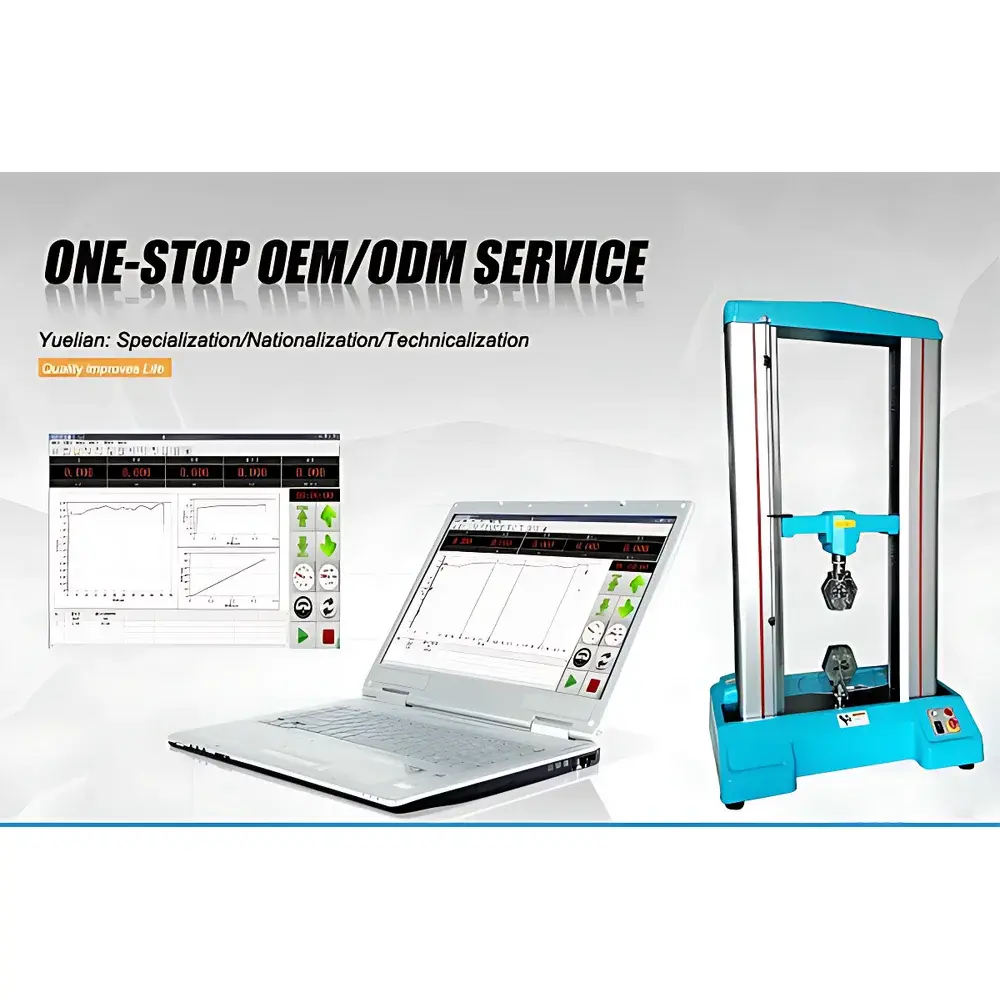
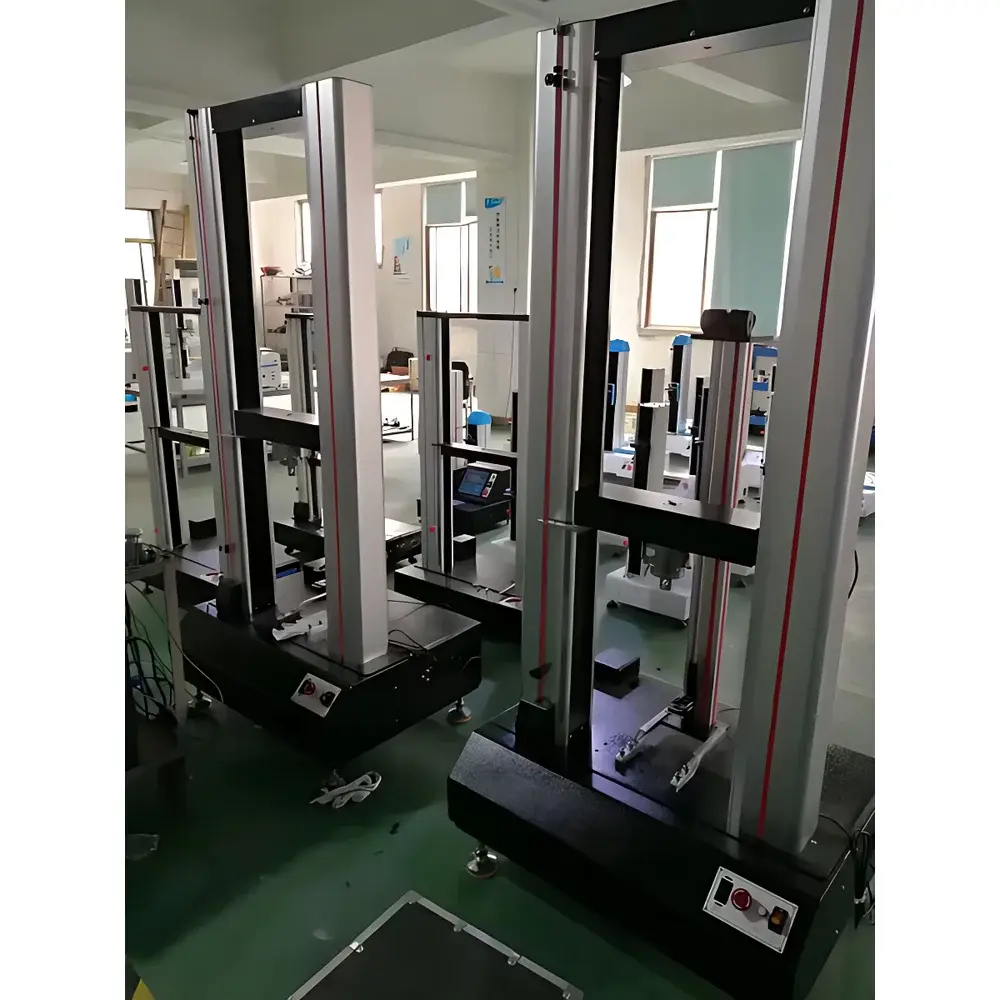
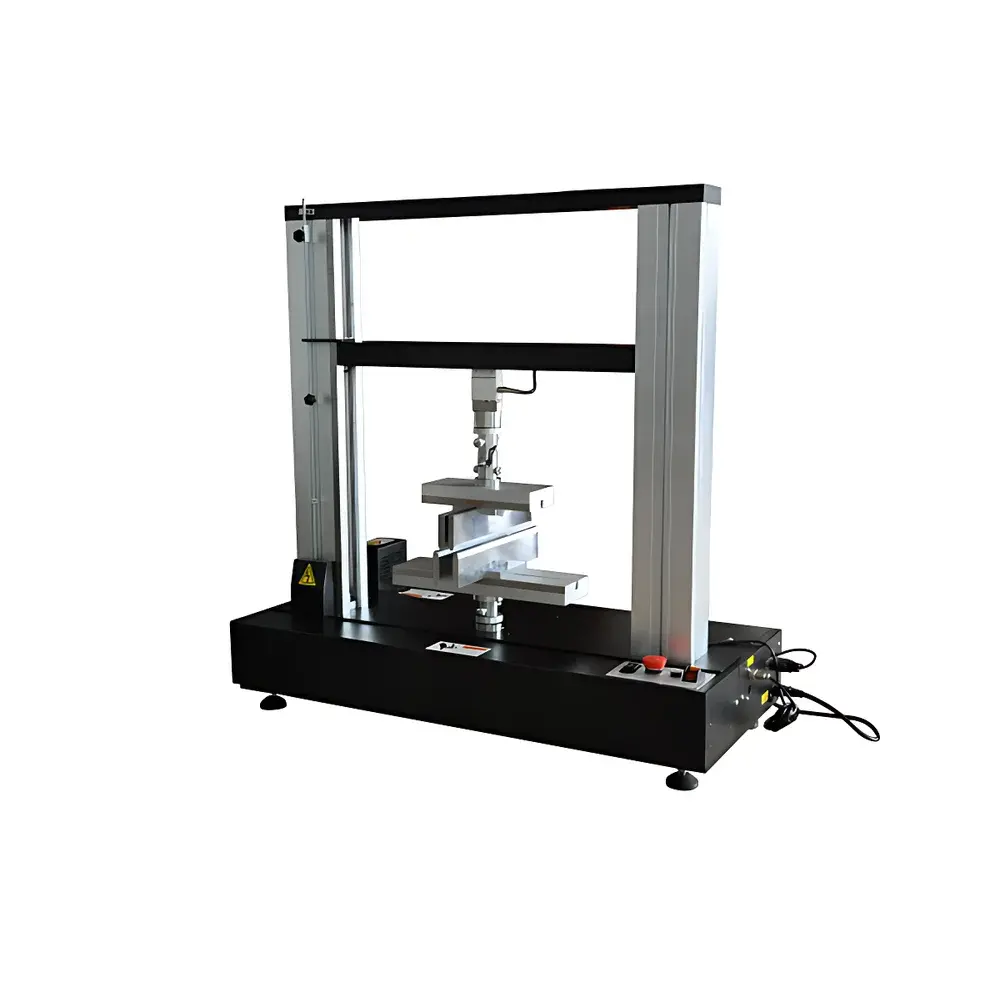
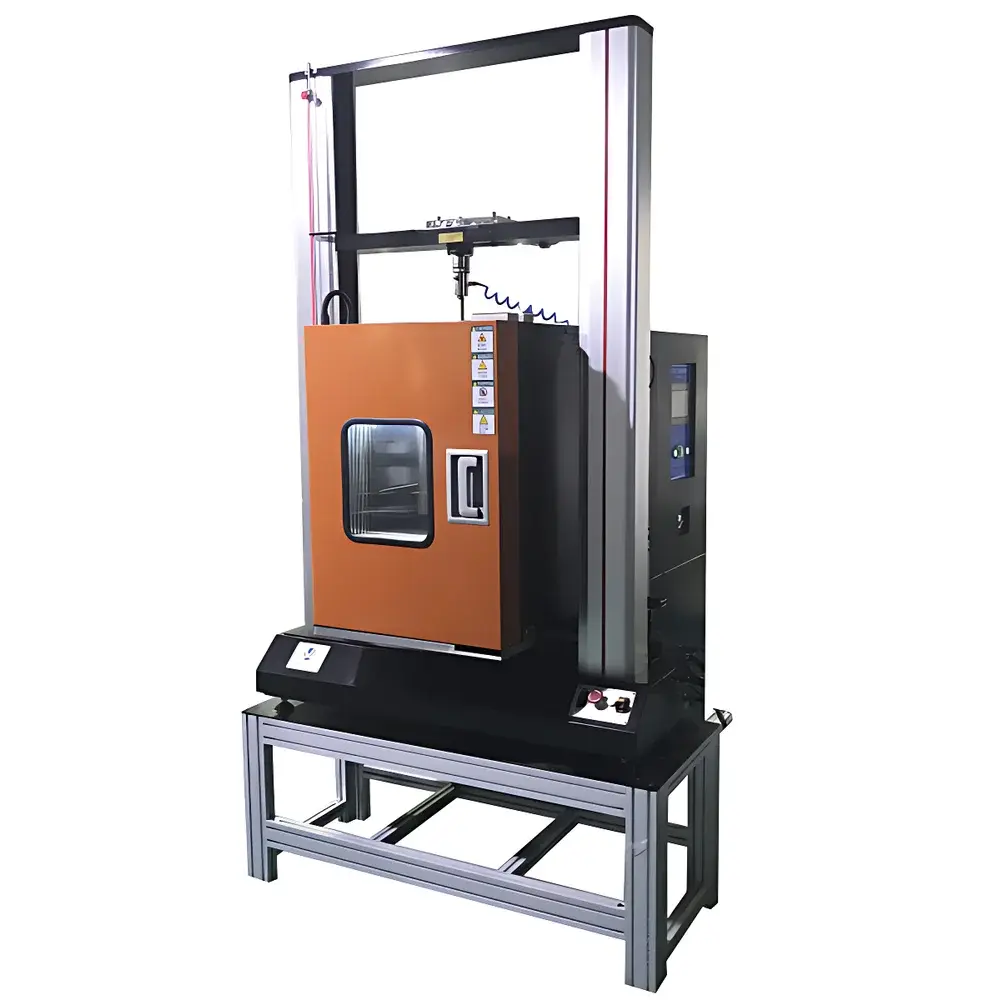
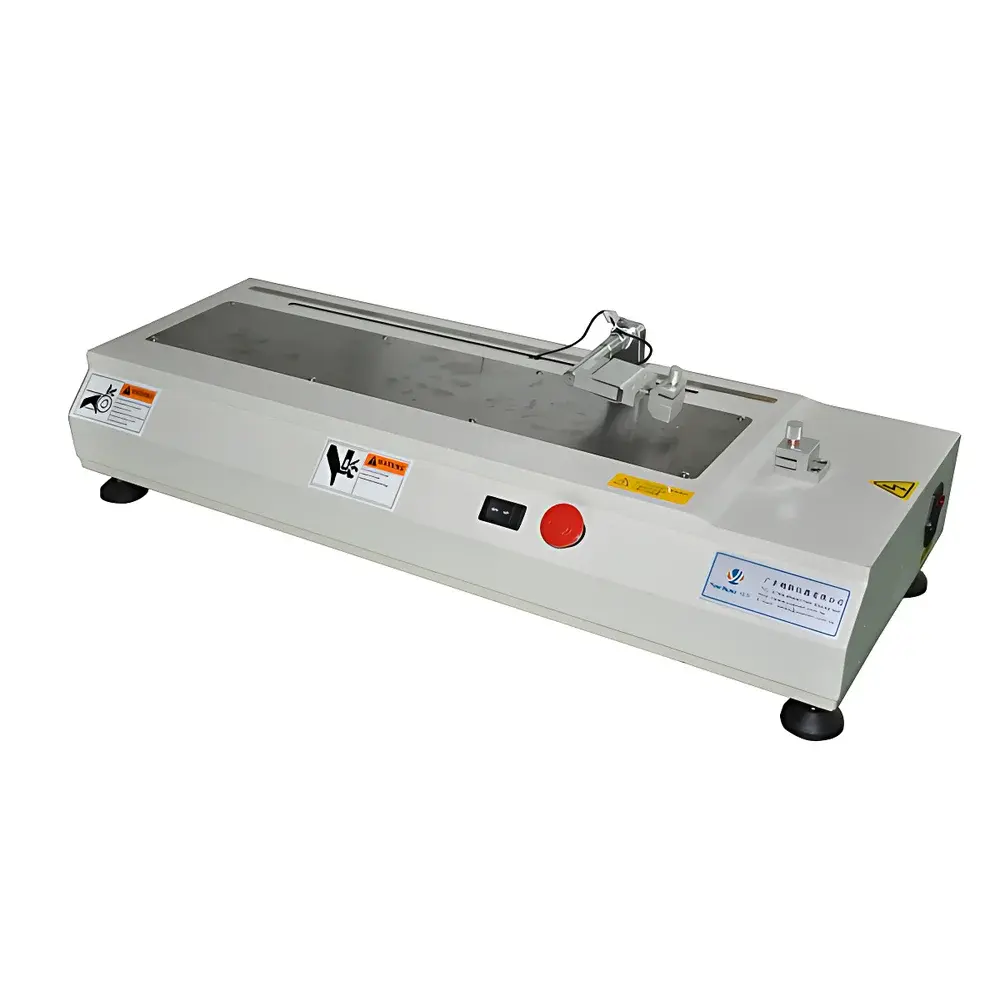
Yuelian YL-D2 Electronic Tensile Testing Machine for Metal Jewelry Alloys per GB/T 35777-2017
| Brand | Yuelian |
|---|---|
| Origin | Guangdong, China |
| Manufacturer Type | Authorized Distributor |
| Regional Classification | Domestic (PRC) |
| Model | YL-D2 |
| Instrument Type | Electronic Universal Testing Machine |
| Max Test Load | 20 kN |
| Load Measurement Range | 0.4–20 kN (0.2–100% FS) |
| Load Accuracy | ±0.5% of reading (per ISO 7500-1 Class 0.5) |
| Test Stroke | 1000 mm |
| Displacement Resolution | 0.001 mm |
| Force Resolution | 1/500,000 full scale |
| Control Mode | PC-based closed-loop servo control |
| Speed Range | 0.01–500 mm/min (adjustable in real time) |
| Test Width | 420 mm |
| Power Supply | 220 V, 50/60 Hz, 10 A |
| Motor Type | AC Servo Motor with Precision Ball Screw and Synchronous Belt Drive |
| Dimensions (W×D×H) | 880 × 600 × 1600 mm |
| Weight | ~115 kg |
Overview
The Yuelian YL-D2 Electronic Tensile Testing Machine is a dual-column universal testing system engineered for high-reproducibility mechanical characterization of precious metal alloys, fine jewelry chains, clasps, solder joints, and related thin-section metallic components. Designed and validated specifically to meet the requirements of GB/T 35777–2017 “Test Methods for Mechanical Properties of Metal Jewelry Alloys”, this instrument implements servo-controlled uniaxial loading under displacement or load regulation, enabling precise quantification of tensile strength, yield behavior, elongation at break, modulus of elasticity, and fracture energy. Its structural architecture conforms to ISO 7500-1:2018 (static calibration of force-measuring systems), ASTM E4–22 (practices for force verification of testing machines), and EN 10002-1:2001 (tensile testing of metallic materials). The machine integrates a high-rigidity frame, preloaded ball screw transmission, and low-inertia servo drive—ensuring minimal compliance error and stable load application across the full 20 kN range.
Key Features
- Dual-column rigid steel frame with 420 mm test width and 1000 mm vertical stroke—optimized for extended-length jewelry chains, multi-link assemblies, and wire-form specimens.
- High-resolution load cell calibrated to ISO 7500-1 Class 0.5 accuracy (±0.5% of reading), supported by 1/500,000 internal force resolution and real-time digital filtering.
- Precision displacement measurement via linear encoder with 0.001 mm resolution, traceable to national metrological standards.
- Full PC-based closed-loop control with programmable ramp-hold profiles, multi-step test sequences, and real-time PID parameter tuning.
- Modular fixture interface compatible with wedge-action grips, pneumatic clamps, and custom-designed jewelry-specific fixtures (e.g., hook-and-loop chain anchors, micro-tension jaws).
- Comprehensive safety architecture: overload cutoff, emergency stop circuit, automatic specimen rupture detection, upper/lower travel limit switches, and auto-return-to-initial-position function.
Sample Compatibility & Compliance
The YL-D2 accommodates specimens ranging from fine-gauge gold-plated copper wire (Ø 0.15 mm) to thick-section platinum alloy bars (up to 8 mm thickness), including soldered joints, laser-welded links, electroformed components, and composite metal-polymer hybrids. It supports standardized specimen geometries per GB/T 228.1–2021 (tensile testing of metallic materials), ISO 6892-1:2019, and ASTM E8/E8M. All test protocols—including those referenced in GB/T 35777–2017—are implemented as preconfigured test templates within the software. The system satisfies documentation and audit requirements for GLP-compliant laboratories and is compatible with FDA 21 CFR Part 11-ready data management configurations when deployed with qualified electronic signature modules and audit-trail-enabled database logging.
Software & Data Management
The proprietary Yuelian TestMaster™ software runs on Windows OS and provides ISO/IEC 17025-aligned test execution, result calculation, and report generation. It calculates and exports over 30 mechanical parameters—including ultimate tensile strength (Rm), yield strength (Rp0.2), Young’s modulus (E), total elongation (At), reduction of area (Z), and average peel/adhesion force—directly traceable to raw sensor data. Curve analysis includes stress–strain hysteresis loops, tangent modulus derivation, and failure point annotation. Data is stored in encrypted MS Access databases with full version history, user access logs, and timestamped metadata. Export formats include PDF (with digital signature support), CSV, Excel, and XML for LIMS integration. Optional validation packages include IQ/OQ documentation and GAMP 5-aligned software qualification reports.
Applications
- Quantitative evaluation of chain link tensile integrity and fatigue resistance per GB/T 35777–2017 Clause 6.2.
- Interfacial strength assessment of soldered, brazed, or laser-welded joints in gold, silver, and palladium alloys.
- Quality assurance of incoming precious metal wire, sheet, and tube stock against supplier specifications.
- Mechanical screening of plating adhesion (e.g., rhodium over white gold) using controlled peel or bend tests.
- Development and validation of new alloy compositions for improved ductility, hardness balance, and wear resistance.
- Regulatory submission testing for CE marking (EN 14603:2006 for jewelry safety) and US CPSC compliance.
FAQ
Does the YL-D2 comply with international jewelry testing standards beyond GB/T 35777–2017?
Yes—it is fully aligned with ISO 7500-1, ASTM E4, EN 10002-1, and JIS B7721, enabling cross-border test data acceptance.
Can the system be validated for regulated environments such as ISO 17025-accredited labs?
Yes—optional IQ/OQ documentation, calibration certificates traceable to NIM (China National Institute of Metrology), and Part 11-compliant audit trail modules are available.
What fixture options are certified for jewelry-specific testing?
Standard configuration includes micro-wedge grips and adjustable chain anchor fixtures; custom fixtures for pendant bail pull tests and clasp release force measurement are available upon request.
Is remote operation and data monitoring supported?
The system supports TCP/IP network connectivity, allowing secure remote test initiation, live curve streaming, and centralized data repository synchronization.
How frequently must the load cell be recalibrated to maintain ISO 7500-1 compliance?
Annual calibration is recommended; however, internal verification using certified reference load cells can be performed daily or per test batch per ISO/IEC 17025 Clause 6.5.



