
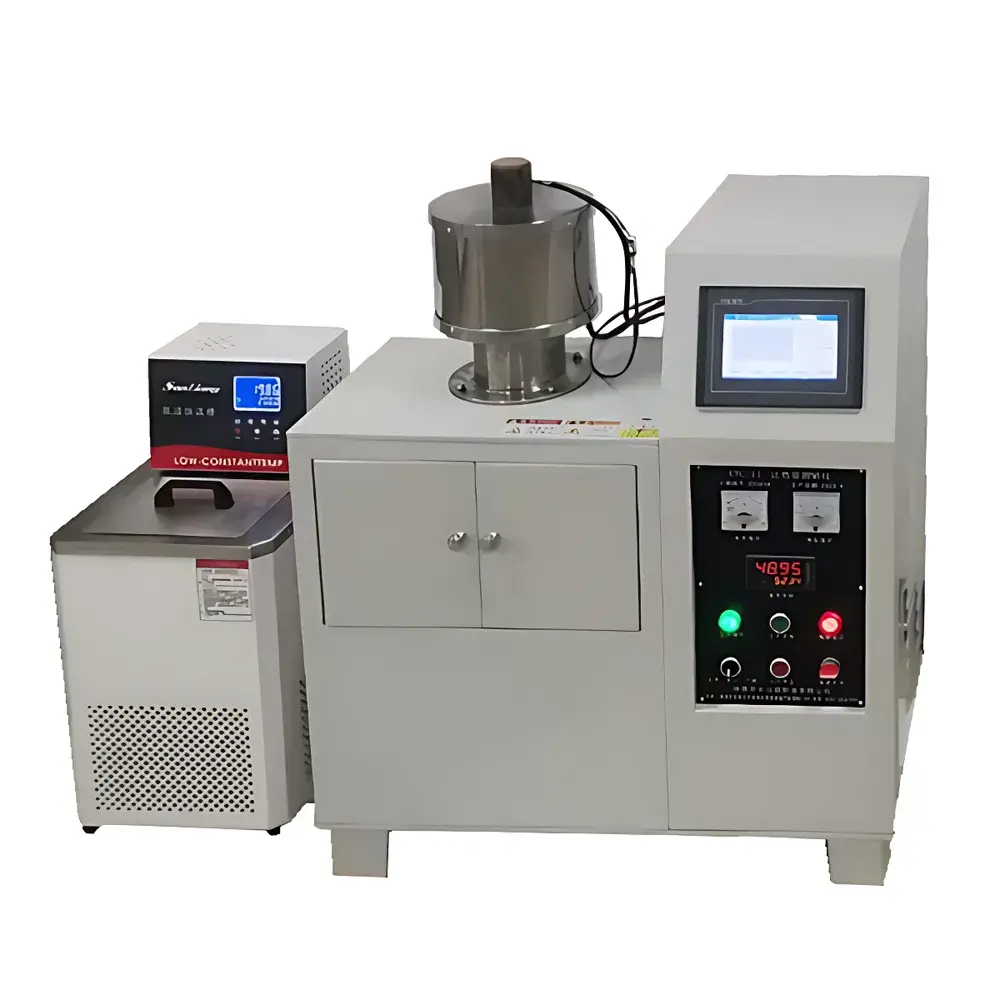
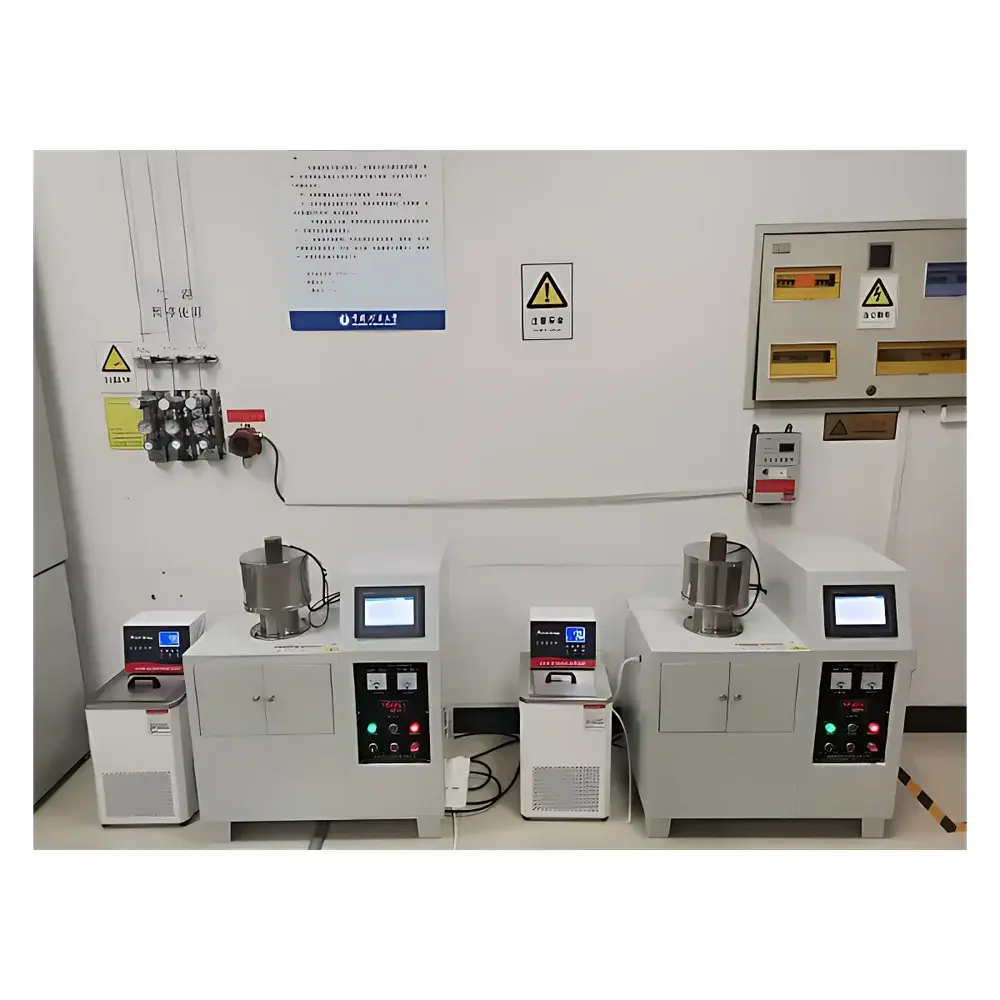
ZHENHUAFENXI GHC-II-10 Medium-Temperature Specific Heat Capacity Tester
| Brand | ZHENHUAFENXI |
|---|---|
| Origin | Hunan, China |
| Model | GHC-II-10 |
| Temperature Range | 100–800 °C |
| Specific Heat Range | 0.05–5 kJ/(kg·K) |
| Accuracy | ≤1% ± 0.002 kJ/(kg·K) |
| Sample Dimensions | Ø16–Ø20 × 30–50 mm |
| Temperature Resolution | 0.001 °C |
| Calorimeter Heat Capacity | ~1500 J/K |
| Control Method | Intelligent PID with Programmable Ramp/Soak |
| Compliance | GJB 330A-2000, GJB 1715-93 |
| Power Supply | 220 V / 50 Hz, <2 kW |
| Software Environment | Windows 10/7/XP (Chinese GUI) |
| Interface | RS-232 or USB data acquisition |
Overview
The ZHENHUAFENXI GHC-II-10 Medium-Temperature Specific Heat Capacity Tester is a precision calorimetric system engineered for the accurate determination of specific heat capacity (cp) of solid materials within the 100 °C to 800 °C temperature range. It operates on the classical method of mixtures—a gravimetric and thermal equilibrium-based technique—where a pre-heated sample is rapidly transferred into a thermally isolated calorimeter of known heat capacity. The resulting transient temperature rise of the calorimeter and its surrounding medium is recorded with high temporal and thermal resolution. By applying energy conservation principles and correcting for heat losses, cp is calculated in accordance with standardized thermodynamic protocols defined in military specifications GJB 330A-2000 and GJB 1715-93. This approach ensures traceability, repeatability, and compatibility with materials science laboratories requiring ISO/IEC 17025-aligned validation procedures.
Key Features
- Programmable vertical tubular resistance furnace with intelligent PID temperature control, supporting multi-step heating ramps and stable isothermal holds at target temperatures
- High-stability calorimeter assembly with calibrated heat capacity of approximately 1500 J/K and thermal resolution of 0.001 °C
- Dual-channel high-precision temperature measurement system (sample + calorimeter bath), synchronized via real-time data acquisition
- Integrated constant-temperature water bath for calorimeter thermal stabilization, minimizing environmental drift during measurement cycles
- Automated sample drop mechanism (optional vacuum-compatible configuration available for oxidation-sensitive specimens such as Ti alloys, Ni-based superalloys, or reactive ceramics)
- Low-power consumption design (<2 kW) compliant with standard laboratory electrical infrastructure (220 V / 50 Hz)
Sample Compatibility & Compliance
The GHC-II-10 accepts cylindrical solid specimens measuring Ø16–Ø20 mm in diameter and 30–50 mm in length—dimensions optimized to ensure uniform heating, minimal axial thermal gradients, and reproducible mass-to-surface-area ratios. Compatible material classes include metals and alloys (e.g., stainless steels, aluminum composites), refractory oxides (Al2O3, ZrO2), technical ceramics, and polymer-derived ceramics. For air-sensitive samples, optional vacuum transfer chamber integration enables inert-atmosphere or low-pressure handling prior to calorimetric immersion. The system meets the metrological requirements of Chinese military standards GJB 330A-2000 (test methods for thermophysical properties of solids) and GJB 1715-93 (calorimetric instrumentation verification), supporting audit-ready documentation for GLP and GMP environments where thermophysical property validation is required for qualification testing.
Software & Data Management
The instrument is operated via dedicated Windows-based software compatible with Windows 10, 7, and XP platforms. The interface provides real-time visualization of temperature transients, manual or automated test sequencing, and built-in calculation modules for cp derivation using corrected adiabatic mixing equations. All raw sensor data—including time-stamped thermocouple outputs, furnace setpoints, and calorimeter bath response—are logged in ASCII-compatible format for third-party analysis (e.g., MATLAB, Python, or Excel). Reports generated include test parameters, calibration certificates, uncertainty budgets (per GUM guidelines), and exportable PDF/CSV outputs suitable for regulatory submission. While the native GUI is localized in Chinese, the underlying data structure and metadata tags conform to international interchange conventions (SI units, ISO 8601 timestamps), facilitating integration into multilingual LIMS or ELN platforms.
Applications
This system serves core functions in academic research, national metrology institutes, and industrial R&D centers focused on thermal management, lightweight structural design, and high-temperature material qualification. Typical use cases include: characterization of phase-change behavior in shape-memory alloys; validation of cp inputs for finite-element thermal stress modeling; thermal stability assessment of aerospace-grade composites; development of thermal barrier coatings; and benchmarking of computational thermodynamics predictions (e.g., CALPHAD-derived heat capacity curves). Its robust mechanical architecture and repeatable thermal transfer protocol make it particularly suited for inter-laboratory round-robin studies where inter-operator variability must be minimized.
FAQ
What temperature calibration standards are supported?
The system supports NIST-traceable Pt100 or Type K thermocouples, with optional factory calibration against reference standards per ISO/IEC 17025 requirements.
Can the system be validated for ISO 17025 accreditation?
Yes—full uncertainty analysis documentation, calibration records, and procedural SOPs are provided to support laboratory accreditation processes.
Is vacuum operation standard or optional?
Vacuum transfer capability is an optional add-on module; base configuration operates under ambient atmosphere.
How is heat loss correction implemented?
Correction algorithms apply both Newtonian cooling models and numerical integration of baseline drift, based on pre-test and post-test calorimeter equilibration phases.
What maintenance intervals are recommended?
Furnace element inspection every 500 operational hours; calorimeter thermal seal integrity check quarterly; annual recalibration of temperature sensors and data acquisition channels.



