
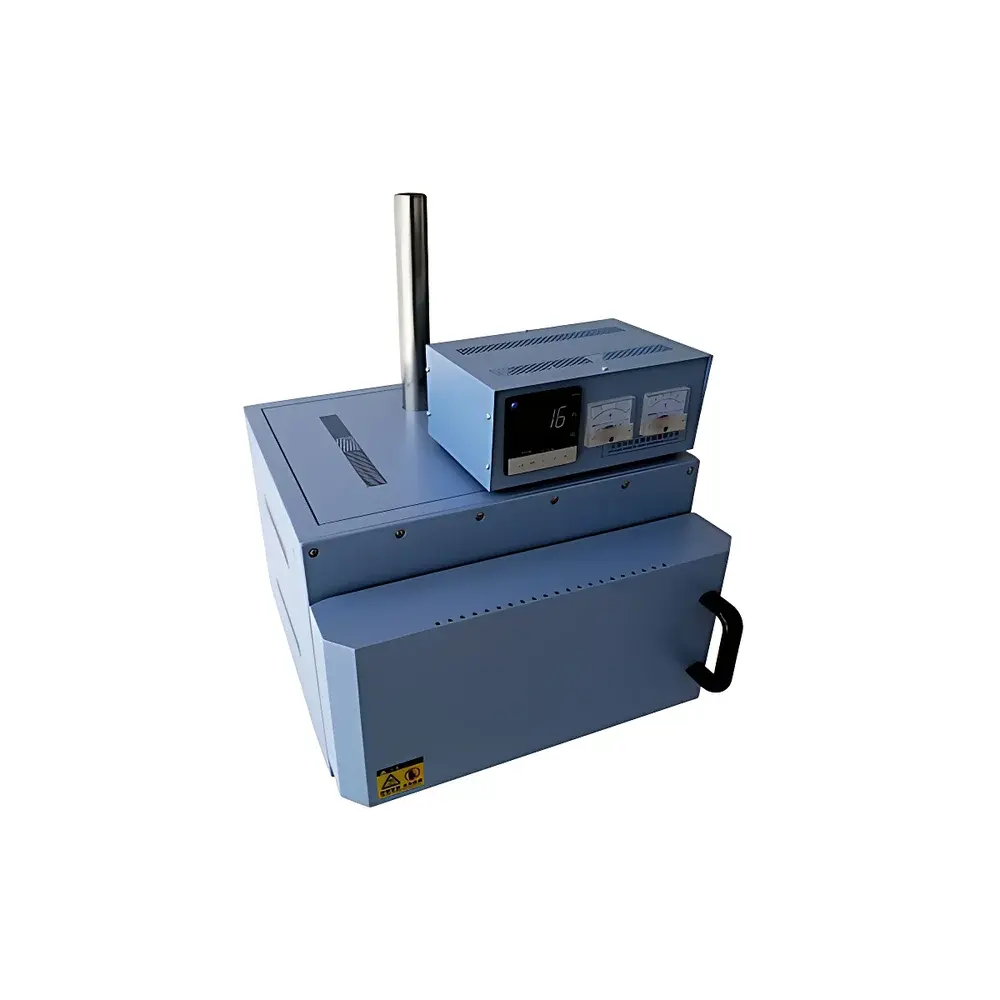
Zhongke Aobo TL-3012 Ceramic Fiber High-Temperature Muffle Furnace
| Brand | Zhongke Aobo |
|---|---|
| Origin | Beijing, China |
| Model | TL-3012 |
| Instrument Type | Box-Type Muffle Furnace |
| Max Temperature | 1200 °C |
| Temperature Control Accuracy | ±1 °C |
| Max Power | 7.5 kW |
| Heating Rate (to Max Temp) | 50 °C/min |
| Heating Method | Resistance Wire |
| Internal Chamber Dimensions (W×D×H) | 400×300×250 mm |
| Chamber Volume | 30 L |
Overview
The Zhongke Aobo TL-3012 Ceramic Fiber High-Temperature Muffle Furnace is a precision-engineered laboratory box furnace designed for controlled thermal processing up to 1200 °C. Built on the principle of resistive heating with embedded high-stability resistance wire elements, it delivers uniform temperature distribution across its 30 L ceramic fiber-insulated chamber. Unlike traditional refractory brick furnaces, the TL-3012 employs low-density, high-purity alumina-silica ceramic fiber insulation—offering exceptional thermal efficiency, rapid thermal response, and minimal heat loss. Its muffle configuration isolates samples from direct contact with heating elements and combustion byproducts, ensuring contamination-free thermal treatment essential for analytical ashing, calcination, heat treatment, and material conditioning in regulated environments.
Key Features
- Advanced Thermal Architecture: Dual-side mounted resistance wire heating elements provide symmetrical heat input and improved temperature uniformity (±5 °C within working zone at 1200 °C), while enabling straightforward element replacement without disassembling the furnace shell.
- Ceramic Fiber Insulation: 120–140 mm thick high-purity (>96% Al₂O₃) ceramic fiber lining reduces thermal mass, enabling ramp rates up to 50 °C/min and cutting energy consumption by ~40% versus conventional brick-lined furnaces of equivalent capacity.
- Enhanced Safety & Ergonomics: Split-body design separates furnace chamber from intelligent controller unit, minimizing operator exposure to radiant heat. Side-hinged door with high-temperature gasket ensures positive sealing and safe access during operation.
- Precision Digital Control: Microprocessor-based PID controller with multi-segment programmable ramp-soak profiles, real-time digital display, and adjustable output modulation (0–100% power). Temperature setpoint resolution: 0.1 °C; control stability: ±1 °C over 8-hour dwell at 1200 °C.
- Robust Protection Systems: Integrated over-temperature cut-off (independent of main controller), door-open safety interlock, grounding fault detection, and thermal fuse protection comply with IEC 61000-6-2/6-4 EMC immunity standards.
- Modular Ventilation Interface: Standard rear-mounted exhaust port (Φ30 mm) supports passive fume extraction or optional inert gas purging (N₂, Ar) via user-supplied flow regulators—critical for oxidation-sensitive ashing or reducing atmosphere protocols.
Sample Compatibility & Compliance
The TL-3012 accommodates crucibles (alumina, platinum, quartz, silicon carbide), ceramic boats, and metal sample holders up to 100 mm height × 280 mm width × 230 mm depth. Its inert muffle environment meets ASTM E1529 (Standard Test Methods for Determining Ignition Resistance of Building Materials), ISO 1171 (Ash Content Determination), and USP (Loss on Ignition). For GLP/GMP applications, audit-ready operation logs (via optional RS485/Modbus RTU interface) support 21 CFR Part 11-compliant electronic records when paired with validated data acquisition software.
Software & Data Management
While the standard TL-3012 operates via standalone controller, optional communication modules enable integration into centralized lab management systems. The RS485 interface supports Modbus RTU protocol for remote setpoint adjustment, real-time temperature streaming, and alarm status polling. When used with third-party SCADA or LIMS platforms (e.g., LabVantage, Thermo Fisher SampleManager), the furnace contributes traceable thermal event metadata—including ramp rate, soak duration, peak temperature deviation, and fault codes—to electronic batch records.
Applications
- Coal & Cement Analysis: Ash content (ASTM D3174), volatile matter (ASTM D3175), sulfur determination (ASTM D3177), and ash fusion temperature testing per ASTM D1857.
- Environmental & Regulatory Testing: Total suspended solids (TSS) residue ignition (EPA Method 160.2), heavy metal recovery from digested sludge (EPA 3050B), and PCB ashing prior to GC-MS analysis.
- Pharmaceutical QC: Residue on ignition (USP ), catalyst removal from active pharmaceutical ingredients (APIs), and excipient thermal stability screening.
- Materials Science: Pre-sintering of ceramic green bodies, binder burnout in powder metallurgy, and thermal gravimetric pre-conditioning of battery cathode materials (e.g., NMC, LFP).
- Food & Agriculture: Crude fiber determination (AOAC 978.10), mineral content analysis (AOAC 942.05), and feedstuff proximate analysis.
FAQ
What is the maximum recommended continuous operating temperature?
The TL-3012 is rated for continuous operation at 1200 °C. Short-term excursions to 1220 °C are permissible (<30 min), but sustained use above rated temperature accelerates insulation degradation and thermocouple drift.
Can this furnace be used under inert or reducing atmospheres?
Yes—when equipped with optional gas inlet/outlet fittings and flow control valves, the TL-3012 supports nitrogen, argon, or forming gas (5% H₂/95% N₂) purging. Ensure chamber pressure remains slightly positive to prevent air ingress.
Is the furnace compatible with GLP-compliant documentation requirements?
With the optional RS485 module and validated software, full thermal cycle logging—including timestamps, setpoints, actual temperatures, and system alarms—can be exported in CSV or PDF format to meet ALCOA+ data integrity principles.
How often should the thermocouple be calibrated?
Annual calibration against a NIST-traceable reference source is recommended. In high-frequency use (>5 cycles/day), quarterly verification using a portable dry-block calibrator is advised.
What maintenance is required for the ceramic fiber insulation?
Ceramic fiber requires no scheduled replacement under normal use. Avoid mechanical impact, moisture exposure, or repeated thermal shock (e.g., opening door below 200 °C). Inspect gasket integrity annually and replace if compressed or cracked.



