
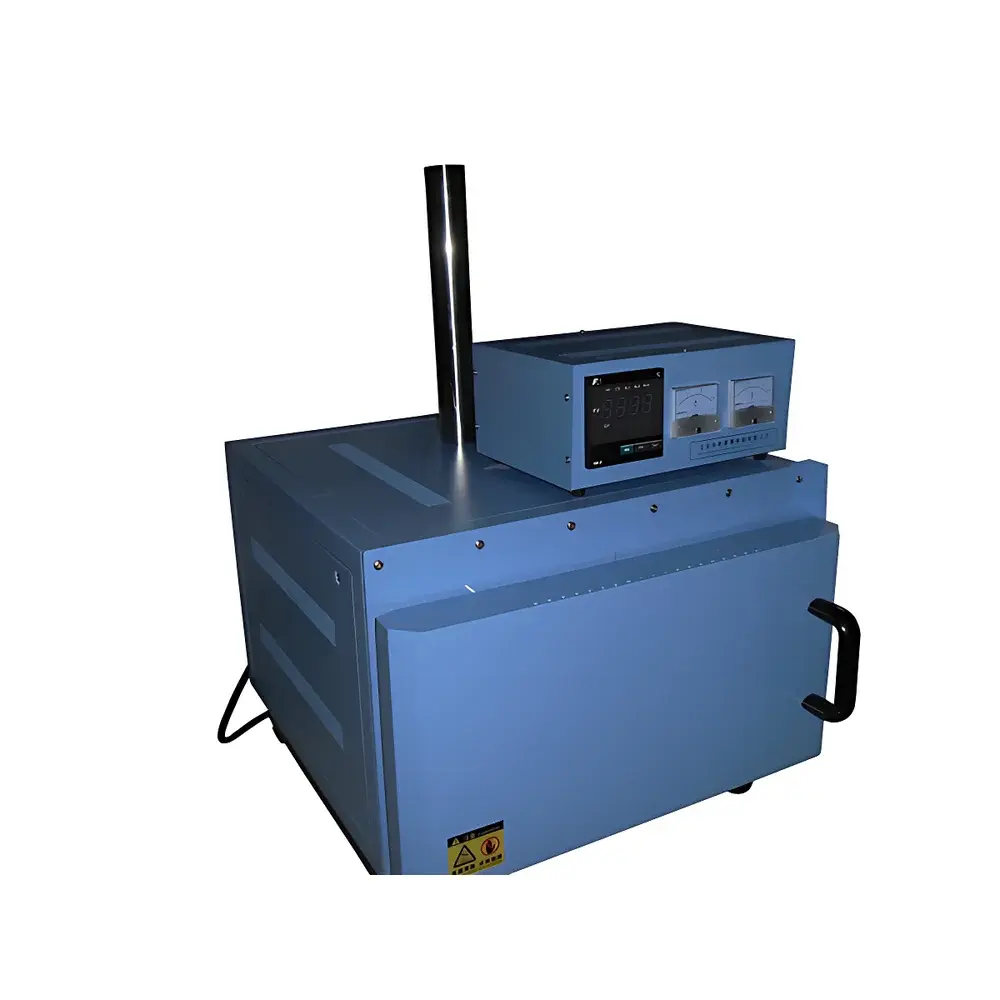
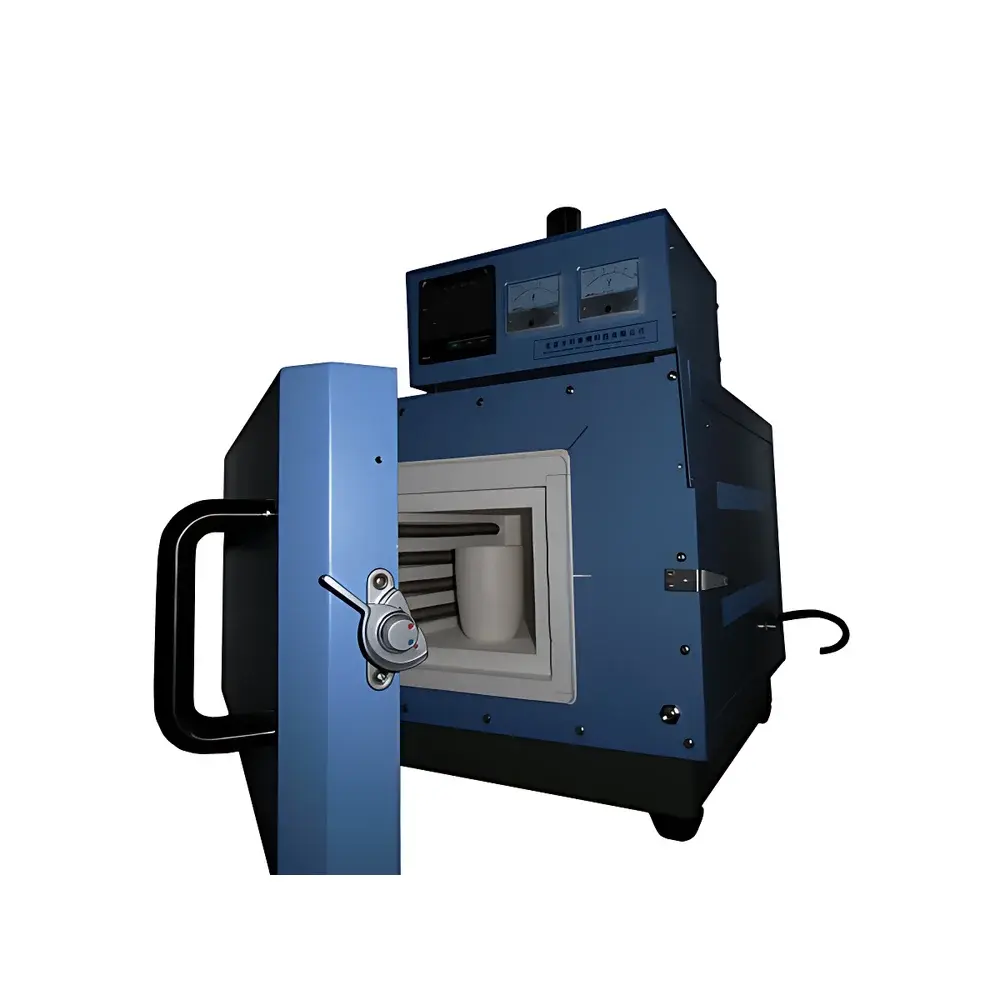
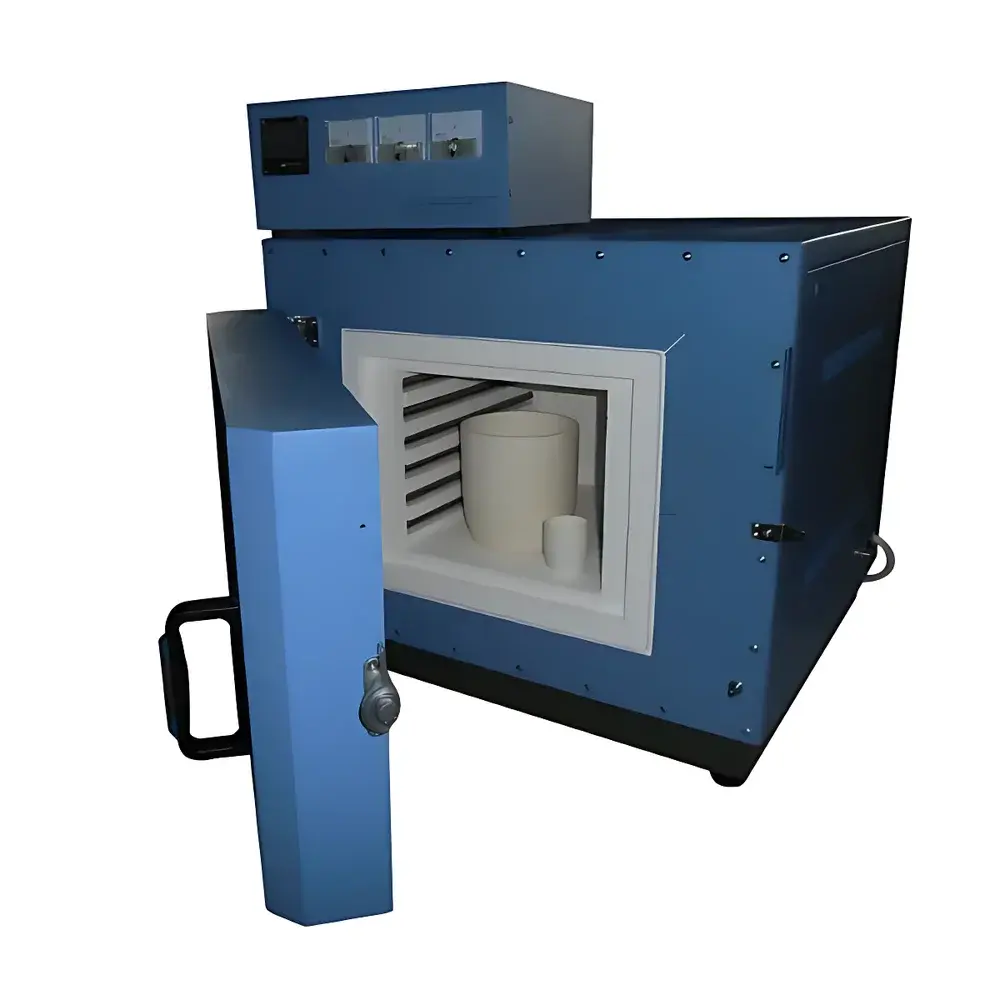
Zhongke Aobo TL0614 High-Temperature Box-Type Muffle Furnace
| Brand | Zhongke Aobo |
|---|---|
| Model | TL0614 |
| Type | Box-Type Muffle Furnace |
| Max Temperature | 1400 °C |
| Temperature Uniformity | ±1 °C |
| Heating Element | Silicon Carbide Rods (SiC) |
| Chamber Dimensions | 250 × 200 × 120 mm (W × D × H) |
| Net Volume | 6 L |
| Power Rating | 4 kW |
| Supply Voltage | AC 220 V, 16 A |
| Heating Rate | ≤50 min (100 → 1400 °C) |
| Control System | PID Intelligent Programmable Controller (8–30 Segments) |
| Thermocouple Type | Type S (Platinum/Rhodium) |
| Insulation | Ceramic Fiber Module (Low Thermal Mass) |
| Safety Features | Automatic Power Cut-off on Door Opening |
| Compliance | Designed for GLP-compliant sample ashing, thermal treatment, and calcination per ASTM E1529, ISO 1171, USP <281>, and EPA Method 3010A |
Overview
The Zhongke Aobo TL0614 is a high-temperature box-type muffle furnace engineered for precision thermal processing in regulated laboratory and industrial QA/QC environments. Operating up to 1400 °C with silicon carbide (SiC) heating elements and Type S platinum/rhodium thermocouples, it delivers stable, repeatable temperature profiles essential for gravimetric analysis, ash content determination, and high-fidelity thermal decomposition studies. Its ceramic fiber insulation architecture minimizes thermal inertia and heat loss—enabling rapid ramp rates (≤50 minutes from 100 °C to 1400 °C) while maintaining external surface temperatures below 60 °C under continuous operation at maximum setpoint. The furnace conforms to the functional requirements of standardized thermal protocols used in coal analysis (ASTM D3174, D3175), pharmaceutical residual solvents (USP ), environmental solid waste testing (EPA SW-846 Methods 3010A, 3050B), and cement clinker phase evaluation (ISO 29581-1).
Key Features
- High-efficiency SiC heating rods with oxidation-resistant coating—rated for continuous operation at 1300 °C and peak service at 1400 °C, offering >3× extended lifetime versus conventional resistance wire.
- Ceramic fiber chamber lining (density: ~220 kg/m³) providing thermal conductivity <0.15 W/(m·K) at 1000 °C—reducing standby energy consumption by ~40% compared to brick-lined furnaces.
- PID-based intelligent programmable controller with 8–30 user-defined segments, digital setpoint input, and real-time deviation compensation—ensuring ±1 °C thermal stability across full load and ambient conditions.
- Side-hinged, double-layer insulated door with integrated safety interlock: power automatically de-energizes upon opening to prevent operator exposure and thermal shock to samples.
- Modular construction with physically separated furnace body and control unit—facilitating field maintenance, component replacement (e.g., thermocouples, heating rods), and electromagnetic interference isolation.
- Standard rear-mounted vent port (M12 thread) configurable for passive exhaust or active gas purging (N₂, Ar) to support inert-atmosphere calcination and reduction studies.
Sample Compatibility & Compliance
The TL0614 accommodates crucibles up to Ø80 mm × 60 mm height within its 250 × 200 × 120 mm working chamber, supporting standard porcelain, alumina, and quartz ware. It is routinely deployed in applications requiring adherence to international standards including: ASTM E1529 (fire-test-response of materials), ISO 1171 (ash content in coal and coke), USP (residue on ignition), and EN 15407 (determination of ash in animal feeding stuffs). All electrical design complies with IEC 61010-1:2010 for laboratory equipment safety; temperature validation procedures align with IQ/OQ documentation frameworks required under FDA 21 CFR Part 11 and EU Annex 11 for GxP-regulated labs.
Software & Data Management
While the base model features a standalone digital controller with local data logging (temperature/time stamp, segment completion status), optional RS485 Modbus RTU interface enables integration into centralized LIMS or SCADA systems. When paired with compliant third-party software (e.g., WinWedge, LabVIEW DAQmx), users may generate audit-trail-enabled reports satisfying ALCOA+ principles—including attributable, legible, contemporaneous, original, and accurate records. Firmware supports configurable alarm thresholds (deviation, over-temperature, door-open), event-triggered data capture, and password-protected parameter editing to meet GLP/GMP configuration control requirements.
Applications
- Coal and biomass analysis: moisture, volatile matter, fixed carbon, ash fusion temperature (AFT), and elemental ash composition (per ASTM D3172–D3176).
- Pharmaceutical QC: residue on ignition (USP ), loss on drying (USP ), and catalyst recovery from API synthesis intermediates.
- Environmental testing: total suspended solids (TSS) ignition loss (EPA 160.2), heavy metal stabilization in contaminated soils (EPA Method 3050B), and filter ash correction in PM2.5 monitoring.
- Materials science: pre-sintering of ceramic powders, binder burnout in investment casting shells, and thermal aging of polymer composites.
- Academic research: kinetic studies of solid-state reactions, TGA correlation validation, and calibration of differential scanning calorimeters (DSC).
FAQ
What is the maximum recommended continuous operating temperature?
The TL0614 is rated for continuous use at 1300 °C; 1400 °C is specified as short-term peak capability (≤2 hours per cycle) to preserve heating element longevity.
Can this furnace be used under inert or reducing atmospheres?
Yes—via optional gas inlet/outlet fittings (M12 or 1/4″ NPT) and compatible mass flow controllers; recommended purge flow: 0.5–2.0 L/min for N₂ or Ar.
Is temperature uniformity validated across the chamber volume?
Per factory verification, radial and axial uniformity is ±5 °C at 1200 °C (measured at 9 points using calibrated Type S probes); users are advised to perform periodic mapping per ISO/IEC 17025.
Does the controller support data export for regulatory submission?
The embedded controller stores 30+ cycles locally; for electronic records compliant with 21 CFR Part 11, integration with validated external software and digital signature workflows is required.
What maintenance intervals are recommended for SiC rods and insulation?
Inspect heating rods visually every 200 operational hours; replace if cracked or exhibiting >15% resistance increase. Ceramic fiber integrity should be verified annually—look for compression, dusting, or visible hot spots during operation.



