
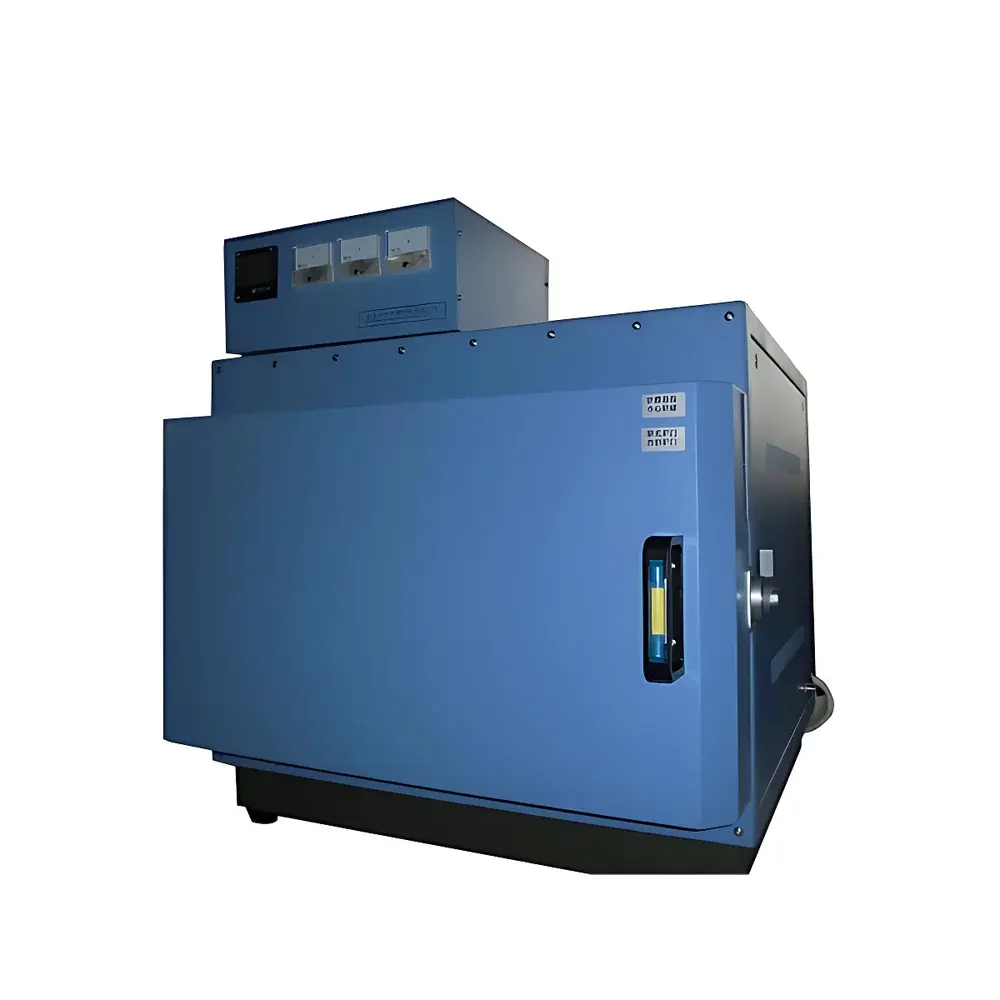
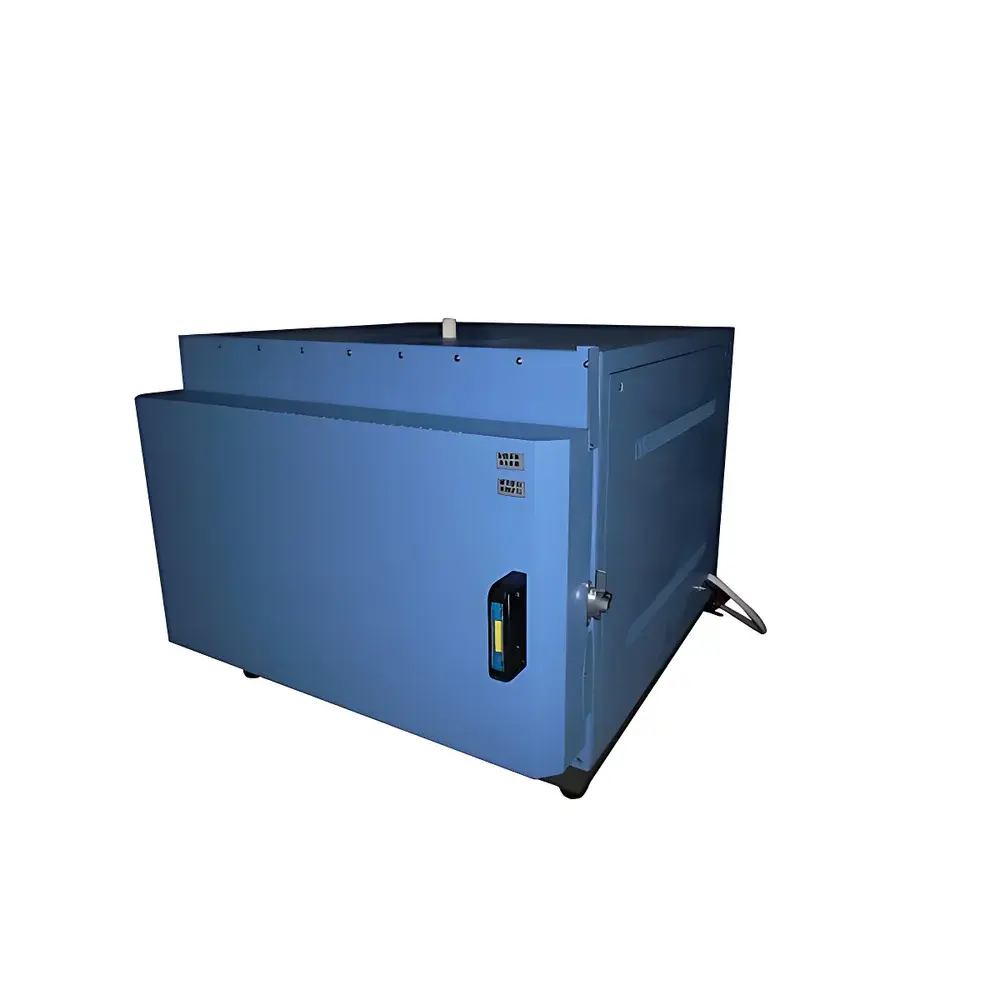
Zhongke Aobo TL2014 High-Temperature Box Furnace
| Brand | Zhongke Aobo |
|---|---|
| Origin | Beijing, China |
| Model | TL2014 |
| Furnace Type | Box-type Muffle Furnace |
| Max Operating Temperature | 1400 °C |
| Temperature Uniformity | ±1 °C |
| Heating Element | Silicon Carbide (SiC) Rods |
| Internal Chamber Dimensions | 400 × 250 × 200 mm (W×D×H) |
| Effective Volume | 30 L |
| Rated Power | 9 kW |
| Heating Rate | ≤80 min (100 °C to 1400 °C) |
| Control System | PID Digital Temperature Controller with Programmable Ramp/Soak Profiles |
| Power Supply | 3-Phase 380 V AC, 16 A |
| Thermal Insulation | High-Density Ceramic Fiber |
| Thermocouple Type | Type S (Platinum/Rhodium) |
| Safety Features | Automatic Power Cut-off on Door Opening, Surface Temperature <60 °C at 1000 °C Hold |
Overview
The Zhongke Aobo TL2014 High-Temperature Box Furnace is a precision-engineered laboratory muffle furnace designed for demanding thermal processing applications requiring stable, repeatable operation up to 1400 °C. It operates on the principle of resistive heating via silicon carbide (SiC) rod elements, which provide superior oxidation resistance and extended service life in air-atmosphere environments. The furnace chamber is fully insulated with high-purity, low-conductivity ceramic fiber modules—eliminating thermal bridging and enabling rapid heating while minimizing standby energy loss. Its robust steel housing, side-opening door design, and modular controller architecture ensure long-term reliability in QC labs, academic research facilities, and industrial R&D settings where regulatory compliance, process reproducibility, and operator safety are non-negotiable.
Key Features
- High-efficiency SiC heating elements rated for continuous operation at 1300 °C ambient, delivering stable thermal output with minimal drift over time.
- Ceramic fiber insulation reduces thermal mass and improves heating rate: achieves 1400 °C from ambient in ≤80 minutes—approximately 2× faster than conventional refractory-brick furnaces of equivalent volume.
- PID-based digital temperature controller (TL20/30/60 series) with programmable multi-step profiles (up to 30 segments), ramp/soak functionality, and real-time deviation monitoring.
- Type S thermocouples (Pt–10% Rh / Pt) integrated into the hot zone for accurate, NIST-traceable temperature measurement across the full operating range.
- Automatic power interlock disables heating when the door is opened—meeting IEC 61000-6-4 EMC and EN 61000-3-2 harmonic emission requirements for lab equipment.
- Front-accessible heating element mounting allows field replacement without disassembling the furnace shell or insulation lining.
- Low-surface-temperature design: external casing remains below 60 °C during prolonged 1000 °C operation—reducing burn risk and easing integration into shared lab spaces.
Sample Compatibility & Compliance
The TL2014 supports a wide range of sample forms—including crucibles (alumina, quartz, platinum), powders, granules, and small metallic components—within its 30 L working chamber. Its muffle configuration isolates samples from direct contact with heating elements and combustion byproducts, making it suitable for ashing, calcination, heat treatment, and pre-conditioning per ASTM E1726 (Standard Test Methods for Determination of Ash in Coal and Coke), ISO 562 (Coal and Coke — Determination of Volatile Matter), and USP (Residue on Ignition). Optional gas inlet/outlet ports (configurable upon order) permit inert-atmosphere processing (N₂, Ar) or controlled oxidation studies. The furnace meets general electrical safety standards per IEC 61010-1 and is compatible with GLP/GMP documentation workflows when paired with validated data logging systems.
Software & Data Management
While the TL2014 operates via standalone front-panel control, its analog/digital I/O interface supports integration with third-party SCADA or LIMS platforms via 4–20 mA or RS485 Modbus RTU protocols. The controller logs timestamped setpoint, actual temperature, and alarm status internally (non-volatile memory, 10,000-cycle retention). For audit-ready operation under FDA 21 CFR Part 11, users may connect an external compliant data logger with electronic signature capability. All temperature profiles can be exported as CSV for traceability, and calibration certificates (including as-found/as-left data) are provided with each unit shipment.
Applications
- Coal and biomass analysis: moisture, volatile matter, fixed carbon, and ash content determination per ASTM D3172/D3173.
- Pharmaceutical quality control: residue-on-ignition testing of excipients and active pharmaceutical ingredients (APIs).
- Environmental testing: gravimetric analysis of total suspended solids (TSS), total dissolved solids (TDS), and heavy metal ash residues in wastewater sludge.
- Materials science: sintering of ceramic precursors, annealing of thin-film substrates, and thermal stability evaluation of catalysts and battery electrode materials.
- Geochemical laboratories: preparation of geological samples for XRF and ICP-MS analysis via open-vessel ashing.
FAQ
What is the maximum recommended continuous operating temperature?
The TL2014 is rated for continuous operation at 1300 °C; short-term excursions to 1400 °C are permissible but reduce element lifetime.
Can this furnace be used under inert or reducing atmospheres?
Yes—optional gas inlet and exhaust ports (¼″ NPT) can be installed to support N₂, Ar, or forming gas purging; however, SiC elements are not recommended for sustained use under strongly reducing conditions.
Is the temperature controller compliant with 21 CFR Part 11?
The embedded controller does not include electronic signatures or audit-trail functionality; full Part 11 compliance requires integration with a validated external data acquisition system.
How often should thermocouple calibration be performed?
Annual calibration against a reference standard is recommended for GxP environments; more frequent verification (e.g., quarterly) is advised if used for critical release testing.
What maintenance is required for the heating elements?
SiC rods require no routine maintenance but should be visually inspected for cracking or warping before each high-temperature run; replacement is straightforward using the front-access mounting system.



