
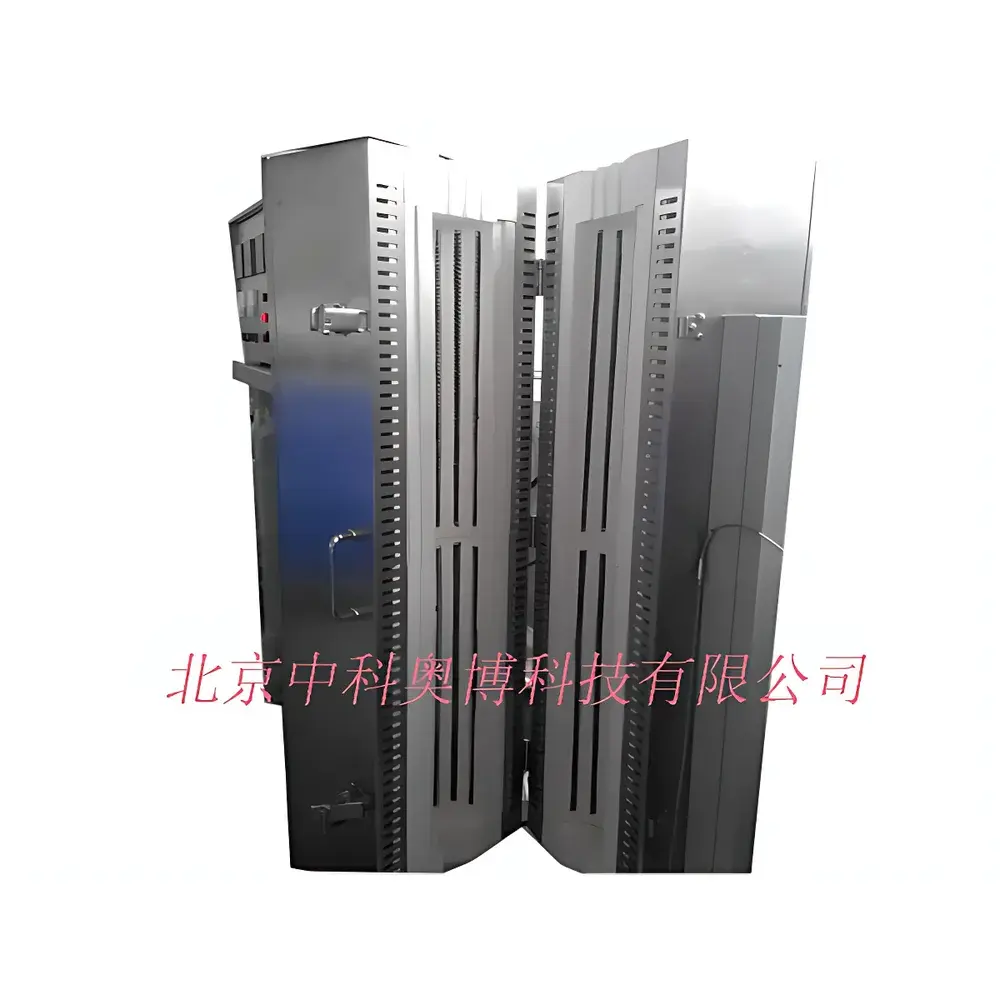
Zhongke Aobo Vertical & Custom-Shaped High-Temperature Muffle Furnace
| Brand | Zhongke Aobo |
|---|---|
| Origin | Beijing, China |
| Model | Custom |
| Voltage/Frequency | 220V/16A (6–9 L) |
| Max Temperature | 1000 °C / 1700 °C |
| Heating Rate | ≤30 min (100 → 1000 °C) |
| Chamber Volume | 6–60 L |
| External Surface Temp at 1000 °C Hold | ≤55 °C |
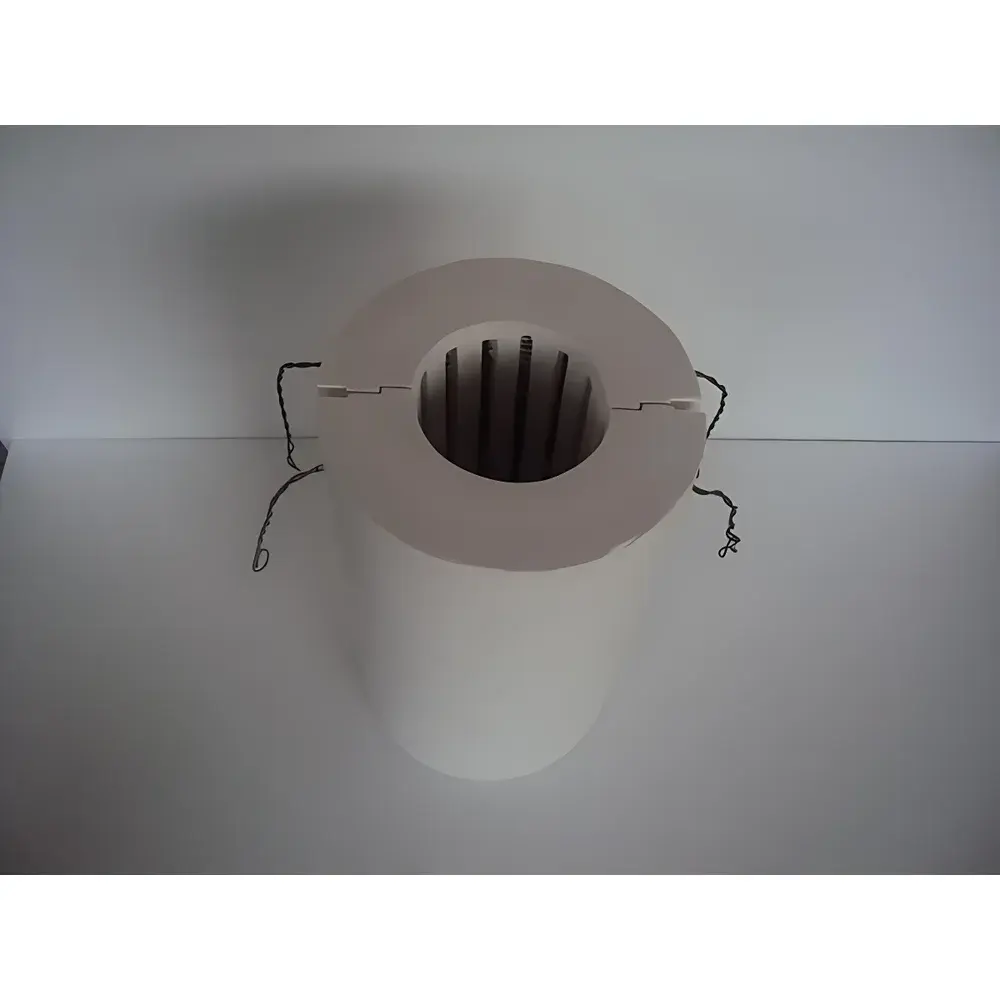
| Insulation | Ceramic Fiber Module |
| Heating Element | Dual-Side Mounted High-Temp Alloy or SiC Rods (Imported) |
| Control System | Digital PID Controller with Setpoint Programming & Ramp/Soak Profiles |
| Safety | Over-Temperature Protection, Door-Interlocked Power Cut-off, Ground Fault Detection |
Overview
The Zhongke Aobo Vertical & Custom-Shaped High-Temperature Muffle Furnace is engineered for precise thermal processing in research laboratories, quality control facilities, and industrial R&D environments. Designed around a vertical chamber architecture with optional custom geometries—including cylindrical, rectangular, or tapered configurations—the furnace supports applications requiring uniform heat distribution, rapid thermal cycling, and strict temperature stability. Its core operating principle relies on resistive heating via high-performance alloy or silicon carbide (SiC) elements, coupled with low-thermal-conductivity ceramic fiber insulation to minimize radial heat loss and maximize energy efficiency. The furnace complies with fundamental thermal safety standards applicable to Class II laboratory ovens (IEC 61010-1), and its structural design enables integration into GLP-compliant workflows where traceable temperature profiles and repeatable thermal exposure are required.
Key Features
- Vertical orientation with side-hinged door—optimized for ergonomic sample loading and reduced floor footprint in constrained lab spaces.
- Dual-side mounted heating elements ensure symmetrical heat flux across the chamber, improving temperature uniformity (±5 °C at 1000 °C, per ASTM E220 calibration practice).
- Ceramic fiber insulation (density: ~128 kg/m³) reduces thermal mass, enabling ramp rates up to 20 °C/min and cutting energy consumption by approximately 40% compared to traditional brick-lined muffle furnaces.
- Modular controller unit—physically separated from the furnace body—supports remote mounting, simplifies maintenance, and isolates sensitive electronics from ambient thermal drift.
- Digital PID temperature controller with programmable ramp/soak sequences, real-time data logging (optional USB/RS485 interface), and adjustable output power limiting.
- Integrated safety architecture includes over-temperature cutoff (settable independently of process setpoint), door interlock switch, grounded chassis, and automatic reset inhibition after fault condition clearance.
- Standard exhaust port (M12 thread) allows connection to fume hoods or inert gas purge systems; optional gas inlet/outlet ports support controlled-atmosphere operations (N₂, Ar, air).
Sample Compatibility & Compliance
This furnace accommodates crucibles, porcelain boats, quartz trays, and stainless-steel sample holders up to 60 L internal volume. It is routinely deployed in ASTM D3172 (moisture/ash/volatile matter in coal), ASTM C114 (cement chemical analysis), USP & EP methods for residual solvent determination, and ISO 1171 (ash content in organic materials). The ceramic fiber chamber is chemically inert to most non-halogenated organics and common mineral acids under non-oxidizing conditions. For regulatory environments, the controller supports audit-trail-capable operation when paired with external data acquisition software compliant with FDA 21 CFR Part 11 requirements (user authentication, electronic signatures, immutable logs).
Software & Data Management
The embedded controller provides local digital display and manual setpoint adjustment. Optional firmware upgrades enable RS485 Modbus RTU communication for integration into LabVIEW, SCADA, or LIMS platforms. Logged temperature data (time-stamped, ±0.5 °C resolution) can be exported as CSV files for post-run analysis. No proprietary cloud service or vendor-hosted platform is required—data remains fully under user control. Firmware updates are delivered via USB flash drive and validated using SHA-256 checksums to ensure integrity.
Applications
- Thermal gravimetric pre-treatment in coal and biomass characterization (moisture, ash, volatile matter, fixed carbon).
- Ashing of biological tissues, pharmaceutical excipients, and environmental filters prior to ICP-OES or AAS analysis.
- Heat treatment of small metallic components, sintering of ceramic precursors, and binder burnout in investment casting.
- Calibration of thermocouples and reference materials per ISO/IEC 17025-accredited procedures.
- Pre-drying of reagents, glassware, and filtration membranes in analytical chemistry workflows.
- Controlled pyrolysis experiments in material science labs investigating char yield and decomposition kinetics.
FAQ
What maximum operating temperature options are available?
Standard configurations support 1000 °C and 1700 °C maximum setpoints. Higher-temperature variants (up to 1800 °C) are available upon request with SiC heating elements and reinforced alumina fiber linings.
Can this furnace operate under inert or reducing atmospheres?
Yes—standard exhaust and optional gas inlet ports permit continuous purge with N₂, Ar, or forming gas. Sealed chamber versions with flanged quartz or alumina tube inserts are offered for vacuum or low-pressure applications.
Is third-party calibration certification included?
Factory calibration is performed using NIST-traceable reference thermocouples. Full calibration certificates (including as-found/as-left data per ISO/IEC 17025) are available as an add-on service.
What maintenance intervals are recommended for heating elements and insulation?
Under typical intermittent use (≤4 hrs/day at ≤1000 °C), heating elements require inspection every 12 months. Ceramic fiber modules retain structural integrity beyond 5,000 thermal cycles; replacement is only necessary if physical damage or excessive dust generation is observed.
Does the controller support multi-step temperature programs?
Yes—the standard PID controller supports up to 30 segments with independent ramp rates, dwell times, and hold temperatures. Program storage persists through power loss.



