
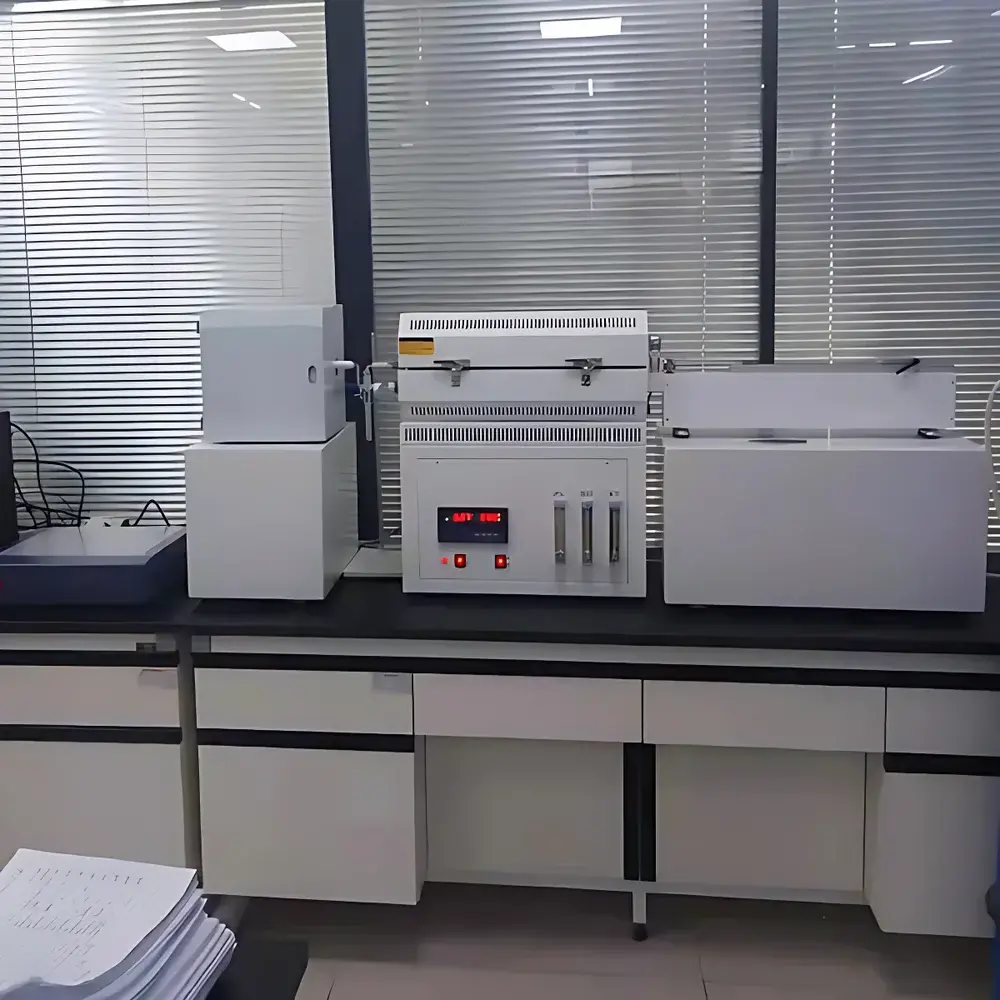
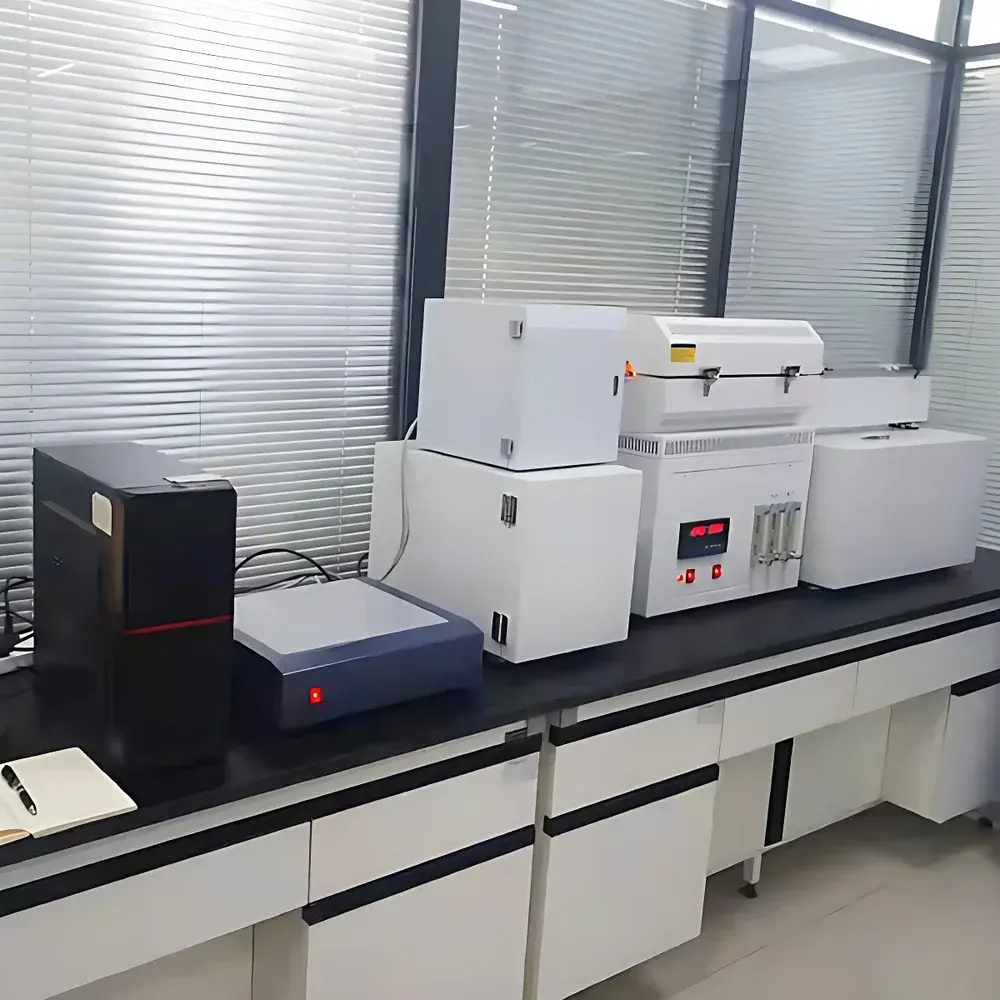
Zhuochi Microcoulometric AOX Analyzer Model AOX-WK-S
| Brand | Zhuochi |
|---|---|
| Origin | Zhejiang, China |
| Manufacturer Type | Authorized Distributor |
| Country of Origin | China |
| Model | AOX-WK-S |
| Price | USD 17,500 (FOB Zhejiang) |
| Measurement Principle | Combustion–Microcoulometric Titration |
| Combustion Temperature Range | 500 °C to 1000 °C, ±1% ±5 °C |
| Accuracy | <5% RSD |
| Repeatability | <5% RSD |
| Limit of Detection (LOD) | 0.1 µg Cl⁻ (as Cl) |
| Resolution | Not specified |
Overview
The Zhuochi Microcoulometric AOX Analyzer Model AOX-WK-S is a dedicated instrumental system engineered for the quantitative determination of Adsorbable Organic Halogens (AOX) in aqueous environmental matrices, fully compliant with China’s national standard HJ 1214–2021, “Water Quality—Determination of Adsorbable Organic Halogens (AOX)—Microcoulometric Method.” The instrument implements the combustion–microcoulometric titration principle: water samples are first passed through activated carbon columns to adsorb halogenated organic compounds; the loaded carbon is then combusted at controlled high temperature (500–1000 °C) in an oxygen-rich quartz furnace, converting all organically bound chlorine, bromine, and iodine into hydrogen halides (HX). These gaseous halides are swept into an absorption solution where they are quantified via microcoulometric titration—electrolytically generating silver ions (Ag⁺) to precipitate halide ions (X⁻) as AgX, with endpoint detection based on a dual-platinum electrode current reversal. This method delivers trace-level sensitivity and robustness for regulatory monitoring of chlorinated disinfection by-products, industrial effluents, pulp and paper discharges, and landfill leachates.
Key Features
- Dual-zone programmable combustion furnace with integrated gas flow and temperature control—ensures precise thermal decomposition across the full 500–1000 °C range with stability ≤±5 °C and accuracy ±1% of setpoint.
- Quartz combustion tube with optimized geometry and inert surface finish to minimize memory effects and catalytic interference during high-temperature halogen release.
- Automated sample introduction and ash removal module enabling sequential analysis of up to 12 adsorption cartridges without manual intervention.
- Dedicated microcoulometric detector featuring dual platinum working electrodes, low-noise electrometer circuitry, and real-time coulombic integration for direct charge measurement (µC) proportional to halogen mass.
- Integrated column adsorption station with calibrated flow controllers, pressure monitoring, and standardized activated carbon cartridges meeting HJ 1214–2021 specifications.
- Modular architecture supporting field-replaceable consumables—including combustion tubes, absorption cells, electrolyte reservoirs, and Ag-anode assemblies—designed for long-term operational continuity under routine laboratory use.
Sample Compatibility & Compliance
The AOX-WK-S analyzer accommodates liquid samples ranging from raw surface water and wastewater effluents to treated drinking water and industrial process streams. Sample volumes (typically 100–500 mL) are processed through standardized 100-mg activated carbon cartridges under controlled flow rates (10–60 mL/min), per HJ 1214–2021 Section 7.2. The system supports co-analysis of Cl, Br, and I without reconfiguration, though quantification is reported as total AOX expressed in µg Cl⁻/L (chlorine-equivalent). All hardware and procedural workflows align with ISO 9562:2022 (Water quality—Determination of adsorbable organic halogens (AOX)—Microcoulometric method) and serve as a technically equivalent alternative to EPA Method 1650. Data integrity meets GLP-aligned documentation requirements, including audit-trail-capable instrument logs and user-access-controlled method files.
Software & Data Management
The embedded firmware provides real-time display of combustion temperature, carrier gas flow, titration current, integrated charge (µC), and calculated AOX concentration. Raw coulombic data and calibration curves are exportable in CSV format for external validation or LIMS integration. While the base configuration does not include 21 CFR Part 11-compliant electronic signatures or role-based access control, optional firmware upgrades support audit trail generation, user authentication, and electronic record retention—facilitating alignment with GMP-regulated environmental testing laboratories. Calibration is performed using potassium chloride (KCl) standards traceable to NIM (National Institute of Metrology, China); linearity verification covers the 0.1–100 µg Cl⁻ range with r² ≥ 0.999.
Applications
- Regulatory compliance testing for municipal wastewater treatment plants subject to discharge permits referencing AOX limits.
- Monitoring of chlorinated organic load in effluents from chlor-alkali, pesticide synthesis, and pharmaceutical manufacturing facilities.
- Performance evaluation of advanced oxidation processes (AOPs) and activated carbon filtration systems in removing halogenated micropollutants.
- Research applications in environmental fate studies, including formation potential of trihalomethanes (THMs) and haloacetic acids (HAAs) during chlorination.
- Quality assurance of recycled process water in paper mills, where AOX serves as a key indicator of bleach plant efficiency.
FAQ
What sample types are suitable for AOX analysis using this system?
Surface water, groundwater, wastewater, treated effluents, and industrial discharges—provided suspended solids are removed by filtration (0.45 µm) prior to adsorption.
Does the system require external gas supplies?
Yes: high-purity oxygen (≥99.995%) for combustion and nitrogen (≥99.99%) for carrier and purge gas lines; regulators and filters must be installed upstream.
Can the instrument quantify individual halogens (Cl, Br, I) separately?
No—the microcoulometric detector responds to total halide ion concentration; speciation requires complementary techniques such as IC-MS or GC-ECD.
Is method validation support included with the system?
Comprehensive application notes, HJ 1214–2021 implementation guidance, and blank/spike recovery protocols are supplied; third-party validation services are available upon request.
What maintenance intervals are recommended for routine operation?
Daily: electrode cleaning and electrolyte replenishment; monthly: combustion tube inspection and quartzware annealing; annually: full system performance verification using certified reference materials.
Related Products







