
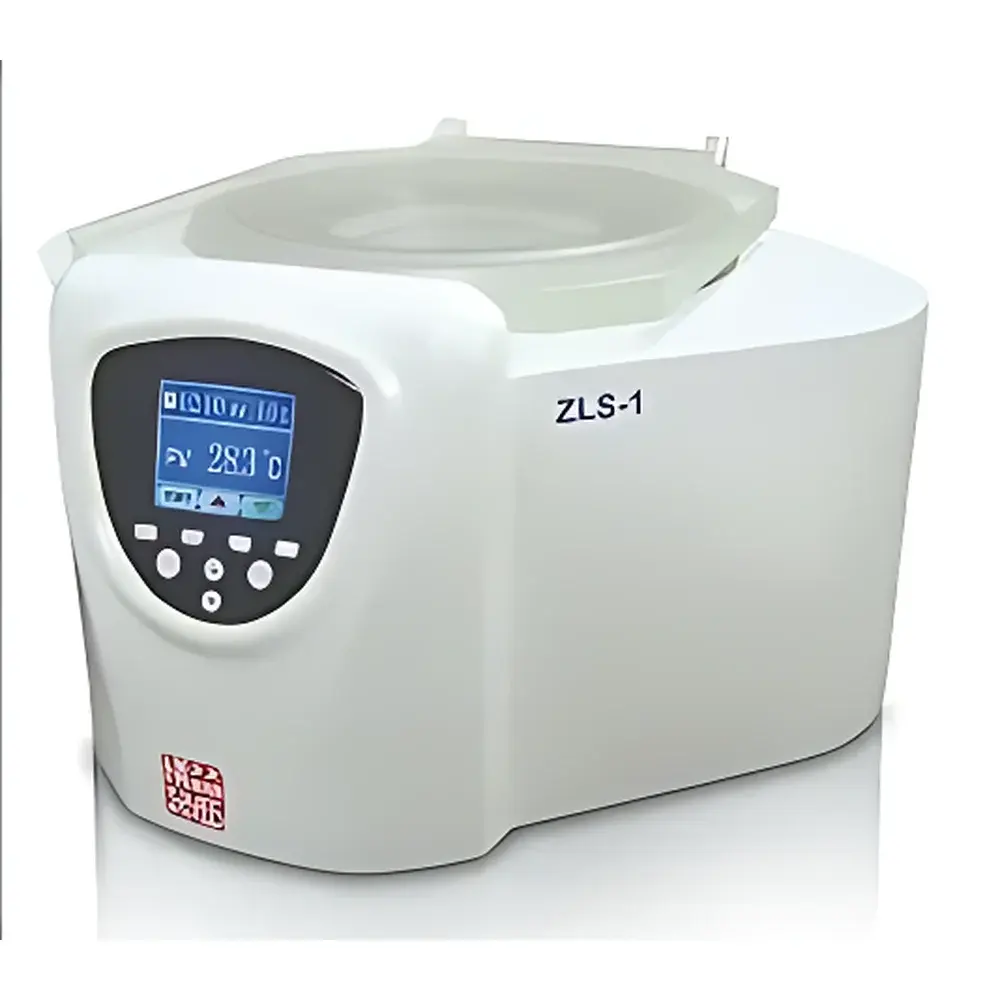
ZLS-1 Vacuum Centrifugal Concentrator
| Origin | Hunan, China |
|---|---|
| Manufacturer Type | Distributor |
| Product Category | Domestic |
| Model | ZLS-1 |
| Price | ¥9,200 |
| Instrument Type | Vacuum Centrifugal Concentrator |
| Display | TFT True-Color Touchscreen LCD |
| Chamber Material | Anodized Aluminum Alloy with Corrosion-Resistant Coating |
| Drive System | Maintenance-Free Contactless Rotational Drive |
| Timer Range | 0–99 h 59 min |
| Temperature Range | Ambient to 55 °C (heating optional) |
| Rotor Capacity | 1.5 mL × 62 positions |
| Compatible Adapters | 20 mL × 6 or × 5 |
| Dimensions (L×W×H) | 500 × 490 × 280 mm |
| Vacuum Pump | External (optional) |
Overview
The ZLS-1 Vacuum Centrifugal Concentrator is an engineered solution for gentle, efficient solvent removal from heat-sensitive biological and analytical samples under reduced pressure. It integrates three core physical principles—centrifugal force, vacuum-assisted evaporation, and controlled conductive heating—to achieve high recovery yields while minimizing sample degradation, oxidation, or foaming. Unlike simple rotary evaporators or nitrogen blow-down systems, the ZLS-1 maintains sample integrity through simultaneous centrifugation (preventing cross-contamination and splashing) and low-temperature vacuum drying (reducing boiling point depression effects). Designed for routine use in molecular biology labs, QC/QA departments, and small-scale pharmaceutical development workflows, it supports reproducible concentration of DNA/RNA extracts, protein digests, metabolite standards, HPLC fractions, and synthetic intermediates.
Key Features
- TFT true-color touchscreen interface with intuitive icon-based navigation and real-time parameter feedback (time remaining, current temperature, rotational speed, vacuum status)
- Anodized aluminum alloy chamber with electrophoretic epoxy coating—resistant to organic solvents, acids, and bases commonly used in extraction protocols (e.g., chloroform, methanol, TFA, acetonitrile)
- Contactless magnetic drive system eliminates mechanical seals and belt wear—ensuring long-term rotational stability and zero lubricant contamination risk
- Adjustable temperature control (ambient to 55 °C) with PID-regulated heating plate; optional heating disable mode for thermolabile compounds
- Transparent polycarbonate lid with dual safety interlocks—enables visual monitoring without interrupting vacuum or rotation
- Precise timer function (0–99 h 59 min) with auto-shutdown and audible alert; compatible with external cold traps (e.g., −50 °C condensers) to enhance volatile solvent capture efficiency
Sample Compatibility & Compliance
The ZLS-1 accommodates standard microcentrifuge tubes (1.5 mL), including conical-bottom and low-retention variants, across a 62-position rotor configuration. Optional adapters support 20 mL vials for larger-volume preparative work. Its operational envelope aligns with common laboratory quality frameworks: the sealed chamber design minimizes ambient particulate ingress, supporting ISO 14644-1 Class 7 cleanroom-compatible handling; temperature and time logging (via optional USB data export) facilitates GLP-compliant recordkeeping. While not certified to IEC 61010-1 or UL 61010B out-of-the-box, its electrical architecture meets basic safety requirements for Class II laboratory equipment when paired with a CE-marked external vacuum pump.
Software & Data Management
The ZLS-1 operates via embedded firmware—no PC connection required for standard operation. All settings are retained after power cycling. For audit-trail purposes, users may export session logs (start/stop time, set temperature, duration, rotor ID) to USB flash drives in CSV format. This capability supports traceability in regulated environments where documentation of sample processing conditions is mandated by internal SOPs or external reviewers (e.g., during FDA pre-submission audits or ISO/IEC 17025 accreditation assessments). The device does not implement 21 CFR Part 11 electronic signature functionality but provides timestamped raw logs suitable for manual verification and archiving.
Applications
- Concentration of enzymatic digests prior to LC-MS/MS analysis
- Desalting and buffer exchange of oligonucleotides and synthetic peptides
- Recovery of volatile organic extracts (e.g., lipidomics solvents such as MTBE or chloroform:methanol mixtures)
- Drying of lyophilization-prep samples where residual moisture must be minimized without thermal stress
- Preparative-scale cleanup of reaction mixtures following Suzuki or Heck couplings
- Routine nucleic acid purification workflows—including post-phenol-chloroform extraction and ethanol precipitation steps
FAQ
Is the ZLS-1 compatible with corrosive solvents such as trifluoroacetic acid (TFA) or hydrochloric acid solutions?
Yes—the interior chamber features an electrophoretic epoxy coating rated for intermittent exposure to ≤10% aqueous TFA and ≤1 M HCl. Continuous use with strong oxidizers (e.g., concentrated nitric acid) is not recommended.
Can the ZLS-1 be operated without external vacuum?
No. It requires an external oil-free or diaphragm vacuum pump capable of achieving ≤5 mbar absolute pressure for effective solvent removal. A cold trap is strongly advised when concentrating low-boiling solvents (e.g., ethyl acetate, dichloromethane).
What safety certifications does the ZLS-1 carry?
The unit complies with GB 4793.1–2018 (Chinese national standard equivalent to IEC 61010-1 for laboratory electrical equipment). CE marking applies only to the controller module; full-system CE/UL certification depends on integration with certified peripheral components.
Does the rotor support fixed-angle or swinging-bucket configurations?
The ZLS-1 uses a fixed-angle aluminum rotor optimized for 1.5 mL tube geometry. Swinging-bucket rotors are not supported due to mechanical constraints of the contactless drive architecture.
How often does maintenance require intervention?
Beyond periodic cleaning of the chamber and lid gasket, no scheduled maintenance is needed. The brushless motor and magnetic coupling have a rated service life exceeding 20,000 operating hours under typical lab usage patterns.



