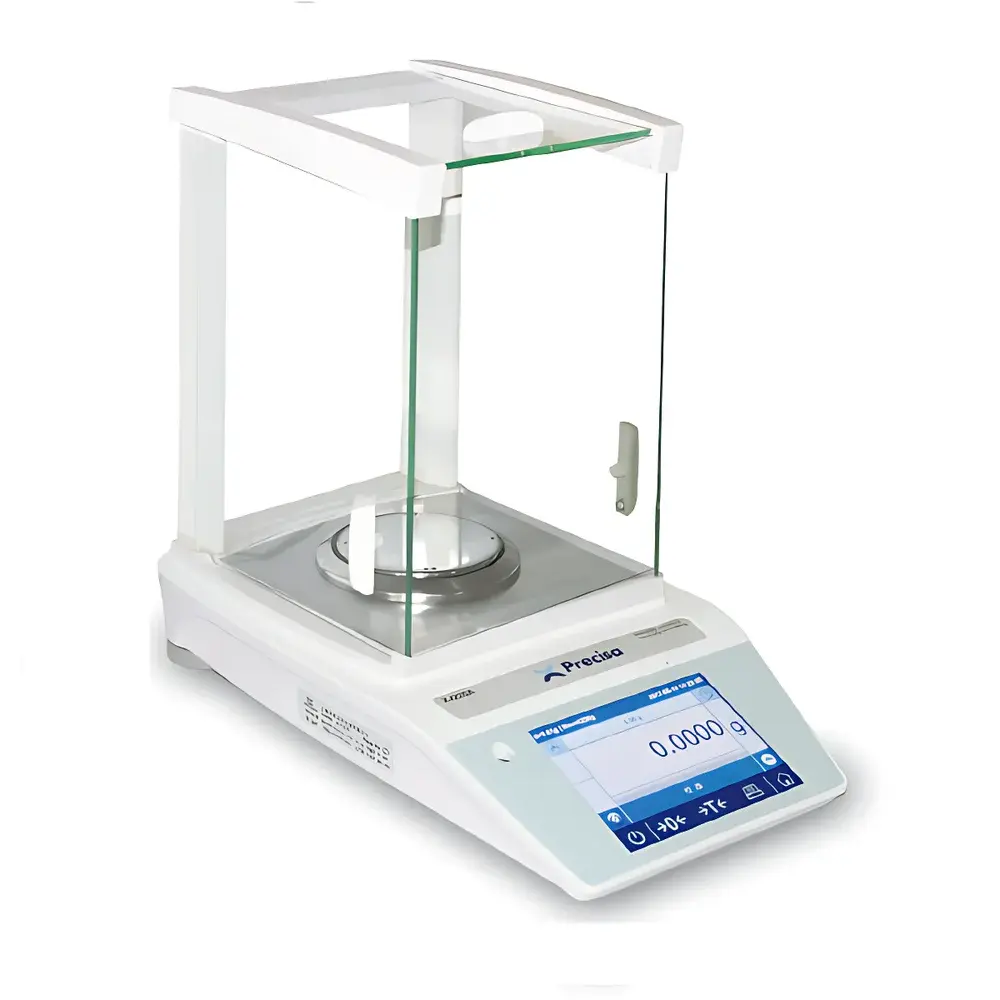
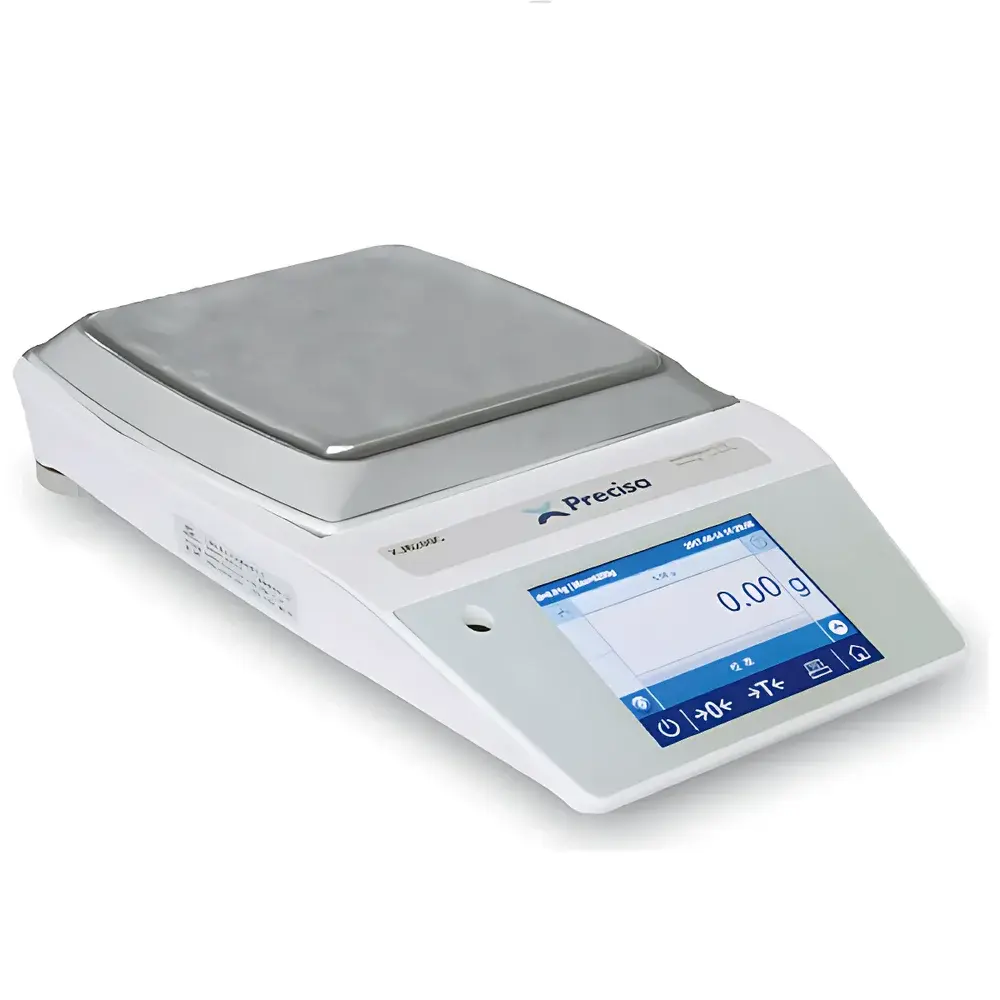
Precisa 321XJ Series Analytical Balance
| Brand | Precisa |
|---|---|
| Origin | Shanghai, China |
| Manufacturer Type | Authorized Distributor |
| Product Category | Domestic (China-manufactured) |
| Model | Precisa 321XJ |
| Price Range | USD 1,100 – 1,400 (est.) |
| Instrument Type | Analytical Balance |
| Capacity | 100–200 g |
| Maximum Capacity | 220 g |
| Readability | 0.1 mg (0.0001 g) |
| Repeatability | 0.1 mg |
| Calibration | Smart Internal Calibration System (SCS) |
| Sensor Technology | MFR Electromagnetic Force Compensation with Samarium-Cobalt Magnet |
| Base Construction | Full Cast-Aluminum Base (321LS Platform Derivative) |
| Display | 5-inch High-Resolution Color TFT Touchscreen |
| Environmental Compensation | Temperature & Time-Triggered Auto-Calibration (e.g., ΔT ≥ 3 °C or Scheduled at 06:00 AM) |
| Compliance | Designed to meet ISO 9001 manufacturing controls |
| Data Output | Excel (.xlsx) for weighing records |
Overview
The Precisa 321XJ Series Analytical Balance is an ISO-compliant, high-reproducibility mass measurement instrument engineered for routine and regulated laboratory environments requiring consistent 0.1 mg readability across a 220 g maximum capacity. Built upon Precisa’s proprietary MFR (Magnetic Force Restoration) electromagnetic force compensation principle, the balance employs a high-energy-density samarium-cobalt permanent magnet—delivering superior thermal stability and signal-to-noise ratio compared to conventional ferrite-based systems. Its full cast-aluminum base, derived from the industrial-grade 321LS platform architecture, minimizes mechanical resonance and enhances long-term zero stability under variable environmental conditions. Manufactured in Shanghai under Precisa’s global quality management system (ISO 9001 certified), the 321XJ integrates Swiss-designed core metrology with localized production rigor—ensuring traceable performance aligned with international analytical balance standards including ASTM E898, ISO 17025 calibration guidelines, and USP weighing requirements.
Key Features
- 5-inch capacitive color TFT touchscreen with glove-compatible operation and UV-resistant, scratch-proof surface—designed for cleanroom and industrial lab use.
- Smart Internal Calibration System (SCS): Automatically initiates calibration when ambient temperature shifts by ≥3 °C or at user-defined time intervals (e.g., 06:00 AM), ensuring continuous metrological traceability without manual intervention.
- MFR sensor with samarium-cobalt magnet assembly—offering 10× higher magnetic energy density than standard ferrite magnets, resulting in improved linearity, reduced drift, and faster stabilization times (typical response <2 s to final reading).
- Full cast-aluminum monolithic base structure—optimized for vibration damping and thermal mass uniformity, contributing to sub-microgram repeatability and resistance to floor-borne disturbances.
- Comprehensive EMC/ESD certification per IEC 61326-1:2013 and IEC 61000-4 series—validated through rigorous electrical safety and electromagnetic immunity testing during final QA.
- Integrated real-time clock with timestamped data logging—enabling chronological traceability of all weight events, calibrations, and system diagnostics.
Sample Compatibility & Compliance
The 321XJ supports standard analytical workflows involving powders, granules, liquids (with tare vessels), and small solid specimens up to 220 g. Its draft shield—integrated into the unit’s structural packaging design—undergoes drop-test validation (ISTA 3A) and shock-absorbing transport simulation to maintain pre-installation alignment. The balance complies with national verification regulations for Class I analytical balances (JJG 1036–2022) and is suitable for applications governed by FDA 21 CFR Part 11 when paired with compliant data management software. Audit-trail-ready output formats—including Excel-exported weighing records with operator ID, timestamp, and stability flag—facilitate GLP/GMP documentation and internal quality audits.
Software & Data Management
All weighing data—including raw mass values, statistical summaries (mean, SD, CV%), density calculations, and counting results—are exportable in native Microsoft Excel (.xlsx) format. Non-weighing metadata (e.g., calibration logs, error codes, firmware version) is stored as plain-text (.txt) files for long-term archival and third-party LIMS integration. Optional serial or USB-connected thermal printers support multiple print modes: auto-print on stabilization, individual value printing, scheduled batch reports, and full calibration certificate generation. Firmware updates are performed via secure USB drive import, maintaining version control and change-log integrity per ISO/IEC 17025 Clause 5.9.
Applications
- Pharmaceutical QC laboratories performing active pharmaceutical ingredient (API) assay, excipient blending verification, and tablet weight uniformity testing per USP .
- Chemical R&D labs conducting stoichiometric reagent preparation, catalyst loading, and gravimetric titration standardization.
- Materials science facilities measuring coating thickness via mass-loss methods or determining bulk density of nanomaterials and ceramics.
- Food safety testing centers executing moisture content analysis (AOAC 950.46), ash determination (AOAC 923.03), and nutritional labeling compliance checks.
- Academic teaching labs where intuitive touchscreen interface, multilingual UI (English/Chinese), and built-in statistical functions support undergraduate analytical chemistry curricula.
FAQ
What calibration standards does the SCS system use?
The Smart Internal Calibration System employs factory-traceable internal weights certified to OIML R111–1 E2 class tolerances, verified annually against national metrology institute references.
Is the 321XJ compliant with FDA 21 CFR Part 11?
Yes—when operated with enabled user authentication, electronic signature prompts, and audit-trail-enabled data export protocols, it meets predicate rules for electronic records and signatures in regulated environments.
Can the balance be integrated into a LIMS or ELN?
Yes—via RS-232 or USB virtual COM port, supporting ASCII-based communication protocols (e.g., Modbus RTU or manufacturer-specific command sets) for automated data ingestion.
What is the recommended warm-up time before first use?
A minimum 30-minute stabilization period is advised following power-on to allow thermal equilibrium of the sensor and electronics, especially after transport or ambient temperature shifts >5 °C.
Does the touchscreen support stylus input or only finger touch?
The capacitive display is optimized for bare-finger or thin-glove interaction; passive stylus use is not supported, but glove-mode sensitivity is adjustable in system settings.