
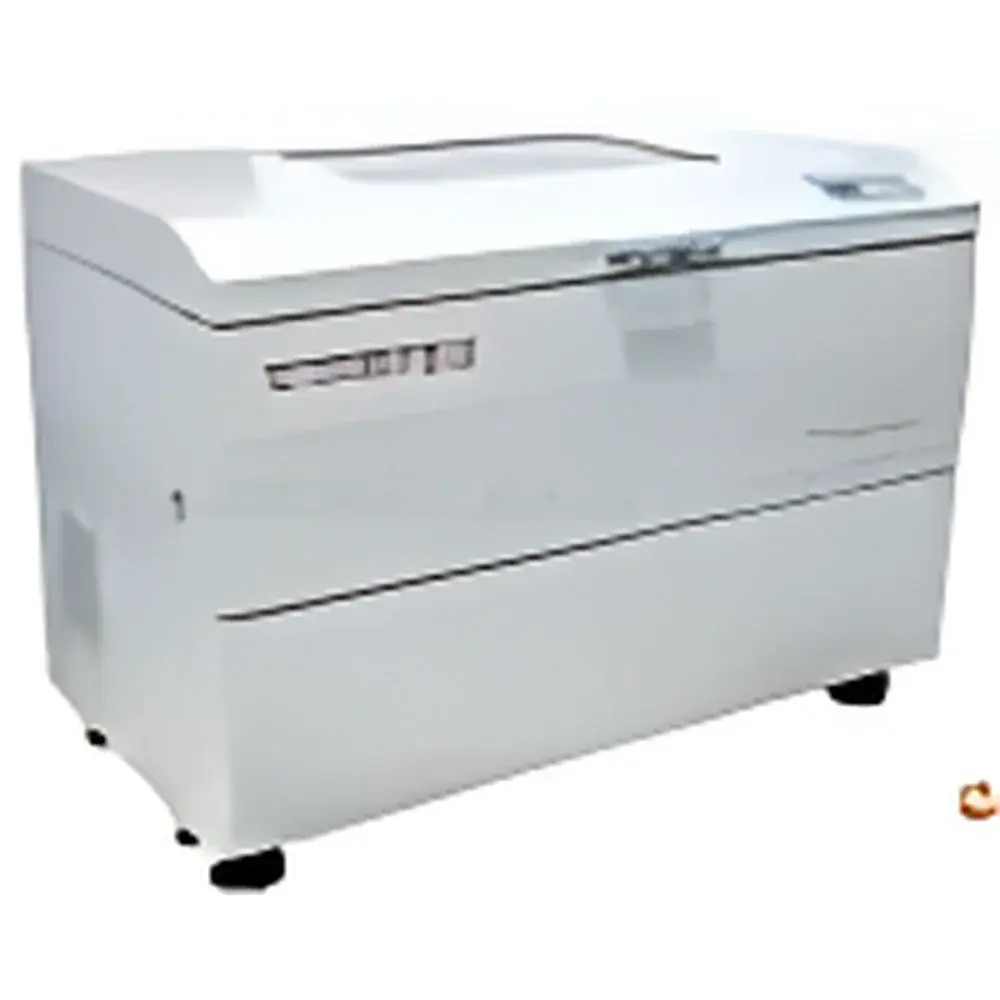
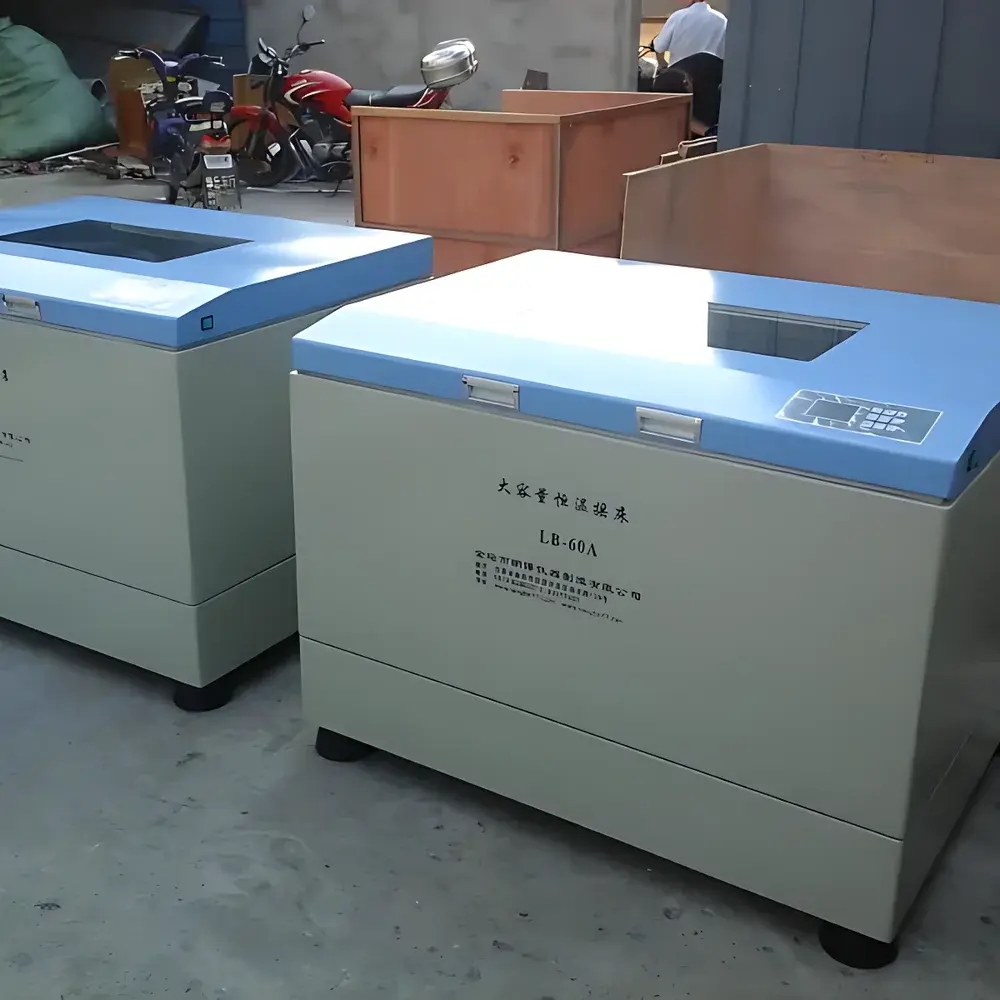
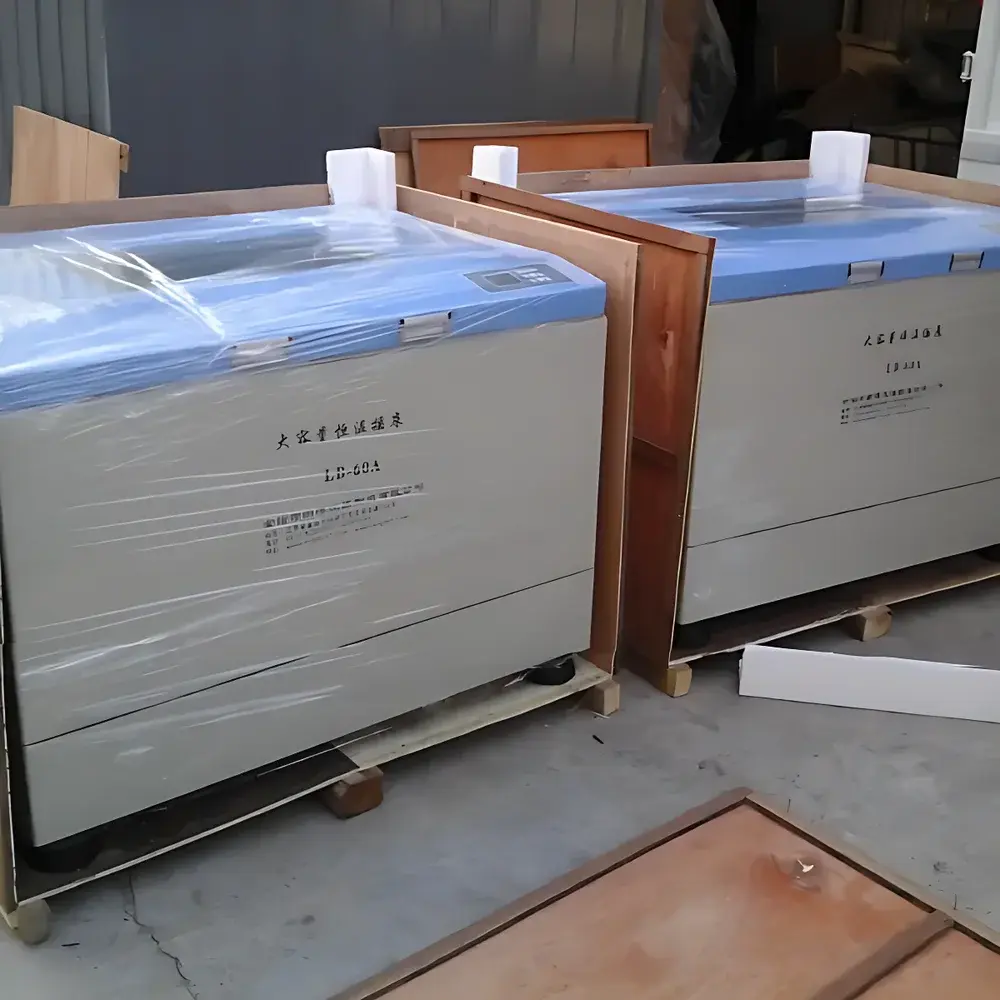
Langbo HZQ-311C Horizontal Constant-Temperature Orbital Shaker
| Brand | Langbo |
|---|---|
| Origin | Jiangsu, China |
| Model | HZQ-311C |
| Instrument Type | Full-Temperature Orbital Shaker |
| Timer Range | 0.1 h to 999 h 59 min |
| Oscillation Frequency | 30–250 rpm |
| Orbit Diameter | 20 mm |
| Temperature Range | 4–60 °C |
| Number of Shaking Platforms | 1 |
| Platform Dimensions | 920 × 500 mm |
| Power Input | 1700 W |
| Display | Large Backlit LCD with Menu-Driven Interface |
| Construction | Stainless Steel Interior & Shaking Surface |
| Insulation | CFC-Free Polyurethane Foam |
| Safety Features | Independent Over-Temperature Cut-Off, Door-Interlocked Shutdown, Brushless AC Motor, Programmable Multi-Stage Control (Optional), RS-485/USB Data Export (Optional) |
Overview
The Langbo HZQ-311C Horizontal Constant-Temperature Orbital Shaker is an integrated incubation and agitation system engineered for reproducible cell culture, microbial growth, biochemical assays, and suspension-based sample processing in life science laboratories. Unlike vertical shakers or standalone incubators, the HZQ-311C employs a horizontal orbital motion (20 mm diameter) within a precisely controlled thermal chamber—enabling uniform heat distribution, minimal shear stress on sensitive biological samples, and high-volume throughput. Its design conforms to fundamental requirements of GLP-compliant workflows, supporting applications where temperature stability (±0.3 °C at setpoint), oscillation consistency (±2 rpm), and contamination control are critical. The unit operates across a broad physiological range (4–60 °C), making it suitable for mesophilic and psychrophilic cultivations, enzyme kinetics studies, and long-term stability testing under defined environmental conditions.
Key Features
- Integrated incubator-shaker architecture with compact footprint (W×D×H: ~1100 × 700 × 750 mm), optimizing lab space without compromising capacity—supports up to 12 × 1 L Erlenmeyer flasks or equivalent multi-well plate configurations on its 920 × 500 mm stainless steel platform.
- Microprocessor-based PID temperature and speed control ensures high repeatability; real-time monitoring of setpoint vs. actual values displayed simultaneously on a large backlit LCD interface with intuitive menu navigation.
- CFC-free refrigeration system using R134a or R600a (depending on production batch), compliant with Montreal Protocol standards and EU F-Gas Regulation (EU No. 517/2014); insulation layer composed of closed-cell polyurethane foam minimizes thermal leakage and energy consumption.
- Brushless AC drive motor delivers maintenance-free operation over >20,000 hours, offering constant torque across the full speed range (30–250 rpm) and eliminating carbon dust contamination risks associated with brushed motors.
- Comprehensive safety architecture includes door-actuated interlocks (disabling heating, cooling, and shaking upon opening), independent over-temperature alarm circuit (adjustable limit, default 65 °C), and intelligent fan-speed modulation to prevent evaporative loss during low-humidity protocols.
- Optional multi-segment programming module enables up to 9 programmable stages—each defining distinct temperature, speed, and duration parameters—supporting complex kinetic experiments such as temperature-gradient adaptation or phased induction protocols.
Sample Compatibility & Compliance
The HZQ-311C accommodates standard laboratory vessels including glass and polycarbonate flasks (50 mL–2 L), deep-well microplates, Petri dishes, and custom bioreactor sleeves. Its stainless steel chamber and platform resist corrosion from common sterilants (e.g., 70% ethanol, 1% sodium hypochlorite) and support routine autoclave-compatible cleaning procedures. Air filtration is enhanced by a replaceable HEPA-grade particulate filter (≥99.97% @ 0.3 µm), reducing airborne microbial ingress during extended runs. While not certified to ISO 13485 or FDA 21 CFR Part 11 out-of-the-box, the instrument’s data logging capabilities—when equipped with USB or RS-485 modules—facilitate audit-ready record generation aligned with internal SOPs and basic GLP documentation requirements.
Software & Data Management
The base configuration supports local parameter storage (up to 10 user-defined protocols) and real-time display of operational status. With optional connectivity hardware, the shaker interfaces with Windows-based host software via USB mass storage (U-disk export) or serial communication (RS-485 Modbus RTU). Logged data includes timestamped temperature, speed, elapsed time, and alarm events—exportable in CSV format for integration into LIMS or statistical analysis platforms (e.g., JMP, GraphPad Prism). Firmware updates are performed offline via FAT32-formatted USB drives, ensuring traceability and version control in regulated environments.
Applications
- Mammalian and insect cell suspension cultures requiring gentle agitation and tight thermal control (e.g., CHO, Sf9 lines).
- Microbial fermentation optimization (E. coli, yeast) under varied aeration and temperature regimes.
- Antibiotic susceptibility testing (AST) using broth microdilution methods per CLSI M07-A11 guidelines.
- Protein solubilization and ligand-binding equilibration in buffered solutions.
- Environmental microbiology—water quality assessment via heterotrophic plate count (HPC) enrichment.
- Educational labs performing standardized growth curve analyses aligned with ASTM E2574-22 (Standard Practice for Microbiological Monitoring of Cleanrooms).
FAQ
What is the maximum flask size supported on the HZQ-311C platform?
The 920 × 500 mm platform accommodates twelve 1 L Erlenmeyer flasks (with standard 50 mm neck spacing) or up to eight 2 L flasks using staggered placement.
Does the unit meet international electromagnetic compatibility (EMC) standards?
Yes—it complies with IEC 61326-1:2013 for laboratory equipment, including radiated and conducted emissions (EN 61326-1) and electrostatic discharge immunity (IEC 61000-4-2 Level 3).
Can the shaker operate unattended for multi-day experiments?
Absolutely—the 999 h 59 min timer, combined with battery-backed clock and non-volatile memory, ensures uninterrupted execution; optional remote monitoring via RS-485 enables integration into building management systems.
Is calibration documentation available for regulatory submissions?
Factory calibration certificates (temperature and speed) are provided upon request; users may perform field verification using NIST-traceable thermistors and optical tachometers per ISO/IEC 17025-aligned internal procedures.
What maintenance intervals are recommended for long-term reliability?
No scheduled lubrication is required due to the brushless motor; annual inspection of door gaskets, filter replacement, and verification of temperature uniformity (per ISO 15337:2020 Annex B) are advised.




