
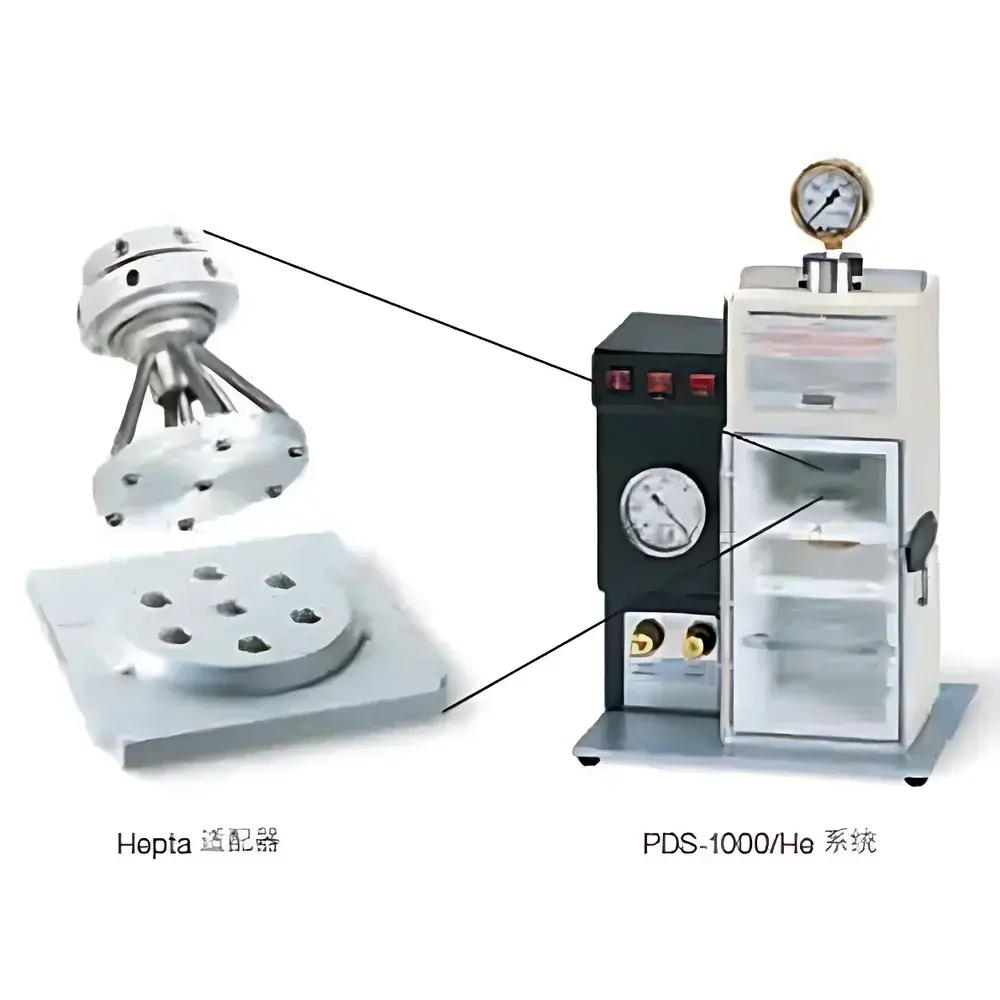
Bio-Rad PDS-1000/HE Biolistic Particle Delivery System
| Brand | Bio-Rad |
|---|---|
| Origin | USA |
| Model | PDS-1000/HE |
| Helium Pressure Range | 450–2200 psi |
| Vacuum Chamber | Adjustable to ≤29 inHg (737 mmHg) |
| Carrier Disk Diameter | 13 mm |
| Stopping Screen Material | Stainless Steel Mesh (100 µm pore) |
| Microprojectile Size Compatibility | 0.6–1.6 µm (Au or W) |
| Pulse Duration | <1 ms (transient helium shockwave) |
| Capacitance | Not applicable (gas-driven, non-electrical acceleration) |
| Resistance | Not applicable (pneumatic system) |
Overview
The Bio-Rad PDS-1000/HE Biolistic Particle Delivery System is a pneumatic gene delivery instrument engineered for physical transfection via high-velocity microprojectile bombardment. Unlike electroporation or chemical transfection methods, the PDS-1000/HE utilizes controlled helium gas pressure to accelerate nucleic acid-coated microparticles—typically gold (0.6–1.6 µm) or tungsten (1.0–1.6 µm)—through a vacuum chamber and into target biological specimens. This ballistic approach enables direct intracellular delivery of DNA, RNA, or proteins without reliance on membrane receptors, endocytosis pathways, or voltage-induced membrane permeabilization. The system operates on the principle of transient shockwave propulsion: helium gas, pressurized behind a rupture disk, expands rapidly upon disk failure, driving a macrocarrier toward a stopping screen. Upon impact, microprojectiles detach and traverse the screen to penetrate cells, tissues, or organelles with minimal thermal or electrical artifact. Its design complies with fundamental biophysical requirements for reproducible nucleic acid delivery across diverse sample types—from suspension-cultured mammalian cells to intact plant embryos and cryosectioned tissue slices.
Key Features
- Pneumatically driven acceleration using ultra-pure helium gas—eliminates electrical arcing risks and ensures consistent kinetic energy transfer.
- Adjustable rupture disks calibrated for precise pressure thresholds (450–2200 psi), enabling fine-tuned control over microprojectile velocity and penetration depth.
- Vacuum-compatible sample chamber (operable down to 29 inHg / ~737 mmHg) reduces aerodynamic drag during particle flight, enhancing delivery efficiency and spatial uniformity.
- Modular architecture supports optional HEPTA Adapter, which distributes helium flow across seven parallel carrier disks—increasing effective transfection area by 7–10× while reducing per-site pressure and particle velocity for delicate samples such as protoplasts or primary neurons.
- Stainless steel stopping screen (100 µm pore size) reliably halts macrocarriers while permitting submicron projectiles to pass unimpeded.
- Interchangeable macrocarrier formats accommodate standard 13-mm circular disks, compatible with Bio-Rad’s certified gold/tungsten microspheres and custom-coated particles.
Sample Compatibility & Compliance
The PDS-1000/HE delivers validated performance across a broad spectrum of biological matrices, including bacterial lawns (e.g., E. coli DH5α), yeast colonies (S. cerevisiae), algal cultures (Chlamydomonas reinhardtii), plant embryogenic callus and immature embryos (Zea mays, Oryza sativa), animal cell monolayers (HEK293, CHO-K1), organotypic brain slices, and isolated mitochondria. Protocols are documented in peer-reviewed literature conforming to ISO 17025-aligned laboratory practices. While the instrument itself does not require FDA clearance as a diagnostic device, its use in GLP-compliant transgenic line development aligns with OECD Test Guidelines 308 and 312 for environmental biosafety assessment. All helium handling procedures comply with CGA G-1.1 safety standards for compressed gases in laboratory environments.
Software & Data Management
The PDS-1000/HE is operated manually via calibrated pressure regulators and mechanical vacuum gauges; it does not incorporate embedded firmware or proprietary software. Experimental parameters—including helium pressure, vacuum level, target distance, microprojectile type/size, and macrocarrier preparation—are recorded in standardized lab notebooks or LIMS-integrated electronic records. For audit readiness under 21 CFR Part 11, users implement procedural controls: dual-operator verification of rupture disk selection, timestamped vacuum gauge readings, and traceable microsphere lot documentation (including CoA for particle size distribution and endotoxin levels). Bio-Rad provides comprehensive SOP templates aligned with internal quality management systems for QC/QA departments.
Applications
- Stable and transient expression of reporter genes (e.g., GFP, GUS, luciferase) in recalcitrant plant species lacking efficient Agrobacterium-mediated transformation protocols.
- Functional genomics screening in non-dividing or terminally differentiated cells—including neurons, cardiomyocytes, and retinal pigment epithelium—where viral vectors pose biosafety or immunogenicity concerns.
- Delivery of CRISPR-Cas ribonucleoprotein complexes for precision genome editing with reduced off-target effects compared to plasmid-based delivery.
- Subcellular targeting of nucleic acids to mitochondria or chloroplasts using density-optimized tungsten particles and organelle-specific promoters.
- Rapid generation of transgenic seed stocks for field-trial evaluation under confined containment conditions (e.g., USDA APHIS-regulated greenhouses).
FAQ
Is the PDS-1000/HE compatible with tungsten microprojectiles?
Yes—tungsten particles (1.0–1.6 µm) are supported for applications requiring higher mass-to-surface-area ratio, such as deep-tissue penetration in woody plant explants or organotypic slice transfection.
What helium purity is required for optimal performance?
Ultra-high-purity helium (≥99.995%, Grade 5.0) is recommended to prevent rupture disk contamination and ensure repeatable burst pressure thresholds.
Can the system be used under biosafety level 2 (BSL-2) containment?
Yes—the vacuum chamber is fully sealable and compatible with BSL-2 laminar flow hoods when equipped with appropriate exhaust filtration (e.g., HEPA + carbon scrubber for aerosol capture).
Does Bio-Rad supply certified microspheres with traceable particle size distribution data?
Yes—gold and tungsten microspheres are supplied with Certificate of Analysis (CoA) specifying D10/D50/D90 values measured by laser diffraction per ISO 13320.
How is calibration verified between maintenance intervals?
Users perform quarterly functional verification using reference rupture disks (certified ±5 psi tolerance) and NIST-traceable pressure transducers, documented per internal equipment qualification SOPs.
Related Products




