
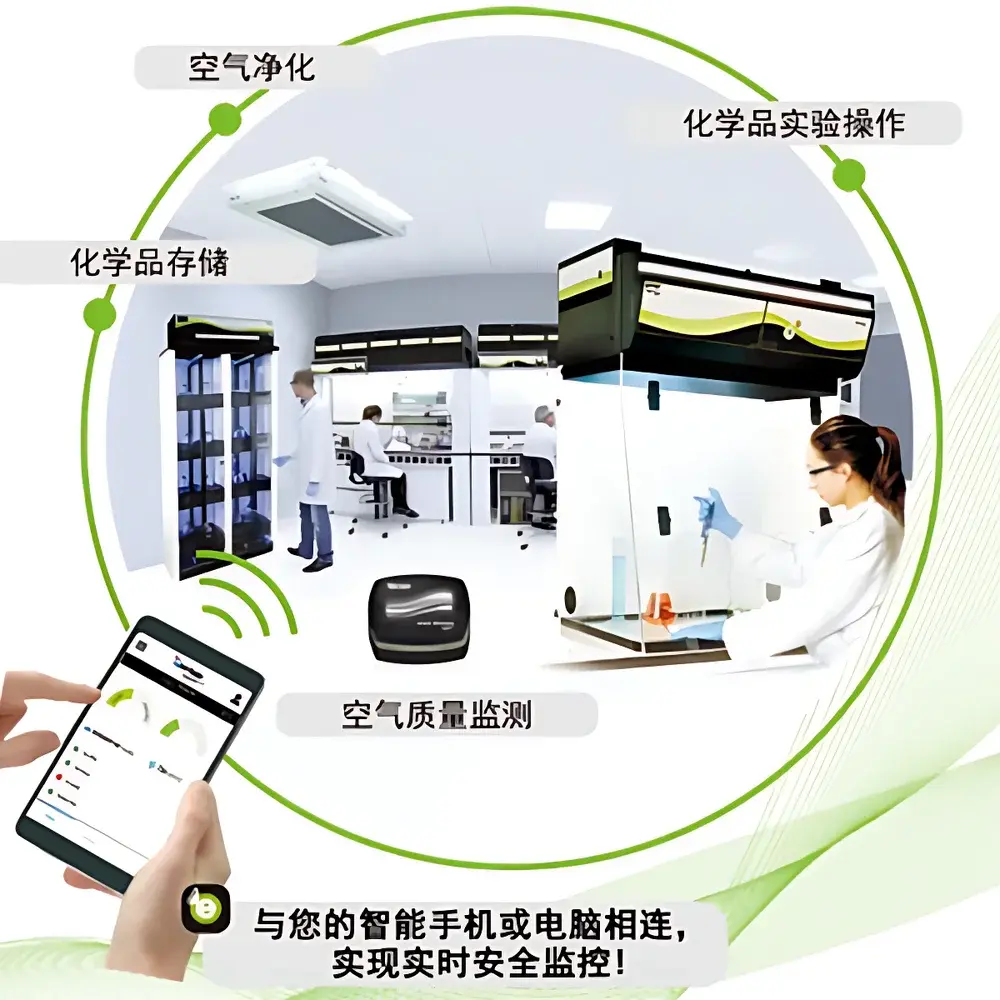
Erlab Ecosystem Laboratory Air Purification Ecosystem
| Brand | Erlab |
|---|---|
| Origin | Shanghai, China |
| Manufacturer Type | Authorized Distributor |
| Region of Origin | Domestic (China) |
| Model | Ecosystem |
| Pricing | Available Upon Request |
Overview
The Erlab Ecosystem Laboratory Air Purification Ecosystem is an integrated, modular platform engineered to deliver comprehensive chemical air safety management in research and analytical laboratories. Unlike standalone fume hoods or air purifiers, the Ecosystem operates on a unified architectural principle grounded in real-time source capture, multi-stage molecular filtration, continuous ambient air monitoring, and centralized digital oversight. Its core measurement and control paradigm combines electrochemical and photoionization sensor technologies (for volatile organic compounds and inorganic gases), coupled with RFID-enabled filter lifecycle tracking and adaptive airflow regulation via embedded microprocessors. Designed for compliance with ISO 14644-1 (cleanroom air classification), EN 14175-3 (fume hood performance), and ANSI/AIHA Z9.5–2022 (laboratory ventilation standards), the Ecosystem ensures consistent operator exposure remains below OSHA PELs and ACGIH TLVs across diverse chemical handling workflows — from routine reagent dispensing to high-throughput synthesis.
Key Features
- Modular interoperability: All components — GFH high-efficiency ductless fume hoods, Captair Smart ductless workstations and storage cabinets, Halo ceiling-mounted air purifiers, and Halo Sense ambient air sensors — share a common communication protocol and power architecture.
- Neutrodine® dual-stage filtration: Proprietary composite media combining activated carbon (impregnated with potassium permanganate and copper oxide) and alkaline-impregnated alumina for simultaneous adsorption of acidic, basic, and neutral VOCs, as well as chlorine, ammonia, hydrogen sulfide, and formaldehyde.
- eGuard cloud-based supervision platform: Provides real-time device status, filter saturation alerts, airflow verification logs, and historical concentration trends. Supports audit-ready data export compliant with GLP and GMP documentation requirements.
- Unified human-machine interface: LED status bands across all devices indicate operational mode (green), maintenance due (amber), or alarm condition (red); synchronized audio cues identify source-specific events (e.g., cabinet door open, sensor threshold exceeded).
- Energy-intelligent operation: Eliminates conditioned air exhaust, reducing HVAC load by up to 70% compared to conventional ducted systems; Halo units maintain ≥90% CADR (Clean Air Delivery Rate) at ≤45 dB(A) noise level.
Sample Compatibility & Compliance
The Ecosystem accommodates broad-spectrum chemical handling, including but not limited to alcohols, ketones, esters, chlorinated solvents, amines, acids (e.g., HCl, HNO₃), and low-concentration hydrogen peroxide solutions. It is explicitly validated for use with EPA Method 8260/8270 analytes and supports ICH Q5C stability testing environments. All filtration modules are tested per ASTM D5209 (carbon adsorption capacity) and certified to meet EN 1822-1:2019 for particulate retention efficiency. The eGuard software architecture complies with FDA 21 CFR Part 11 for electronic records and signatures, enabling secure user authentication, role-based access control, and immutable audit trails.
Software & Data Management
eGuard functions as both a local network controller and a cloud-connected supervisory system. It archives time-stamped sensor readings (ppm/ppb resolution), motor RPM logs, filter usage metrics, and event-triggered notifications. Administrators may configure custom alarm thresholds, define escalation protocols (SMS/email/push), and generate quarterly safety performance reports aligned with ISO 45001 occupational health frameworks. Data exports support CSV, PDF, and XML formats; integration with laboratory information management systems (LIMS) is achievable via RESTful API.
Applications
- Academic teaching labs requiring flexible, plug-and-play chemical containment without infrastructure retrofitting.
- Pharmaceutical QC/QA labs performing residual solvent analysis where cross-contamination prevention is critical.
- Contract research organizations (CROs) managing multi-client projects with varying chemical risk profiles.
- University core facilities supporting shared instrumentation (e.g., GC-MS, HPLC prep stations) with decentralized air quality assurance.
- Government regulatory labs maintaining traceability under ILAC-G8 and ISO/IEC 17025 accreditation requirements.
FAQ
Does the Ecosystem require external ductwork or make-up air systems?
No — all components are ductless and self-contained, eliminating reliance on building HVAC infrastructure.
How often must Neutrodine filters be replaced?
Filter service intervals are dynamically calculated based on real-time chemical exposure data and runtime hours; typical replacement ranges from 6 to 18 months depending on usage intensity and compound profile.
Can Halo Sense detect specific gases individually?
Yes — it employs a multi-sensor array calibrated for 20+ target compounds, with selective response algorithms that distinguish overlapping signals using pattern recognition and baseline drift compensation.
Is eGuard compatible with existing IT security policies?
Yes — it supports TLS 1.2+ encryption, LDAP/Active Directory integration, and configurable firewall port assignments for enterprise deployment.
What validation documentation is provided for regulatory submissions?
Each system shipment includes Factory Acceptance Test (FAT) reports, filter certification dossiers, and IQ/OQ templates aligned with GAMP 5 guidelines.



