
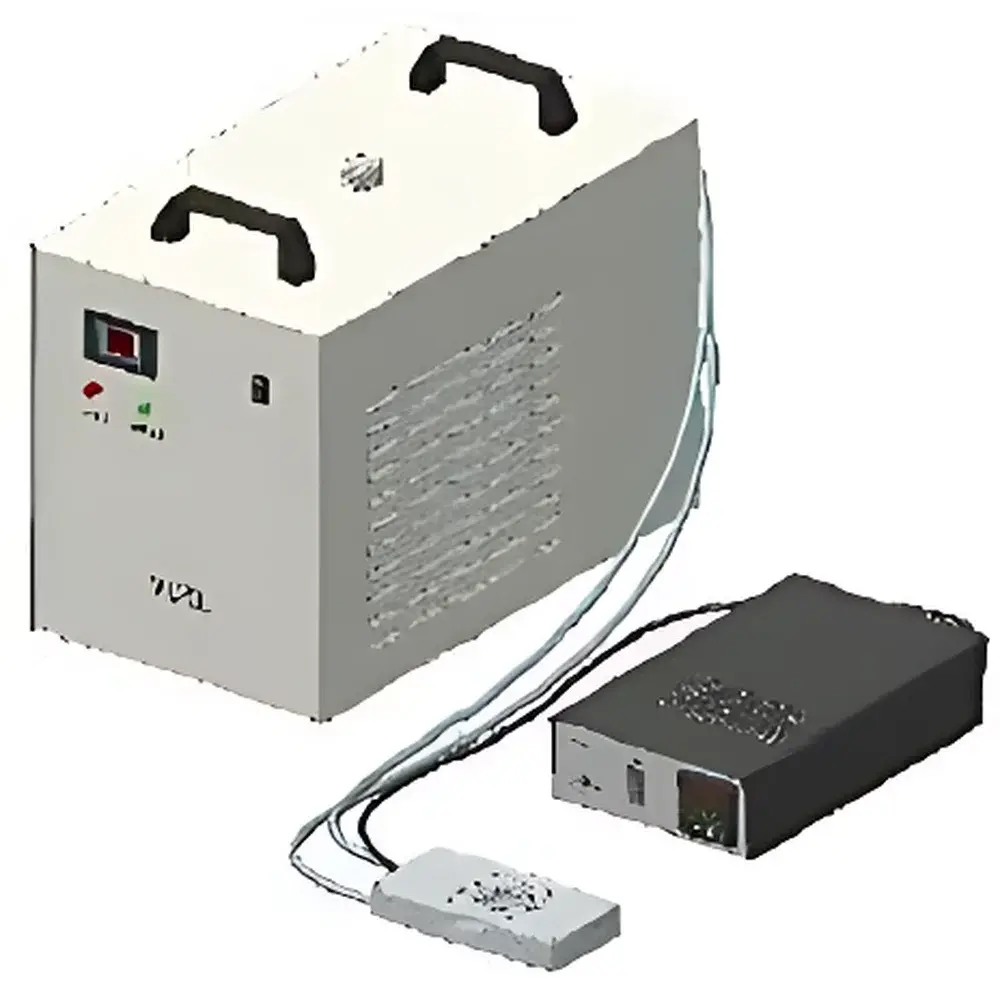
MicrOptik MTS120i Inverted Microscope Stage with Thermoelectric Cooling and Heating
| Brand | MicrOptik |
|---|---|
| Origin | Netherlands |
| Model | MTS120i |
| Temperature Range | −20 °C to +120 °C |
| Temperature Resolution & Accuracy | 0.1 °C |
| Control Method | Manual or USB 2.0–enabled software (MTDC600 controller) |
| Sample Area | 25 mm × 40 mm |
| Observation Port Diameter | 32 mm |
| Standard Chamber Height | 4 mm |
| Objective Working Distance Compatibility | 0.17 mm coverslip thickness |
| Sensor Type | RTD (Pt100) |
| Cooling Method | Solid-state thermoelectric (Peltier), no liquid nitrogen or chiller required |
| Optional Accessory | MC-5L auxiliary cooler for sub-zero stability |
Overview
The MicrOptik MTS120i is a precision-engineered inverted microscope stage designed for real-time, high-stability thermal modulation of biological, polymeric, and crystalline samples under optical observation. Unlike conventional cryostages requiring external cryogenic infrastructure, the MTS120i employs solid-state thermoelectric (Peltier) technology to achieve continuous, bidirectional temperature control from −20 °C to +120 °C—enabling both cryo-microscopy and elevated-temperature studies without mechanical vibration or condensation risks associated with liquid nitrogen systems. Its compact form factor and low-profile architecture allow seamless integration beneath standard inverted microscopes, including Nikon Eclipse Ti, Olympus IX series, and Zeiss Axio Observer platforms. The system operates on the principle of Joule–Thomson–Peltier coupling, delivering rapid thermal response (<3 min to stabilize at ±0.1 °C) and exceptional spatial uniformity across the sample plane—critical for quantitative phase-contrast, fluorescence recovery after photobleaching (FRAP), and time-lapse morphological assays.
Key Features
- Wide operational range: −20 °C to +120 °C with 0.1 °C resolution and repeatability, validated per ISO/IEC 17025 calibration traceability protocols
- Integrated MTDC600 programmable temperature controller featuring dual-mode operation—manual knob interface and USB 2.0–connected software suite with PID parameter tuning, ramp/soak profiles, and alarm-triggered logging
- Modular chamber design with interchangeable windows (standard BK7, optional UV-fused silica or IR-transmissive CaF₂) and removable top cover for unobstructed sample loading using standard 25 × 75 mm microscope slides
- Optimized optical path: 32 mm central observation port with minimal vignetting; compatible with objectives down to 2× magnification and NA ≤ 0.5; working distance accommodates 0.17 mm coverslip correction
- Thermally isolated water-cooled frame (optional MC-5L auxiliary cooler) ensures long-term baseline stability during extended experiments (>8 h), meeting GLP-compliant thermal drift specifications (<±0.05 °C/h)
- Low-profile mechanical footprint (height < 35 mm) enables compatibility with motorized XY stages and nanopositioning systems without Z-axis interference
Sample Compatibility & Compliance
The MTS120i supports a broad spectrum of specimen formats—including live-cell monolayers in μ-Slide chambers, polymer thin films on silicon wafers, lipid bilayer vesicles in sealed capillaries, and protein crystal trays—within its 25 × 40 mm active area. Chamber height is configurable from 2 mm to 10 mm (standard 4 mm), permitting use with thick-section histology slices or multi-layer microfluidic devices. All wetted materials comply with USP Class VI biocompatibility standards; stainless-steel and anodized aluminum housing meets IP52 ingress protection for controlled lab environments. The system adheres to IEC 61000-6-3 EMC emission limits and conforms to CE marking requirements for laboratory electrical equipment. Temperature validation reports are provided per ASTM E220–22 (Standard Test Method for Calibration of Thermocouples by Comparison Techniques), supporting FDA 21 CFR Part 11–compliant audit trails when used with validated MTDC600 software.
Software & Data Management
The MTDC600 control software runs on Windows 10/11 (64-bit) and provides full experimental scripting capability via Python API (included). Real-time temperature curves are synchronized with external acquisition hardware (e.g., Hamamatsu ORCA cameras, Thorlabs PM100 power meters) using TTL trigger outputs and analog voltage inputs. All session logs—including setpoints, actual readings, PID gains, and timestamped events—are stored in HDF5 format with embedded metadata (user ID, experiment ID, instrument serial number), enabling FAIR data principles implementation. Software-generated reports export to PDF or CSV and support digital signature workflows aligned with ISO 13485 quality management documentation.
Applications
- Live-cell thermobiology: monitoring membrane phase transitions, heat shock protein expression, and cold-induced cytoskeletal reorganization
- Materials science: in situ observation of polymer crystallization kinetics, glass transition (Tg) mapping, and solder reflow behavior
- Pharmaceutical development: real-time analysis of crystallization pathways in API suspensions and lyophilized cake morphology evolution
- Microfluidics integration: thermal actuation of valving mechanisms and viscosity-driven flow control in lab-on-chip platforms
- Electron microscopy correlative workflows: pre-characterization of cryo-sensitive specimens prior to plunge-freezing
FAQ
Does the MTS120i require external refrigeration or liquid nitrogen?
No—the system uses self-contained thermoelectric cooling and heating; only ambient air cooling or optional water-cooling (via MC-5L) is needed for sustained sub-zero operation.
Can the stage be used with oil-immersion objectives?
Yes, provided the immersion medium remains within its operational viscosity range at target temperatures; recommended maximum oil temperature is 60 °C to avoid degradation.
Is the MTDC600 controller compatible with third-party DAQ systems?
Yes—USB HID-class communication and analog voltage output (0–10 V) enable integration with National Instruments, Keysight, or LabVIEW-based automation frameworks.
What is the thermal uniformity across the sample area?
Measured uniformity is ≤ ±0.3 °C over the central 20 × 30 mm region at steady state, verified using calibrated micro-thermocouple arrays per ISO 10576-1.
Can the chamber be evacuated or purged with inert gas?
The base model is not vacuum-rated; however, custom O-ring–sealed variants with gas inlet/outlet ports are available upon request for anaerobic or low-humidity applications.





