
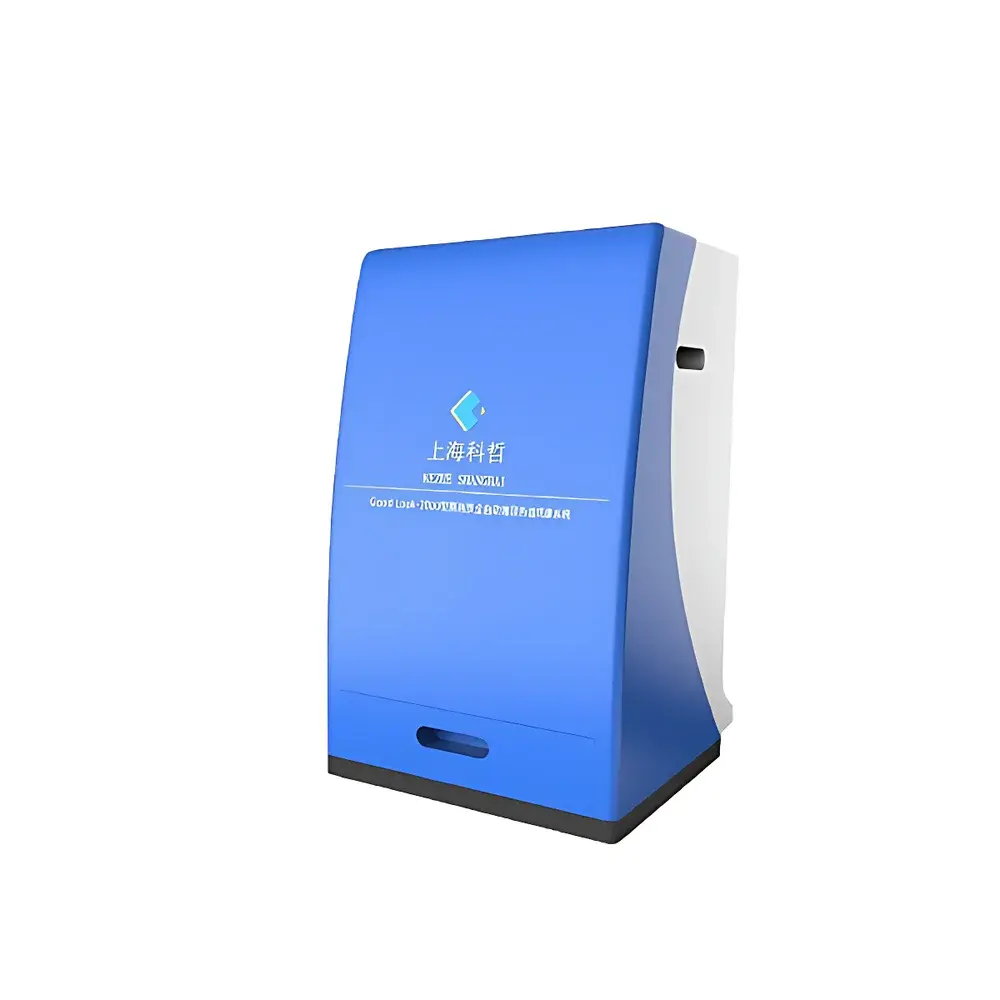
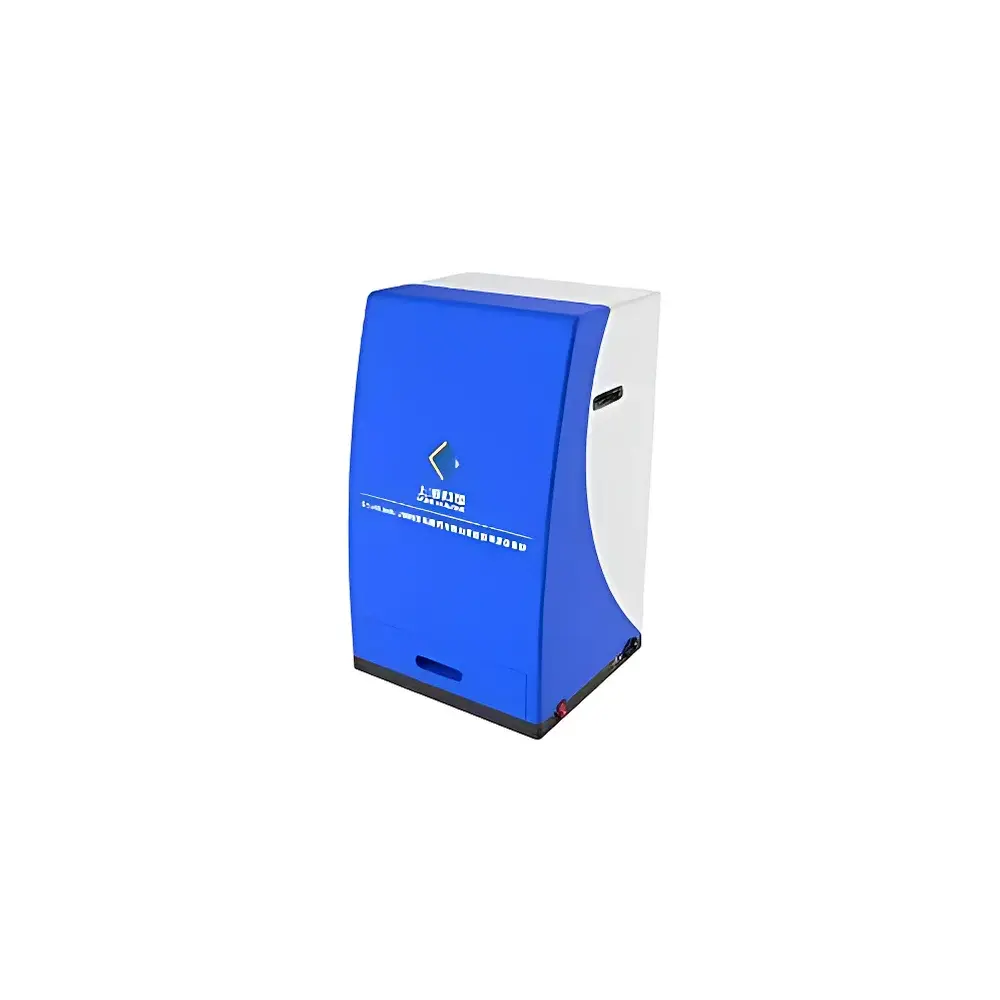
Kezhe GoodLook-2000 Thin Layer Chromatography Imaging System
| Brand | Kezhe / KEZHE SHANGHAI |
|---|---|
| Origin | Shanghai, China |
| Manufacturer Type | Direct Manufacturer |
| Product Category | Domestic |
| Model | GoodLook-2000 |
| Instrument Type | TLC Imaging System |
| Measurement Modes | Reflectance Absorption, Reflectance Fluorescence, Transmittance Absorption, Transmittance Fluorescence |
| Wavelength Range | 190–800 nm |
| Light Sources | Xenon lamp, Tungsten-halogen lamp, High-pressure Mercury lamp |
| Monochromator | Holographic grating (1200 lines/mm) with nitrogen purge capability |
| Spectral Bandwidth | 5 nm |
| Wavelength Accuracy | < 1 nm |
| Wavelength Repeatability | < 0.2 nm |
| Minimum Spatial Resolution | 25 µm |
| Imaging Wavelengths | 254 nm, 365 nm, White light (400–700 nm) |
| Sample Stage Capacity | Up to 200 mm × 200 mm TLC plates |
| Scanning Speed | Max 100 mm/s |
Overview
The Kezhe GoodLook-2000 Thin Layer Chromatography Imaging System is a high-fidelity, fully automated digital imaging platform engineered for quantitative and qualitative analysis of thin-layer chromatograms. Based on high-resolution reflectance and transmittance optical detection—combined with tunable UV/visible excitation and precision spectral filtering—the system captures chemically resolved band patterns across standardized silica or alumina plates. It operates on the principle of wavelength-selective absorption and fluorescence emission, enabling reproducible densitometric quantification of analytes without destructive elution. Designed for regulatory-compliant environments, the GoodLook-2000 meets the instrumental performance criteria specified in the Chinese Pharmacopoeia (2015 Edition) for TLC image acquisition and supports audit-ready workflows aligned with GLP and GMP frameworks.
Key Features
- 20-megapixel industrial CMOS sensor with ≥1-inch optical format, delivering exceptional signal-to-noise ratio and dynamic range for low-light fluorescence and absorbance imaging.
- 24-bit color depth (16,777,216 grayscale levels), supporting Adobe RGB color space for accurate spectral fidelity—critical for comparative analysis and publication-grade documentation.
- Computer-controlled multi-source illumination module featuring xenon, tungsten-halogen, and high-pressure mercury lamps—each independently addressable via software for precise excitation selection and intensity modulation.
- Integrated monochromator with 1200-line/mm holographic grating and optional nitrogen purge for stable deep-UV operation (down to 190 nm), minimizing ozone generation and spectral drift.
- Automated stage with programmable exposure (0–10 s), shutter timing (0–600 min, extendable), and real-time Rf calculation synchronized to solvent front migration.
- 16-bit processing pipeline and dedicated display subsystem (4 GB RAM, 2 GB GPU memory) enabling lossless image rendering and pixel-level calibration.
- USB 3.0 interface for high-throughput image transfer; six USB ports on integrated controller for peripheral expansion (e.g., auto-samplers, developing chambers, spray units).
Sample Compatibility & Compliance
The GoodLook-2000 accommodates standard and custom TLC plates up to 200 mm × 200 mm—including glass, aluminum, and polyester-backed layers coated with silica gel, amino, cyano, or reversed-phase media. Its multi-modal detection supports both non-destructive visualization (e.g., UV-induced fluorescence quenching at 254 nm) and derivatization-enhanced imaging (e.g., anisaldehyde/H2SO4 staining under white light). The system complies with pharmacopeial requirements for resolution, wavelength accuracy (<1 nm), and spatial uniformity. Data integrity safeguards include electronic signatures, user-access logging, method version control, and time-stamped audit trails—fully compatible with FDA 21 CFR Part 11 readiness when deployed with validated GL-2000 workstation software.
Software & Data Management
The GL-2000 Thin Layer Image Workstation provides a modular, ISO/IEC 17025-aligned analytical environment. Core modules include: background subtraction (via blank plate referencing or temporal averaging), geometric correction (keystone, barrel distortion, vignetting compensation), multi-plate alignment and overlay, Rf-based peak tracking, and quantitative densitometry using single-point, multi-point, or internal standard calibration models. Advanced functionality includes herbal fingerprint profiling (hierarchical clustering, similarity index calculation), template matching, and export to CSV, TIFF, PNG, or PDF with embedded metadata. All processing steps are scriptable and repeatable; raw image archives support forensic traceability for regulatory submissions.
Applications
- Pharmaceutical QC/QA: Identity testing, assay validation, degradation product profiling per ICH Q5C and USP .
- Traditional Medicine Analysis: Multi-component fingerprinting of TCM extracts, adulterant detection, batch-to-batch consistency assessment.
- Food Safety: Pesticide residue screening, mycotoxin identification (e.g., aflatoxins under 365 nm), antioxidant profiling.
- Environmental Monitoring: PAHs, PCBs, and chlorinated hydrocarbons in soil/water extracts.
- Academic Research: Reaction monitoring, natural product isolation tracking, chiral separation verification.
FAQ
Does the GoodLook-2000 support GLP/GMP-compliant data handling?
Yes—the GL-2000 software implements role-based access control, electronic signatures, audit trail generation, and method locking per Annex 11 and ALCOA+ principles.
Can it integrate with automated TLC hardware?
Yes—it is natively compatible with Kezhe’s SP-20E sample applicator, TK-20E developing chamber, and TS-20E derivatization sprayer via TTL/RS-232 handshake protocols.
Is nitrogen purge required for 254 nm imaging?
No—nitrogen purge is optional and recommended only for extended operation below 220 nm to suppress ozone formation and maintain lamp stability.
What file formats does it export for regulatory submission?
TIFF (uncompressed, with EXIF metadata), PDF/A-2b (for reports), and CSV (peak tables with Rf, area, height, % content) are fully supported.
How is color accuracy maintained across instruments and over time?
Through factory-calibrated reference tiles, routine chromaticity verification using NIST-traceable standards, and optional professional color profiling services including spectrophotometric recalibration.





