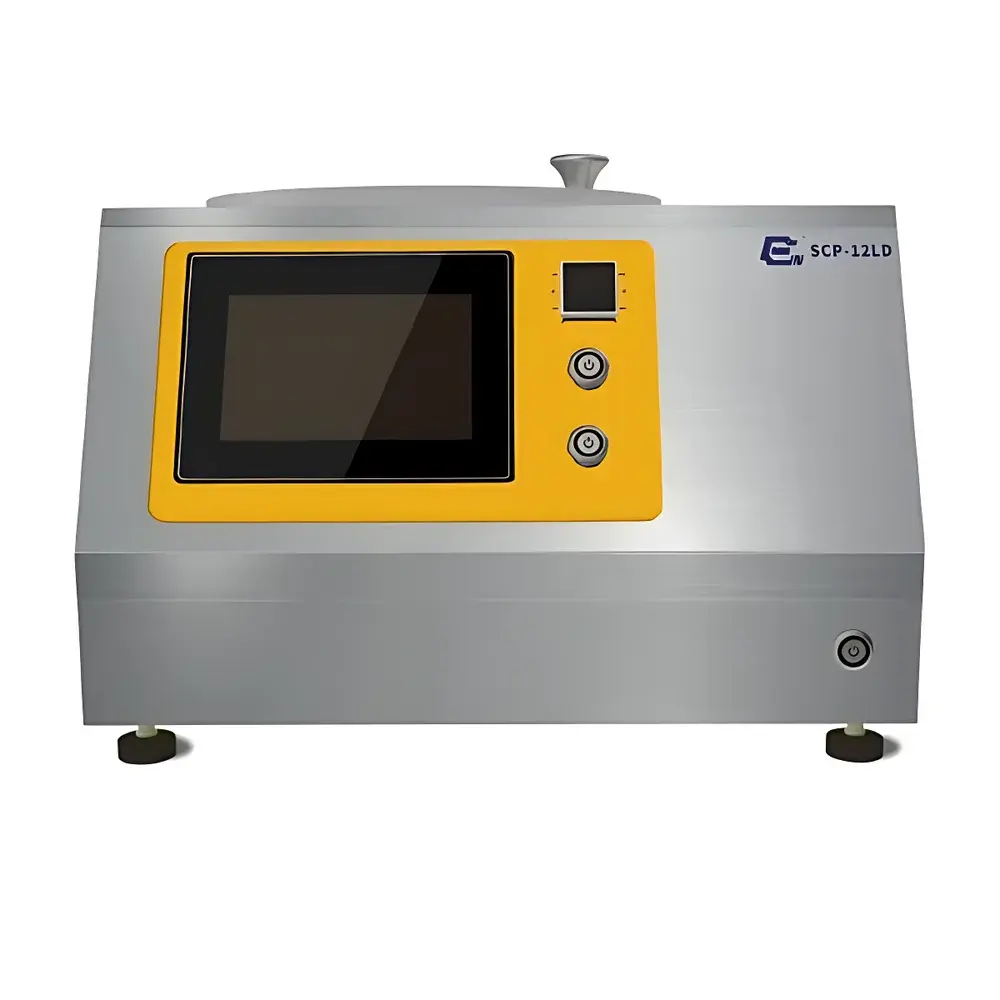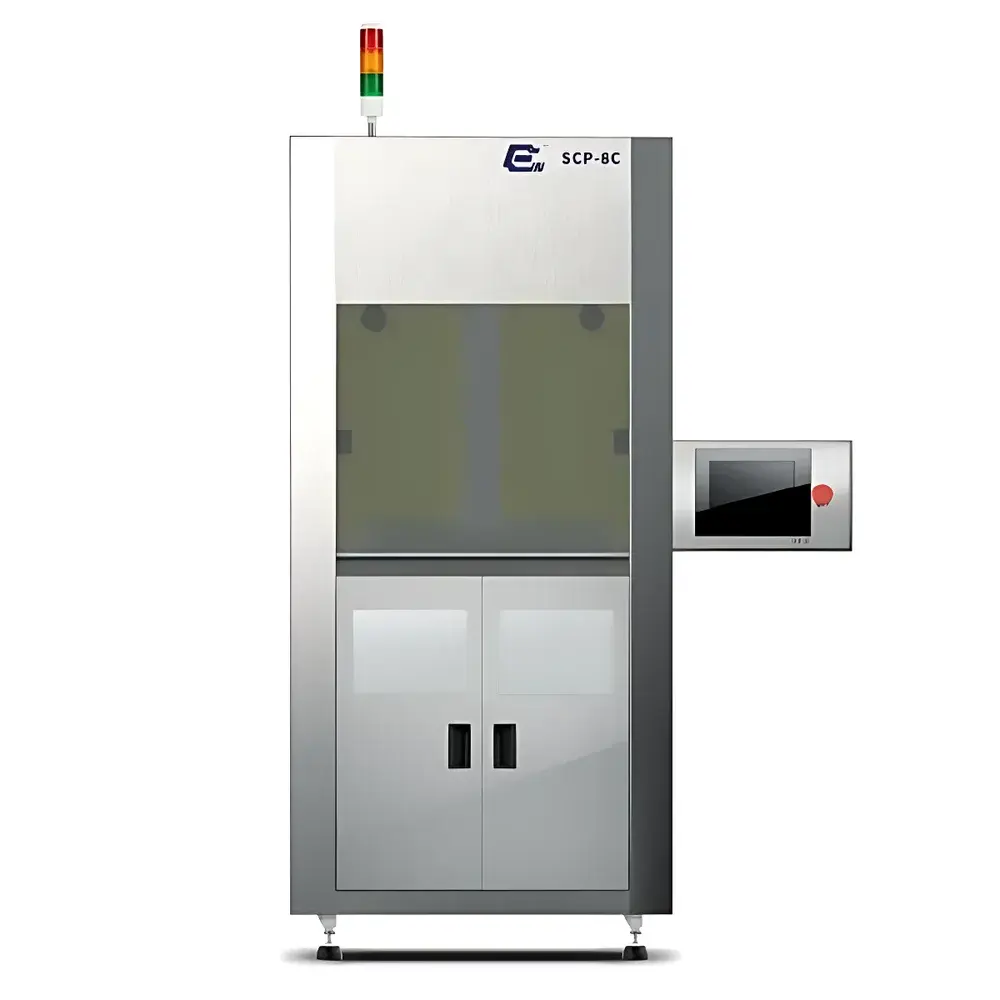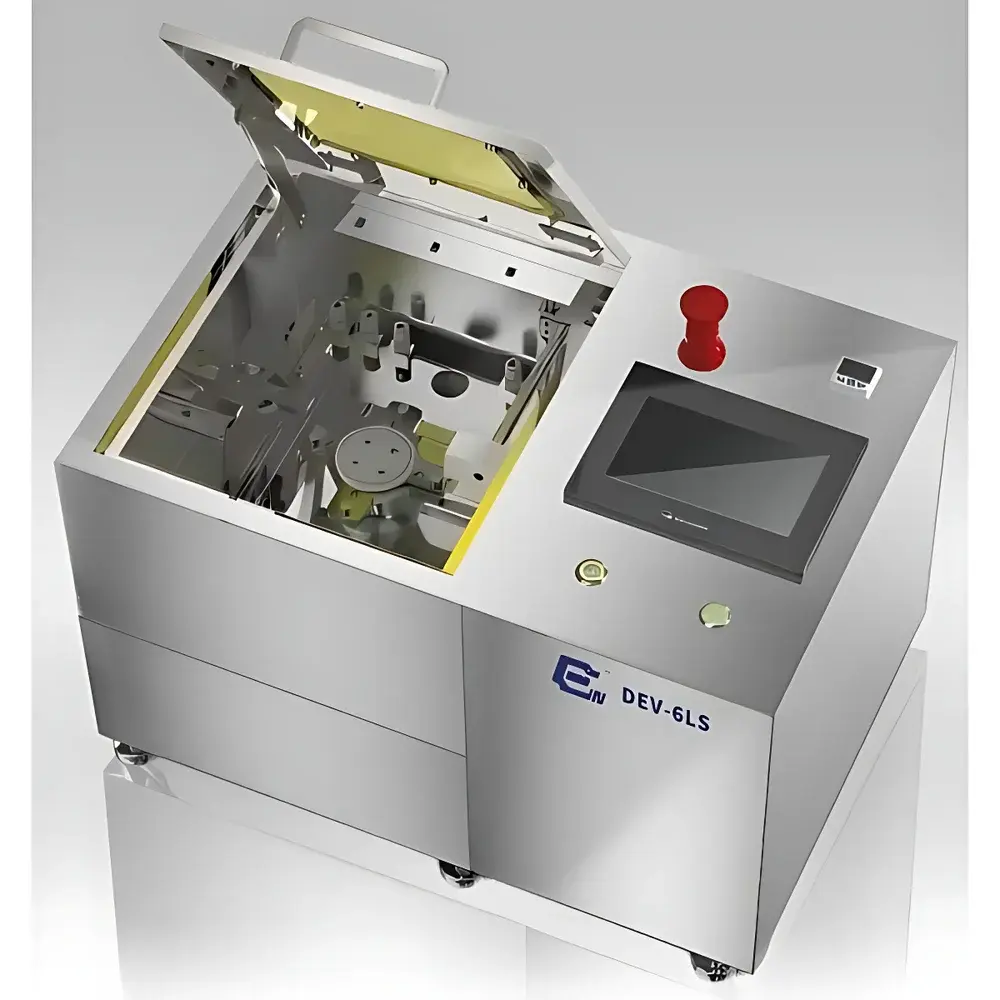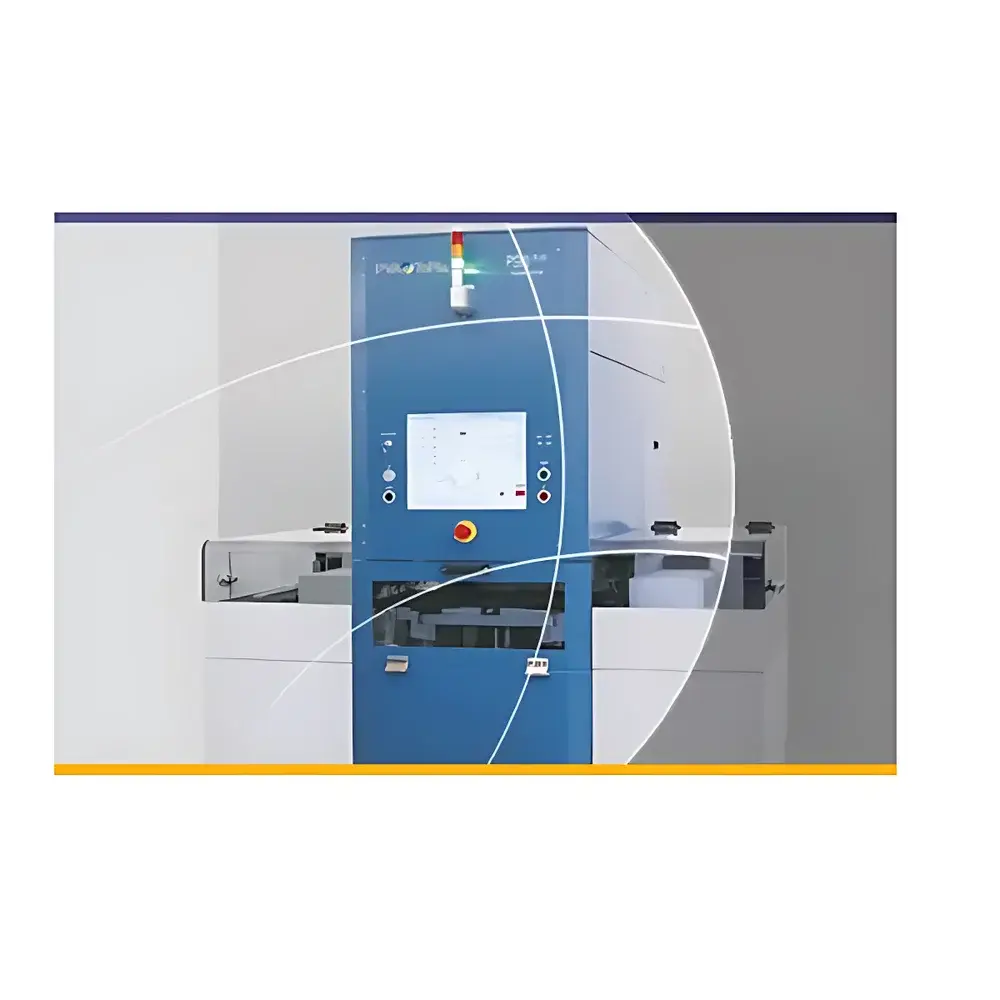
PVA TePla 80 Plus Bar-Type Plasma Cleaning System
| Brand | PVA TePla |
|---|---|
| Origin | USA |
| Model | 80 Plus |
| Plasma Source Options | RF (13.56 MHz) or Microwave (2.45 GHz) |
| Chamber Configuration | Electrode-equipped (RF) or Electrode-less (Microwave) |
| Operation Modes | Manual and Automated Integration Capable |
| Compliance | Designed for Semiconductor Cleanroom Environments (Class 100 / ISO Class 5 compatible) |
| Integration | Standalone or Inline Production Line Compatible |
| Software Interface | Intuitive GUI with Parameter Logging and Recipe Management |
Overview
The PVA TePla 80 Plus Bar-Type Plasma Cleaning System is a precision-engineered dry process tool designed specifically for surface activation, organic residue removal, and native oxide modification in semiconductor front-end-of-line (FEOL) and back-end-of-line (BEOL) fabrication. It operates on low-pressure plasma physics principles—either capacitive-coupled radiofrequency (RF) discharge at 13.56 MHz or microwave-excited plasma at 2.45 GHz—to generate reactive species (ions, radicals, UV photons) that interact with contaminant layers via synergistic physical sputtering and chemical etching mechanisms. Unlike wet chemical cleaning, this system eliminates solvent handling, drying steps, and particle redeposition risks—critical for sub-100 nm node wafer processing where atomic-level surface integrity directly impacts gate oxide reliability, metal adhesion, and dielectric uniformity.
Key Features
- Modular bar-type plasma source architecture enabling uniform treatment across 200 mm and 300 mm wafers without shadowing or edge non-uniformity.
- Dual excitation mode support: RF configuration (13.56 MHz) delivers controllable ion bombardment energy for selective physical cleaning; microwave configuration (2.45 GHz) enables high-density, low-energy radical-dominated chemistry ideal for delicate photoresist stripping or polymer removal.
- Integrated vacuum chamber with pressure regulation (1–100 mTorr range), mass flow controllers for precise gas dosing (O2, Ar, N2, CF4, H2, or custom blends), and real-time RF/microwave power monitoring (0–1000 W range).
- Flexible integration capability: supports manual loading, semi-automated cassette-to-cassette transfer, or full SECS/GEM-compliant integration into cluster tools and automated fab lines.
- Robust stainless-steel construction with electropolished interior surfaces and ISO-KF vacuum ports compliant with SEMI E10 and E19 standards.
- Onboard PLC-based control system with password-protected user levels, audit trail logging, and configurable safety interlocks meeting IEC 61508 SIL2 requirements.
Sample Compatibility & Compliance
The 80 Plus accommodates bare silicon, SiO2, SiNx, low-k dielectrics (e.g., carbon-doped oxides), copper, aluminum, and advanced packaging substrates including fan-out wafer-level packages (FOWLP) and 2.5D/3D interposers. It meets critical industry specifications for particle generation (< 0.1 particles/cm² per 30-second cycle, measured per SEMI F22), outgassing rate (< 1×10⁻⁸ Torr·L/s·cm²), and residual halogen content (per SEMI C37). Process repeatability is validated under GLP-aligned protocols, and software features support 21 CFR Part 11 compliance through electronic signatures, change control logs, and secure data archiving.
Software & Data Management
The system runs on PVA TePla’s proprietary PlasmaControl™ software—a Windows-based platform offering recipe-driven operation, real-time parameter visualization (power, pressure, gas flow, reflected power), and automated process sequencing. All operational data—including timestamps, setpoints, sensor readings, and alarm events—are stored in encrypted SQLite databases with export to CSV or XML for SPC analysis. Optional integration with MES platforms (e.g., Applied Materials EnduraLink, PDF Solutions Exensio) enables traceability from wafer lot ID to individual plasma cycle parameters, supporting FA investigations and yield correlation studies.
Applications
- Semiconductor: Pre-metallization surface conditioning to remove hydrocarbon monolayers and improve TiN/Ti adhesion; post-etch residue removal after hard mask patterning; post-CMP organic contaminant clearance.
- Advanced Packaging: Redistribution layer (RDL) surface activation prior to dielectric spin-coating; under-bump metallization (UBM) cleaning before solder reflow.
- MEMS & Sensors: Release etch residue removal from high-aspect-ratio structures; hydrophobic-to-hydrophilic surface conversion for microfluidic channel priming.
- Photovoltaics: Anti-reflective coating (ARC) surface functionalization prior to SiNx deposition; PERC cell passivation layer preparation.
- R&D & Pilot Production: Used by foundry partners and IDMs for process development, qualification of new materials (e.g., Co, Ru, MoS2), and small-batch prototyping under controlled environmental conditions.
FAQ
What vacuum level is required for stable plasma ignition and sustained operation?
Typical operating pressure ranges from 5 to 50 mTorr, optimized per gas chemistry and process objective—lower pressures favor ion directionality (RF mode), while higher pressures enhance radical density (microwave mode).
Can the 80 Plus be qualified for high-volume manufacturing (HVM) environments?
Yes—its design conforms to SEMI S2/S8 safety standards, includes MTBF > 10,000 hours for core subsystems, and supports predictive maintenance via integrated sensor diagnostics.
Is remote monitoring and troubleshooting supported?
Standard Ethernet/IP connectivity enables secure remote access via VPN; optional VNC-based support interface allows PVA TePla field engineers to perform diagnostics without physical presence.
How does the bar-type electrode geometry improve process uniformity compared to planar configurations?
The linear bar array generates a distributed plasma zone with minimized standing-wave effects and reduced edge-field distortion—validated via Langmuir probe mapping showing < ±3% spatial variation in electron density across 300 mm wafers.
Does the system support mixed-gas chemistries for hybrid physical-chemical cleaning?
Yes—dual MFCs allow simultaneous or sequential introduction of inert (Ar), oxidizing (O2), or reducing (H2/NH3) gases, enabling tunable etch selectivity and surface termination control.