
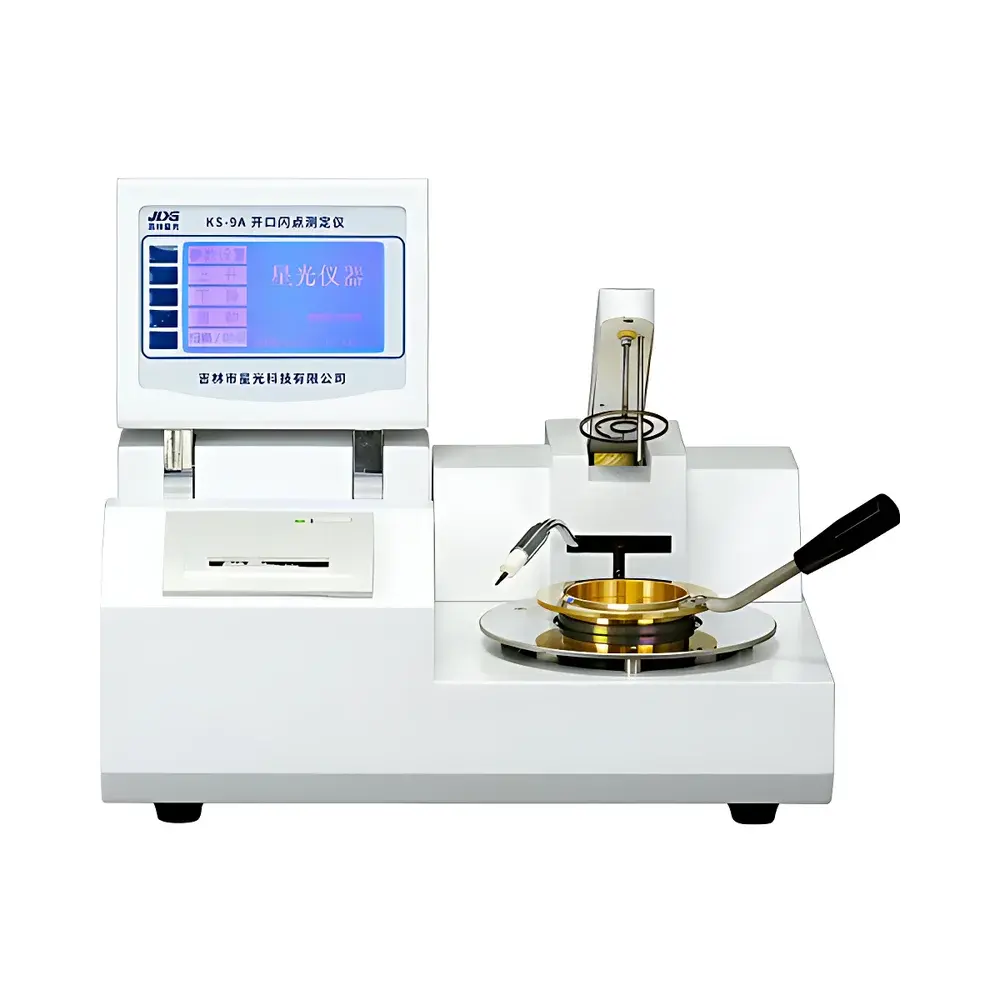
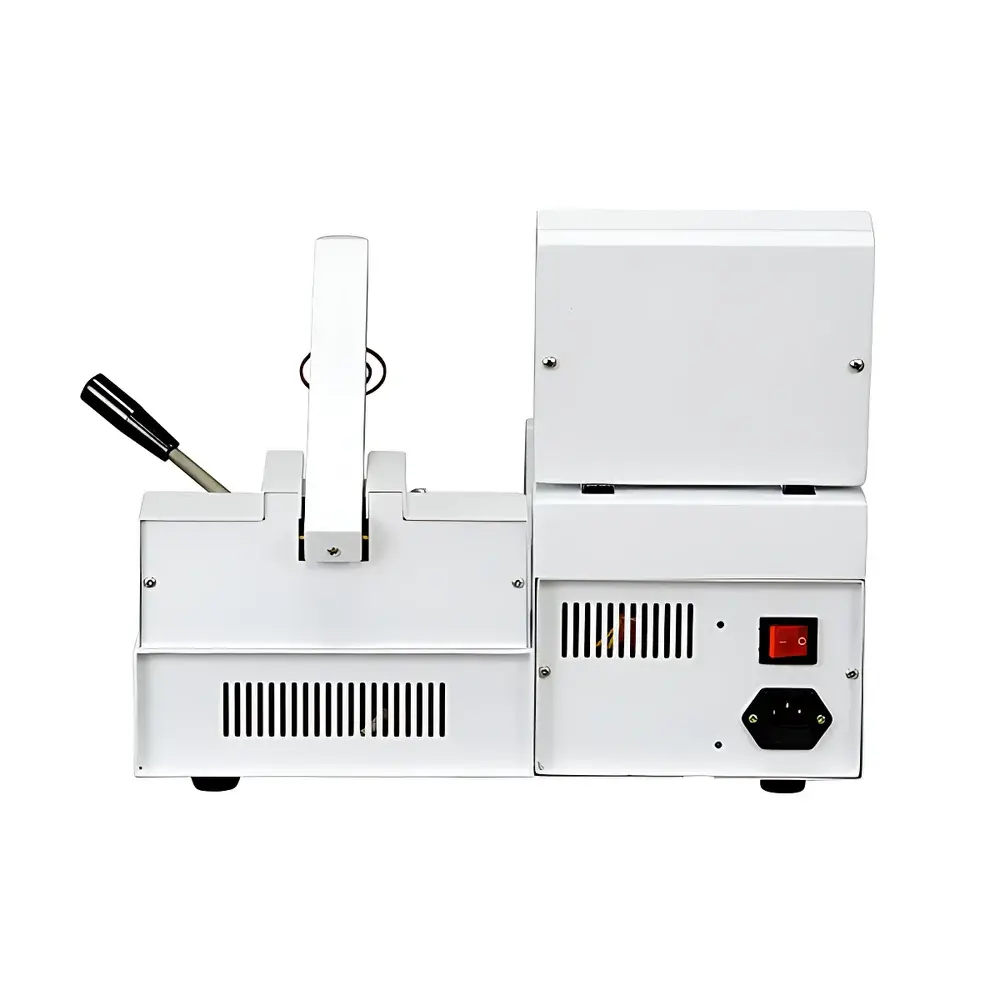
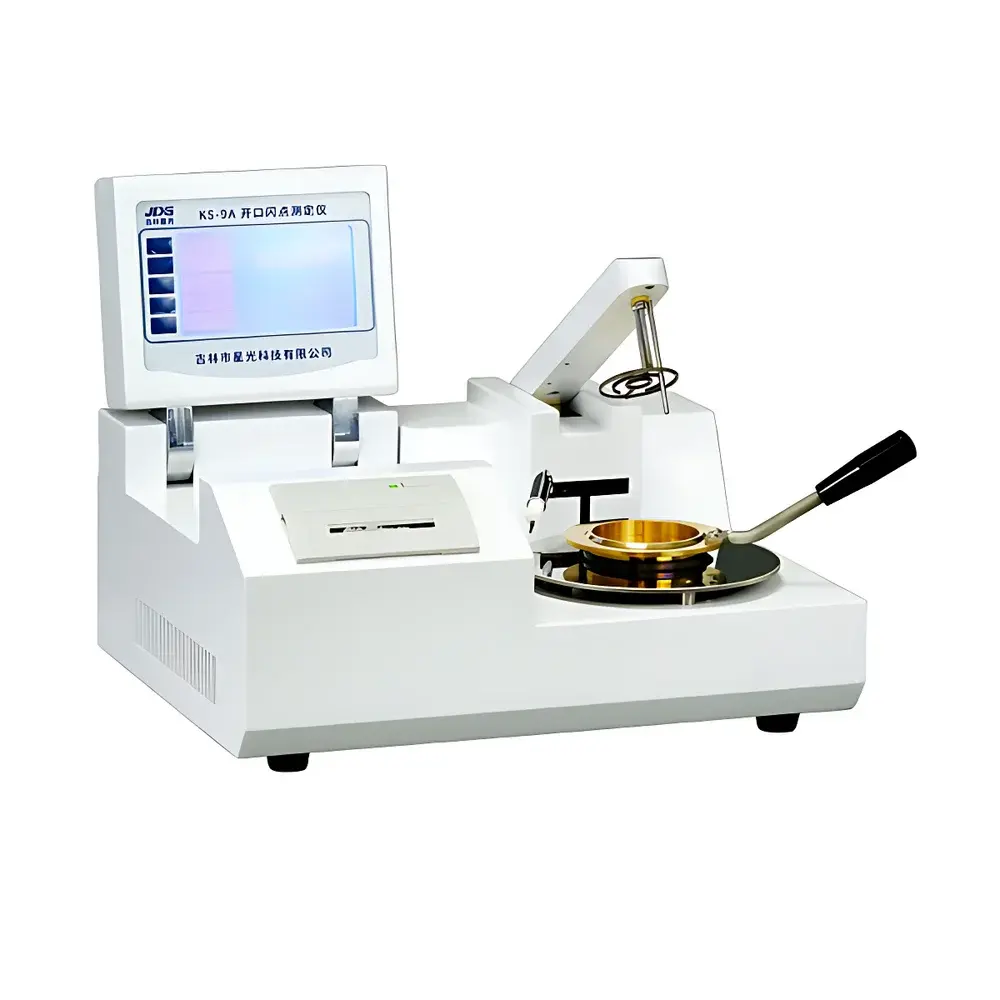
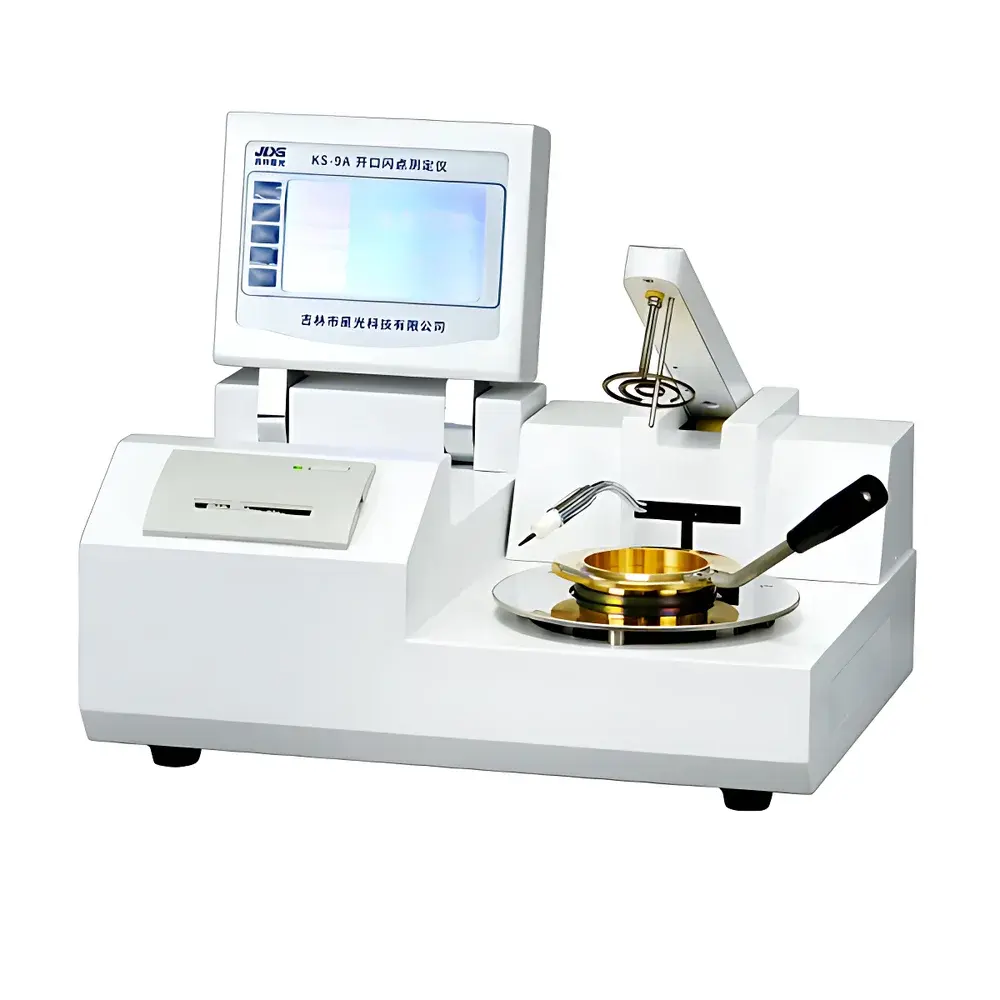
KS-9A Automatic Cleveland Open-Cup Flash Point Tester
| Brand | KC Starlight |
|---|---|
| Origin | Beijing, China |
| Manufacturer Type | Direct Manufacturer |
| Country of Origin | China |
| Model | KS-9A |
| Price | USD 1,150 (FOB) |
| Temperature Range | 79 °C to 400 °C |
| Ignition Source | High-Stability Silicon Nitride Igniter |
| Repeatability | ≤4 °C |
| Applicable Standards | GB/T 3536, ASTM D92 |
| Accuracy | ±2 °C |
| Reproducibility | ≤8 °C |
| Heating Rate | Compliant with GB/T 3536 |
| Resolution | 0.1 °C |
| Ambient Operating Conditions | 5–40 °C, ≤85% RH (non-condensing) |
| Power Supply | AC 220 V ±10%, 50 Hz ±10% |
| Power Consumption | ≤550 W |
| Dimensions (W×D×H) | 410 × 320 × 165 mm |
| Net Weight | 14.5 kg |
Overview
The KS-9A Automatic Cleveland Open-Cup Flash Point Tester is a precision-engineered instrument designed for the accurate determination of the open-cup flash point of petroleum products, lubricants, biodiesel blends, and other combustible liquids in accordance with internationally recognized test methods—specifically GB/T 3536 (Chinese National Standard) and ASTM D92 (Standard Test Method for Flash and Fire Points by Cleveland Open Cup Tester). It operates on the fundamental principle of controlled heating: a sample is placed in a standardized brass test cup, heated at a prescribed rate, and exposed to a calibrated flame at regular intervals. The flash point is defined as the lowest temperature at which vapors above the sample ignite momentarily upon exposure to the ignition source under specified atmospheric conditions. This thermally driven, flame-based detection method ensures compliance with regulatory and quality control requirements across refining, distribution, transportation, and end-user safety assessment workflows.
Key Features
- Fully automated sequence execution—including cup lifting, temperature ramping, flame introduction, flash detection, data logging, thermal shutdown, and post-test cooling—minimizing operator intervention and inter-laboratory variability.
- High-stability silicon nitride igniter delivering consistent flame geometry, thermal output, and extended service life (>10,000 cycles) without degradation in ignition reliability.
- Pt100 platinum resistance thermometer housed in corrosion-resistant stainless-steel sheath, providing traceable temperature measurement with 0.1 °C resolution and ±2 °C absolute accuracy across the full 79–400 °C operating range.
- Microprocessor-controlled heating system with real-time PID feedback, ensuring strict adherence to the linear heating rate mandated by GB/T 3536 (typically 14–17 °C/min during final approach).
- Integrated safety logic: automatic heater deactivation upon reaching user-defined upper temperature limit or detection of abnormal thermal runaway; emergency stop button compliant with IEC 60204-1.
- Large backlit LCD display (320 × 240 pixels) supporting bilingual interface (English/Chinese), real-time graphical temperature curve, and intuitive menu navigation without external PC dependency.
Sample Compatibility & Compliance
The KS-9A accommodates standard Cleveland open-cup test vessels (ASTM D92-compliant brass cups, 65 mm diameter × 35 mm depth) and accepts samples ranging from low-viscosity naphthas to high-boiling residual fuels and oxidized lubricants. Its design meets mechanical and procedural requirements of both GB/T 3536 and ASTM D92, including cup geometry, stirrer specifications, flame diameter (3.2–4.8 mm), and sweep frequency (every 2 °C after 23 °C rise from expected flash point). While not certified to ISO/IEC 17025 as a standalone unit, the instrument supports GLP-compliant operation when integrated into validated laboratory workflows—including audit-trail-capable data export (via RS232/USB), manual calibration verification logs, and documented maintenance records per manufacturer-recommended intervals.
Software & Data Management
Data acquisition and reporting are handled internally via embedded firmware with non-volatile memory storage for up to 200 test records. Each record includes date/time stamp, sample ID, measured flash point, final equilibrium temperature, ignition event count, and pass/fail status relative to specification limits. Export options include direct thermal printing (built-in printer module) and ASCII-formatted text files via serial or USB interface for import into LIMS or Excel-based QA databases. Though no proprietary PC software is bundled, the device supports standard Modbus RTU protocol for integration into SCADA or centralized QC monitoring systems. All firmware updates are delivered via secure USB stick with version-controlled release notes and change-log documentation aligned with ICH Q7 Annex 11 principles for electronic records integrity.
Applications
- Quality assurance of crude oil fractions and finished distillates (e.g., diesel, jet fuel, heating oil) prior to shipment or blending.
- Flash point verification of transformer oils and turbine lubricants to ensure dielectric integrity and fire-safety compliance (IEEE C57.106, IEC 60296).
- Regulatory testing for customs clearance and hazardous goods classification (UN TDG Class 3, IMDG Code, ADR/RID).
- Research and development of alternative fuels—including bio-oils, pyrolysis liquids, and synthetic hydrocarbons—where volatility profiling informs handling and storage protocols.
- Third-party inspection labs serving petrochemical terminals, rail tank car operators, and aviation refueling facilities requiring repeatable, auditable flash point data.
FAQ
What standards does the KS-9A strictly comply with?
It is fully aligned with the procedural, geometric, and timing requirements of GB/T 3536 and ASTM D92 for open-cup flash point determination.
Is the instrument suitable for testing used engine oils or heavily contaminated samples?
Yes—its robust cup design, high-temperature tolerance (up to 400 °C), and self-cleaning thermal cycle support analysis of degraded or soot-laden lubricants, provided residue is manually removed between tests per ASTM D92 Section 8.3.
Can the device be integrated into a networked QC lab environment?
It supports RS232 and USB host interfaces for direct connection to PCs or PLCs; Modbus RTU implementation enables integration with MES or centralized instrumentation management platforms.
Does the KS-9A meet FDA 21 CFR Part 11 requirements?
The base unit does not include electronic signature or audit-trail functionality out-of-the-box; however, its data export architecture allows downstream validation within a Part 11–compliant LIMS ecosystem when paired with appropriate access controls and record retention policies.
What maintenance is required to sustain long-term accuracy?
Quarterly verification using NIST-traceable reference oils (e.g., SRM 2721a), annual calibration of Pt100 sensor and igniter timing, and biannual cleaning of cup holder and flame path per KC Starlight Technical Bulletin TB-KS9A-03.







