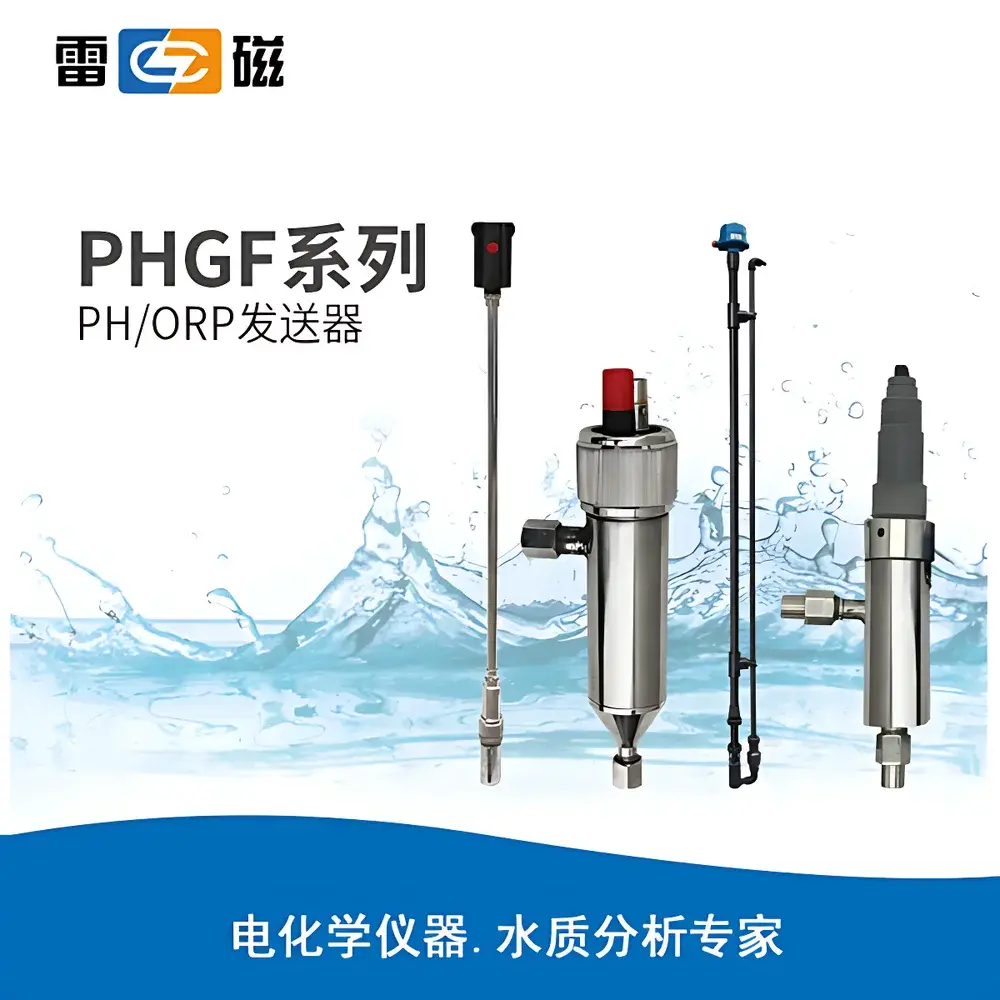
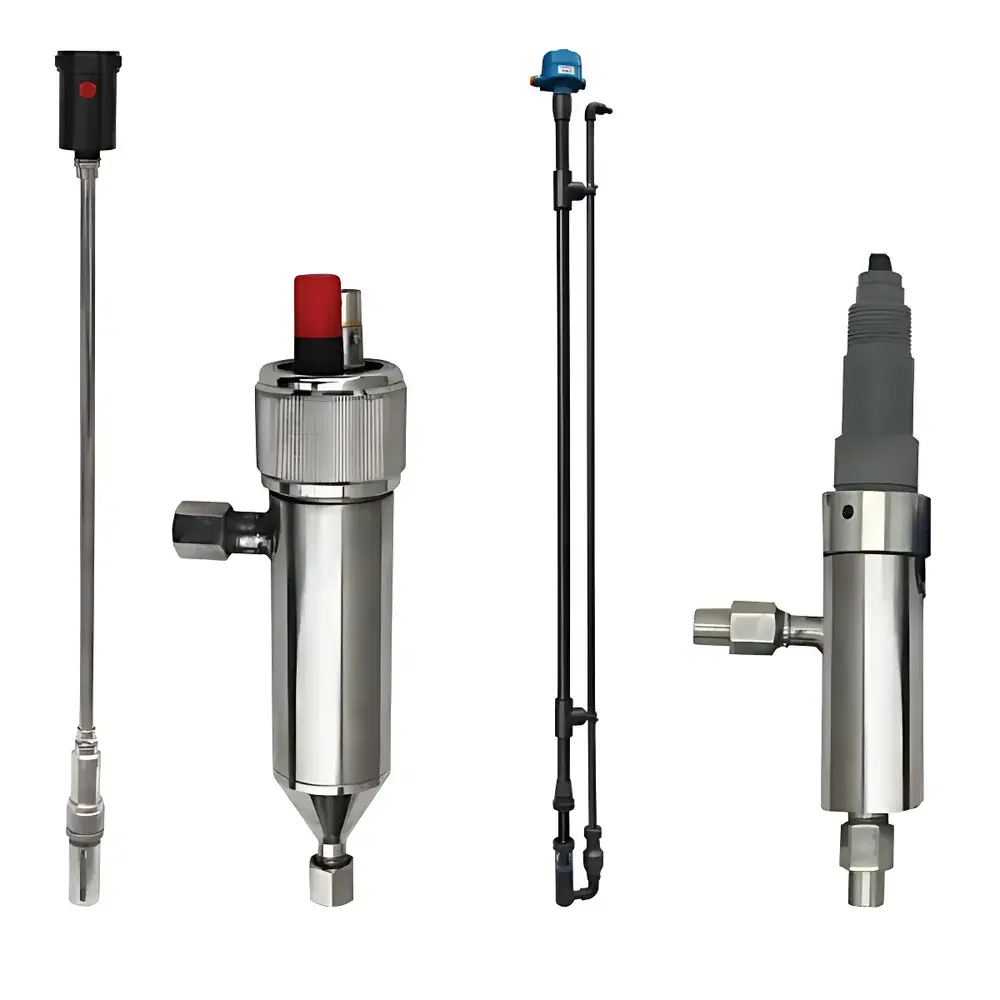
Leichi PHGF Series pH/ORP Transmitter
| Brand | Leichi |
|---|---|
| Model | PHGF Series |
| Type | pH and ORP Transmitter |
| Mounting Options | Submersible (PHGF-27B, PHGF-28B, PHGF-43) / Flow-Through (PHGF-28B, PHGF-46) |
| Integrated Pre-amplifier Board | Yes (PHGF-27B, PHGF-28B, PHGF-43) / No (PHGF-46) |
| Cable Length | 20 m (PHGF-27B, PHGF-28B, PHGF-43) / 10 m (PHGF-46) |
| Operating Temperature Range | 5–60 °C or 20–90 °C (selectable, PHGF-27B & PHGF-28B) / 5–45 °C (PHGF-43) / 5–55 °C (PHGF-46) |
| Compatible Electrodes | FG-990 (pH), ORP-1 (ORP) |
Overview
The Leichi PHGF Series pH/ORP Transmitter is an industrial-grade process analytical instrument engineered for continuous, real-time monitoring of hydrogen ion activity (pH) and oxidation-reduction potential (ORP) in liquid-phase process streams. Designed for integration into distributed control systems (DCS), programmable logic controllers (PLC), and SCADA architectures, the PHGF series employs high-impedance voltage measurement circuitry with low-drift analog signal conditioning to convert millivolt-level electrode outputs into stable, noise-immune 4–20 mA current loop signals—compliant with IEC 61000-6-2/6-4 electromagnetic compatibility standards. Each variant supports two-wire or four-wire configurations depending on power supply topology and grounding requirements, and features galvanically isolated analog output to prevent ground-loop interference in electrically noisy plant environments. The transmitter operates on a wide input voltage range (12–36 VDC), enabling flexible deployment across water treatment plants, chemical manufacturing lines, pharmaceutical bioreactors, and food & beverage processing units where regulatory traceability and long-term calibration stability are critical.
Key Features
- Configurable mounting options: submersible (direct immersion in tanks or open channels) and flow-through (inline installation in pressurized piping systems) variants optimized for minimal flow disturbance and consistent sample exposure
- Integrated high-gain, low-noise preamplifier board (standard on PHGF-27B, PHGF-28B, and PHGF-43 models) reduces signal degradation over extended cable runs up to 20 meters
- Wide operating temperature range support: dual-range selection (5–60 °C or 20–90 °C) for high-temperature sterilization cycles or ambient process monitoring
- Auto-detect and auto-configure capability for Leichi’s smart electrodes (e.g., FG-991A, FG-990T-819-A), enabling plug-and-play operation with embedded sensor identification and calibration history retention
- IP67-rated enclosure with stainless steel housing (PHGF-27B/28B/43) or polycarbonate housing (PHGF-46), rated for NEMA 4X and IEC 60529 environmental protection
- Diagnostic functions including electrode impedance monitoring, reference junction status, and open-circuit detection—accessible via front-panel LED indicators or HART digital interface
Sample Compatibility & Compliance
The PHGF series is validated for use with aqueous solutions across a broad conductivity spectrum (10 µS/cm to 2 S/cm), including municipal wastewater, boiler feedwater, caustic soda lyes, acidic pickling baths, and fermentation broths. All models meet ISO 17025 traceable calibration requirements when used with certified reference buffers (NIST-traceable pH 4.01, 7.00, 10.01 at 25 °C). The transmitter architecture supports compliance with FDA 21 CFR Part 11 for electronic records and signatures when paired with Leichi’s optional L-Link software suite (v3.2+), providing audit trails, user access control, and electronic signature workflows required under GMP/GLP frameworks. Electrical safety conforms to IEC 61010-1:2010; intrinsic safety versions (PHGF-Ex variants) are available upon request for Zone 1/21 hazardous locations.
Software & Data Management
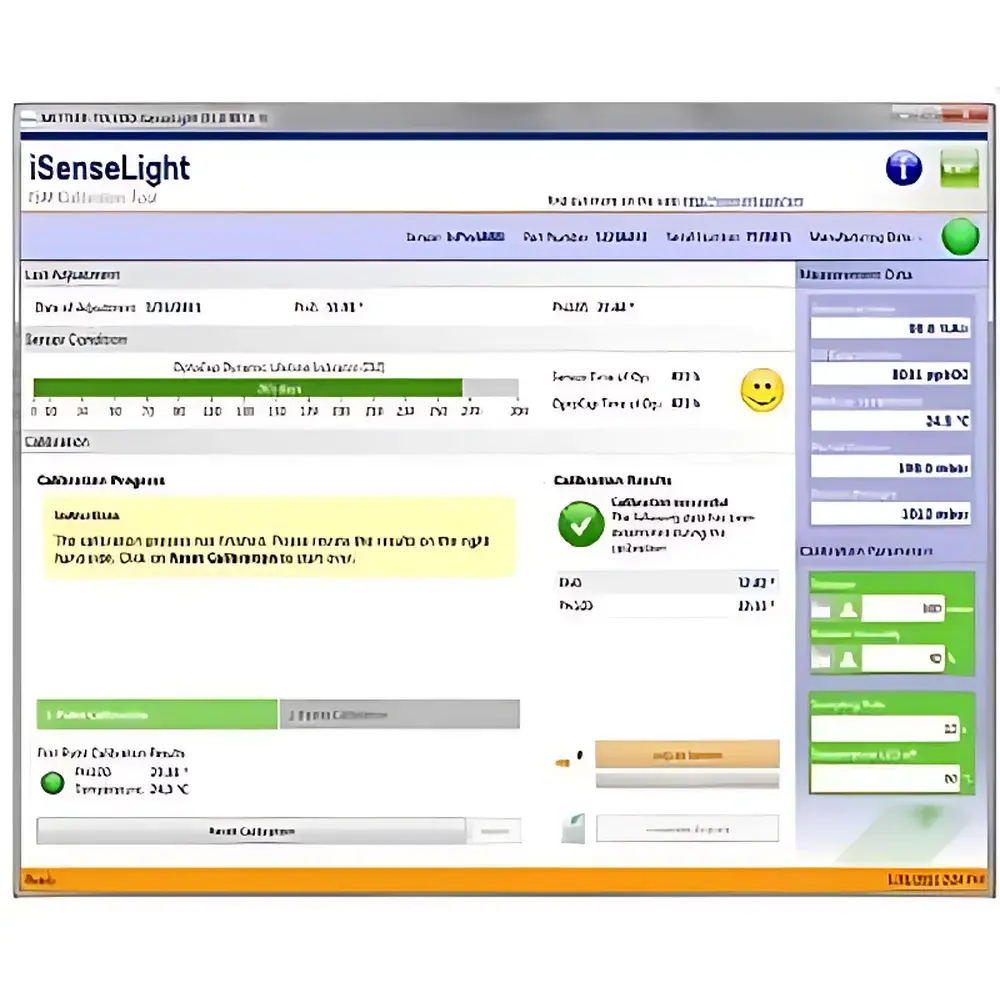
Configuration, diagnostics, and calibration management are performed via Leichi’s L-Link PC software (Windows 10/11 compatible), which communicates over USB-to-HART or RS-485 Modbus RTU protocols. The software enables multi-point calibration (up to 5 points), slope/offset verification, temperature compensation profile definition (NTC 10 kΩ, Pt100, or user-defined), and automatic drift trending over time. All configuration parameters—including sensor serial number, calibration date, operator ID, and environmental conditions—are stored in non-volatile memory with timestamped logging. Data export complies with ASTM D1129 and ISO/IEC 17025 reporting templates, supporting CSV, PDF, and XML formats for laboratory information management system (LIMS) integration.
Applications
- Real-time pH control in activated sludge basins and anaerobic digesters (WWTPs)
- ORP monitoring for chlorine dioxide dosing and ozone disinfection validation
- In-line pH supervision during CIP (clean-in-place) and SIP (sterilize-in-place) cycles in biopharmaceutical skids
- Acid-base titration endpoint detection in batch chemical synthesis reactors
- Corrosion potential tracking in cooling tower water and steam condensate return lines
- Quality assurance of dairy product pH (e.g., yogurt, cheese whey) during thermal processing
FAQ
What electrode types are natively supported?
The PHGF series is designed for Leichi’s FG-series combination pH electrodes (e.g., FG-990, FG-991, FG-991A, FG-990T-819-A) and ORP-1 redox electrodes. Third-party electrodes may be used if they conform to DIN 19263 or ISO 15270 pinout specifications and output impedance remains below 1 GΩ.
Does the transmitter support temperature compensation?
Yes—automatic temperature compensation (ATC) is enabled via integrated Pt100 or NTC 10 kΩ sensors housed within compatible electrodes (e.g., FG-990T-819-A). Manual temperature entry is also supported for fixed-point applications.
Can the PHGF be integrated into a Modbus-based SCADA system?
All PHGF models support Modbus RTU over RS-485 as standard; register maps and function code documentation are provided in the L-Link Software Developer Kit (SDK).
Is firmware upgrade capability available in the field?
Yes—firmware updates are performed via L-Link software using a USB-HART interface or RS-485 connection, with checksum verification and rollback support to ensure operational continuity.
What is the recommended recalibration interval under continuous operation?
Per ISO 5725-2 and USP <797>, routine calibration verification is advised every 24 hours in critical GMP applications; for non-regulated industrial use, weekly verification with two-point buffer check is typical, contingent on process stability and electrode aging characteristics.