
Aolong AL-DR-270 Portable Pulsed X-ray Digital Radiography (DR) System
| Brand | Aolong |
|---|---|
| Origin | Liaoning, China |
| Manufacturer Type | Direct Manufacturer |
| Origin Category | Domestic |
| Model | AL-DR-270 |
| X-ray Tube Voltage | 270 kV |
| Penetration Capability | 13 mm steel equivalent |
| Detector Type | Amorphous Silicon Flat Panel Detector |
| Effective Imaging Area | 350 × 430 mm |
| Pixel Pitch | 140 µm |
| Spatial Resolution | 3.2 lp/mm |
| A/D Conversion | 16-bit |
| Image Acquisition Time | 1 s (wired), 2.5 s (wireless) |
| Focal Spot Size | 3 mm |
| Pulse Width | 50 ns |
| Pulse Rate | 15 Hz |
| Output Dose | 2.6–4.0 mR/pulse (measured at 30.5 cm / 12 in from source) |
| Dimensional Measurement Accuracy | ±1 mm |
| Radiation Safety Compliance | Meets IEC 61331-1 and GBZ 138–2019 requirements for portable pulsed X-ray devices |
Overview
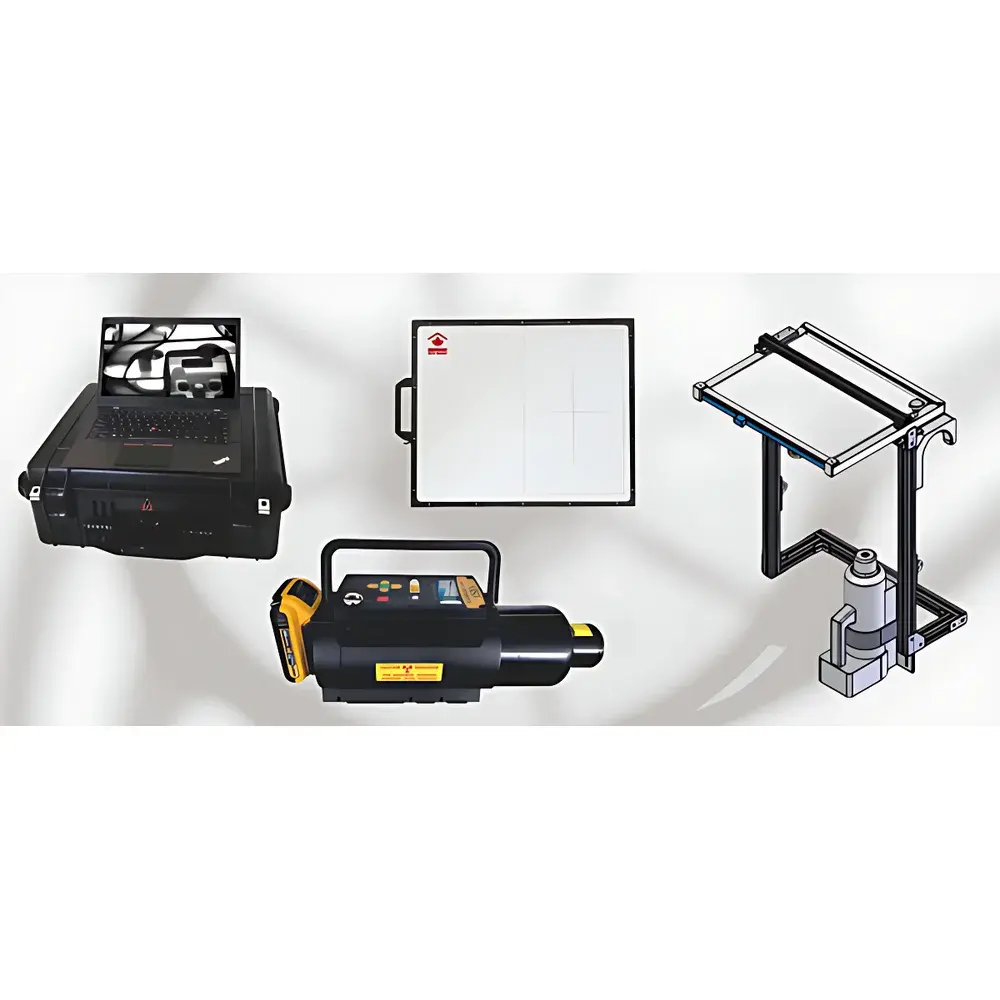
The Aolong AL-DR-270 is a compact, battery-assisted pulsed X-ray digital radiography (DR) system engineered for field-deployable non-destructive testing (NDT) of metallic and composite structures. Unlike continuous-wave X-ray generators, the AL-DR-270 employs a high-voltage pulsed X-ray source operating at a nominal peak voltage of 270 kV, delivering discrete radiation bursts with precisely controlled temporal and spatial characteristics. This pulse-based architecture minimizes heat load on the anode, extends tube life, and significantly reduces operator dose exposure—critical for on-site inspection in aerospace maintenance, pipeline integrity assessment, rail infrastructure verification, and defense-related component screening. The system’s core imaging chain comprises a tungsten-target pulsed X-ray generator (3 mm focal spot), a large-area amorphous silicon flat-panel detector (350 × 430 mm active area), and a real-time image processing engine compliant with ASTM E2737–22 for digital radiographic system performance evaluation. Designed for rugged portability, all components—including generator, detector, laptop workstation, charging units, and mechanical fixtures—fit within a single IP65-rated transport case weighing under 45 kg.
Key Features
- True field-portable architecture: Integrated lithium-ion power modules enable >8 hours of operation without external AC supply.
- Pulsed X-ray generation: 50 ns pulse width and 15 Hz repetition rate ensure minimal motion blur and optimal signal-to-noise ratio for dynamic or vibration-prone environments.
- High-fidelity imaging: 16-bit A/D conversion and 140 µm pixel pitch support quantitative density analysis and sub-millimeter defect discernibility in steel up to 13 mm thickness.
- Real-time workflow integration: Wired acquisition completes in ≤1 second; wireless mode (Wi-Fi 5 GHz) delivers images in ≤2.5 seconds with AES-256 encryption for secure data transmission.
- Ergonomic deployment: Compatible with standard photographic tripods and custom-engineered articulating mounts for angled or overhead inspections.
- Radiation safety by design: Dose output strictly limited to 2.6–4.0 mR per pulse at 30.5 cm distance; meets ALARA principles and supports compliance with local regulatory frameworks including NRC 10 CFR Part 20 and IAEA SSG-11.
Sample Compatibility & Compliance
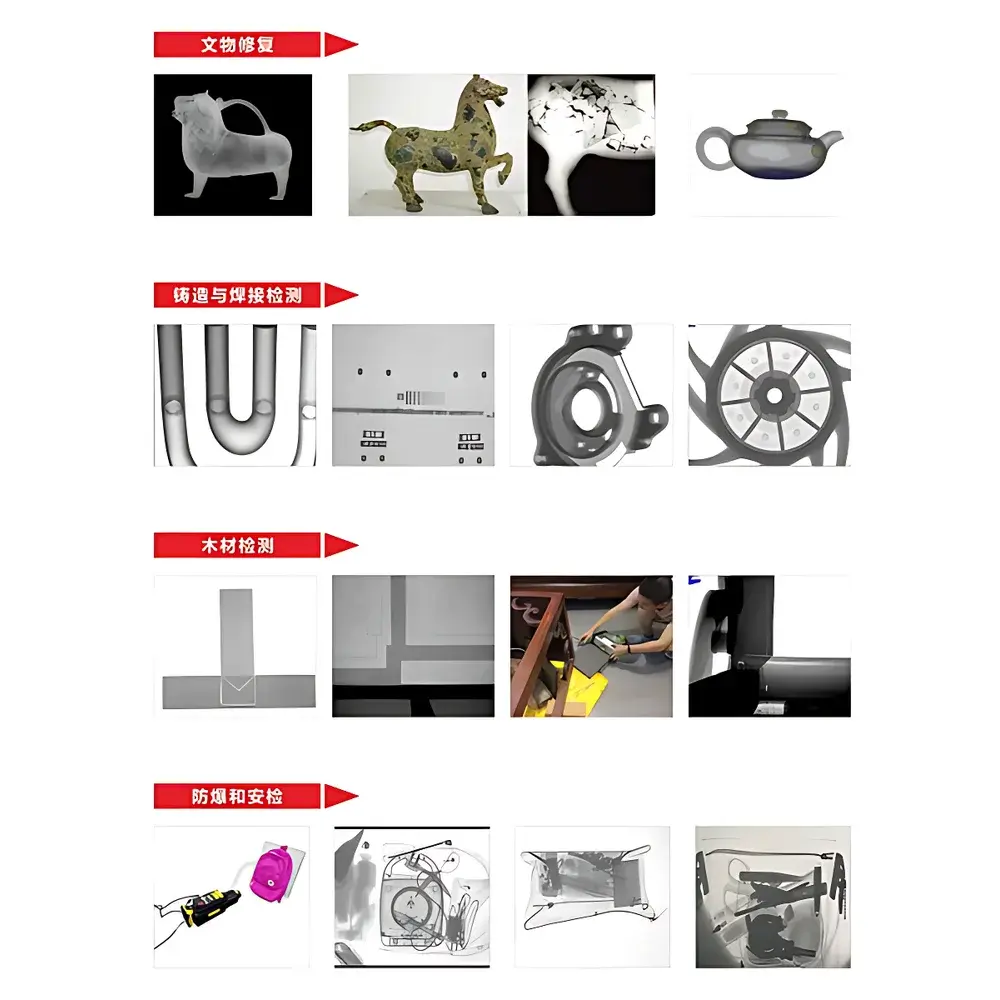
The AL-DR-270 accommodates a broad range of industrial specimens—from welded joints and castings to composite laminates and additive-manufactured parts—within its 350 × 430 mm field of view. Its 270 kV pulsed beam provides sufficient photon energy to penetrate structural steel (13 mm), aluminum alloys (up to 50 mm), and titanium (up to 35 mm), while maintaining adequate contrast sensitivity for porosity, inclusions, lack-of-fusion, and cracking. The system conforms to ISO 17636-2:2022 for radiographic testing of welds using digital detectors and satisfies essential requirements of EN 13068-3 for computed radiography and DR systems. All firmware and calibration routines are traceable to national standards (CNAS-accredited metrology labs), and dose reporting logs include timestamp, kV, pulse count, and distance metadata to support ISO/IEC 17025 audit readiness.
Software & Data Management
The proprietary Aolong DRView™ software (Windows 7/10/11 compatible) provides full DICOM 3.0 interoperability and native support for ASTM E2698-compliant image quality indicator (IQI) analysis. Core functionalities include dual-window contrast enhancement, edge-sharpening filters based on unsharp masking algorithms, geometric measurement tools with pixel-to-mm calibration referencing NIST-traceable step wedges, and window-level/width adjustment for optimal grayscale rendering. All acquired images are stored with embedded EXIF metadata (kV, mAs-equivalent, pulse count, detector temperature, gain settings). Audit trails record user login, parameter changes, measurement annotations, and export actions—fully compliant with FDA 21 CFR Part 11 requirements when configured with electronic signatures and role-based access control. Batch export supports TIFF, JPEG2000, and DICOM formats; raw 16-bit data can be exported for third-party analysis in MATLAB or Python-based QA pipelines.
Applications
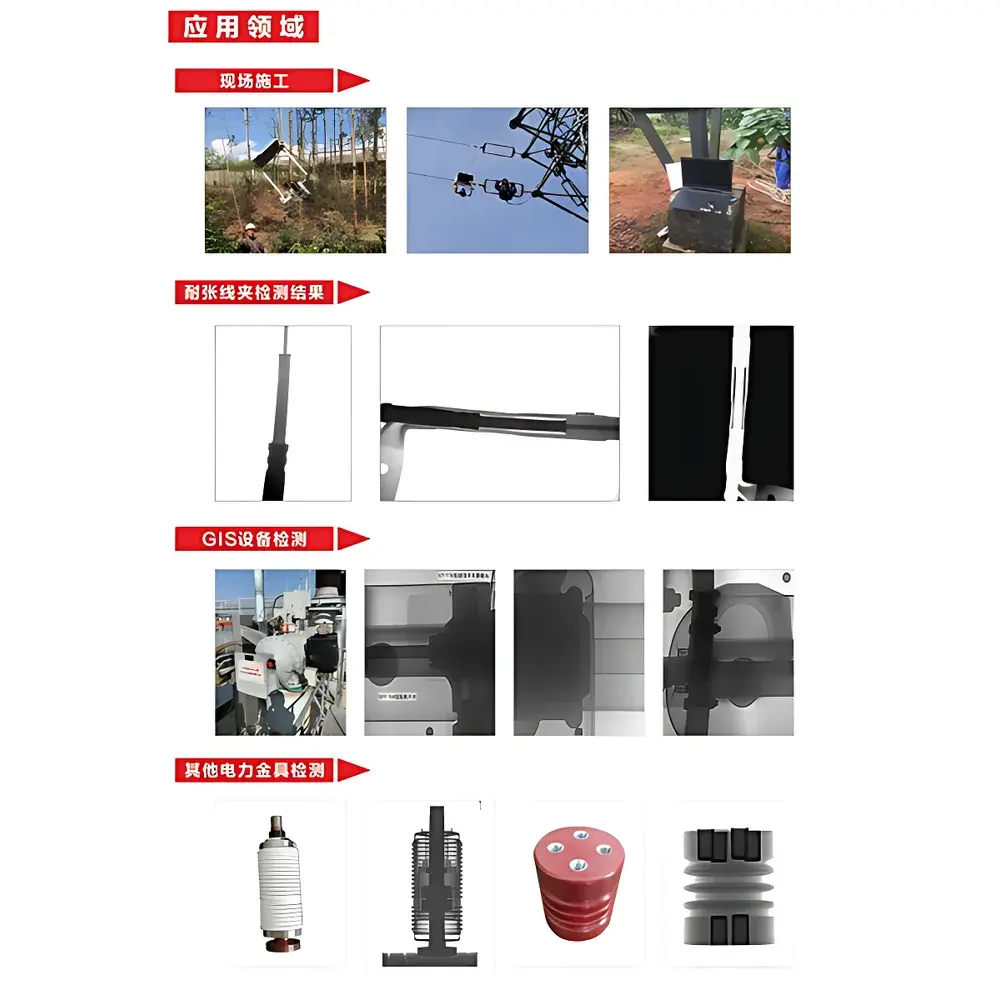
- Aerospace: In-situ inspection of turbine blades, honeycomb panels, and bonded assemblies during line maintenance.
- Oil & Gas: Field verification of girth weld integrity in offshore pipelines without scaffolding or hot work permits.
- Rail Transport: Wheelset and axle inspection at depots using mobile gantry adapters.
- Defense & Security: Rapid screening of munitions casings, armor plating interfaces, and electronic enclosures for internal anomalies.
- Academic Research: Quantitative porosity mapping in laser powder bed fusion (LPBF) samples under controlled environmental conditions.
FAQ
What regulatory standards does the AL-DR-270 meet for radiation safety?
It complies with IEC 61331-1:2014 (requirements for protective devices), GBZ 138–2019 (Chinese national standard for portable X-ray equipment), and incorporates dose monitoring circuitry aligned with IAEA Safety Guide SSG-11.
Can the system perform quantitative thickness measurements?
Yes—using calibrated step-wedge references and dual-energy subtraction techniques supported by DRView™, it achieves ±1 mm dimensional accuracy across the full FOV per ASTM E2737 Annex A3.
Is remote image review supported?
Yes—images are automatically uploaded via encrypted Wi-Fi to a secure cloud repository or on-premise PACS server; authorized users can annotate and generate PDF reports from any web-enabled device.
What maintenance intervals are recommended for field use?
Detector flat-field calibration every 30 days or after 500 exposures; X-ray tube performance validation quarterly using ISO 17636-2 reference blocks; annual traceable dosimetry audit required for ISO/IEC 17025 accreditation.
Does the system support automated defect recognition (ADR)?
ADR is not embedded but the 16-bit raw data stream and DICOM export enable integration with validated AI inference engines (e.g., NVIDIA Clara, Siemens Healthineers AI-Rad Companion) via RESTful API extensions.



