
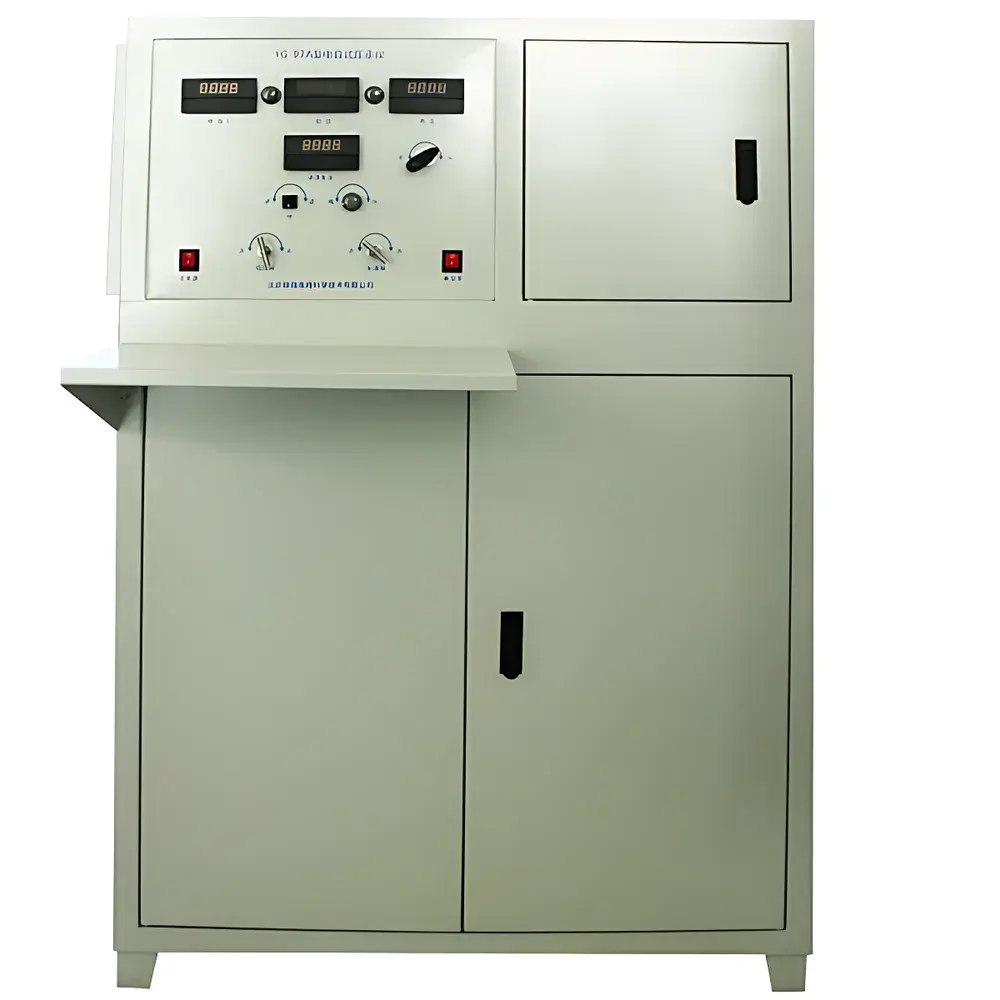
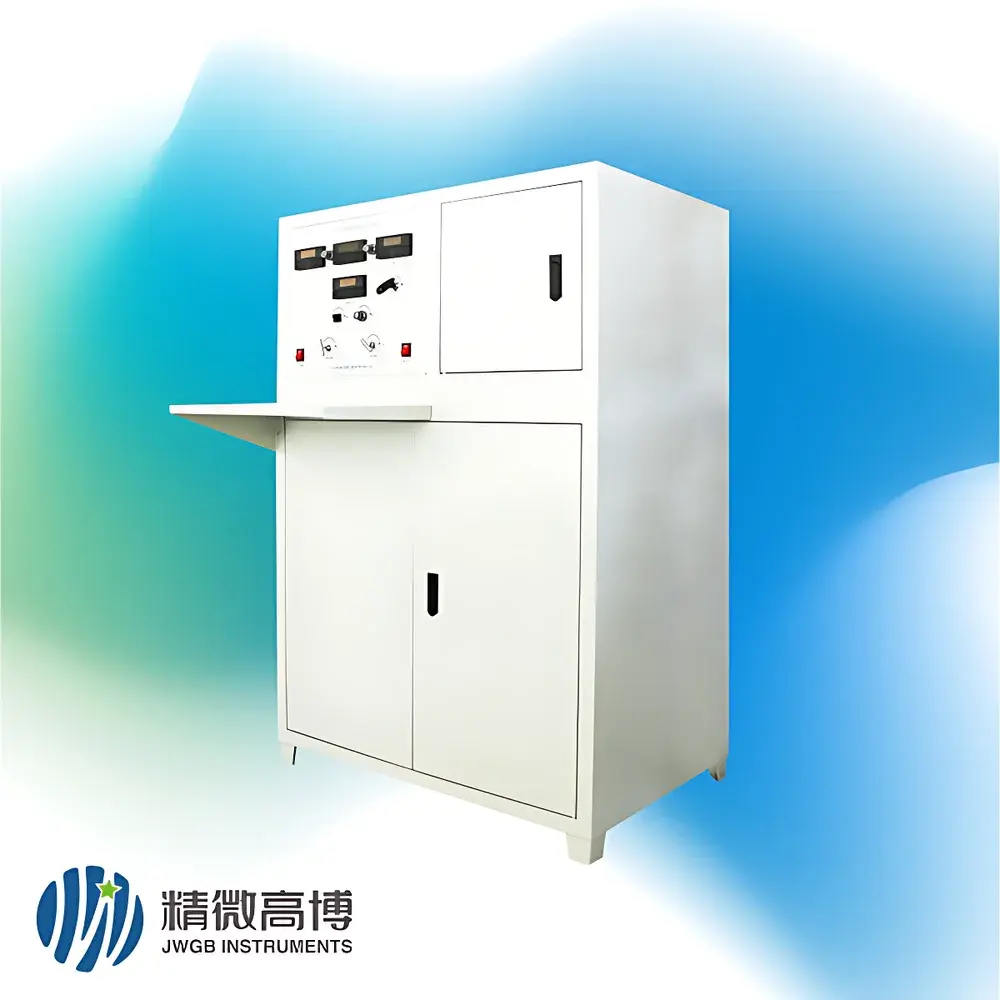
JWGB YG-97A High-Pressure Mercury Intrusion Porosimeter for Shale Porosity Analysis
| Brand | JWGB |
|---|---|
| Origin | Beijing, China |
| Manufacturer Type | Direct Manufacturer |
| Product Category | Domestic |
| Model | YG-97A Mercury Intrusion Porosimeter (Shale Porosity) |
| Price | Upon Request |
| Pore Diameter Range | 30 nm – 600 µm |
| Pressure Range | 0.01 – 50 MPa (7250 psi) |
| Vacuum Level | ≤ 0.05 Pa |
| Sample Chamber Volume | Up to 15 cm³ |
| Measurement Accuracy | ≤ 0.5% |
| Blank Volume at 50 MPa | ~0.25 mL |
| Safety | Integrated Mercury Vapor Containment System |
| Compliance | ISO 15901-1:2005, GB/T 21650.1-2008 |
Overview
The JWGB YG-97A High-Pressure Mercury Intrusion Porosimeter is an engineered analytical instrument designed for the quantitative characterization of pore structure in rigid, non-collapsible solid materials—particularly shale, reservoir rocks, ceramics, catalysts, and advanced functional materials. It operates on the fundamental principle of mercury intrusion porosimetry (MIP), a well-established capillary pressure-based technique grounded in the Washburn equation. Due to mercury’s non-wetting behavior toward most solids and its high surface tension (~485 mN/m), controlled incremental pressurization forces mercury into interconnected pores against capillary resistance. The volume intruded at each pressure step is directly related to the pore throat radius, enabling derivation of pore size distribution, total pore volume, cumulative surface area (via Gurvich model), average pore diameter, and hysteresis analysis (intrusion vs. extrusion curves). The YG-97A is optimized for macropores and mesopores (30 nm – 600 µm), making it especially suitable for geological samples where pore networks dominate permeability and fluid storage capacity.
Key Features
- High-pressure capability up to 50 MPa (7250 psi), with overpressure tolerance to 60 MPa for system safety margin
- Dual-path pressure measurement architecture ensures high-resolution, low-drift pressure control across the full range (0.01–50 MPa)
- Ultra-high vacuum subsystem using a dual-stage mechanical pump achieving ≤0.05 Pa, critical for complete mercury de-gassing and baseline stabilization
- Single dedicated analysis station with 15 cm³ sample chamber volume—accommodates both powdered and intact core specimens (e.g., shale plugs, ceramic monoliths)
- Integrated mercury containment design compliant with occupational hygiene standards: sealed vapor path, activated carbon filtration, and negative-pressure enclosure minimize ambient Hg exposure
- Capacitance-based mercury volume detection with digital readout, offering ≤0.5% measurement accuracy per ASTM D4404 and ISO 15901-1 protocols
- Gravity-compensated positive-pressure measurement mode enhances long-term stability and reduces thermal drift during extended runs
Sample Compatibility & Compliance
The YG-97A accepts dry, rigid, mercury-compatible solids—including crushed shale, sintered ceramics, fired catalyst pellets, hardened cementitious matrices, and battery electrode substrates. Samples must be non-reactive with mercury and thermally stable under vacuum. The system fully conforms to ISO 15901-1:2005 (“Porous materials — Determination of pore size distribution and porosity using mercury intrusion porosimetry — Part 1: General principles”) and GB/T 21650.1-2008 (Chinese national standard equivalent). Its pressure calibration traceability, vacuum integrity verification protocol, and blank correction methodology support GLP-compliant data generation. While not inherently 21 CFR Part 11–enabled, raw pressure/volume datasets are exportable in CSV/ASCII format for integration into validated LIMS or ELN platforms supporting audit trails and electronic signatures.
Software & Data Management
The embedded control software provides real-time monitoring of pressure, capacitance, and vacuum levels, with automated stepwise pressurization/depressurization sequences. Post-acquisition processing includes automatic application of the Washburn correction (contact angle = 140°, surface tension = 485 mN/m), cumulative pore volume summation, differential pore size distribution (dV/d(log r)), specific surface area estimation (Gurvich method), and hysteresis loop quantification (ink-bottle ratio, pore connectivity index). All reports are exportable in PDF and tabular formats; raw time-series data (pressure, volume, temperature) are archived with metadata (operator ID, date/time stamp, calibration certificate ID). Software supports user-defined analysis templates aligned with internal SOPs or external regulatory requirements (e.g., API RP 40, ASTM D3766).
Applications
This instrument delivers critical microstructural parameters for upstream geoscience (shale gas/oil reservoir evaluation, core plug poroperm correlation), materials R&D (ceramic green-body densification, zeolite framework stability, polymer membrane tortuosity), pharmaceutical solid-state characterization (excipient compaction behavior, tablet pore architecture), and energy storage (Li-ion anode/cathode pore network evolution after cycling). It is routinely deployed in national laboratories, petroleum research institutes, university geomechanics centers, and industrial QC labs where reproducible, standardized pore structure metrics are required for comparative benchmarking and process optimization.
FAQ
What pore size range does the YG-97A cover, and how is resolution achieved?
The instrument measures pore diameters from 30 nm to 600 µm using calibrated pressure increments and high-stability capacitance sensing. Resolution is governed by pressure step density and signal-to-noise ratio of the volume transducer—not by optical or laser methods.
Is mercury handling training required prior to operation?
Yes. Users must complete institutional mercury safety certification, including spill response, vapor monitoring, and PPE protocols, in accordance with OSHA 29 CFR 1910.120 and local environmental regulations.
Can the YG-97A be integrated into an automated lab workflow?
It supports RS-232 and Ethernet communication for remote start/stop and data streaming. Full automation requires third-party middleware compatible with Modbus TCP or OPC UA.
Does the system include validation documentation for IQ/OQ?
Factory-issued Installation Qualification (IQ) and Operational Qualification (OQ) protocols are available upon request, including pressure transducer calibration certificates and vacuum leak test records.
How is blank correction applied during data reduction?
A pre-run blank curve (mercury intrusion into empty chamber at 50 MPa yielding ~0.25 mL) is subtracted pointwise from sample curves to eliminate system compressibility and dead-volume artifacts.



