
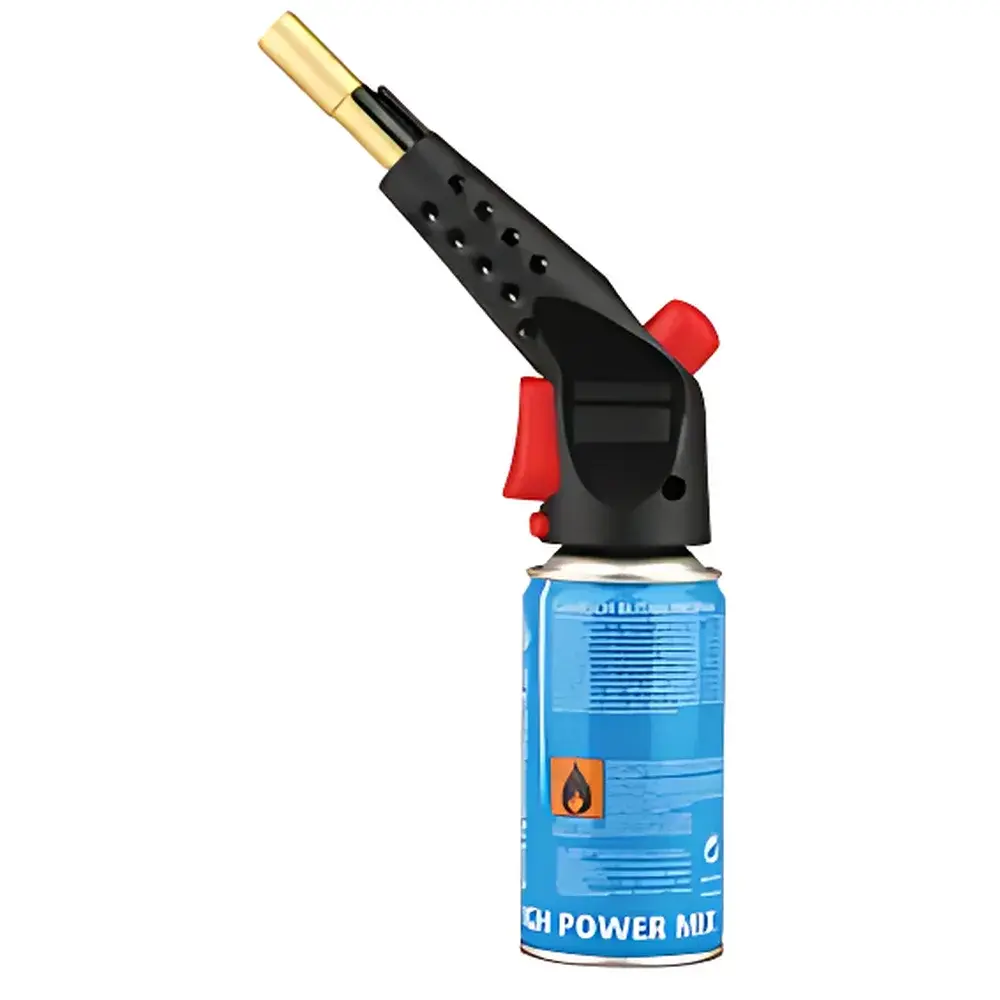
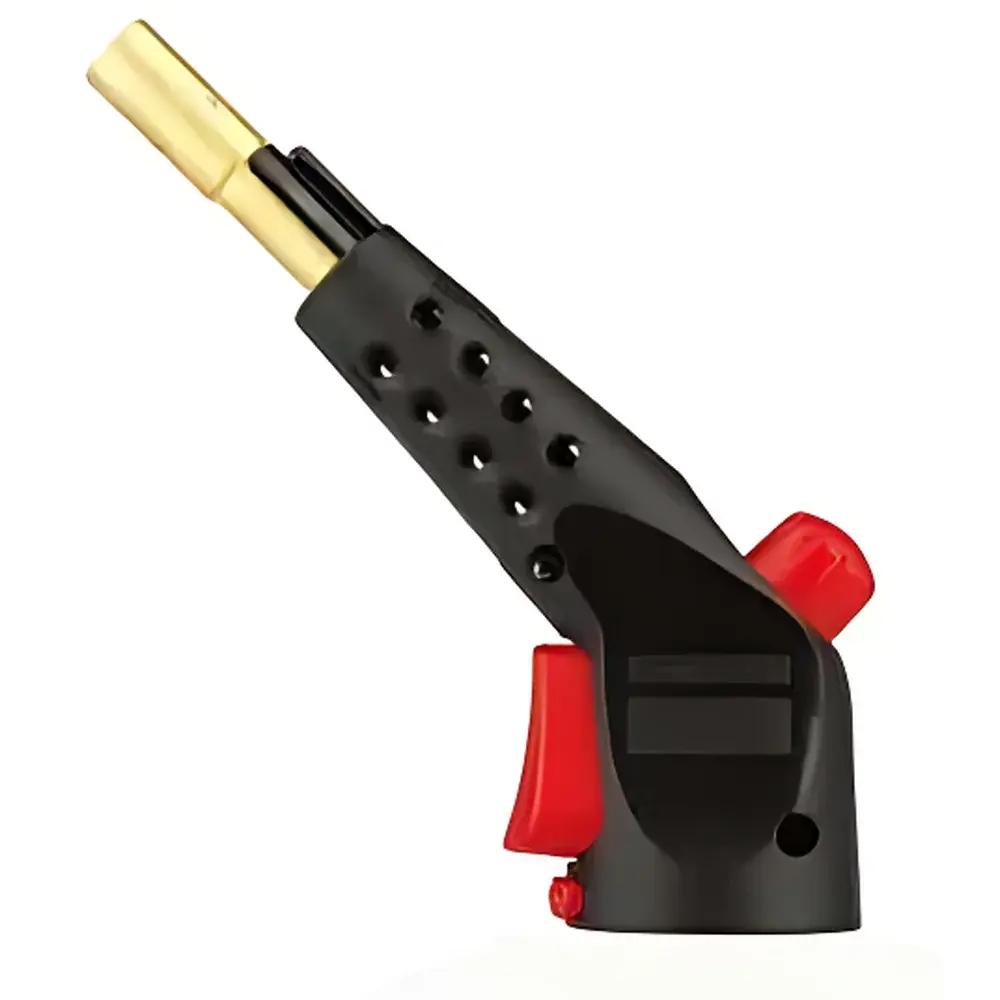
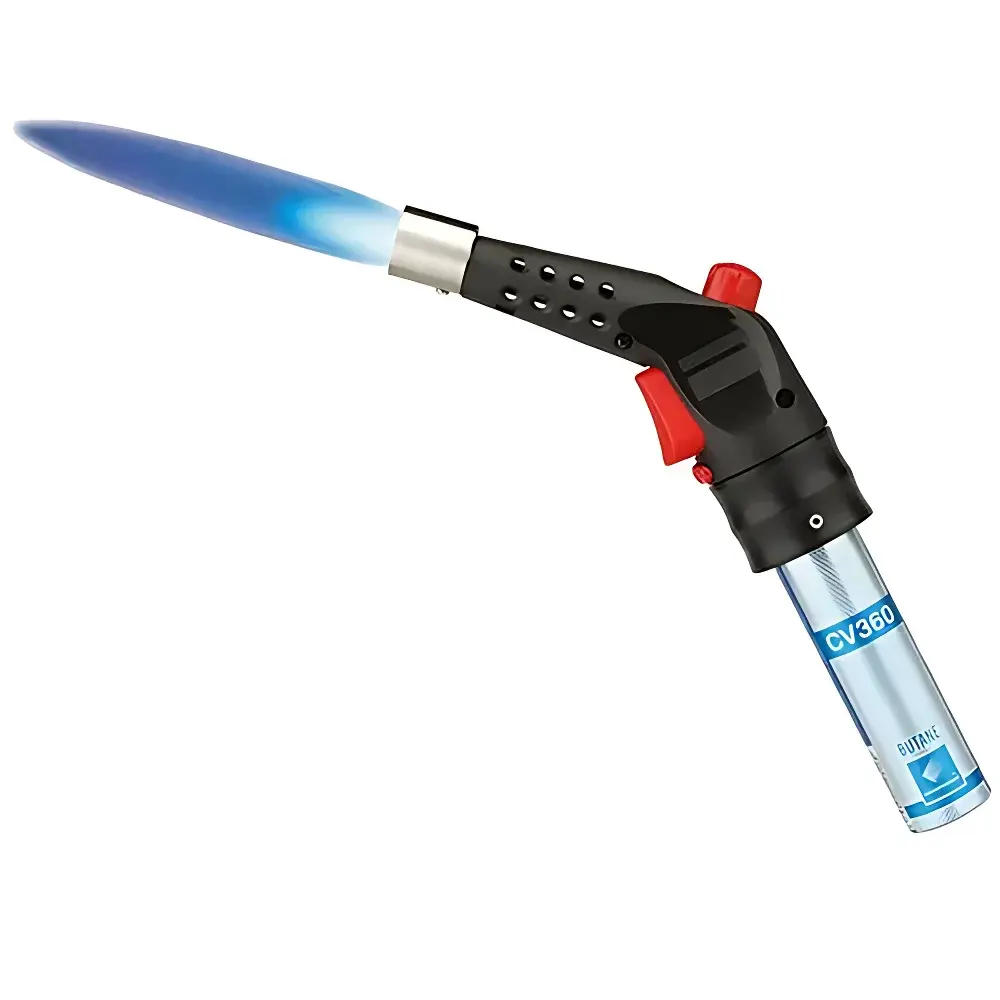
WIGGENS Powerjet Handheld Bunsen Burner
| Brand | WIGGENS |
|---|---|
| Origin | Germany |
| Manufacturer Type | Authorized Distributor |
| Origin Category | Imported |
| Model | Powerjet |
| Price Range | USD 680–1,090 |
| Fuel Type | Liquefied Petroleum Gas (LPG) |
| Max Flame Temperature | 1350 °C |
| Gas Consumption | 0.12 kg/h |
| Power Output | 1.54 kW |
| Dimensions (W×H) | 150×180 mm |
| Weight | 300 g |
| Ignition | Piezoelectric |
| Flame Control | Adjustable Knob with Locking Mechanism |
| Standard Accessories | Regulator Adapter (7/16″×28), Campingaz CG1750 UNEF-Compatible Cylinder Interface |
Overview
The WIGGENS Powerjet Handheld Bunsen Burner is a precision-engineered, portable flame source designed for rigorous laboratory sterilization and thermal processing tasks. Unlike conventional benchtop burners, the Powerjet operates on pressurized liquefied petroleum gas (LPG) — specifically optimized for Campingaz CG1750 disposable cylinders — and employs Couette-flow-optimized nozzle geometry to generate a stable, laminar, non-luminous blue flame. Its combustion profile conforms to ASTM D1826–18 (Standard Test Method for Calorific (Heating) Value of Gases in Natural Gas Range) principles, ensuring reproducible thermal output across repeated ignition cycles. The burner’s core function is rapid, localized flame sterilization of inoculation loops, spreaders, forceps, and other microbiological tools — eliminating viable microorganisms via dry heat at ≥1350 °C without residue or volatile byproducts. Its handheld form factor enables ergonomic operation during biosafety cabinet workflows, while its integrated piezoelectric ignition system eliminates external spark sources and matches ISO 13485-compliant device safety expectations for Class I medical device manufacturing environments.
Key Features
- Piezoelectric ignition system: One-button actuation initiates simultaneous gas flow and spark generation; release terminates gas supply instantly — no residual fuel bleed or post-ignition afterglow.
- Flame stability control: Precision-machined brass nozzle and calibrated air shutter ensure consistent stoichiometric combustion, yielding uniform blue flame with minimal yellow tipping even under variable ambient airflow conditions.
- Mechanical flame lock: Integrated rotary knob with positive detent locking allows hands-free maintenance of set flame intensity for extended sterilization protocols (e.g., loop red-glow duration per USP sterility testing).
- Regulator-integrated design: Factory-calibrated 7/16″×28 threaded adapter ensures leak-tight connection to Campingaz CG1750 UNEF-standard cylinders, meeting EN 417:2012 requirements for non-refillable metal gas containers.
- Thermal efficiency optimization: Combustion chamber geometry minimizes convective heat loss, delivering >92% thermal transfer efficiency from fuel energy to target surface — validated per DIN 51622 methodology for small-scale gas burners.
Sample Compatibility & Compliance
The Powerjet is validated for direct flame contact with stainless steel (AISI 304/316), nickel-chromium alloys (e.g., Nichrome 80/20), and borosilicate glassware surfaces. It complies with IEC 61010-1:2010 (Safety Requirements for Electrical Equipment for Measurement, Control, and Laboratory Use) for ancillary electronics (ignition circuit), and adheres to EN 13861:2016 (Laboratory Equipment – Gas Burners) for structural integrity, pressure containment, and flame detachment resistance. When operated within certified biosafety cabinets (Class II A2/B2), it satisfies NIH Guidelines for Research Involving Recombinant or Synthetic Nucleic Acid Molecules regarding open-flame use. Documentation includes CE marking, RoHS 2011/65/EU conformity, and full traceability to German manufacturing QA records.
Software & Data Management
As a purely mechanical gas appliance with no embedded firmware or digital interface, the Powerjet requires no software installation, driver configuration, or network connectivity. All operational parameters — including ignition timing, flame height calibration, and cylinder pressure decay profiles — are documented in the included EU Declaration of Conformity and maintained in paper-based GLP-compliant logbooks per ISO/IEC 17025:2017 clause 7.11.1. For audit readiness, WIGGENS provides editable PDF versions of user manuals, safety data sheets (SDS), and calibration certificates aligned with FDA 21 CFR Part 11 electronic record retention guidelines when paired with institutional LIMS platforms.
Applications
- Aseptic technique execution: Rapid sterilization of platinum/nichrome inoculation loops and spreaders prior to microbial streaking, pour plating, or stab culture preparation.
- Biosafety cabinet integration: Portable flame source compatible with laminar airflow constraints — used for flaming necks of culture tubes and bottle caps during transfers.
- Material testing pre-treatment: Controlled surface annealing of metallic specimens prior to SEM/EDS analysis to remove organic contaminants without oxidation artifacts.
- Educational laboratories: Demonstrating stoichiometric combustion, flame temperature gradients, and gas law relationships (e.g., Gay-Lussac’s law) in undergraduate physical chemistry curricula.
- Field-deployable diagnostics: Sterilization support for mobile molecular labs operating under CLIA-waived conditions where electrical infrastructure is limited.
FAQ
Is the Powerjet compatible with refillable propane tanks?
No — it is engineered exclusively for single-use Campingaz CG1750 UNEF-threaded cylinders. Refillable tanks introduce uncontrolled pressure variance and violate EN 417:2012 compatibility specifications.
Does the device require periodic recalibration?
No — flame output is governed solely by fixed orifice geometry and regulated inlet pressure; no sensor drift or time-dependent degradation occurs.
Can it be used with natural gas in fixed installations?
Only the Powerjet 2 variant supports natural gas via optional 08-series nozzle and CV360 adapter; standard Powerjet units lack the required pressure regulation for pipeline gas supply.
What safety certifications apply to the piezoelectric ignition module?
The ignition circuit carries UL 61010-1 recognition and meets IEC 62368-1 Annex G for limited-energy circuits, ensuring intrinsic safety during repeated actuation cycles.
How is flame temperature verified during routine QC checks?
Users perform visual verification per ASTM E1317–21: sustained blue cone with sharp tip and no orange halo confirms ≥1300 °C; thermocouple validation is optional but not required for daily operation.



