
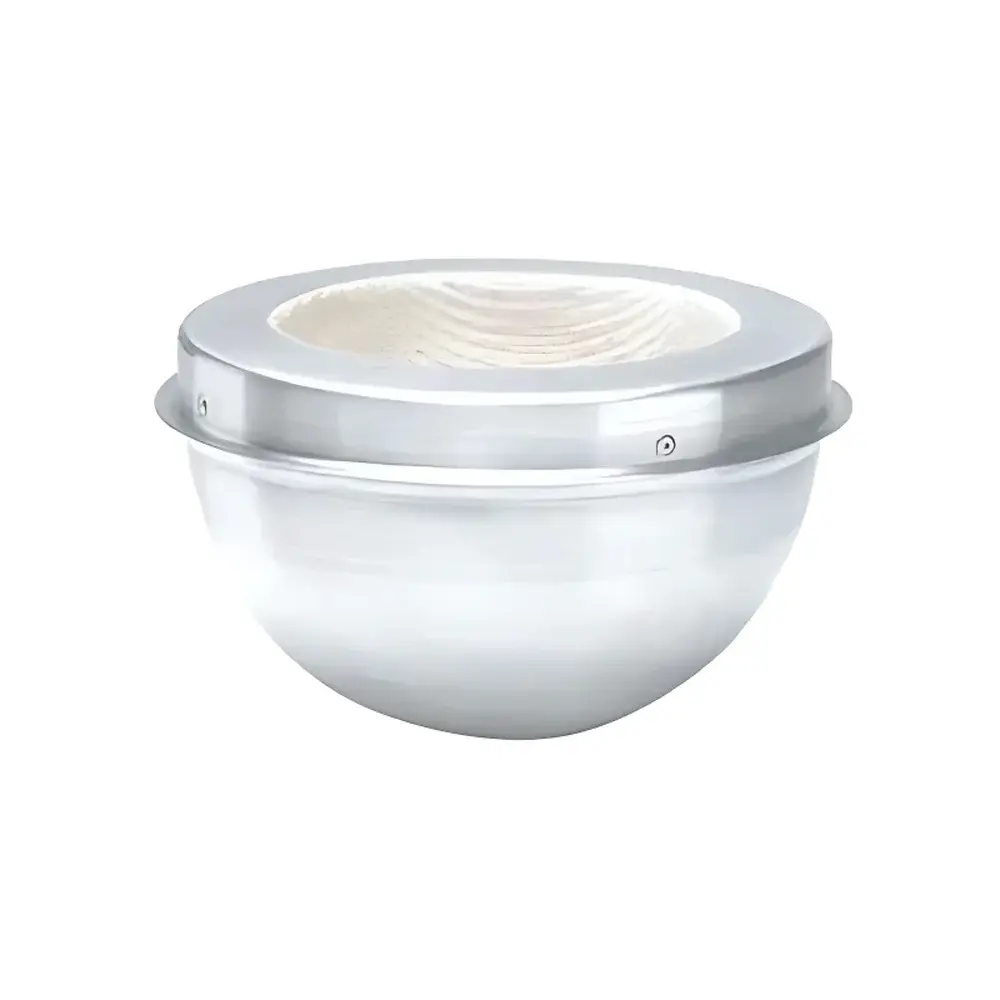
WIGGENS M101 Aluminum Round-Bottom Flask Heating Mantle
| Brand | WIGGENS |
|---|---|
| Origin | Germany |
| Manufacturer Type | Authorized Distributor |
| Origin Category | Imported |
| Model | M101 |
| Pricing | Available Upon Request |
| Flask Capacity | 200 mL |
| Max Flask Diameter | 76 mm |
| Power Rating | 100 W |
| Internal Depth | 38 mm |
| External Diameter | 140 mm |
| External Height | 85 mm |
| Weight | 0.9 kg |
Overview
The WIGGENS M101 Aluminum Round-Bottom Flask Heating Mantle is an engineered thermal solution designed for precise, uniform, and visually accessible heating of laboratory glassware in synthetic chemistry, process development, and quality control environments. Based on resistive heating embedded within a precision-machined aluminum hemispherical shell, the M101 employs a lower-hemisphere-only configuration to enable unobstructed optical observation of reaction progress—critical for monitoring color changes, precipitation, reflux behavior, or phase separation in real time. Its maximum operating temperature of 450 °C supports high-temperature applications including solvent distillation, catalytic reactions, and polymerization under inert atmosphere. Constructed from high-purity anodized aluminum, the mantle offers excellent thermal conductivity, mechanical rigidity, and corrosion resistance against common organic solvents and mild acids encountered in standard lab workflows.
Key Features
- Compact hemispherical design with full lower-half heating zone—optimized for visual access and ergonomic flask handling
- High-density mineral-insulated heating element embedded in solid aluminum body for rapid thermal response and stable setpoint maintenance
- Integrated 1.2 m three-conductor cable with locking IEC 60320 C13 connector for secure, grounded power delivery compliant with IEC 61000-6-3 EMC standards
- Anodized aluminum surface finish providing enhanced oxidation resistance and long-term dimensional stability at elevated temperatures
- Optional accessories available: upper-hemisphere extension kit (for full-wrap heating), splash guard ring, full protective outer sleeve, and adjustable support ring for vertical flask stabilization
- Designed for compatibility with standard ISO 1042 and DIN 12331 round-bottom flasks; no internal clamping mechanism required—flask rests securely via gravity and thermal expansion matching
Sample Compatibility & Compliance
The M101 is validated for use with borosilicate glass (e.g., Pyrex®, Duran®) round-bottom flasks rated for thermal shock up to ΔT = 120 °C and continuous service up to 500 °C. It meets general-purpose electrical safety requirements per EN 61010-1:2010 (IEC 61010-1) for laboratory equipment. While not intrinsically rated for hazardous area use, its non-sparking aluminum construction and absence of exposed heating elements make it suitable for fume hood–based operations under Class I, Division 2 conditions when paired with appropriate ventilation controls. The device supports GLP-compliant workflows through traceable calibration documentation (available upon request) and is compatible with external PID controllers meeting FDA 21 CFR Part 11 data integrity requirements when integrated into regulated QC/QA systems.
Software & Data Management
The M101 operates as a standalone analog heating device without built-in digital controls or firmware. For automated temperature profiling, it is routinely interfaced with external programmable temperature controllers (e.g., Eurotherm, Watlow, Omega CNi16D) via 0–10 V or 4–20 mA analog input/output signals. When deployed in validated environments, users implement electronic logbooks or LIMS-integrated acquisition systems to record setpoints, dwell times, and ambient thermal drift—ensuring audit readiness per ISO/IEC 17025 and ASTM E2500-13 guidelines. Calibration certificates (including as-found/as-left data at 100 °C, 250 °C, and 400 °C) are issued per ISO/IEC 17025-accredited laboratories upon request.
Applications
- Controlled heating of 200 mL reaction vessels in Grignard, Friedel-Crafts, and Suzuki coupling syntheses
- Solvent removal and concentration steps during natural product isolation and API purification
- Thermal conditioning of viscosity standards prior to rheological measurement (per ASTM D445)
- Pre-heating and hold stages in accelerated stability testing protocols (ICH Q1A)
- Supporting ASTM D86 and IP 123 distillation setups where visual reflux monitoring is essential
- Integration into modular flow chemistry platforms requiring compact, low-profile thermal modules
FAQ
Is the M101 compatible with magnetic stirrers placed beneath the heating mantle?
Yes—the open-bottom geometry allows unimpeded placement of hotplate stirrers or external stirrer motors. Ensure the combined thermal load does not exceed the flask’s thermal shock rating.
Can the M101 be used under nitrogen or argon atmosphere?
Yes—its sealed aluminum housing prevents gas ingress, and the absence of internal wiring or sensors eliminates ignition risk. Always verify flask seal integrity and pressure relief provisions.
What is the recommended calibration frequency for GMP environments?
Per EU Annex 15 and USP , annual calibration is standard; however, user risk assessment may require quarterly verification if used in critical process steps.
Does WIGGENS provide NIST-traceable calibration certificates?
Yes—certificates issued by WIGGENS’ accredited calibration partners include uncertainty budgets and traceability to national metrology institutes (e.g., PTB, NPL).
How is thermal uniformity across the heating surface characterized?
Typical radial temperature deviation is ≤ ±3 °C at 300 °C under steady-state conditions with a properly seated 200 mL flask, verified per ASTM E220-17 methodology.



