
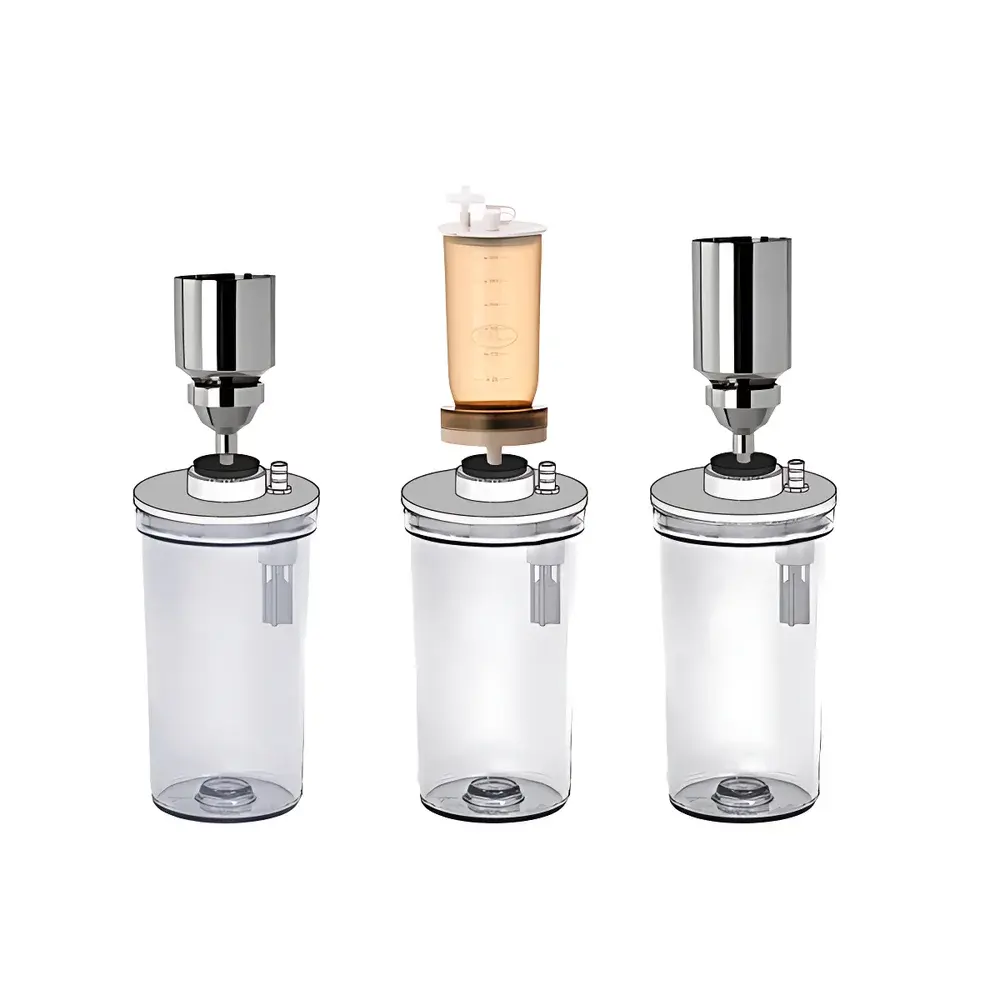
WIGGENS VF Series Vacuum Filtration Assembly
| Brand | WIGGENS |
|---|---|
| Origin | Germany |
| Model | VF Series |
| Material Options | Borosilicate Glass, SUS316 Stainless Steel, PES, PP, PTFE |
| Filter Diameter | 25 mm to 90 mm |
| Funnel Capacity | 15 mL to 1000 mL |
| Receiving Bottle Capacity | 125 mL to 4000 mL |
| Effective Filtration Area | 2.2 cm² to 9.6 cm² |
| Hose ID | 8 mm |
| Compliance | ASTM D1193 (Type II/III Water), ISO 7207-1, USP <788> Particulate Matter in Injections, GLP/GMP-Compatible Configuration Options |
Overview
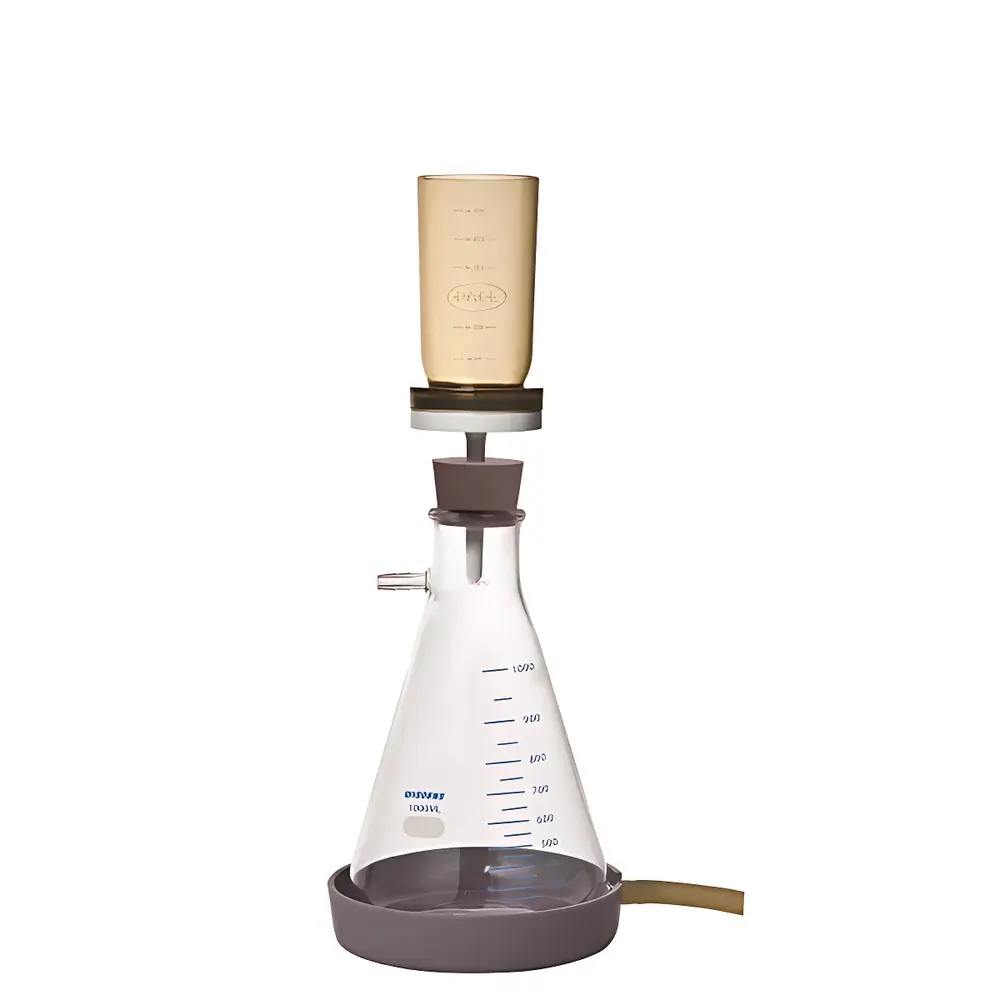
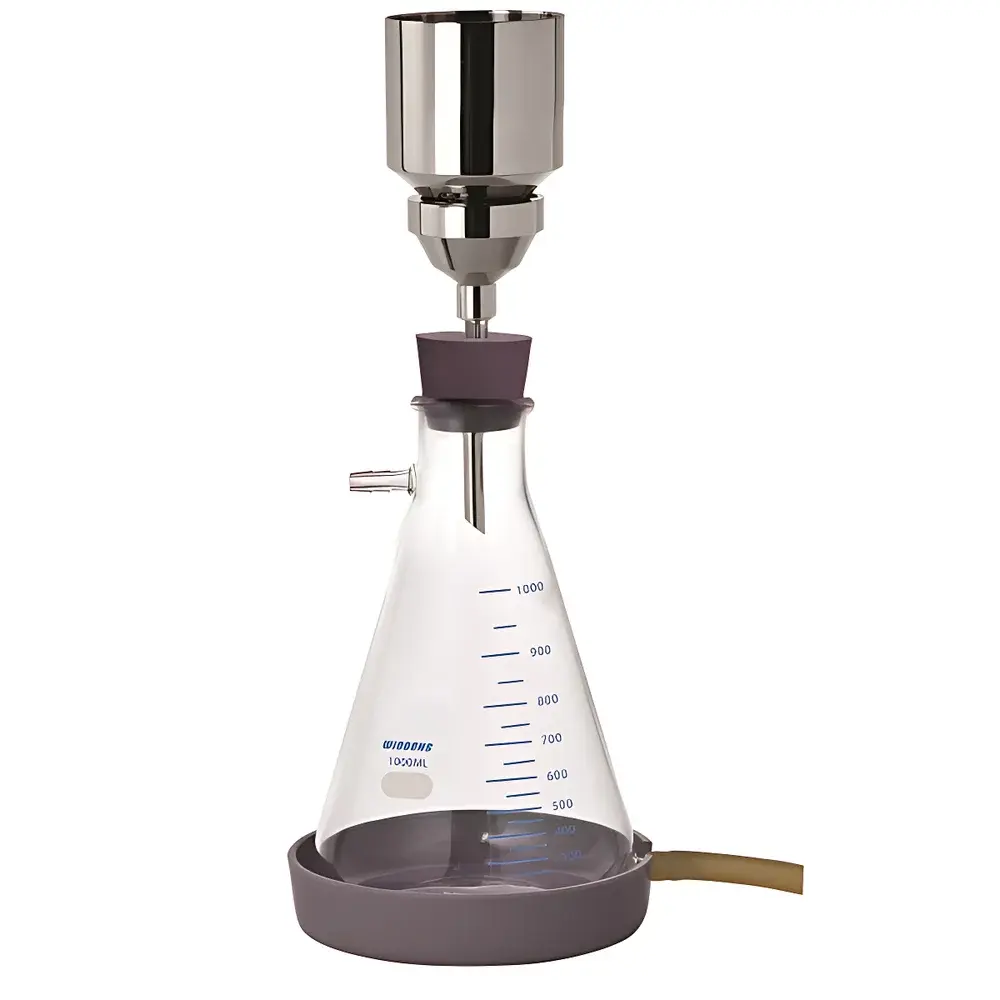
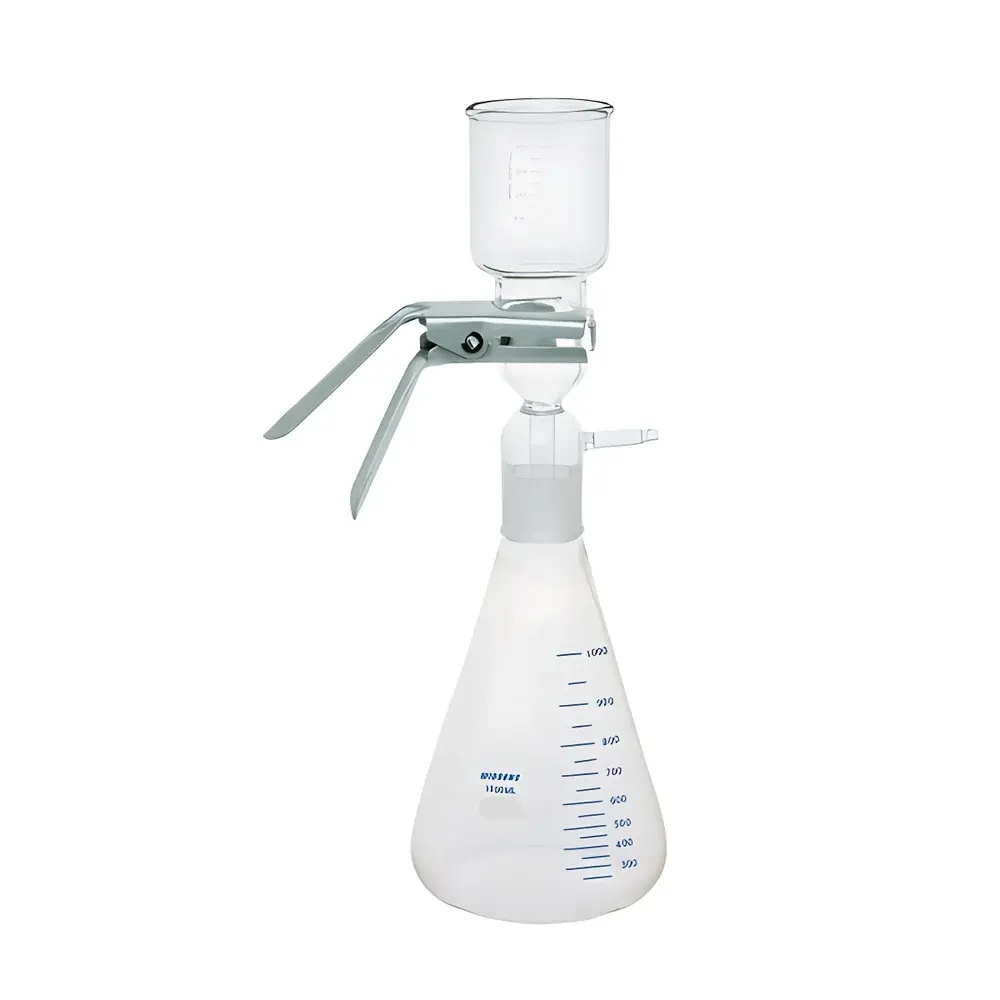
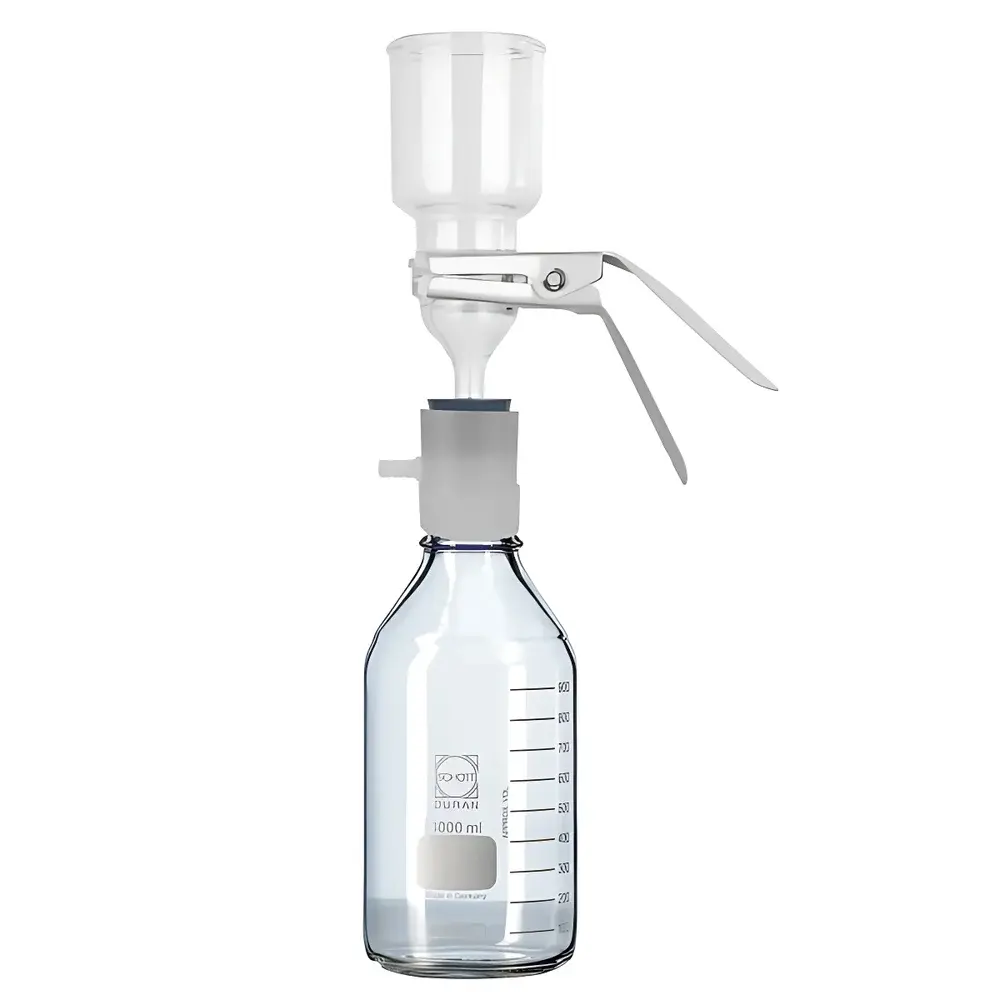
The WIGGENS VF Series Vacuum Filtration Assembly is a modular, laboratory-grade vacuum-assisted liquid separation system engineered for reproducible, contamination-controlled filtration across analytical, pharmaceutical, environmental, and microbiological applications. Operating on the principle of pressure-driven membrane filtration under controlled vacuum differential, the VF Series enables rapid, quantitative recovery of suspended solids, microorganisms, or particulates from aqueous and organic solvent-based samples. Each configuration integrates a precision-machined funnel assembly—comprising funnel body, base, membrane support plate, and sealing gasket—with a calibrated borosilicate glass or chemically resistant stainless steel receiving vessel and a dedicated magnetic or mechanical mounting base. Designed for compatibility with standard vacuum sources (e.g., diaphragm pumps, water aspirators), the system maintains stable negative pressure during operation while minimizing risk of overflow, membrane rupture, or sample cross-contamination.
Key Features
- Modular architecture supporting 12 standardized configurations (VF1–VF12, VF30–VF33) optimized for specific workflow requirements—including HPLC/GC solvent purification, microbial enumeration (ISO 8199, APHA 9222), suspended solids analysis (EPA Method 160.2), and trace particulate testing (USP ).
- Borosilicate glass components conform to DIN ISO 3585 specifications, offering thermal shock resistance up to 150 °C and chemical compatibility with concentrated acids, bases, and organic solvents (e.g., acetonitrile, THF, chloroform).
- SUS316 stainless steel variants provide enhanced durability and autoclavability (121 °C, 20 min, 15 psi), enabling sterile filtration in GMP-compliant microbiology labs per ISO 13408-1.
- Integrated magnetic mounting bases (VF1, VF2, VF30) ensure stable positioning on metal surfaces; aluminum-magnesium alloy clamps (VF3, VF5, VF6–VF12) offer adjustable, non-marring fixation for benchtop or fume hood use.
- PTFE-coated gaskets and silicone stoppers comply with USP Class VI biocompatibility standards; all elastomeric components are extractables-tested per ICH Q5C guidelines.
- Standardized 8 mm inner-diameter hose interface ensures seamless integration with common vacuum manifolds and pressure-regulated pump systems meeting ISO 8573-1 Class 3 air purity requirements.
Sample Compatibility & Compliance
The VF Series accommodates diverse sample matrices without compromising integrity: aqueous suspensions (drinking water, wastewater), viscous biological fluids (serum, fermentation broth), aggressive organic solvents (ethyl acetate, DMF), and corrosive reagents (6 M HCl, 5 M NaOH). Filter support options include sintered glass (VF7, VF8), stainless steel mesh (VF9, VF11), and polymer-based plates (PP, PES), each selected to prevent adsorption or leaching during critical analyses. All glassware meets DIN EN ISO 1042 volumetric accuracy tolerances (Class A). When used with certified membranes (e.g., 0.45 µm PVDF for microbiology, 0.22 µm nylon for sterilization), the system supports validation protocols aligned with FDA 21 CFR Part 11 electronic record requirements and EU Annex 11 data integrity principles.
Software & Data Management
While the VF Series is a manually operated hardware platform, its design facilitates full auditability within regulated environments. Component part numbers (e.g., 167200-03, 197000-39) are laser-etched on glass and metal parts for traceability. Optional accessories—including vacuum pressure gauges with analog/digital output (WIGGENS VP-200), inline condensate traps (WIGGENS CT-10), and programmable vacuum controllers (WIGGENS VC-500)—enable integration into LIMS or ELN workflows via RS-232 or 4–20 mA signal outputs. All configurations support GLP-compliant documentation: filter lot numbers, sterilization cycles (for SUS316 units), and operator signatures can be recorded directly onto standardized filtration logs compliant with ISO/IEC 17025 Clause 7.7.
Applications
- Preparative filtration of HPLC mobile phases and GC carrier gases per ASTM E2912 and ISO 8573-3 particulate limits.
- Quantitative determination of total suspended solids (TSS) in environmental water per EPA 160.2 and ISO 11923.
- Membrane filtration assays for coliforms and E. coli in food, beverage, and pharmaceutical waters per ISO 9308-1 and USP .
- Clarification of cell culture supernatants prior to LC-MS analysis, minimizing column fouling and improving signal-to-noise ratios.
- Recovery of precipitated analytes (e.g., heavy metals as sulfides) in trace metal analysis workflows adhering to ISO 17294-2.
- High-throughput sample preparation for nanoparticle characterization (DLS, TEM) where residual solvent must be removed without ultracentrifugation.
FAQ
What vacuum pressure range is recommended for optimal performance?
A stable operating vacuum between –0.8 bar and –0.95 bar (–80 to –95 kPa) is recommended. Exceeding –0.98 bar may cause premature membrane collapse or glass implosion in low-wall configurations.
Can the VF Series be autoclaved?
SUS316 stainless steel assemblies (VF2, VF9, VF11, VF32, VF33) are fully autoclavable at 121 °C for 20 minutes. Borosilicate glass components (VF3, VF5, VF6–VF12, VF30) are heat-resistant but not designed for repeated autoclaving; dry-heat sterilization at 180 °C for 2 hours is preferred.
Is the system compatible with aggressive solvents like chloroform or THF?
Yes—borosilicate glass funnels and bottles exhibit excellent resistance to halogenated and polar aprotic solvents. Avoid prolonged contact with hydrofluoric acid or hot concentrated phosphoric acid.
How is leakage prevention ensured during extended filtration runs?
All interfaces utilize conical ground-glass joints (ISO K 29/32, K 45/50) or precision-machined O-ring grooves with FDA-listed silicone seals. Leak testing per ASTM F2096 is performed during final QA inspection.
Are replacement parts available for individual components?
Yes—WIGGENS supplies all subcomponents as discrete SKUs (e.g., 167240-01 = 47 mm glass base; 167110-16 = 1000 mL triangular receiver), enabling field-level maintenance without full-system replacement.



