
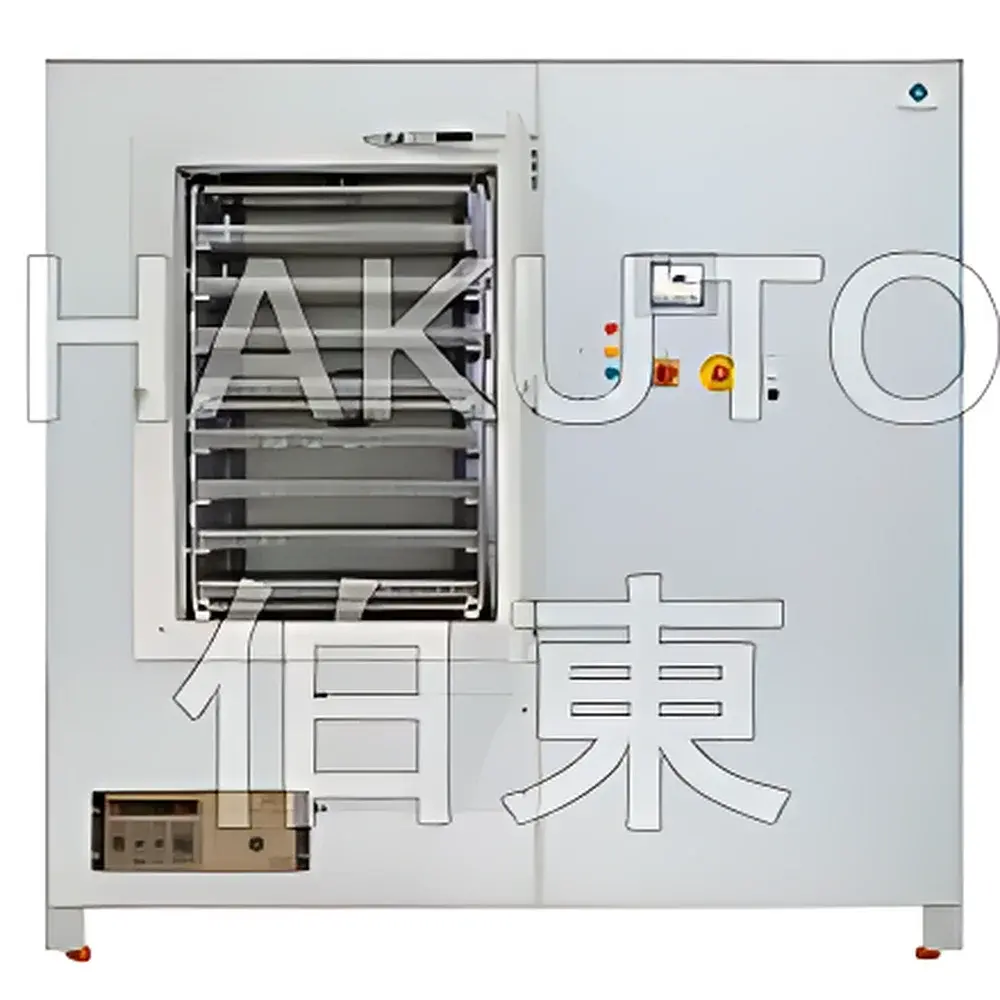
Europlasma CD 1200 PLC Plasma Surface Activation System for Hydrophilic Modification and TC Treatment
| Brand | Europlasma |
|---|---|
| Origin | Belgium |
| Model | CD 1200 PLC |
| Power | 5 kW |
| Chamber Dimensions | 700 × 700 × 1200 mm |
| Chamber Volume | 490 L |
| Chamber Material | Anodized Aluminum |
| Process Gases | O₂, Ar, and custom gas mixtures |
| Control System | PLC-based with 17″ HMI touchscreen |
| Vacuum System | Dry scroll pump (480 m³/h), Pirani gauge |
| Gas Delivery | Up to 5 MFCs (1/4″ inlet, 1 bar max) |
| Exhaust | 28 mm outlet with optional VOC abatement |
| Safety | Emergency stop, vacuum interlock, thermal cutoff, CE-compliant |
| Electrical Supply | 380 V AC, 3-phase, 50 Hz, 40 A |
Overview
The Europlasma CD 1200 PLC is a fully automated, industrial-grade low-pressure plasma surface activation system engineered for reproducible, high-throughput hydrophilic modification of polymeric and biomedical substrates. Operating on the principle of capacitively coupled radiofrequency (RF) plasma generation in controlled vacuum environments (typically 0.1–10 Pa), the system utilizes reactive oxygen species (e.g., atomic O, O₃, excited O₂) and energetic ions to functionalize inert polymer surfaces—introducing polar oxygen-containing groups (–OH, –COOH, C=O, –OOH) without altering bulk material properties. This physicochemical surface transformation reduces water contact angle (WCA) to <10° immediately post-treatment and sustains WCA <42° for ≥30 days—meeting stringent requirements for tissue culture (TC)-treated labware, microfluidic devices, implantable components, and diagnostic consumables. Designed and manufactured in Belgium, the CD 1200 PLC complies with IEC 61000-6-2/6-4 (EMC), EN 61010-1 (safety), and carries full CE marking for use in regulated laboratory and pilot-production settings.
Key Features
- Large-volume aluminum chamber (490 L) with 700 × 700 × 1200 mm internal dimensions and integrated quartz viewport for real-time process observation
- 5 kW RF generator with frequency-stabilized output, configurable for O₂, Ar, or multi-gas blends via up to five mass flow controllers (MFCs)
- Integrated dry scroll vacuum system (480 m³/h pumping speed) with Pirani pressure monitoring and programmable evacuation profiles
- PLC-based control architecture with 17″ industrial touchscreen HMI supporting recipe-driven operation, parameter logging, and user-access levels with password protection
- Standard configuration includes eight 620 × 675 mm anodized aluminum sample trays optimized for uniform plasma exposure across high-density formats (e.g., 96-well plates, cell culture flasks, microfluidic chips)
- Comprehensive safety suite: hardware emergency stop, vacuum interlock, overtemperature cutoff, and fail-safe gas shutoff valves
- Modular design supports integration with ERP or SAP systems via optional OPC UA or Modbus TCP interfaces
Sample Compatibility & Compliance
The CD 1200 PLC accommodates a broad range of non-conductive and temperature-sensitive substrates including polystyrene (PS), polypropylene (PP), polyethylene (PE), cyclic olefin copolymer (COC), and silicone elastomers. It is routinely deployed for pre-sterilization surface activation of Class IIa/IIb medical devices per ISO 10993-5 (cytotoxicity) and ISO 13485 quality management requirements. The system enables consistent TC treatment compliant with ASTM F2622 (standard specification for tissue-culture treated polystyrene surfaces) and supports GLP/GMP-aligned documentation through audit-trail-capable data logging. All process parameters—including chamber pressure, RF power, gas composition, treatment time, and temperature—are recorded with timestamped metadata for traceability and regulatory submission readiness.
Software & Data Management
The embedded PLC controller records all operational variables at 1 Hz resolution and stores them in encrypted CSV format on internal flash memory (≥12 months of continuous operation). The HMI interface provides real-time visualization of vacuum ramp curves, RF forward/reflected power, and MFC flow stability. Users can define, store, and recall unlimited process recipes with version control and change history. Audit trails comply with FDA 21 CFR Part 11 requirements when paired with optional electronic signature modules. Raw data export supports third-party statistical process control (SPC) platforms and LIMS integration via standard Ethernet protocols.
Applications
- Tissue culture (TC) treatment of polystyrene flasks, dishes, and multiwell plates to enhance cell adhesion and proliferation
- Surface activation of microfluidic PDMS or COC chips for improved aqueous reagent wettability and reduced bubble formation
- Pre-bonding treatment of polymer substrates prior to adhesive lamination or plasma-assisted bonding
- Functionalization of filtration membranes (e.g., PVDF, PTFE) to increase hydrophilicity and reduce protein fouling
- Activation of implantable polymer components (e.g., catheters, drug delivery reservoirs) to improve biointegration
- Removal of organic contaminants and monolayer hydrocarbons from optical and sensor substrates prior to coating
FAQ
What is the typical water contact angle reduction achievable with the CD 1200 PLC?
Immediate post-treatment WCA values are routinely <10° on PS and PP; aged measurements remain <42° after 30 days under ambient storage conditions.
Can the system handle mixed-gas chemistries beyond O₂ and Ar?
Yes—up to five independently controlled gases (e.g., N₂, NH₃, CF₄, H₂) may be introduced using calibrated MFCs, enabling tailored surface chemistry for specific functionalization goals.
Is validation support available for GMP environments?
Europlasma provides IQ/OQ documentation templates and on-site protocol execution support; system design inherently supports 21 CFR Part 11 and Annex 11 compliance when configured with optional audit trail and e-signature modules.
How is uniformity ensured across large or stacked samples?
Chamber geometry, electrode configuration, and gas distribution manifolds are optimized for <±5% spatial variation in plasma density, verified by Langmuir probe mapping and WCA uniformity testing per ASTM D7334.
What maintenance intervals are recommended for the vacuum system?
Dry scroll pump oil changes are required every 6,000 operating hours; RF matching network calibration is advised annually or after 500 plasma cycles, with full service logs accessible via the HMI.



