
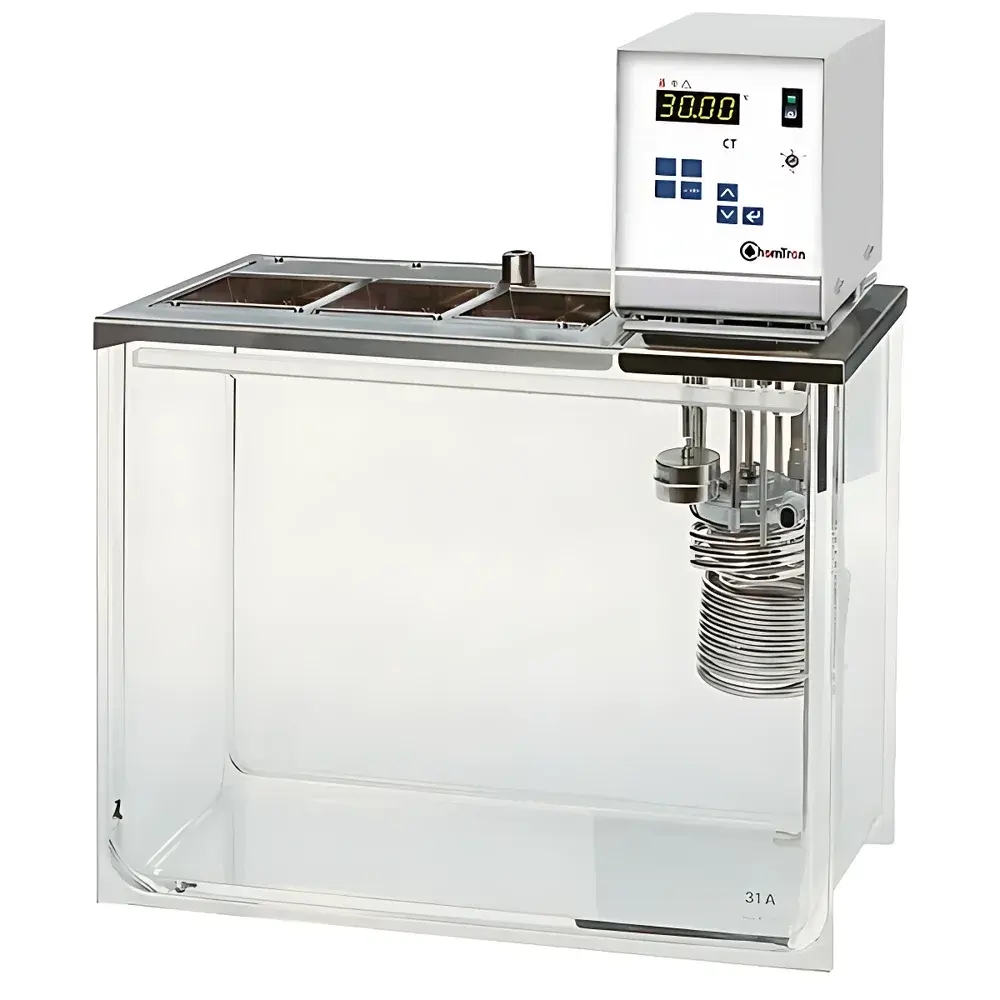
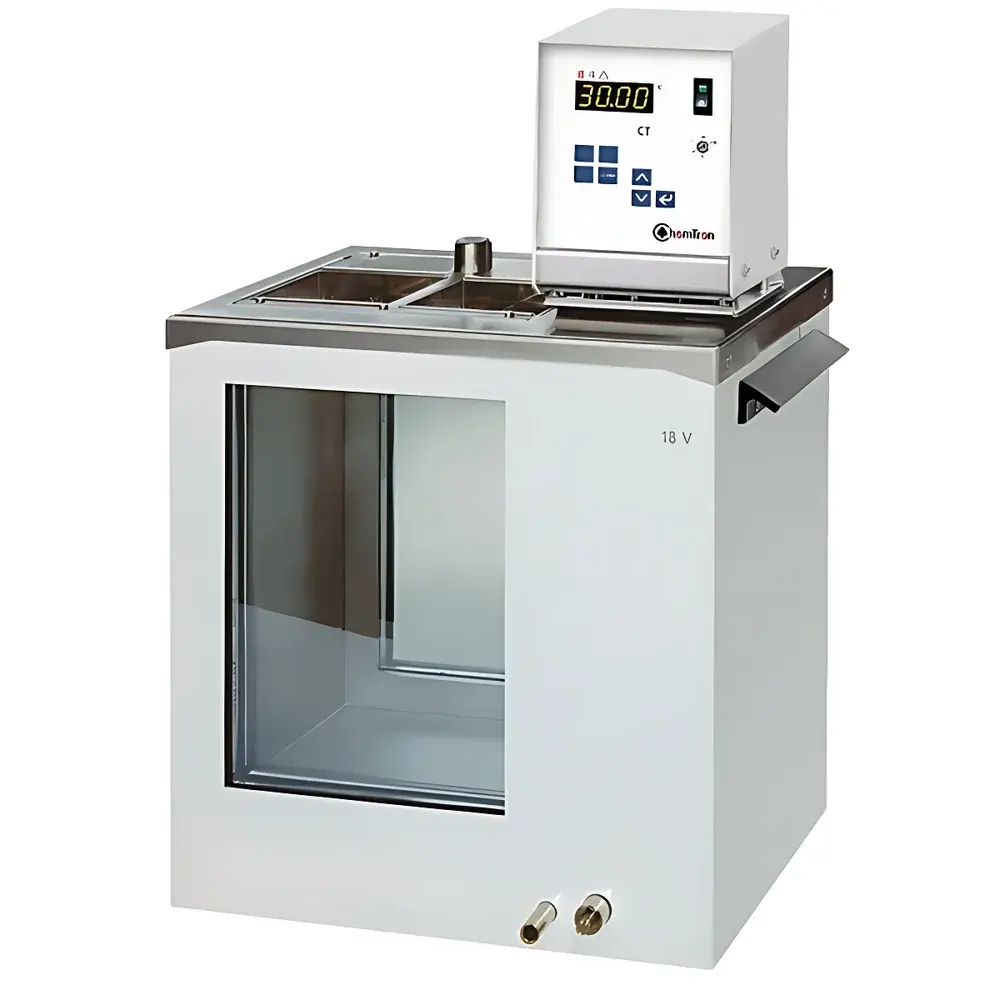
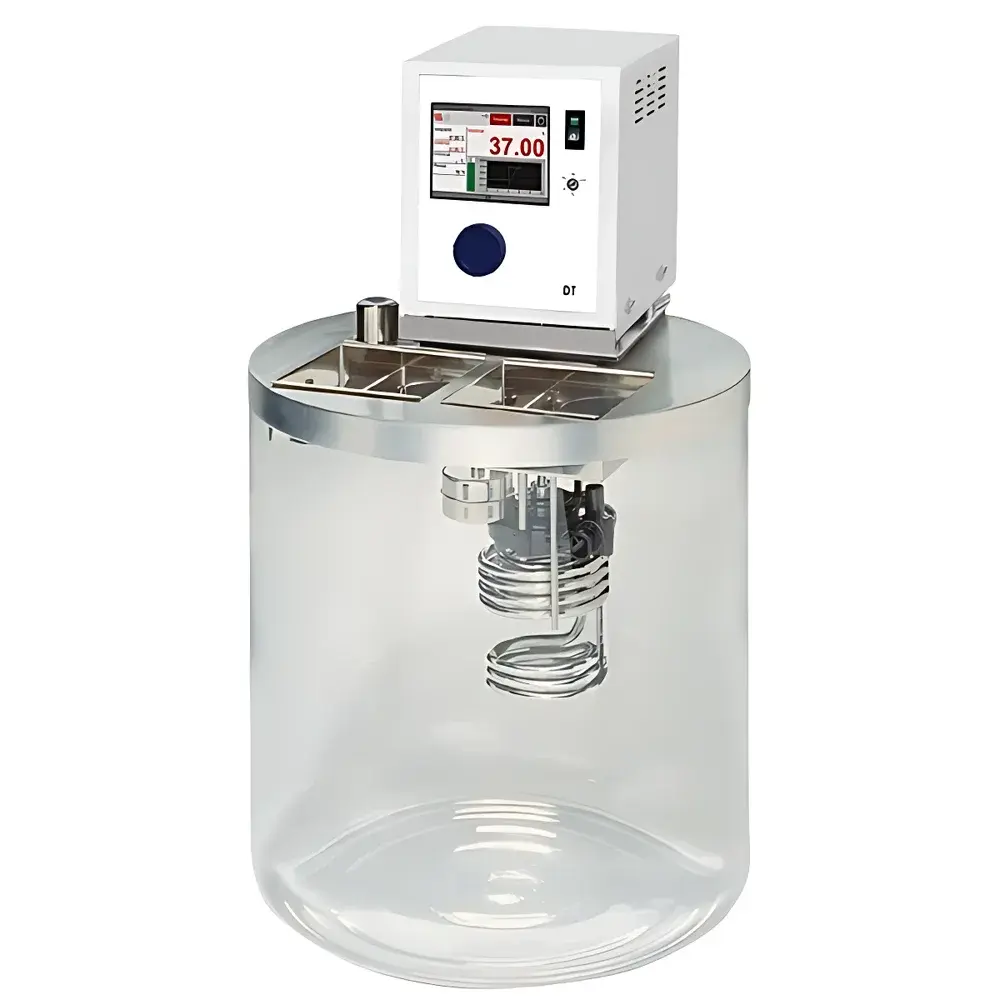
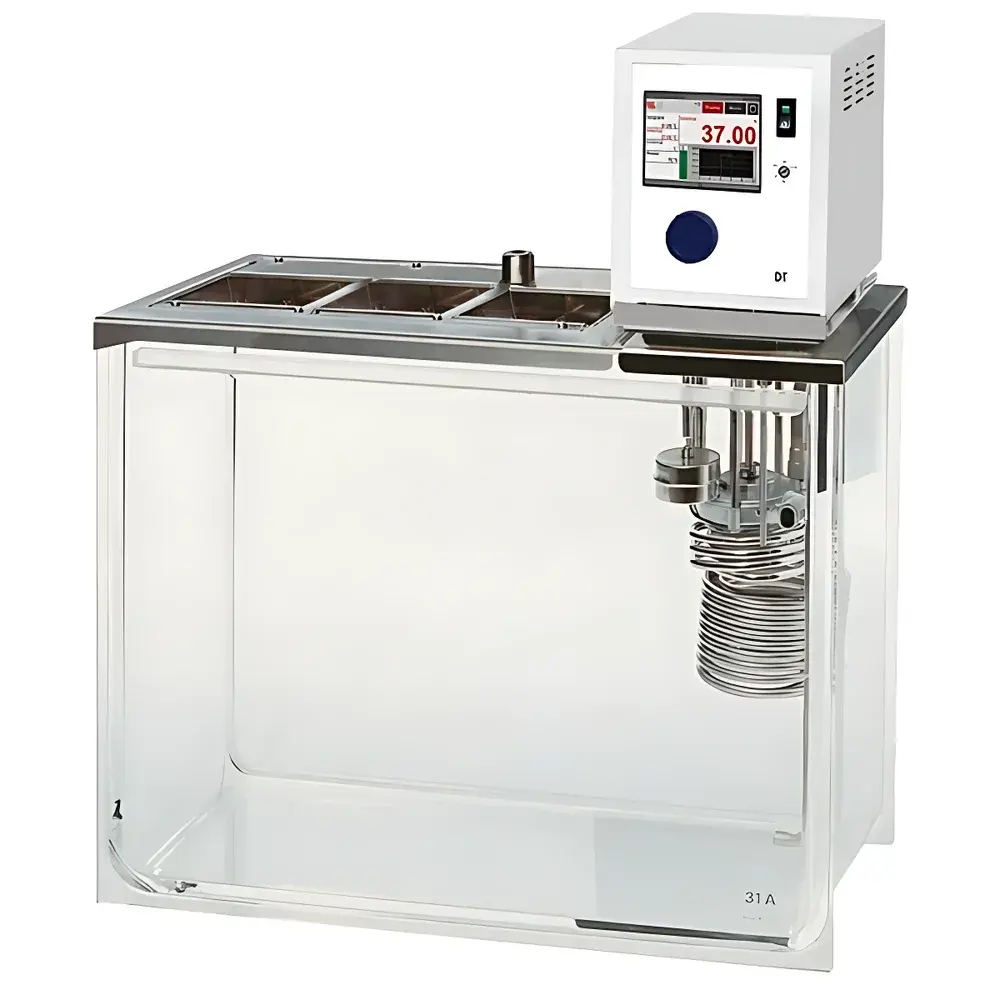
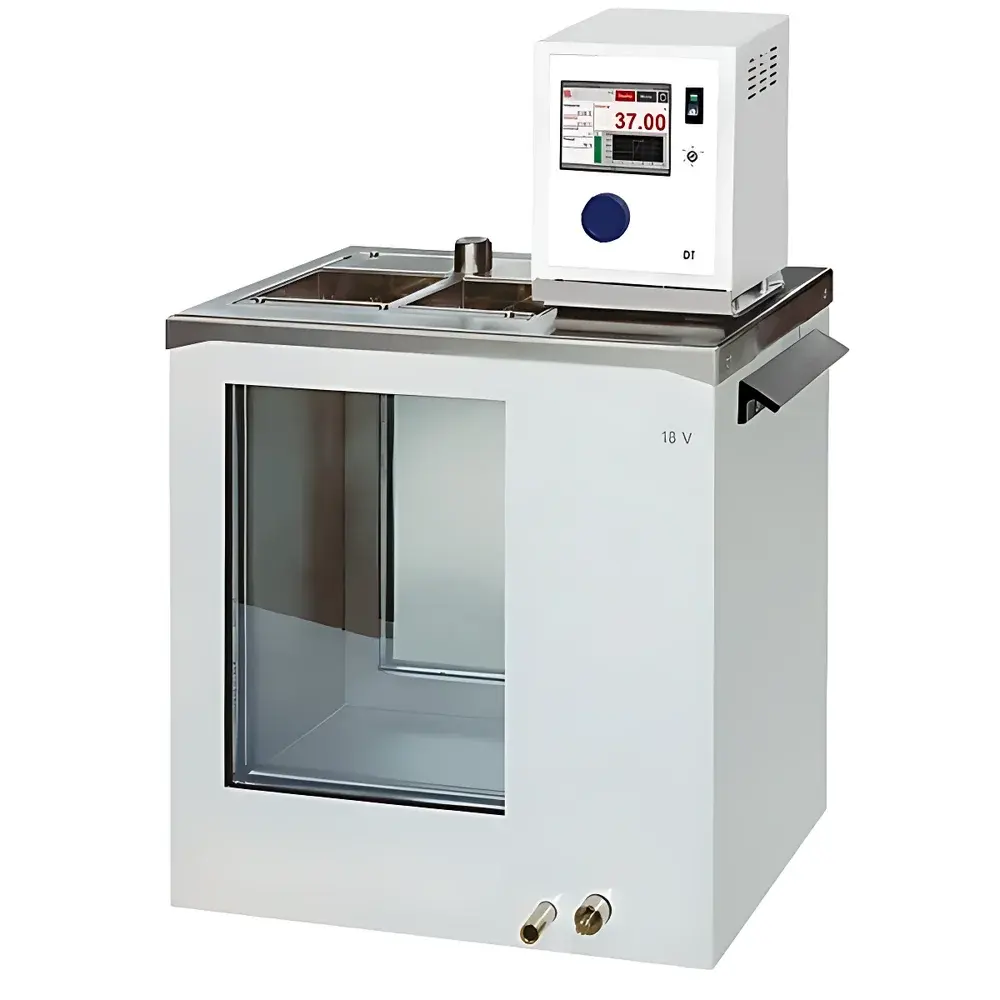
JULABO DT-31A Transparent Bath for Kinematic Viscosity and Density Measurement
| Brand | JULABO |
|---|---|
| Origin | Germany |
| Model | DT-31A / DT-18V / DT-16G |
| Temperature Range | Ambient +5 °C to +150 °C |
| Temperature Stability | ±0.01 °C |
| Bath Volume | 13–40 L |
| Circulation | Internal & External |
| Display Resolution | 0.01 °C |
| Compliance | ASTM D445, ISO 3104, ISO 12185 |
| Vacuum-Insulated Viewing Windows (DT-18V | 185 × 245 mm, multi-layer) |
Overview
The JULABO DT-31A Transparent Bath is a precision-engineered constant-temperature immersion system designed specifically for kinematic viscosity and density measurements in accordance with international standards including ASTM D445, ISO 3104 (petroleum products), and ISO 12185 (crude oil and liquid petroleum products). Its optically clear bath chamber—constructed from high-transmittance, thermally stable acrylic—is engineered to provide unobstructed visual access to capillary viscometers (e.g., Ubbelohde, Cannon-Fenske, or Ostwald types) and pycnometers during thermal equilibration and measurement. Unlike conventional opaque baths, the DT-31A’s transparency enables real-time monitoring of meniscus movement, bubble formation, and sample clarity—critical for method validation and operator verification in GLP- and GMP-regulated environments. The bath operates across a wide temperature range (ambient +5 °C to +150 °C) with exceptional stability of ±0.01 °C at setpoint, achieved via PID-controlled heating, optimized fluid dynamics, and low-thermal-mass bath geometry. Its dual-circulation architecture supports both internal recirculation for uniformity and external loop integration for auxiliary equipment (e.g., automated viscometer arms or density analyzers).
Key Features
- Optically transparent acrylic bath chamber enabling direct visual inspection of capillary flow and density column behavior without disassembly
- High-resolution digital display with 0.01 °C resolution and integrated real-time clock for time-stamped procedural logging
- ±0.01 °C temperature stability at setpoint—validated per ISO/IEC 17025 calibration protocols
- Standard cooling ring interface compatible with JULABO FT900 or equivalent chillers, supporting sub-ambient operation down to –40 °C when paired externally
- Dual-mode circulation: adjustable internal pump (0.23 L/min @ 0.2 bar) and external port for closed-loop integration with automated measurement systems
- Comprehensive safety suite: independent high/low temperature alarms, low-bath-level detection, and dry-run protection
- RS-232 serial interface with native support for JULABO’s PC-based temperature control software (included), enabling remote setpoint programming, profile execution, and data export in CSV format
- Modular lid configurations: DT-31A ships with a 5-position lid optimized for simultaneous multi-sample viscosity runs; DT-18V offers a 4-position variant with dual vacuum-insulated viewing windows (185 × 245 mm)
Sample Compatibility & Compliance
The DT-31A accommodates standard ASTM D445-compliant capillary viscometers (diameters 0.8–2.5 mm), glass pycnometers (25 mL, 50 mL), and digital density meters requiring stable thermal immersion. Its bath geometry ensures full submersion of viscometer bulbs and consistent thermal boundary conditions across all measurement positions. The system meets essential regulatory requirements for analytical instrumentation used in quality control laboratories, including traceability to NIST-traceable references, documented thermal uniformity mapping (≤ ±0.02 °C across 50 mm vertical zone), and audit-ready operational logs when used with compliant software. It supports 21 CFR Part 11 readiness through optional electronic signature modules and secure user-access levels when integrated with validated LIMS or ELN platforms.
Software & Data Management
The included JULABO temperature control software provides deterministic, script-driven operation—including ramp-soak sequences, timed hold steps, and alarm-triggered shutdowns. All temperature events are timestamped and logged with millisecond precision, generating tamper-evident records suitable for FDA or EMA audit trails. Data export conforms to ASTM E1382-22 (standard guide for computerized analytical instrument systems), supporting CSV and XML formats for import into statistical process control (SPC) tools or laboratory information management systems (LIMS). Firmware updates are delivered via secure HTTPS channel and require cryptographic signature verification prior to installation.
Applications
- Kinematic viscosity determination of lubricants, base oils, biodiesel, and aviation fuels per ASTM D445 and IP 71
- Density and relative density measurements of hydrocarbons and solvents per ISO 12185 and ASTM D1298
- Thermal conditioning of reference standards (e.g., NIST SRM 2783) prior to calibration transfer
- Method development and validation studies requiring visual confirmation of flow initiation and endpoint detection
- Supporting automated viscometry platforms (e.g., Anton Paar SVM series or AMETEK Brookfield CAP2000+) via analog/digital I/O or Modbus RTU gateway
FAQ
Is the DT-31A suitable for use with silicone oil as bath fluid?
Yes—the bath chamber and pump wetted parts are chemically resistant to common heat-transfer fluids including silicone oil, mineral oil, and glycol-water mixtures up to 150 °C.
Can the DT-31A be operated in a fume hood?
Yes, provided adequate ventilation is maintained and the external cooling loop (if used) is routed outside the hood to prevent heat buildup.
Does the system support Ethernet or USB connectivity?
No—only RS-232 is natively supported; however, third-party USB-to-serial adapters certified to FTDI or CP210x standards may be used with driver validation.
What is the maximum allowable bath fluid volume for DT-31A?
The nominal internal volume is 31 L, but operational fill level must remain between 13 L (minimum for pump priming) and 40 L (maximum safe fill line indicated on chamber wall).
How is temperature uniformity verified across the bath chamber?
JULABO provides a factory-generated thermal uniformity report (per ISO 17025) measuring deviation at five defined axial/radial points; users may replicate this using calibrated PT100 probes and a certified DAQ system.



