
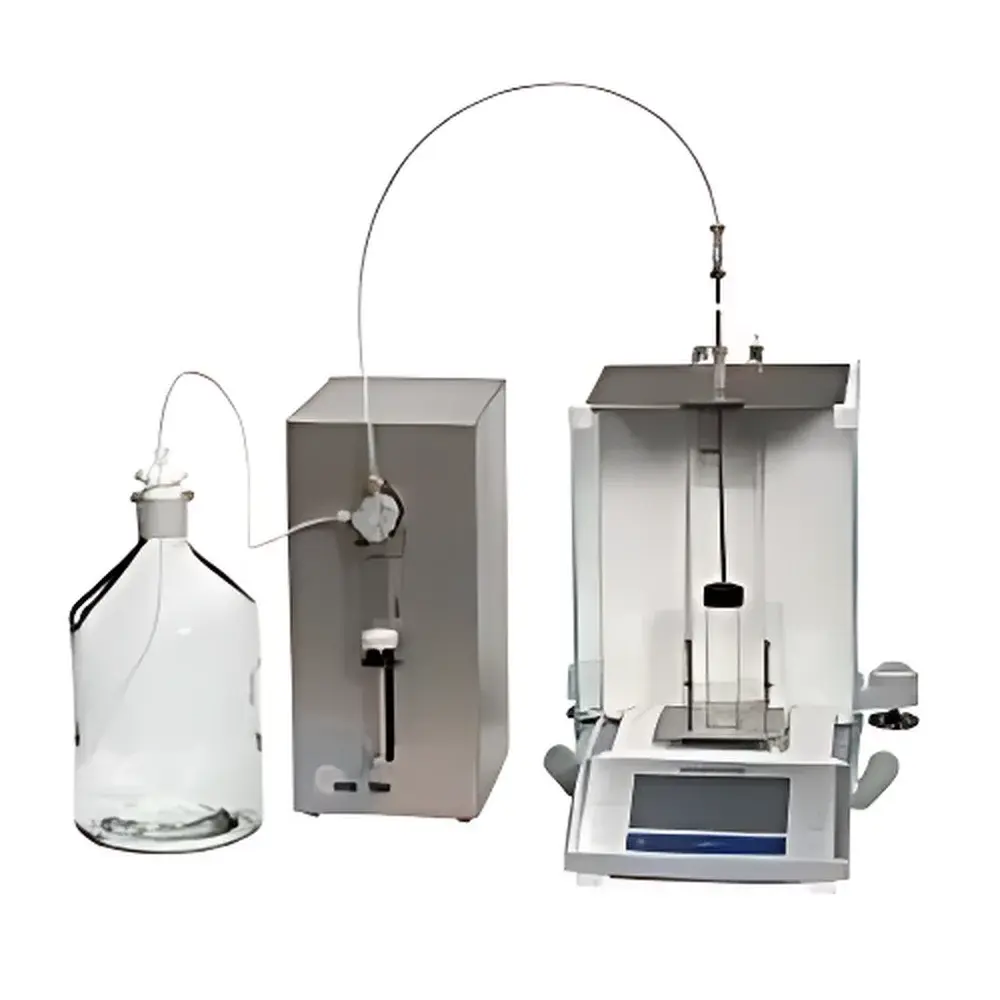
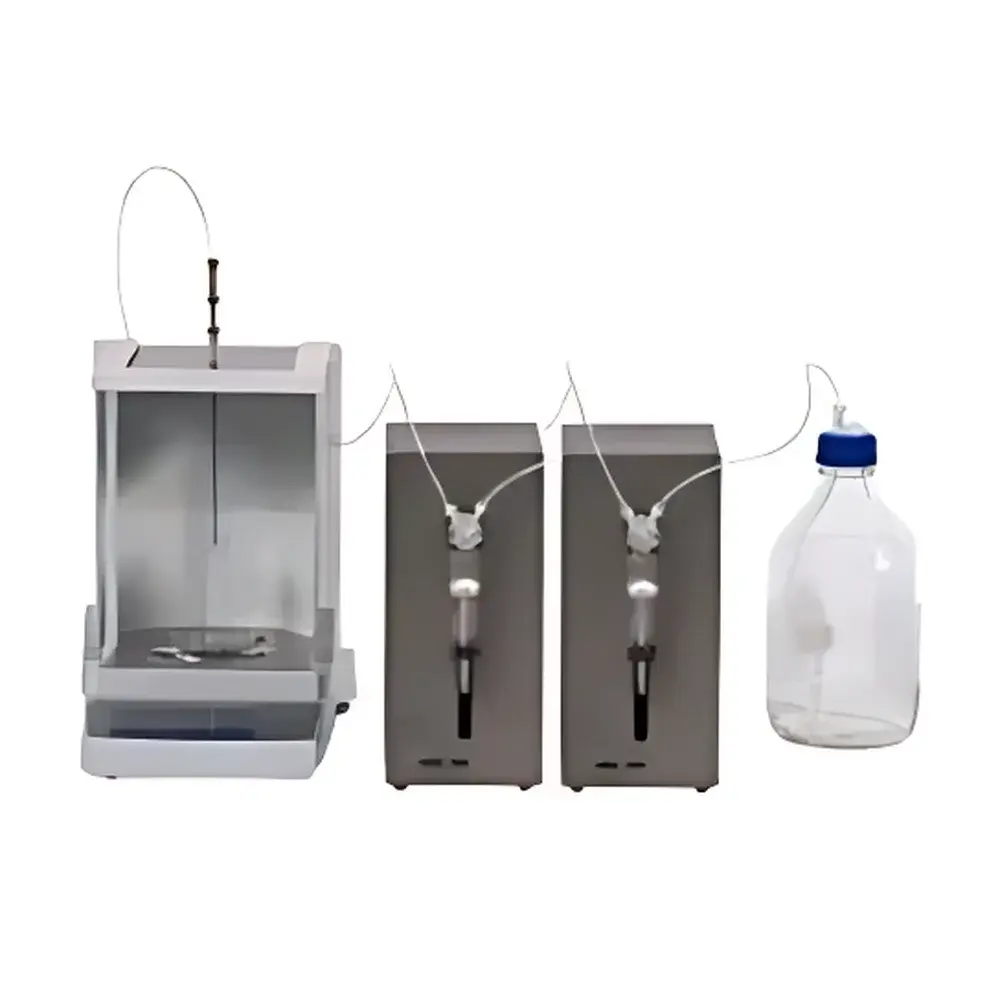
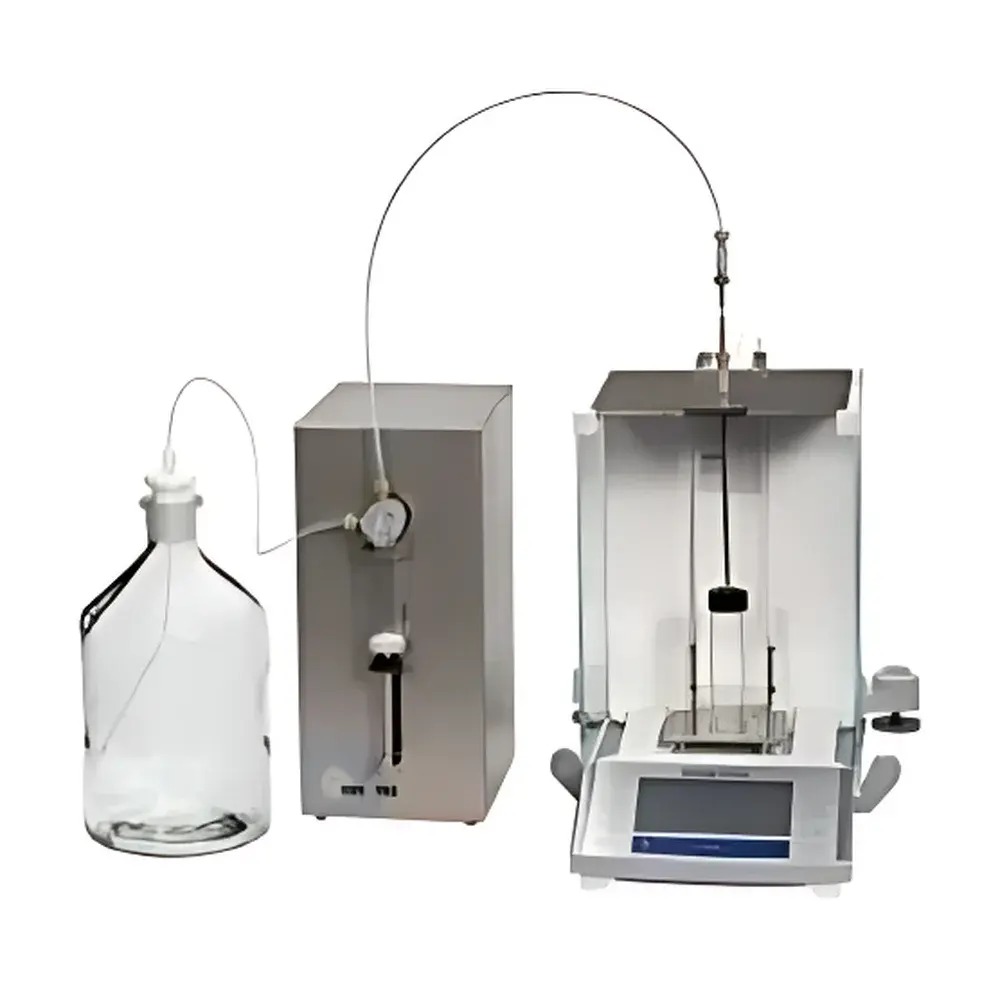
ChemTron ISP-1 / ISP-2 / ISP-1HD Automated Sample Preparation Systems for Rheological and Viscosity Testing
| Brand | ChemTron |
|---|---|
| Origin | Germany |
| Model | ISP-1, ISP-2, ISP-1HD |
| Application | Polymer, pulp, and HDPE/PP sample preparation for rotational rheometry and capillary viscometry |
| Compliance | Designed for GLP-compliant workflows with audit-trail-ready data transfer to RPV-1 viscosity software |
| Safety | Integrated self-diagnostic routines and real-time error detection |
Overview
The ChemTron ISP-1, ISP-2, and ISP-1HD Automated Sample Preparation Systems are precision-engineered peripheral platforms designed to standardize and accelerate sample conditioning for rotational rheometers and capillary viscometers—particularly in polymer melt characterization, pulp suspension analysis, and high-density polyolefin (HDPE/PP) quality control. These systems operate on gravimetric (mass/mass) formulation principles, eliminating volumetric uncertainties induced by thermal expansion or material density variation—a critical requirement for ISO 1628-1, ASTM D1238, and ISO 11443 compliant viscosity and rheological testing. Each system integrates a high-resolution analytical balance, programmable syringe pump(s), and dedicated firmware that synchronizes weight acquisition, dispensing sequence, and metadata generation. The core architecture ensures traceable, repeatable sample loading across batches, directly supporting regulatory requirements for method validation and instrument qualification under GMP/GLP environments.
Key Features
- Sub-75-second sample preparation cycle time—achievable via synchronized balance stabilization, pump actuation, and automated tare/record logic.
- Gravimetric concentration calculation (w/w %) with real-time correction for moisture and ash content—applied automatically in ISP-2 and ISP-1HD during pulp or polyolefin sample conditioning.
- Seamless bidirectional data exchange with ChemTron RPV-1 viscosity analysis software: sample ID, mass values, preparation timestamp, operator code, and correction factors are transmitted as structured metadata—not manual entry.
- Embedded safety self-check protocol validates balance calibration status, pump occlusion integrity, syringe plunger position, and environmental drift before each run—halting execution if thresholds are exceeded.
- Voice-guided workflow navigation (ISP-2 and ISP-1HD): step-by-step audio prompts reduce operator dependency and minimize procedural deviations—especially valuable in multi-shift or training-intensive QC labs.
- Modular hardware design supports field-upgradable configurations: ISP-1 serves general polymer solutions; ISP-2 adds moisture/ash compensation algorithms for fiber-based suspensions; ISP-1HD incorporates reinforced pumping modules and thermal-stable weighing chambers optimized for viscous HDPE/PP melts at elevated temperatures.
Sample Compatibility & Compliance
The ISP series accommodates a broad range of sample matrices including thermoplastic polymer solutions (e.g., PS, PET, PC in o-dichlorobenzene), cellulose pulp slurries (ISO 5351), and high-melt-index polyolefin melts. All models comply with the mechanical and metrological requirements of OIML R 76 and EN ISO 9001 for measurement equipment used in certified testing laboratories. Data export protocols adhere to ASTM E1482 and ISO/IEC 17025 Annex A.2 guidelines for electronic record integrity. When deployed in conjunction with RPV-1 software, full 21 CFR Part 11 compliance is achievable—including electronic signatures, audit trails, and user-access-controlled parameter locking—subject to site-specific configuration and validation documentation.
Software & Data Management
Firmware is managed via ChemTron’s proprietary ISP Control Suite, which provides local configuration of dispensing profiles, correction factor libraries (e.g., moisture equivalence tables per pulp grade), and alarm thresholds. Raw mass/time logs are stored in encrypted SQLite databases with SHA-256 hashing. Export options include CSV (for LIMS integration), XML (for RPV-1 ingestion), and PDF-certified reports containing digital signatures and chain-of-custody metadata. System logs retain all user actions, sensor events, and diagnostic outcomes for ≥36 months—satisfying minimum retention periods specified in ISO/IEC 17025:2017 clause 7.5.2.
Applications
- Standardized preparation of polymer solutions for intrinsic viscosity (IV) determination per ISO 1628-1 and USP <911>.
- Routine conditioning of kraft pulp samples prior to viscosity measurement (ISO 5351), including automatic ash/moisture normalization to oven-dry basis.
- High-precision dosing of molten HDPE/PP into capillary dies or parallel-plate geometries—minimizing thermal degradation through controlled shear history and minimized residence time.
- Supporting interlaboratory comparison studies where sample homogeneity and preparation reproducibility are primary uncertainty contributors (per ISO 5725).
- Enabling unattended overnight preparation sequences in regulated pharmaceutical excipient characterization workflows (e.g., HPMC, PVP viscosity grading).
FAQ
Can the ISP systems be integrated with third-party rheometers or viscometers beyond ChemTron’s RPV-1 platform?
Yes—via RS-232 or Ethernet TCP/IP interfaces using ASCII command protocols; custom drivers are available upon request for select Anton Paar, TA Instruments, and Brookfield platforms.
What level of accuracy does the gravimetric concentration calculation achieve?
Typical uncertainty is ±0.05% w/w for samples >1 g, assuming use of a Class I balance (e.g., Mettler Toledo XPR series) calibrated per ISO/IEC 17025.
Is firmware validation support provided for FDA-regulated environments?
ChemTron supplies IQ/OQ documentation templates, traceable calibration certificates, and change-control logs—all aligned with GAMP 5 Category 3 software classification.
Does ISP-1HD support operation above 200 °C?
The ISP-1HD thermal enclosure maintains ambient stability around the balance but does not heat samples; it is intended for use with externally heated rheometer stages—sample temperature control remains the responsibility of the host instrument.
How frequently must the self-diagnostic routine be executed?
It runs automatically before every sample preparation cycle; manual initiation is also supported via the front-panel interface or remote command.



