
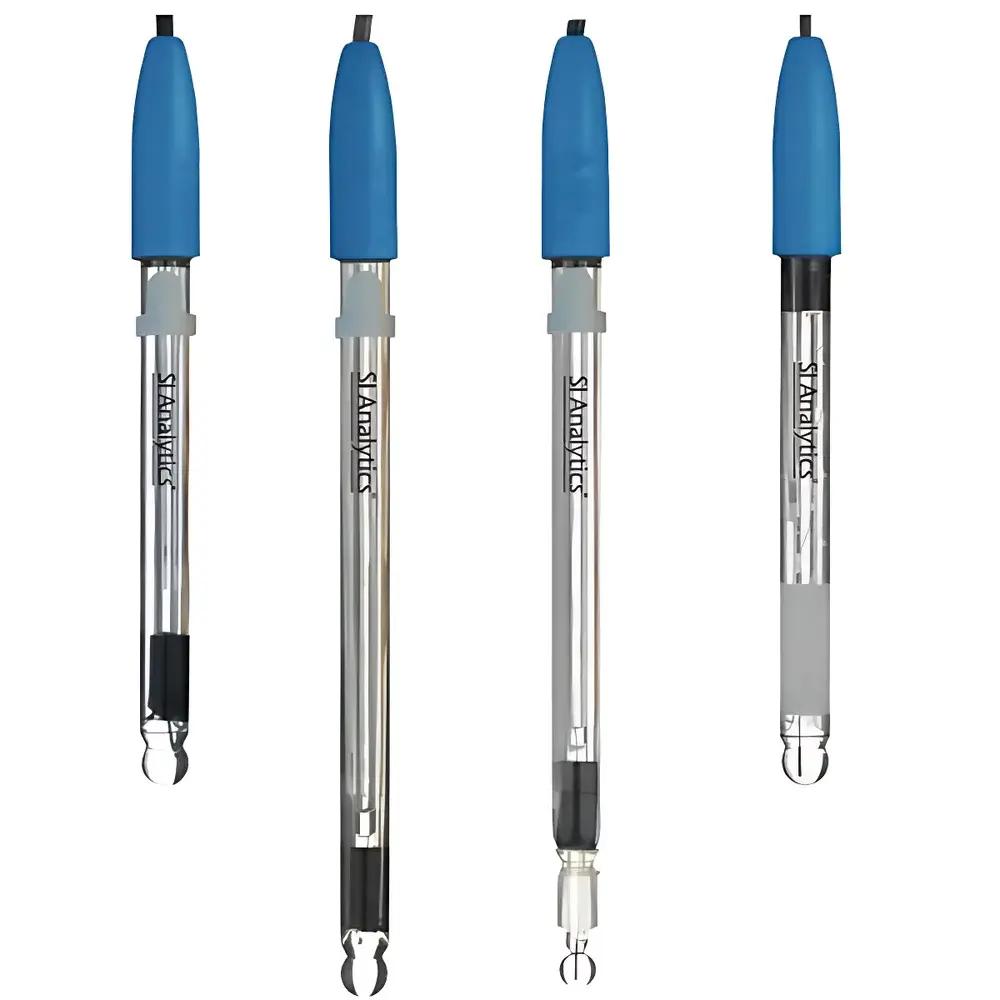
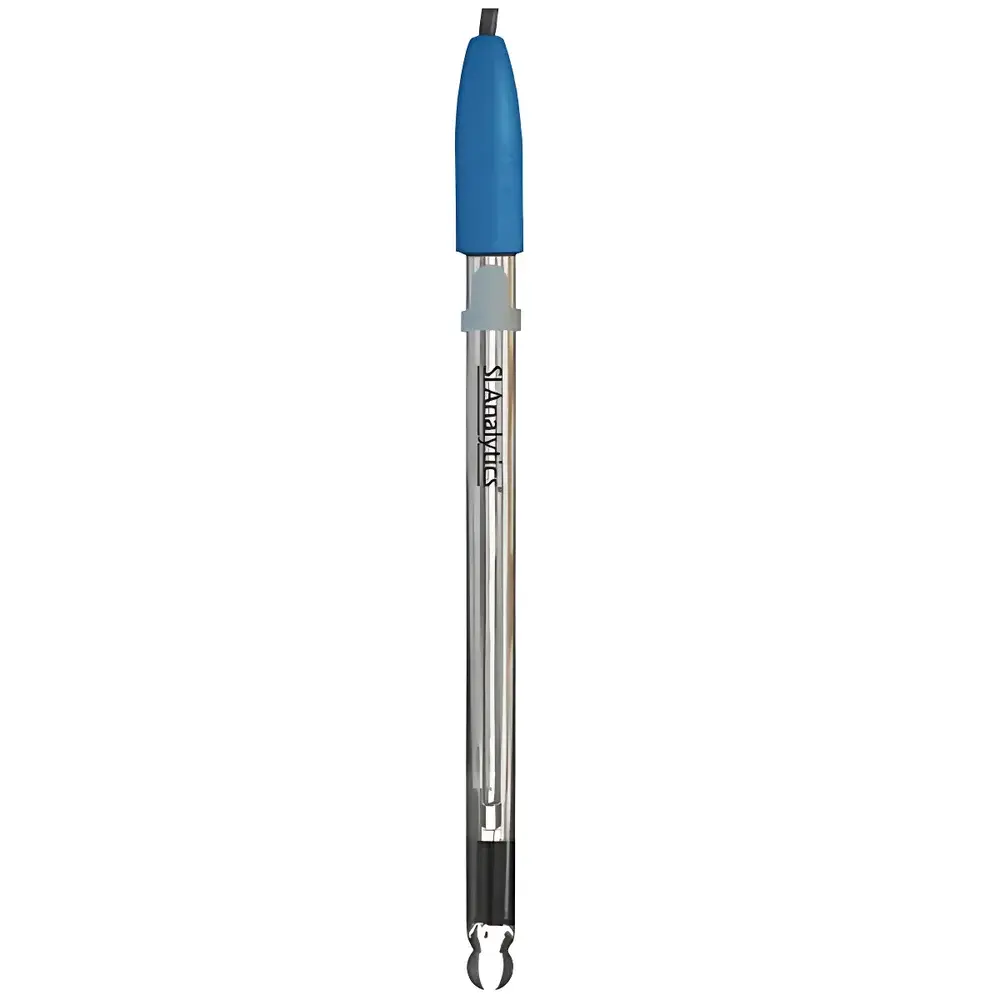
ChemTron ScienceLine A 161 1M-DIN-ID pH Electrode with Integrated Pt1000 Temperature Sensor
| Brand | ChemTron |
|---|---|
| Origin | Germany |
| Model | ScienceLine A 161 1M-DIN-ID |
| Electrode Type | Combination pH/temperature sensor |
| Reference System | Silamid® |
| Body Material | Glass |
| pH Range | 0–14 |
| Zero Point | pH 7.0 ± 0.3 |
| Filling Solution | 3 mol/L KCl |
| Temperature Sensor | Pt1000 |
| Sensing Membrane Shape | Spherical |
| Junction Type | Platinum wire (A-5) |
| Temperature Range | –5 to +100 °C |
| Connector | DIN 19262 + 4-mm pin, with automatic electrode ID recognition |
Overview
The ChemTron ScienceLine A 161 1M-DIN-ID is a high-precision, integrated combination electrode engineered for reliable and traceable pH measurement in demanding laboratory, quality control, and process monitoring environments. Designed in accordance with ISO 3696 (Grade 2 water), ASTM D1293, and USP guidelines for electrochemical sensing, this electrode employs a robust glass body and a spherical pH-sensitive membrane optimized for rapid response and minimal drift. Its integrated Pt1000 temperature sensor enables real-time, two-point temperature compensation—critical for accurate Nernstian potential correction across wide thermal gradients. The Silamid® reference system ensures long-term stability and low junction potential variability, while the platinum-wire liquid junction (A-5 type) delivers consistent electrolyte flow under variable pressure or viscosity conditions. The electrode operates within the full aqueous pH range (0–14) and is rated for continuous immersion at temperatures from –5 °C to +100 °C, making it suitable for applications ranging from aggressive acid/base titrations to high-temperature bioreactor monitoring.
Key Features
- Integrated Pt1000 temperature sensor compliant with IEC 60751 Class B tolerance (±0.3 °C at 0 °C), enabling automatic temperature compensation without external probes
- Silamid® reference system offering superior long-term stability, reduced clogging risk, and minimal liquid junction potential drift
- Spherical pH-sensitive glass membrane fabricated from low-resistance, alkali-resistant glass for enhanced reproducibility in alkaline media (pH > 12)
- DIN 19262 + 4-mm pin connector with embedded EEPROM chip supporting automatic electrode identification and parameter recall in compatible meters (e.g., Metrohm 916 Ti-Touch, Hanna HI5522, Thermo Scientific Orion Star A329)
- Pt-wire (A-5) flowing junction designed for uniform electrolyte outflow and resistance to fouling in suspensions, colloids, or protein-rich matrices
- Calibration-ready zero point at pH 7.0 ± 0.3 (25 °C), verified per DIN EN ISO 17025-accredited calibration protocols
Sample Compatibility & Compliance
The ScienceLine A 161 1M-DIN-ID demonstrates broad compatibility with aqueous samples, including buffers, pharmaceutical formulations, food extracts, wastewater, fermentation broths, and cleaning-in-place (CIP) solutions. Its platinum junction and chemically resistant glass body ensure reliable performance in low-ionic-strength samples (e.g., deionized water), high-salinity brines, and mildly oxidizing environments. The electrode meets key regulatory requirements for data integrity: its auto-ID functionality supports audit-trail generation in GLP/GMP-compliant workflows, and its design aligns with FDA 21 CFR Part 11 principles when used with validated instrument platforms. It is not recommended for non-aqueous solvents (e.g., ethanol, acetone), hydrofluoric acid, or strongly reducing sulfide-containing media without prior validation.
Software & Data Management
When paired with modern benchtop or portable pH meters featuring DIN-ID support, the electrode enables seamless configuration transfer and calibration history logging. The embedded EEPROM stores manufacturer-defined parameters—including serial number, calibration date, slope tolerance thresholds, and junction type—ensuring metrological traceability across instrument changes. Data export formats (CSV, XML) preserve timestamped temperature-corrected mV and pH values, facilitating integration into LIMS (e.g., LabWare, Thermo Fisher SampleManager) and electronic lab notebooks (ELNs). Firmware updates on compatible readers preserve backward compatibility with legacy calibration curves and user-defined SOPs.
Applications
- Pharmaceutical QC: Dissolution testing, buffer preparation verification, and stability-indicating assays per USP
- Food & Beverage: pH monitoring during pasteurization, fermentation (yogurt, beer, wine), and shelf-life studies
- Environmental Labs: Wastewater effluent analysis, soil extract pH determination (ASTM D4972), and leachate characterization
- Academic Research: Kinetic studies requiring simultaneous pH/temperature tracking in reaction calorimetry setups
- Biotechnology: In-line pH control in single-use bioreactors and downstream purification skids
FAQ
What is the expected lifetime of the Silamid® reference system under continuous use?
With proper storage in 3 mol/L KCl and routine cleaning (e.g., 0.1 M HNO₃ for protein deposits), the Silamid® junction typically maintains stable performance for 12–18 months in standard lab use.
Can this electrode be used with non-DIN meters?
Yes—via DIN-to-BNC or DIN-to-SMEK adapters—but auto-ID and temperature compensation will be disabled; manual entry of sensor parameters and external temperature input are required.
Is the Pt1000 sensor independently calibrated?
Each electrode undergoes individual Pt1000 resistance verification at 0 °C and 100 °C during final QA; full calibration certificates (ISO/IEC 17025) are available upon request.
How should the electrode be cleaned after measuring viscous or oily samples?
Rinse thoroughly with deionized water, then soak for 5–10 minutes in 0.1 M HCl or a mild detergent solution; avoid organic solvents that may degrade the glass membrane or epoxy sealant.
Does the A-5 junction require refilling or maintenance?
No—the A-5 platinum junction is sealed and non-refillable; its design eliminates electrolyte level checks but mandates periodic inspection for crystallization or blockage at the junction aperture.




