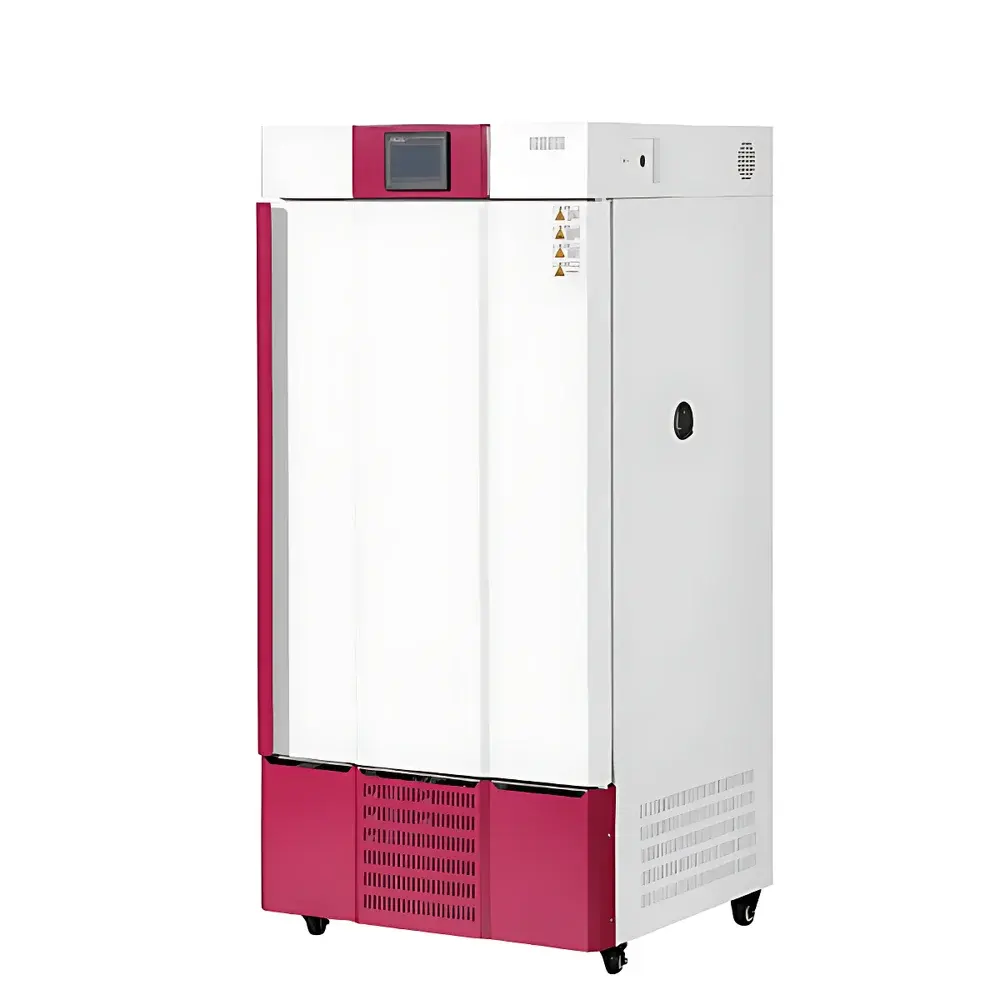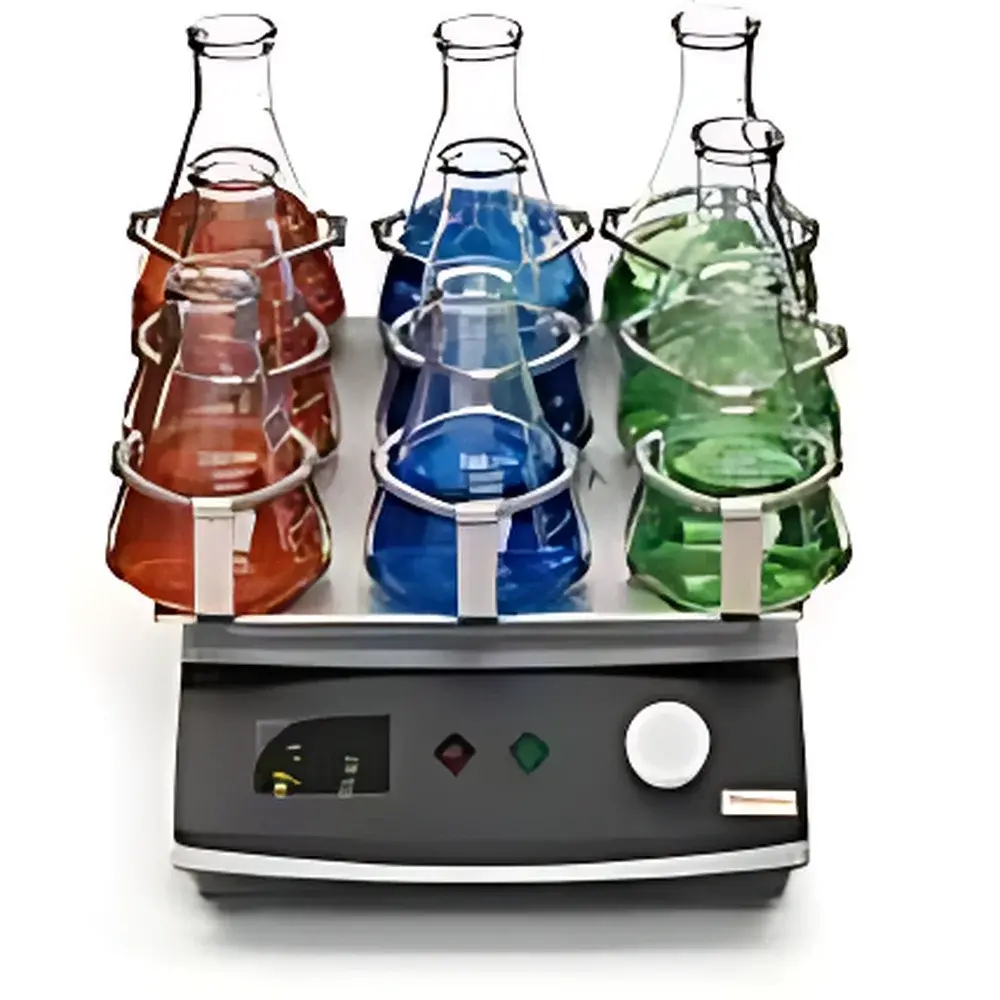
Thermo Scientific Orbital Shaker with Photoelectric Control
| Brand | Thermo Fisher |
|---|---|
| Origin | South Korea |
| Manufacturer Type | Original Equipment Manufacturer (OEM) |
| Product Category | Imported Instrument |
| Model | Thermo Scientific Air-Bath Orbital Shaker |
| Pricing Range | USD 1,400 – 2,800 |
| Instrument Type | Air-Bath Constant-Temperature Orbital Shaker |
| Timer Range | 1 min – 99 hrs 59 min / Continuous Operation |
| Oscillation Speed | 50–300 rpm |
| Temperature Range | Up to 60 °C |
| Platform Quantity | 1 |
| Control System | PID-Based Photoelectric Speed & Temperature Regulation |
| Enclosure Compatibility | Designed for placement inside non-CO₂ incubators and refrigerated chambers (≤60 °C operating ambient) |
Overview
The Thermo Scientific Orbital Shaker with Photoelectric Control is an air-bath constant-temperature orbital shaker engineered for precision and reliability in microbiological cultivation, cell suspension maintenance, and biochemical reaction mixing. Unlike water-bath shakers, this unit employs forced-air convection within a thermally insulated chamber to deliver uniform temperature distribution across the oscillating platform—eliminating condensation risks and enabling safe operation inside standard non-CO₂ incubators or refrigerated environments where ambient temperatures do not exceed 60 °C. Its core motion mechanism utilizes a balanced eccentric drive system to generate smooth, continuous circular orbital motion (typically 20–25 mm diameter), ensuring homogeneous suspension of microbial cultures, yeast, or mammalian cells without shear-induced damage. The integrated photoelectric speed sensor continuously monitors rotational position and feedbacks real-time data to the PID controller—enabling rapid correction of load-dependent speed drift and maintaining ±1 rpm stability under variable flask weights (50–500 mL). Temperature regulation follows a dual-sensor PID algorithm, referencing both chamber air and platform surface readings to minimize thermal lag and achieve ±0.3 °C uniformity at setpoints between ambient and 60 °C.
Key Features
- PID-controlled photoelectric feedback loop for precise, load-compensated speed regulation (50–300 rpm, resolution: 1 rpm)
- Forced-air heating system with optimized airflow geometry for ≤±0.3 °C temperature uniformity across the platform
- Timer flexibility: programmable duration from 1 minute to 99 hours 59 minutes, plus dedicated continuous mode
- Compact footprint (W × D × H ≈ 370 × 420 × 220 mm) designed for integration into standard-sized incubators (min. internal height ≥250 mm) and low-temperature refrigerated chambers
- Single-platform configuration with universal clamp-free design—compatible with standard Erlenmeyer flasks (50–1000 mL), test tubes, and deep-well plates via optional accessories
- Over-temperature and motor overload protection circuits compliant with IEC 61010-1 safety standards
Sample Compatibility & Compliance
This shaker supports routine suspension applications requiring gentle yet consistent agitation—including bacterial growth in LB or TB media, antibiotic susceptibility testing (AST), enzyme kinetics assays, and pre-incubation of transformation mixes. It accommodates standard glass and polycarbonate vessels up to 1 L volume on its single oscillating plate. The device meets electromagnetic compatibility (EMC) requirements per EN 61326-1 and electrical safety standards per EN 61010-1. While not certified for use in CO₂-controlled or sterile laminar flow environments, its sealed chassis and absence of external water reservoirs make it suitable for GLP-compliant labs conducting non-sterile culture propagation and QC testing under ISO/IEC 17025 frameworks. No USP , , or FDA 21 CFR Part 11 compliance claims are made, as the instrument lacks audit-trail logging or user-access controls.
Software & Data Management
The shaker operates via an embedded microcontroller with local front-panel interface only—no PC connectivity, no USB/Ethernet ports, and no proprietary software suite. All parameters (speed, time, temperature) are set manually using rotary encoder and LED display. No data export, remote monitoring, or electronic record-keeping functionality is provided. This architecture prioritizes operational simplicity, mechanical robustness, and long-term serviceability—ideal for high-throughput core facilities where reproducibility depends on deterministic hardware behavior rather than software-mediated control.
Applications
- Maintenance of aerobic microbial cultures (E. coli, Bacillus spp., Pseudomonas) in shake flasks during logarithmic-phase expansion
- Preparation of competent cells and plasmid transformation reactions requiring uniform thermal and mechanical input
- Antibiotic dilution series preparation and broth microdilution assays per CLSI M07-A10 guidelines
- Suspension of insect or suspension-adapted mammalian cell lines (e.g., Sf9, CHO-S) prior to transfection or infection steps
- Homogenization of immunoassay reagents, antigen-antibody mixtures, and buffer equilibration protocols
FAQ
Can this shaker be placed inside a CO₂ incubator?
No. The unit is explicitly designed for non-CO₂ environments; CO₂ exposure may corrode internal components and compromise temperature sensor calibration.
Is the oscillation amplitude specified?
The device delivers standard orbital motion with a nominal diameter of 20–25 mm, consistent with ISO 8570-1 for laboratory shakers. Amplitude is mechanically fixed and non-adjustable.
Does it support multi-platform configurations?
No. This model features a single oscillating platform only. Multi-tier stacking or dual-platform variants are not available in the Thermo Scientific air-bath shaker product line.
What is the maximum flask size supported without accessories?
Standard configuration accommodates up to 1 L Erlenmeyer flasks; larger vessels require custom clamping solutions not supplied by Thermo Fisher.
Is firmware update capability available?
No. The control firmware is factory-programmed and non-upgradable. Functional integrity relies on hardware-level calibration and passive component stability.