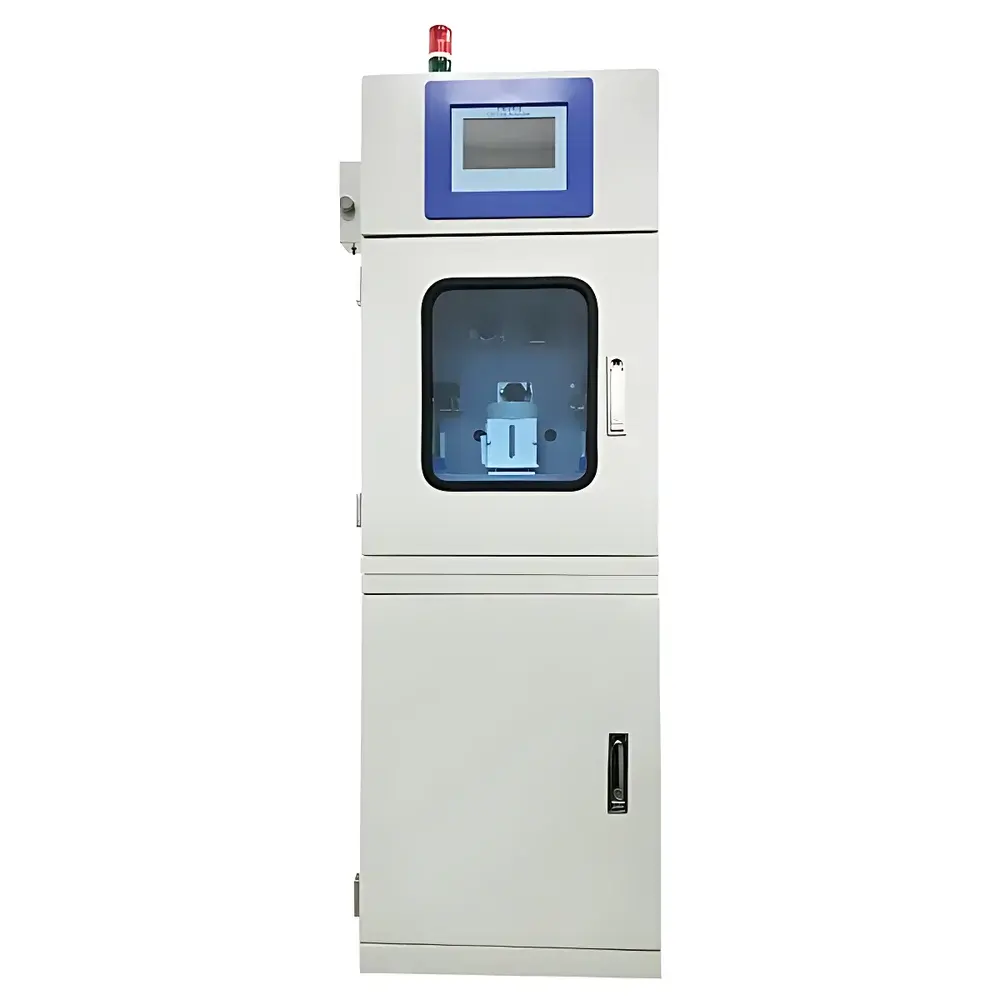
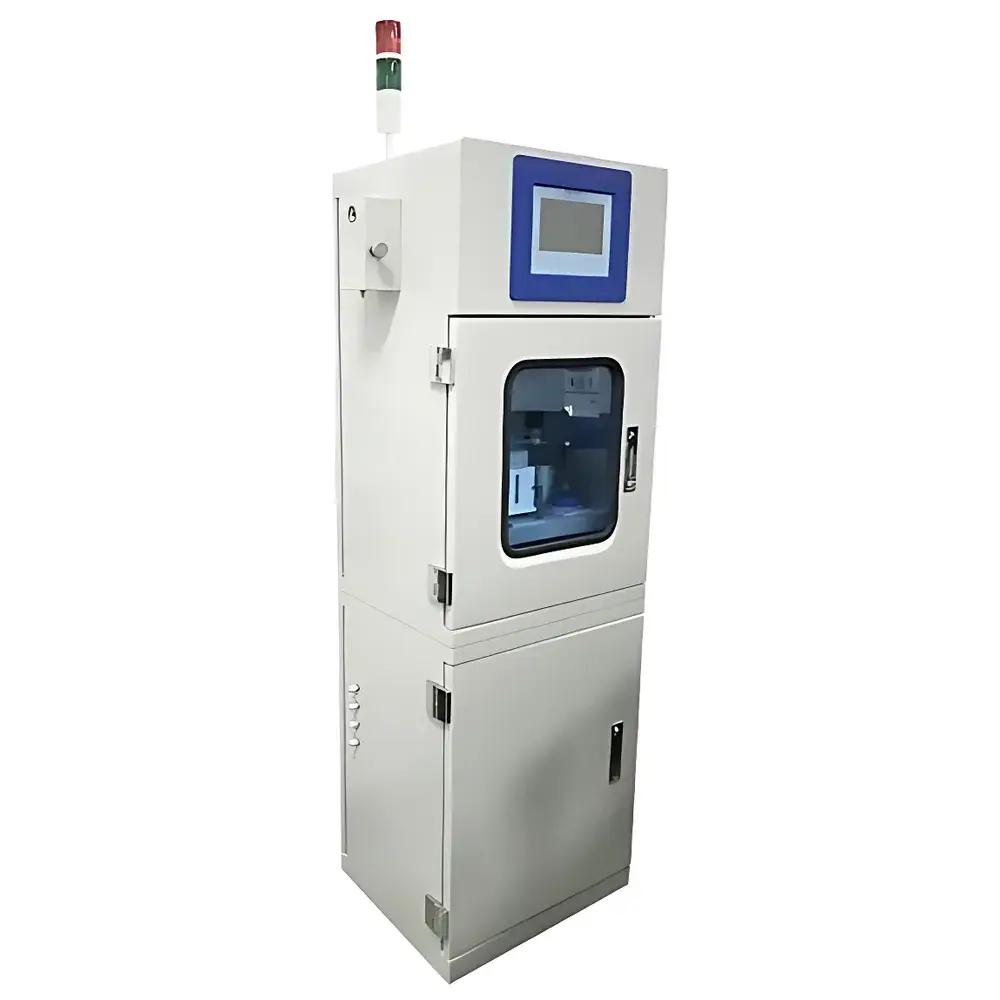
HOGON ALT Boric Acid Online Analyzer
| Brand | HOGON |
|---|---|
| Origin | Shanghai, China |
| Manufacturer Type | OEM Manufacturer |
| Regional Classification | Domestic (China) |
| Model | ALT Boric Acid Online Analyzer |
| Pricing | Upon Request |
Overview
The HOGON ALT Boric Acid Online Analyzer is an industrial-grade, fully automated titration-based process analyzer engineered for continuous, unattended monitoring of boric acid concentration in circulating process baths—particularly in electroplating, metal surface treatment, PCB manufacturing, and chemical synthesis lines. It operates on potentiometric and photometric endpoint detection principles: real-time measurement of electrode potential shifts (e.g., pH or redox potential) combined with high-resolution colorimetric analysis enables precise, multi-mode titration—including acid-base, redox, complexometric, precipitation, and non-aqueous titrations. Unlike laboratory benchtop titrators, the ALT system integrates sample acquisition, reagent delivery, reaction control, endpoint recognition, data computation, and closed-loop dosing feedback into a single ruggedized platform. Its architecture complies with ISA-88 and ISA-95 modular automation standards, supporting deterministic cycle times (<90 s per analysis) and long-term operational stability under ambient industrial conditions (IP54-rated enclosure, 5–40 °C operating range, 20–80% RH non-condensing).
Key Features
- Embedded A8 ARM processor with deterministic real-time control firmware for synchronized valve actuation, pump timing, and sensor sampling
- Modular hardware design: swappable titration modules (pH, redox, colorimetric), dual high-precision burettes (±0.1% volumetric accuracy, 0.01 mL resolution), and electromagnetic switching valves rated for >500,000 cycles
- 7-inch full-color capacitive touchscreen HMI with localized multilingual UI (English/Chinese), configurable workflow editor, and audit-trail-enabled operation logging
- Dual detection capability: potentiometric (using platinum or combination pH electrodes) and spectrophotometric (RGB-sensor array with ±1.5 nm wavelength repeatability) for robust endpoint confirmation
- Integrated dosing control interface: direct RS-485/Modbus RTU output to peristaltic or diaphragm metering pumps for automatic bath correction based on user-defined setpoints and PID-derived dosage algorithms
- Industrial communication suite: dual-port Ethernet (TCP/IP), isolated RS-232, and Modbus TCP/RTU protocols compliant with SCADA and MES integration requirements
Sample Compatibility & Compliance
The ALT analyzer accommodates aqueous process streams with turbidity ≤50 NTU and suspended solids <50 mg/L. It supports sample matrices containing common plating bath additives (e.g., glycol ethers, surfactants, brighteners) without interference—validated per ASTM D1126 (Hardness of Water) and ISO 8655-5 (Piston Syringes for Titration). All wetted parts (PFA tubing, PTFE valves, borosilicate glass burettes) meet USP Class VI biocompatibility and FDA 21 CFR 177.1550 (fluoropolymer resins) specifications. The system’s data integrity framework adheres to ALCOA+ principles (Attributable, Legible, Contemporaneous, Original, Accurate, Complete, Consistent, Enduring, Available) and supports 21 CFR Part 11-compliant electronic signatures when deployed with validated software configuration.
Software & Data Management
Firmware v3.2 includes embedded titration method editor, customizable calculation templates (e.g., boric acid = (Vtitrant × Ctitrant × MBA) / Vsample), and time-stamped result export (CSV/JSON) via FTP or HTTP POST. Local storage retains ≥10,000 analysis records with full metadata (sample ID, timestamp, electrode drift, endpoint slope, reagent lot traceability). Remote access enables secure TLS 1.2-encrypted configuration updates and diagnostic telemetry. Audit logs capture all operator actions—including method edits, calibration events, and alarm acknowledgments—with immutable SHA-256 hashing for GLP/GMP compliance.
Applications
- Electroless nickel-boron plating baths: continuous boric acid monitoring to maintain buffering capacity and deposition rate consistency
- PCB etching and stripping lines: real-time control of boric acid in copper dissolution inhibitors
- Textile dyeing auxiliaries: quantification of boric acid stabilizers in reactive dye fixation baths
- Pharmaceutical intermediate synthesis: in-process verification of boric acid catalyst concentration during esterification
- Wastewater neutralization systems: adaptive dosing of boric acid-containing effluents prior to discharge compliance testing
FAQ
What titration methods does the ALT support for boric acid quantification?
It primarily employs mannitol-assisted acid-base titration using standardized NaOH, with optional verification via potentiometric endpoint detection using a combination pH electrode.
Can the system interface with existing PLC-based control infrastructure?
Yes—Modbus TCP and RS-485 RTU protocols enable native integration with Siemens S7, Rockwell ControlLogix, and Mitsubishi Q-series PLCs without middleware.
Is routine maintenance required between analyses?
The automated cleaning sequence (dilute acid rinse → deionized water flush → air purge) executes after each analysis; no manual intervention is needed for up to 30 days of continuous operation.
How is calibration traceability ensured?
Each instrument ships with NIST-traceable certificate for burette volume verification and electrode slope calibration; field recalibration uses certified reference materials per ISO/IEC 17025 guidelines.
What cybersecurity measures are implemented?
Role-based access control (admin/operator/auditor), disabled default credentials, firmware signature validation, and configurable firewall rules for network ports.