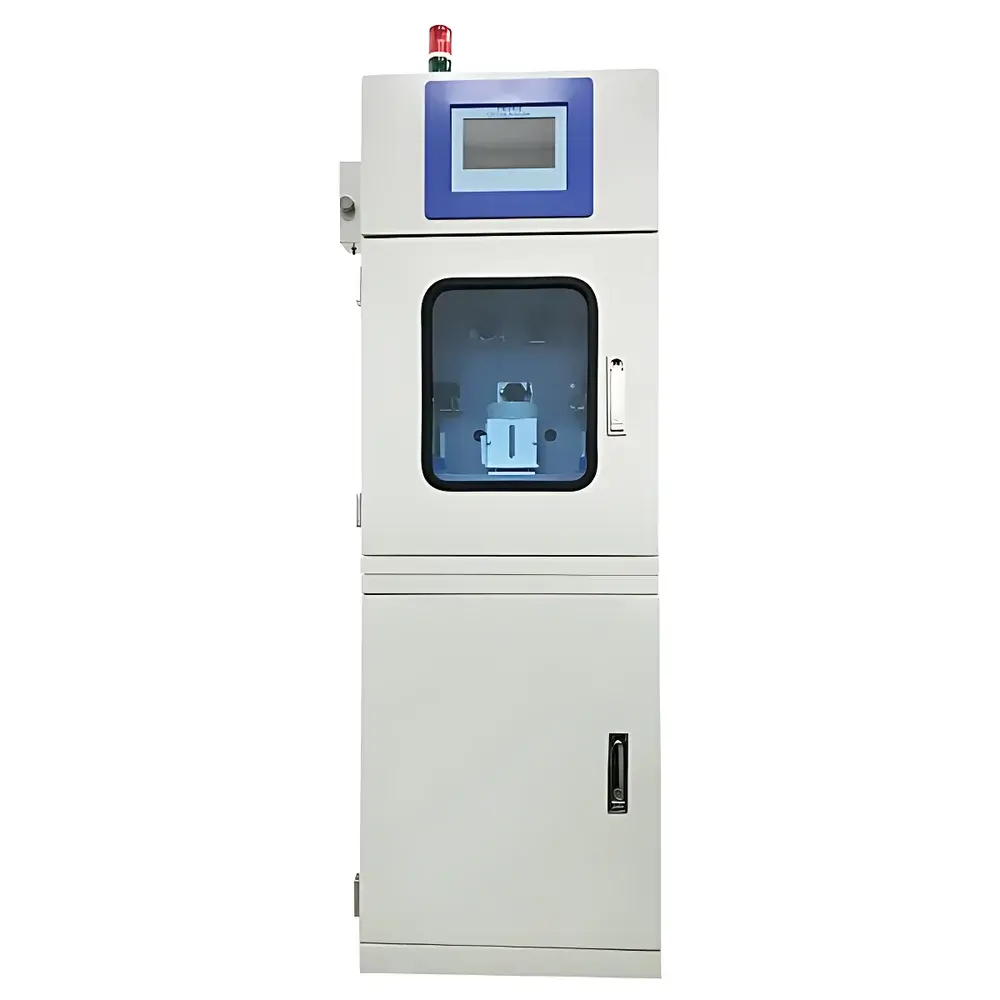
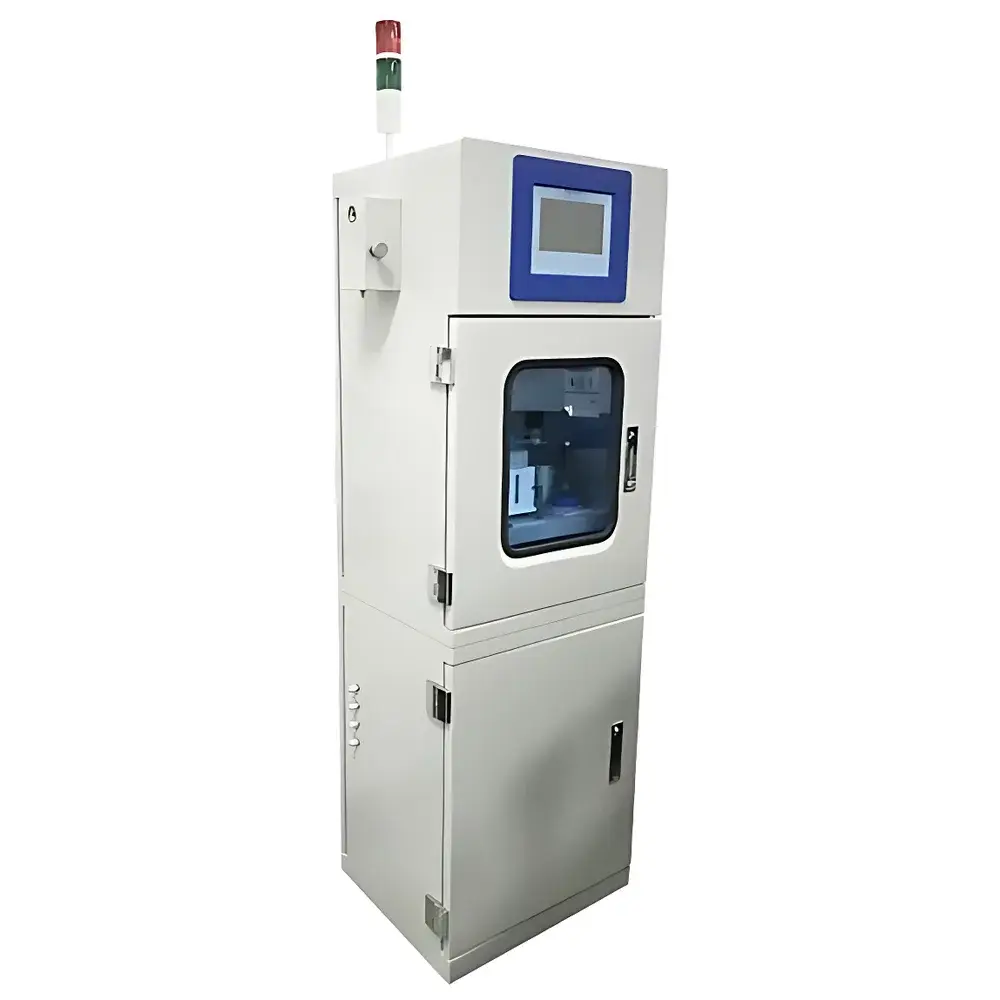
HOGON ALT-1-PH Online Process Titration Analyzer
| Brand | HOGON |
|---|---|
| Origin | Shanghai, China |
| Manufacturer Type | Direct Manufacturer |
| Region of Origin | Domestic (China) |
| Model | ALT-1-PH |
| Pricing | Upon Request |
| Detection Principle | Potentiometric and Colorimetric Acid-Base Titration |
| Analysis Frequency | Once per 20 minutes |
| RSD | ≤1% (Potentiometric), ≤2% (Colorimetric) |
| Detection Range | 0.01–10 mol/L H⁺ |
| Titration Precision | ±1 µL (using 20 mL burette) |
| Alarm Indicators | Dual-color LED for liquid level, data out-of-spec, reagent expiry, and system fault |
| Output Interfaces | Modbus TCP, RS-232/485, CAN, 4–20 mA analog |
| Operating Temperature | 5–40 °C |
| Relative Humidity | ≤90% RH (non-condensing at 10 °C) |
| Wetted Materials | PTFE/FEP |
| Enclosure Rating | IP55 / IP65 (when door is closed and locked) |
| Dimensions (W×D×H) | 500 × 400 × 1600 mm |
| Power Supply | 100–220 V AC, 50–60 Hz, 200 W |
Overview
The HOGON ALT-1-PH Online Process Titration Analyzer is an industrial-grade, fully automated titration system engineered for continuous, real-time monitoring and control of acid-base concentration in process streams—particularly in electroplating, metal finishing, chemical synthesis, and wastewater treatment applications. It operates on the fundamental principles of volumetric acid-base titration, employing either potentiometric endpoint detection (via high-stability pH or ion-selective electrodes) or colorimetric endpoint recognition (using calibrated optical sensors and RGB-based chromatic analysis). Unlike conventional grab-sample lab titrators, the ALT-1-PH integrates sampling, titration, electrode conditioning, rinsing, waste disposal, and reagent replenishment into a single synchronized cycle—executed every 20 minutes without operator intervention. Its architecture supports closed-loop feedback control: upon completion of each analysis, the system calculates deviation from setpoint and transmits proportional control signals to external dosing pumps via 4–20 mA or Modbus TCP, enabling dynamic reagent addition to maintain target alkalinity or acidity within defined tolerance bands.
Key Features
- Dual-mode endpoint detection: Selectable potentiometric (electrode potential inflection) or colorimetric (spectral absorbance shift) analysis—optimized for diverse matrix chemistries including buffered, turbid, or colored solutions.
- High-precision micro-dosing capability: Integrated 20 mL glass syringe burette with ±1 µL volumetric resolution ensures reproducible delivery across the full 0.01–10 mol/L H⁺ range.
- Automated maintenance cycle: Post-analysis self-cleaning sequence includes multi-stage rinse (deionized water + optional solvent flush), electrode wetting, and air-drying—minimizing carryover and drift.
- Rugged industrial enclosure: IP55/IP65-rated housing (achievable only when door is secured) with PTFE/FEP-wetted fluid paths ensures long-term compatibility with aggressive acids, alkalis, and halide-containing electrolytes.
- Multi-protocol digital connectivity: Native support for Modbus TCP (Ethernet), RS-232/485 (serial), CAN bus, and 4–20 mA analog outputs enables seamless integration into DCS, SCADA, and MES platforms.
- Comprehensive status diagnostics: Dual-color LED indicators provide immediate visual feedback on liquid level integrity, analytical result validity, reagent shelf-life expiration, and hardware fault conditions.
Sample Compatibility & Compliance
The ALT-1-PH is validated for use with aqueous process liquors containing total dissolved solids (TDS) up to 150 g/L and suspended particulates <50 µm in diameter. It complies with IEC 61000-6-2 (immunity) and IEC 61000-6-4 (emissions) for industrial electromagnetic environments. While not certified to ISO/IEC 17025 for accredited testing, its measurement traceability aligns with ASTM E202–22 (Standard Test Methods for Saponification Number of Fatty Acids) and ISO 3696 (Grade 3 water specifications for rinsing). The system supports audit-ready operation under GLP and GMP frameworks through configurable event logging—including timestamped analysis records, calibration logs, reagent lot tracking, and user-access history—compatible with FDA 21 CFR Part 11 requirements when deployed with validated software extensions.
Software & Data Management
The embedded controller runs a deterministic real-time OS with non-volatile storage for ≥12 months of compressed analytical records (timestamp, sample ID, titrant volume, endpoint pH/color value, calculated concentration, RSD, and alarm flags). Remote configuration and diagnostics are accessible via secure web interface (HTTPS) or dedicated HOGON ProcessLink™ desktop application. Data export formats include CSV, XML, and OPC UA—enabling direct ingestion into LIMS or cloud-based analytics platforms. All firmware updates undergo cryptographic signature verification; configuration changes require role-based authentication (admin/operator levels) with session timeout and password complexity enforcement.
Applications
- Electroplating bath control: Continuous monitoring of free acid concentration in nickel, copper, and zinc plating baths to prevent pitting, poor adhesion, or burnt deposits.
- Passivation line optimization: Real-time tracking of nitric or citric acid concentration during stainless steel passivation to ensure compliance with ASTM A967 and AMS 2700.
- Chemical dosing in PCB etching: Closed-loop adjustment of ferric chloride or ammonium persulfate activity based on titratable acidity.
- Neutralization control in effluent treatment: Adaptive dosing of NaOH or H₂SO₄ to maintain discharge pH within regulatory limits (e.g., EPA 40 CFR Part 414).
- Quality assurance in detergent manufacturing: In-line verification of active alkali content (NaOH/Na₂CO₃) in bulk liquid formulations.
FAQ
What titration methods does the ALT-1-PH support?
It supports both potentiometric titration (using pH or specific-ion electrodes) and colorimetric titration (using optical sensors with preloaded indicator response curves).
Can the system operate unattended for extended periods?
Yes—designed for 7×24 operation with automatic cleaning, reagent level monitoring, and fault-tolerant error recovery; typical service interval is 3 months under standard usage.
Is remote access and configuration possible?
Yes—via secure HTTPS web interface or HOGON ProcessLink™ software; all communications are encrypted using TLS 1.2+.
How is measurement accuracy verified onsite?
Through scheduled standard additions using NIST-traceable buffer solutions or certified reference materials (CRMs); the system logs all calibration events with operator ID and timestamp.
Does it meet any international safety standards?
It conforms to UL 61010-1 and IEC 61010-1 for electrical safety in laboratory and industrial equipment, and CE marking applies for EMC and Low Voltage Directive compliance.