
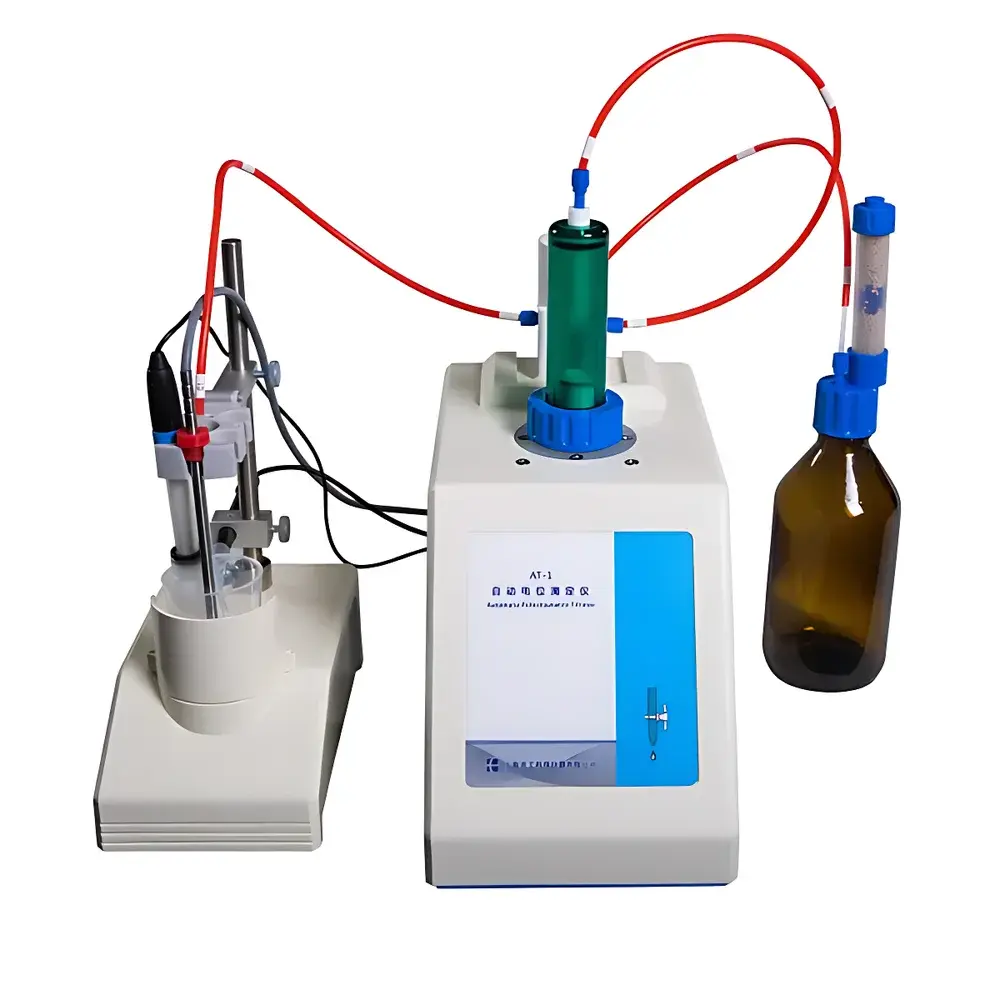
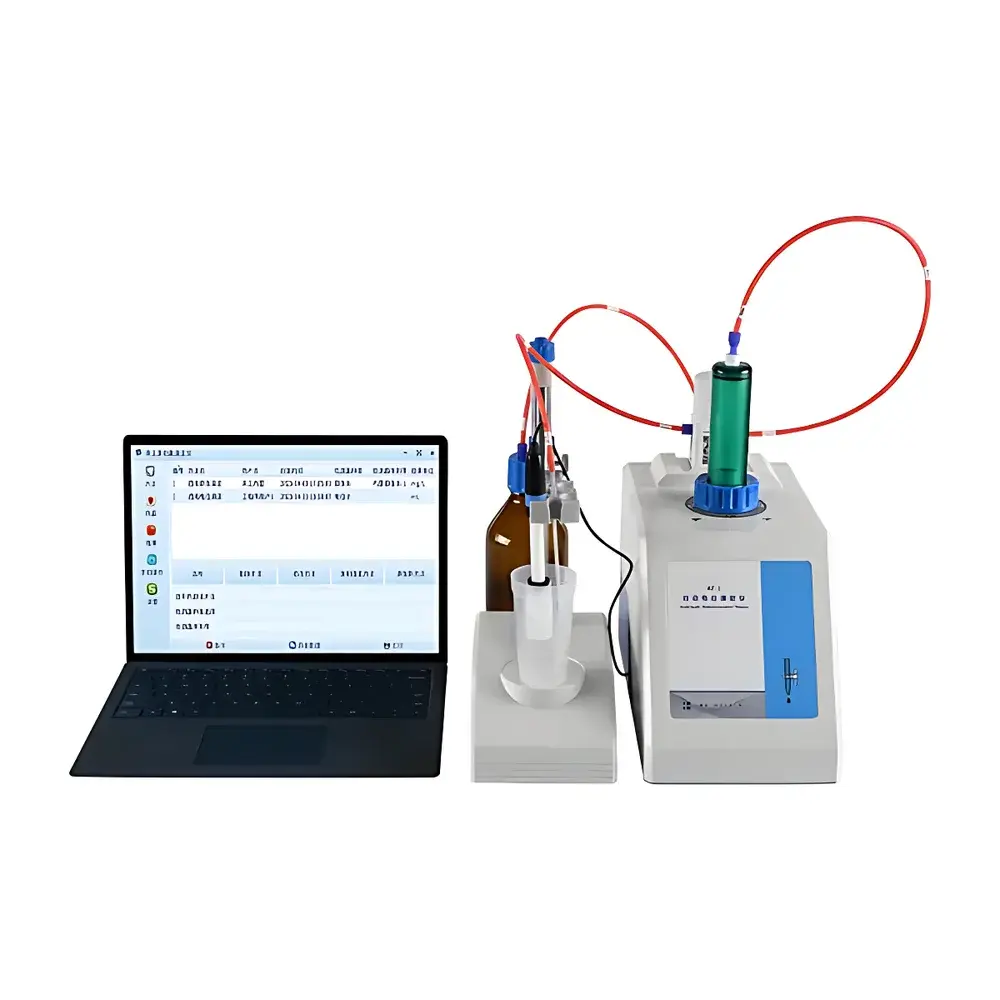
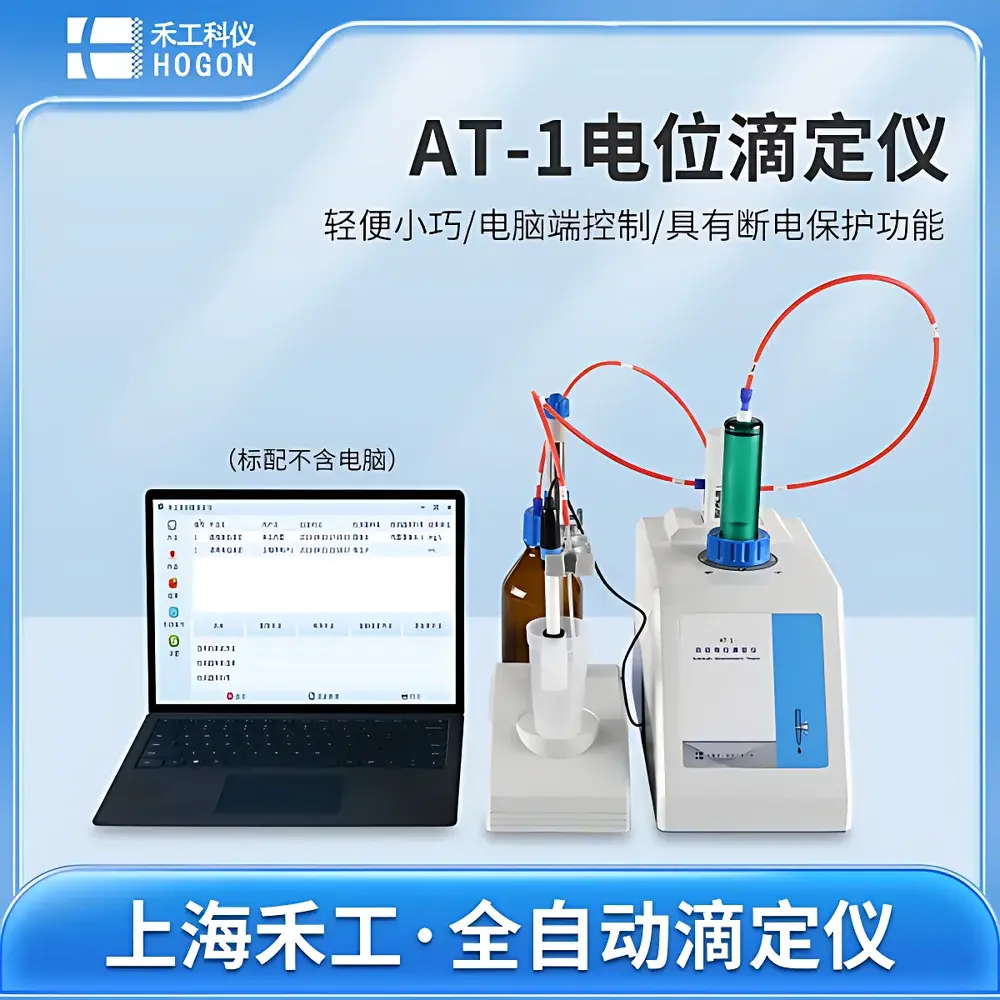
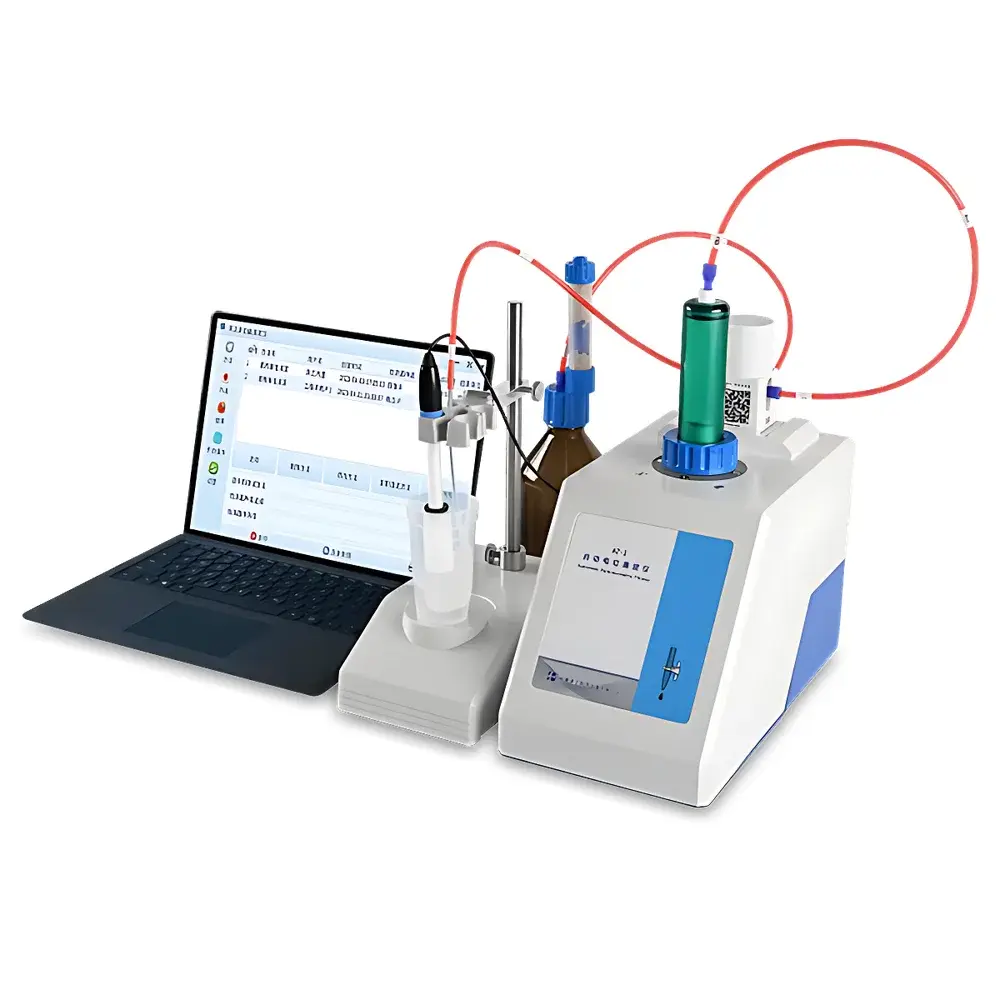
HOGON AT-1 Advanced Automatic Potentiometric Titrator (Economy Edition)
| Brand | HOGON |
|---|---|
| Origin | Shanghai, China |
| Manufacturer Type | Direct Manufacturer |
| Instrument Category | Domestic |
| Model | AT-1 Advanced |
| Instrument Type | General-Purpose Potentiometric Titrator |
| Application Scope | Universal |
| Measurement Range | mV: −2000 to +2000 mV |
| pH | 0.000–14.000 |
| Temperature | −55.0 to +125.0 °C |
| Meter Accuracy | ±0.5% of full scale |
| Meter Resolution | 0.1 mV |
| Titration Accuracy | ±0.8 mV/h |
| Titration Resolution | 0.1 mV |
Overview
The HOGON AT-1 Advanced Automatic Potentiometric Titrator is a compact, PC-controlled laboratory instrument engineered for precision volumetric analysis based on potentiometric endpoint detection. It operates on the fundamental principle of monitoring potential difference (in mV) between a reference and an indicator electrode during titration, enabling real-time identification of stoichiometric equivalence points via first- and second-order derivative analysis of the titration curve. Designed as a universal platform, the AT-1 supports classical aqueous and non-aqueous titrations—including acid-base, redox, complexometric, and precipitation reactions—without requiring hardware modification. Its architecture integrates a maintenance-free, high-precision burette system capable of delivering titrant volumes down to 3 µL with 1/20,000 volumetric resolution, ensuring reproducibility essential for method validation in regulated environments. The instrument is calibrated and validated per ISO/IEC 17025-aligned internal protocols and conforms to core metrological requirements outlined in ASTM E2087 and USP for titrimetric analysis.
Key Features
- PC-based operation via USB interface with intuitive graphical software for instrument control, real-time data acquisition, and automated report generation
- Dual-mode endpoint detection: dynamic equivalence point (EP) tracking and fixed-value endpoint (e.g., pH = 7.00 or E = +325 mV), configurable per method
- Integrated temperature compensation using a calibrated Pt1000 sensor (−55 to +125 °C), enabling accurate pH and activity-corrected titrations
- Multi-electrode compatibility: standardized BNC, DIN, and mini-DIN ports support combination pH electrodes, redox electrodes, Ag/AgCl reference electrodes, ion-selective electrodes (ISEs), and auxiliary temperature probes
- PWM-controlled magnetic stirrer with adjustable speed and anti-interference design for viscous, heterogeneous, or low-conductivity samples
- Burette options: interchangeable 10 mL and 20 mL modules constructed from chemically resistant materials (including high-chloric-acid-compatible components for non-aqueous titrations)
- Comprehensive safety architecture: automatic overfill prevention, reagent depletion alerts, emergency stop logic, and physical drip tray containment
- GLP-compliant data integrity: user authentication with role-based permissions (admin/operator/auditor), electronic audit trail, and PDF export of raw curves, derivative plots, and final reports with embedded metadata (date/time, operator ID, method name, calibration history)
Sample Compatibility & Compliance
The AT-1 accommodates a broad spectrum of sample matrices—from dilute aqueous solutions and pharmaceutical excipients to crude oil fractions, electroplating baths, and organic solvents (e.g., glacial acetic acid, dimethylformamide). Its wide mV range (±2000 mV) and high-resolution measurement capability ensure reliable performance in low-signal applications such as trace halide determination or weak acid titrations. All firmware and software comply with FDA 21 CFR Part 11 requirements for electronic records and signatures when configured with enabled audit trail and user access controls. Instrument design meets IEC 61010-1 safety standards for laboratory electrical equipment. Routine verification follows manufacturer-recommended protocols aligned with ISO 8655-3 (burette accuracy) and ISO 3696 (water purity for standardization).
Software & Data Management
The proprietary HOGON TitraSoft™ software provides a modular, Windows-native interface supporting method development, sequence programming, and multi-parameter curve analysis. Raw potential vs. volume data is acquired at ≥10 Hz sampling rate and processed in real time to generate primary titration curves, first-derivative (dE/dV), and second-derivative (d²E/dV²) plots for unambiguous endpoint discrimination. Methods are stored in encrypted XML format with version control and can be exported/imported across instruments. Data files include embedded calibration logs, electrode status flags, and environmental parameters. Audit trails record all critical events—including method edits, calibration executions, result approvals, and user logins—with immutable timestamps. Export formats include CSV (for LIMS integration), PDF (signed reports), and proprietary .TITRA binary archives.
Applications
The AT-1 serves as a foundational analytical tool across QA/QC, R&D, and regulatory testing workflows. In pharmaceutical manufacturing, it quantifies active ingredients (e.g., amine content in APIs) and residual catalysts per ICH Q2(R2) guidelines. In food and beverage labs, it determines total acidity (TA), free fatty acids (FFA), and chloride content per AOAC Official Methods. Environmental laboratories apply it to alkalinity, hardness, and cyanide analysis per EPA Method 310.1 and ISO 9963-1. Petrochemical users perform base number (BN) and acid number (AN) determinations in lubricants and fuels according to ASTM D664 and D974. Academic institutions utilize its modular design for teaching fundamental electrochemistry concepts and validating theoretical titration models.
FAQ
What electrode types are supported by the AT-1?
The instrument features universal electrode interfaces compatible with combination pH electrodes, redox electrodes (Pt or Au), silver/silver chloride reference electrodes, ion-selective electrodes (e.g., fluoride, nitrate), and temperature sensors—all connected via standard BNC or DIN connectors.
Does the AT-1 meet GLP and 21 CFR Part 11 requirements?
Yes—when audit trail, user authentication, and electronic signature functions are activated in TitraSoft™, the system satisfies core ALCOA+ principles and 21 CFR Part 11 Subpart B technical controls for closed systems.
Can the AT-1 perform thermometric or photometric titrations?
No—the AT-1 is exclusively a potentiometric titrator. It does not incorporate temperature-rate or absorbance detection modules; those require dedicated thermometric or spectrophotometric titration platforms.
Is calibration verification traceable to national standards?
Yes—calibration solutions (e.g., NIST-traceable pH buffers, certified redox standards) are recommended, and the instrument’s internal diagnostics support documented verification against certified reference materials per ISO/IEC 17025 clause 6.6.
What is the maximum allowable viscosity for magnetic stirring?
The PWM-driven stirrer maintains consistent mixing efficiency up to 500 mPa·s (measured at 25 °C with glycerol/water mixtures); for higher-viscosity samples, optional overhead stirring adapters are available as accessories.
Related Products






