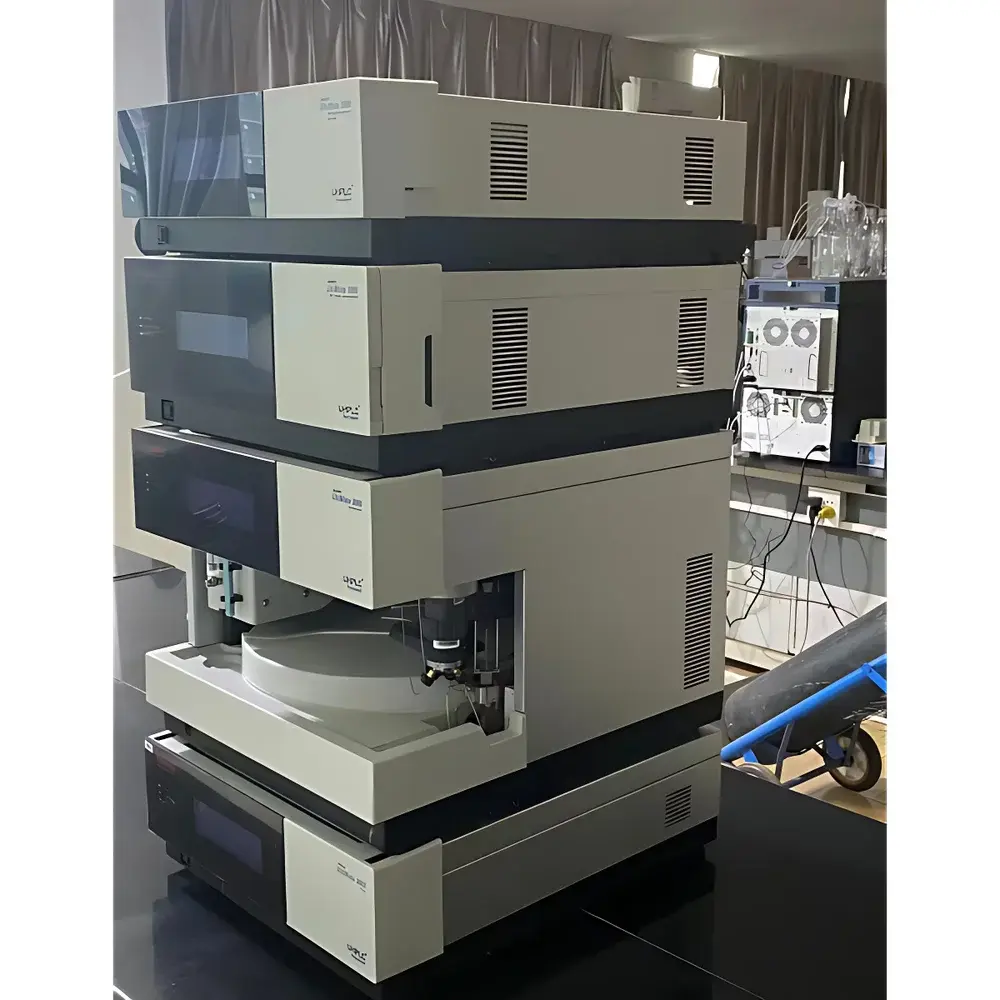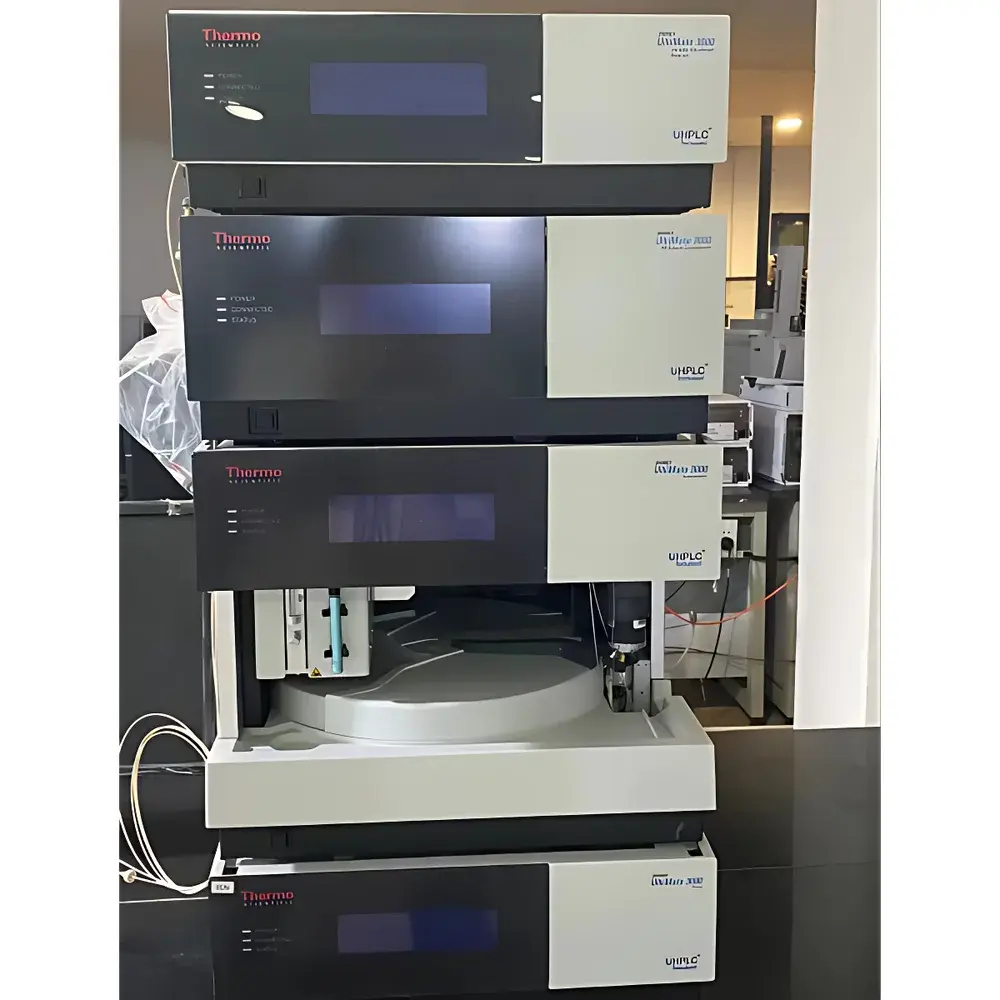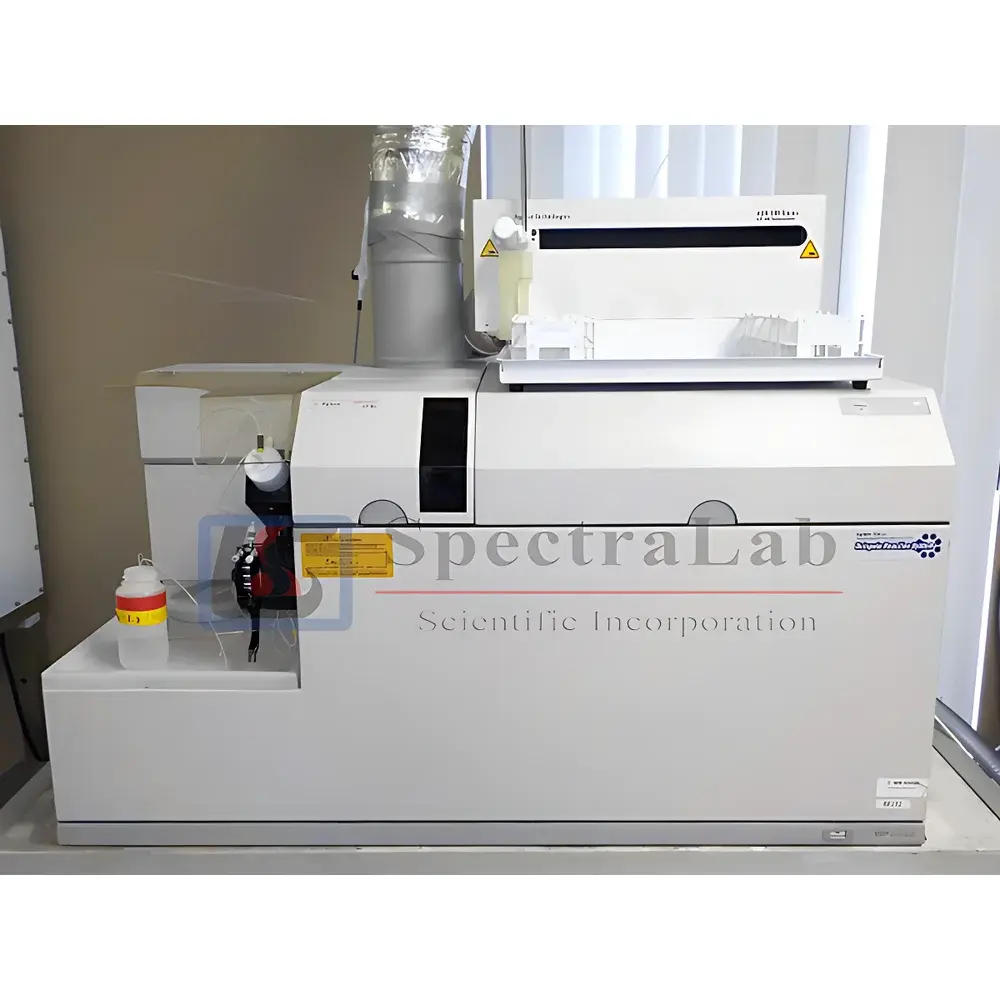
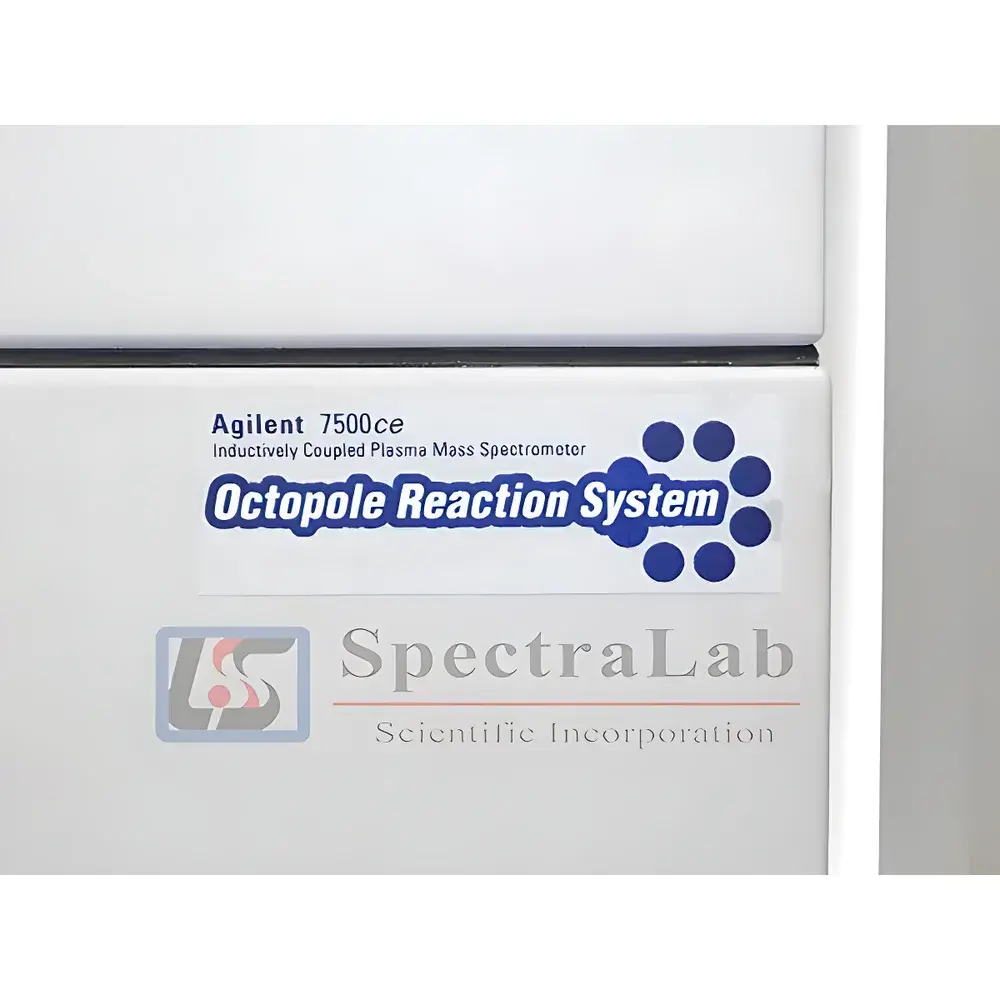
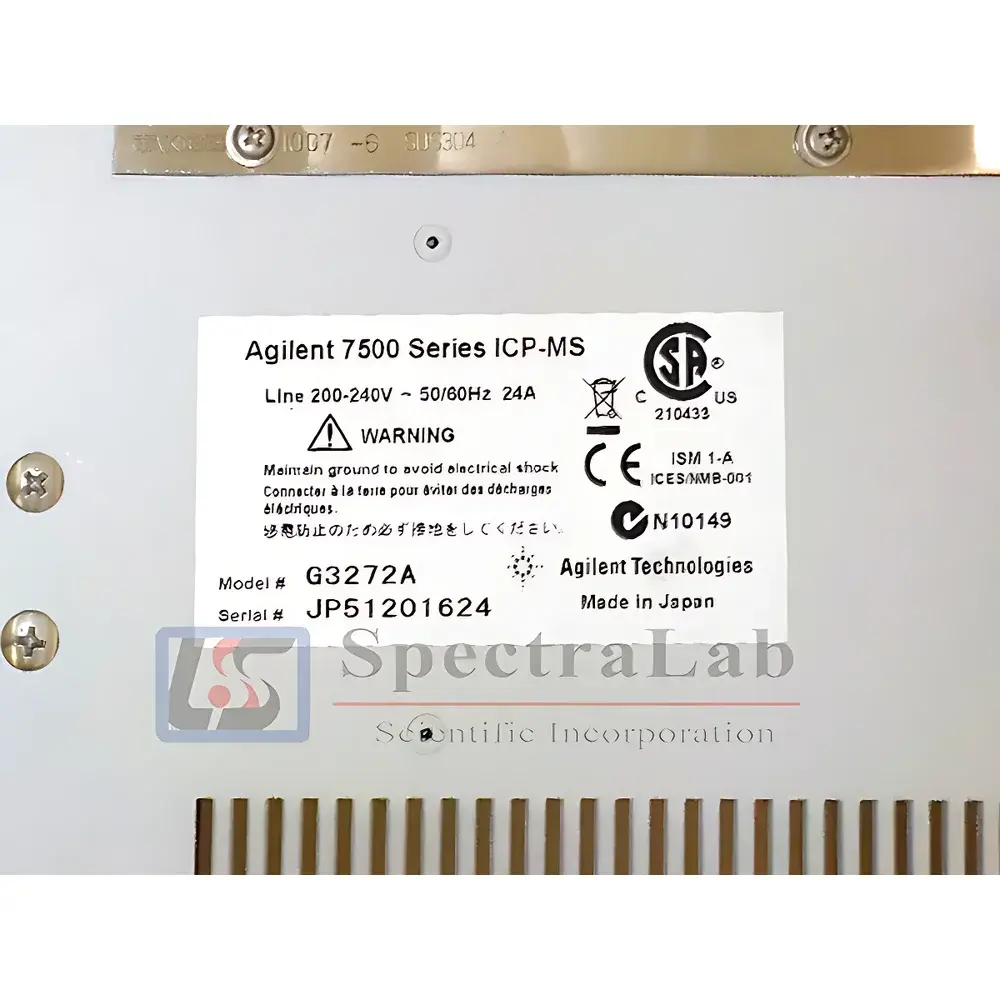
Agilent 7500ce ICP-MS System (Refurbished)
| Brand | Agilent Technologies |
|---|---|
| Origin | USA |
| Model | 7500ce |
| Instrument Type | Inductively Coupled Plasma Mass Spectrometer |
| Year of Service | 4 years |
| Warranty | 6 months |
| Sample Introduction | ASX-500 Autosampler |
| Detection Range | Sub-ppt to hundreds of ppm |
| Detection Limit | Low-pq to sub-ppq (element-dependent) |
| Linear Dynamic Range | >12 orders of magnitude |
| Analysis Time | 1–3 min per sample |
| Compliance | Designed to support ISO/IEC 17025, ASTM D5673, USP <232>/<233>, EPA Methods 200.8 & 6020B |
Overview
The Agilent 7500ce ICP-MS is a high-sensitivity, quadrupole-based inductively coupled plasma mass spectrometer engineered for ultra-trace elemental and isotopic analysis across diverse matrices. It operates on the principle of ionizing sample aerosols in a high-temperature Ar plasma (~7,000–10,000 K), followed by mass separation via a robust RF-driven quadrupole mass filter and detection using a high-gain electron multiplier or analog Faraday cup. Unlike optical techniques such as ICP-OES, the 7500ce achieves elemental detection at sub-part-per-quadrillion (ppq) levels—enabling quantification of isotopes like 238U, 208Pb, or 115In with high mass resolution and low polyatomic interference. Its design incorporates an octopole reaction cell (ORS) for on-the-fly collision/reaction gas chemistry (He, H2, NH3), significantly reducing oxide and argide interferences (e.g., 40Ar16O+ on 56Fe+). This system was originally manufactured in the United States and has undergone full functional validation—including mass calibration, sensitivity verification, oxide ratio assessment (160Gd16O+/160Gd+), and background stability testing—at SpectraLab Scientific’s ISO/IEC 17025-accredited refurbishment facility.
Key Features
- Quadrupole mass analyzer with real-time mass calibration and automatic tuning for long-term mass stability
- Octopole Reaction System (ORS) with programmable gas selection (He, H2, NH3) for interference mitigation
- Integrated ASX-500 autosampler supporting up to 240 vials with programmable rinse, dilution, and internal standard addition
- High-efficiency nebulizer and quartz torch optimized for aqueous and organic solvent compatibility
- Dual-mode detector (pulse-counting + analog) enabling seamless dynamic range coverage from sub-pq to 100s of ppm
- Robust vacuum architecture with dual-stage turbomolecular pumps and active pressure regulation
- Front-panel diagnostics and remote monitoring via Ethernet-connected control interface
Sample Compatibility & Compliance
The 7500ce accommodates liquid samples (aqueous acids, dilute organics, digested biological tissues) introduced via concentric nebulization or microflow systems. With appropriate matrix-matched calibration and internal standardization (e.g., 115In, 103Rh, 187Re), it meets regulatory requirements for trace metal analysis in environmental water (EPA Method 6020B), pharmaceutical elemental impurities (USP /), semiconductor wafer rinse solutions (SEMI F57), and geological reference materials (CRM certification). The system supports audit-ready data integrity features including electronic signatures, user-access logging, and instrument method versioning—fully compatible with GLP and GMP workflows requiring FDA 21 CFR Part 11 compliance when deployed with validated software configurations.
Software & Data Management
Controlled via Agilent MassHunter Workstation Software (v10.x or later), the system provides method development wizards, automated QC checks (e.g., daily sensitivity, background, tuning reports), and customizable reporting templates compliant with LIMS integration standards (ASTM E1482, ANSI/NIST IR 7595). Raw data files (.D format) are stored with full metadata—including acquisition parameters, calibration history, and operator ID—and support retrospective reprocessing without raw signal loss. Audit trails record all method modifications, data exports, and user logins, ensuring full traceability for laboratory accreditation assessments.
Applications
- Environmental monitoring: quantification of As, Cd, Pb, U, and rare earth elements in drinking water, seawater, and soil leachates
- Geochemical fingerprinting: isotopic ratio analysis (e.g., 87Sr/86Sr, 206Pb/204Pb) in rock digests and sediment cores
- Pharmaceutical QA/QC: elemental impurity screening per ICH Q3D guidelines in APIs and excipients
- Electronics materials: detection of Na, K, Fe, Cu, and Ni contaminants in high-purity silicon wafers and photoresists
- Clinical research: multi-element profiling in serum, urine, and whole blood for nutritional or toxicological studies
- Nuclear safeguards: isotopic characterization of uranium enrichment and plutonium isotopics in swipe samples
FAQ
Is this unit fully refurbished and performance-validated?
Yes. Each 7500ce undergoes comprehensive hardware inspection, vacuum integrity testing, detector gain calibration, and multi-element sensitivity verification against NIST-traceable standards prior to shipment.
What documentation accompanies the instrument?
You receive a full refurbishment report, factory service history (where available), calibration certificates, and a 6-month limited warranty covering parts and labor for defects in materials or workmanship.
Can this system be integrated into an existing laboratory IT infrastructure?
Yes. It supports standard TCP/IP networking, LIMS connectivity via ODBC or HL7, and complies with IEEE 1394 and USB 2.0 peripheral protocols for external storage and printer integration.
Are consumables and spare parts included?
Standard consumables (nebulizer, torch, sampler/skimmer cones, pump oils) are available separately; critical spares (quadrupole rods, detector assemblies) are stocked for expedited replacement under extended service agreements.
Does SpectraLab provide application support post-installation?
Yes. Remote method optimization, troubleshooting assistance, and on-site startup support (optional) are available through our global network of certified ICP-MS application scientists.
Related Products