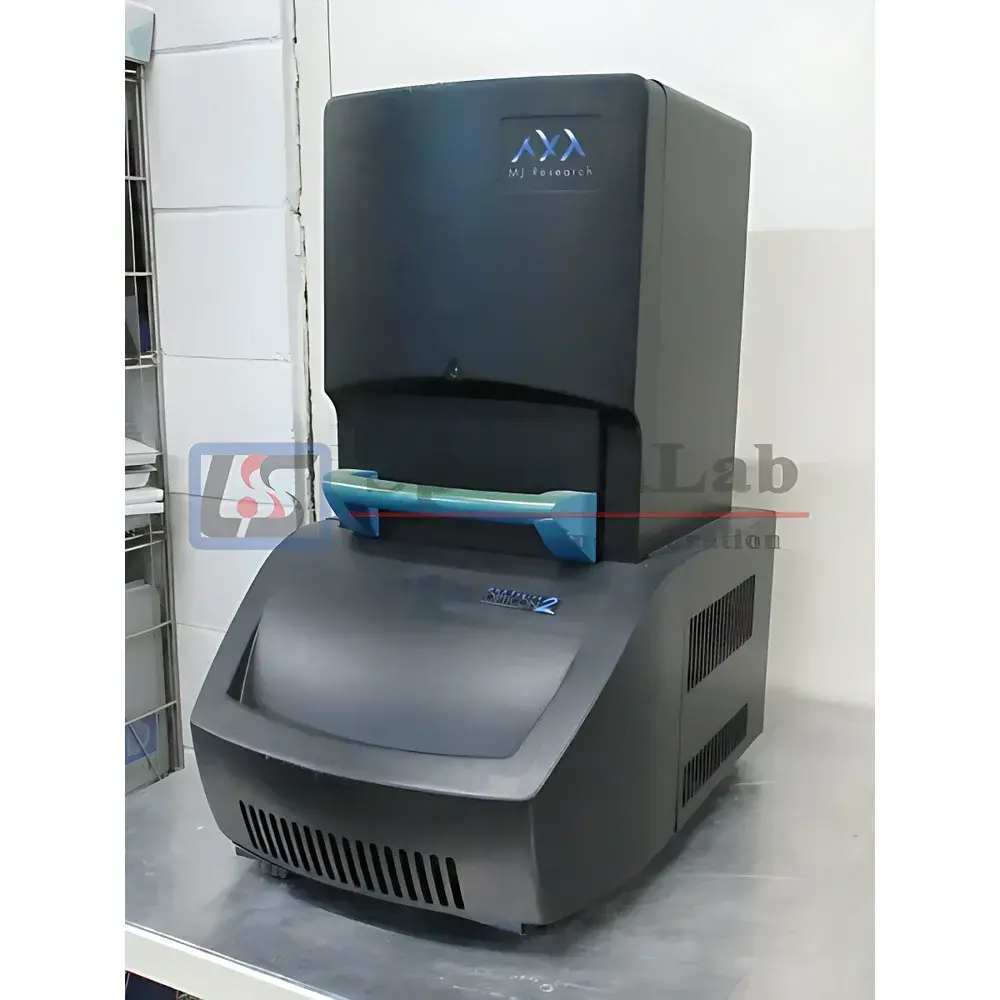
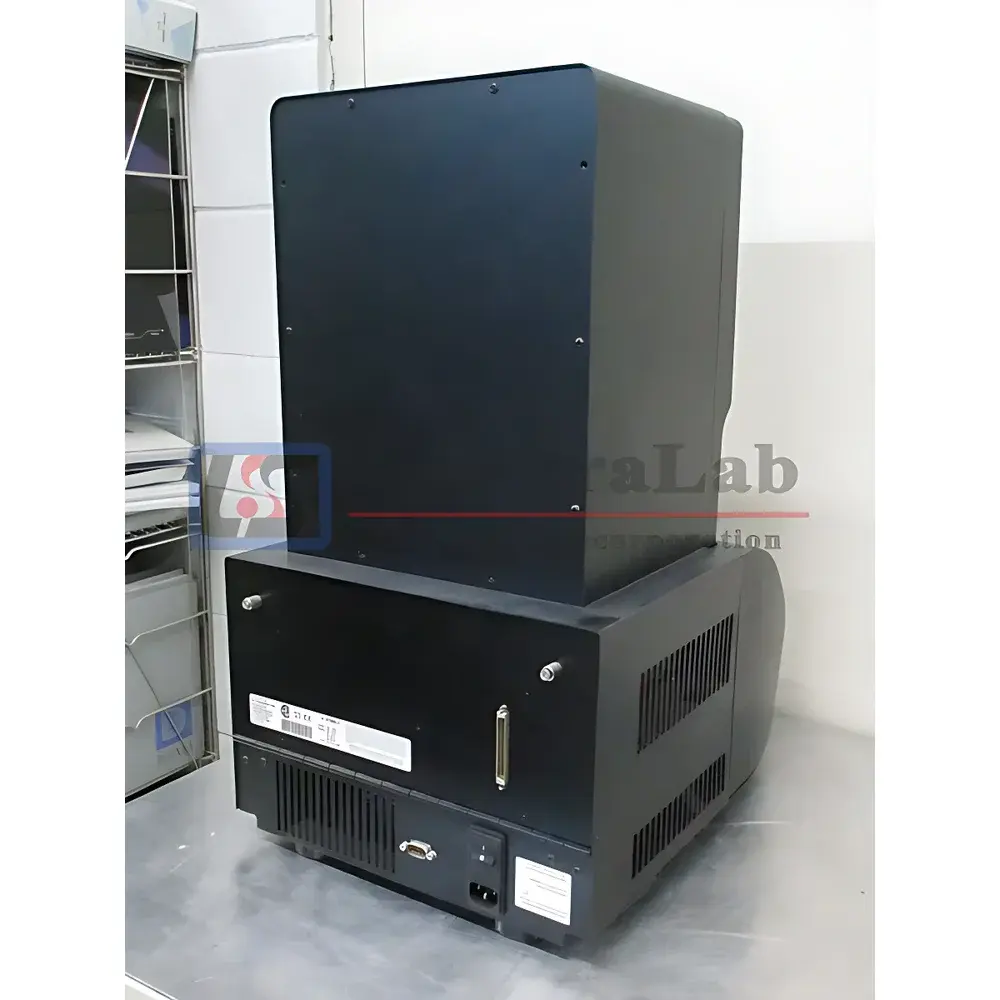

MJ Research DNA Engine Opticon 2 Real-Time Fluorescence Detection System
| Origin | USA |
|---|---|
| Manufacturer Type | Authorized Distributor |
| Origin Category | Imported Instrument |
| Model | DNA Engine Opticon 2 |
| Price Range | USD $13,500 – $40,500 (FOB) |
| Product Category | Real-Time PCR Detection System |
| Operational Age | 3–4 Years |
| Warranty | 6 Months Limited Hardware Warranty |
| Instrument Dimensions | 47 cm (L) × 34 cm (W) × 60 cm (H) |
Overview
The MJ Research DNA Engine Opticon 2 Real-Time Fluorescence Detection System is a dual-channel, real-time polymerase chain reaction (qPCR) platform engineered for precise nucleic acid quantification and genotyping in research and diagnostic development laboratories. It integrates a thermally stable DNA Engine thermal cycler with a dedicated Opticon 2 optical detection module—designed around solid-state LED excitation and high-sensitivity photodiode-based emission detection. Unlike integrated monolithic qPCR instruments, the modular architecture enables independent calibration, maintenance, and future upgrade paths for either thermal or optical subsystems. The system operates on the principle of fluorescence resonance energy transfer (FRET) and intercalating dye detection (e.g., SYBR Green I), enabling kinetic monitoring of amplicon accumulation during each thermal cycle. Its design complies with core performance expectations outlined in ISO/IEC 17025 for quantitative molecular testing workflows and supports method validation per CLSI EP17-A2 guidelines for low-abundance target detection.
Key Features
- Thermal cycler with ±0.25 °C temperature accuracy and ≤0.5 °C well-to-well uniformity across the full 96-well aluminum block (0.2 mL tube or low-profile plate compatible)
- Dual independent optical channels: Channel 1 (excitation 470–505 nm / emission 523–543 nm) optimized for SYBR Green I, FAM, and FITC; Channel 2 (emission >540 nm) suitable for HEX, JOE, VIC, and TAMRA
- LED-based excitation source with >10,000-hour operational lifetime—eliminating lamp replacement cycles and intensity drift over time
- Oil-free thermal lid with active pressure regulation ensures consistent contact across variable-height vessels without condensation or evaporation artifacts
- Two selectable thermal control modes: “Calculated Block Mode” (algorithm-driven ramp rate optimization for maximal precision) and “Module Mode” (direct block temperature feedback for cross-platform protocol portability)
- Compact footprint (47 × 34 × 60 cm) designed for benchtop integration in BSL-2 labs, core facilities, and QC environments with space constraints
Sample Compatibility & Compliance
The Opticon 2 accepts standard 96-well PCR plates (full-skirted, semi-skirted, and unskirted), 0.2 mL strip tubes, and individual 0.2 mL tubes—enabling flexibility in assay scale-up and reagent conservation. All consumables are non-proprietary and compliant with ANSI/SBS standards. The instrument’s firmware and data handling architecture support audit-trail generation required under FDA 21 CFR Part 11 for regulated environments when deployed with validated software configurations. While not a GMP-certified device out-of-the-box, its hardware stability, calibration traceability (NIST-traceable reference materials used during refurbishment), and deterministic thermal/optical response make it suitable for GLP-compliant applications including reference method verification, assay transfer studies, and internal QC monitoring.
Software & Data Management
Opticon Monitor™ software (v3.x, Windows-compatible) provides complete experimental control—from thermal profile definition and real-time fluorescence acquisition to melt curve analysis and relative quantification (ΔΔCt). Raw fluorescence data (.opt files) are stored in ASCII-delimited format for third-party statistical import (e.g., R, Python pandas). The software enforces user role-based access control, session logging, and electronic signature capture for critical actions—facilitating compliance with laboratory information management system (LIMS) integration requirements. Refurbished units include verified software license restoration and factory-default configuration reset; no legacy user data remains post-certification.
Applications
- Gene expression profiling using two-step RT-qPCR with hydrolysis probes or intercalating dyes
- SNP genotyping via allelic discrimination assays (e.g., TaqMan® SNP Genotyping Assays)
- Viral load quantification in virology research (e.g., HIV, HCV, SARS-CoV-2 RNA standards)
- Microbial identification and antibiotic resistance gene screening in environmental or clinical isolates
- Validation of CRISPR-Cas editing efficiency through T7E1 or SURVEYOR nuclease-based qPCR assays
- Quality control of oligonucleotide synthesis batches via melting temperature consistency assessment
FAQ
Is this unit fully refurbished and performance-verified?
Yes—each DNA Engine Opticon 2 undergoes comprehensive functional testing at SpectraLab Scientific’s ISO 9001-certified refurbishment facility, including thermal ramp validation, optical signal-to-noise ratio measurement, and multi-day stability profiling.
Does the 6-month warranty cover both thermal and optical subsystems?
Yes—the warranty applies to all factory-installed components, including the Peltier modules, LED drivers, photodiode amplifiers, and control board firmware. Exclusions include consumables, accidental damage, or modifications by unauthorized personnel.
Can this system be integrated into an existing LIMS environment?
Direct LIMS interfacing is achievable via exported CSV/ASCII data files and timestamped log reports; API-level integration requires custom middleware development due to the absence of native HL7 or ASTM E1384 support.
Are original service manuals and calibration certificates included?
Yes—electronic copies of the Opticon 2 Service Manual (Rev. D), DNA Engine Technical Specifications, and post-refurbishment Certificate of Performance Testing are provided with shipment.
Related Products