
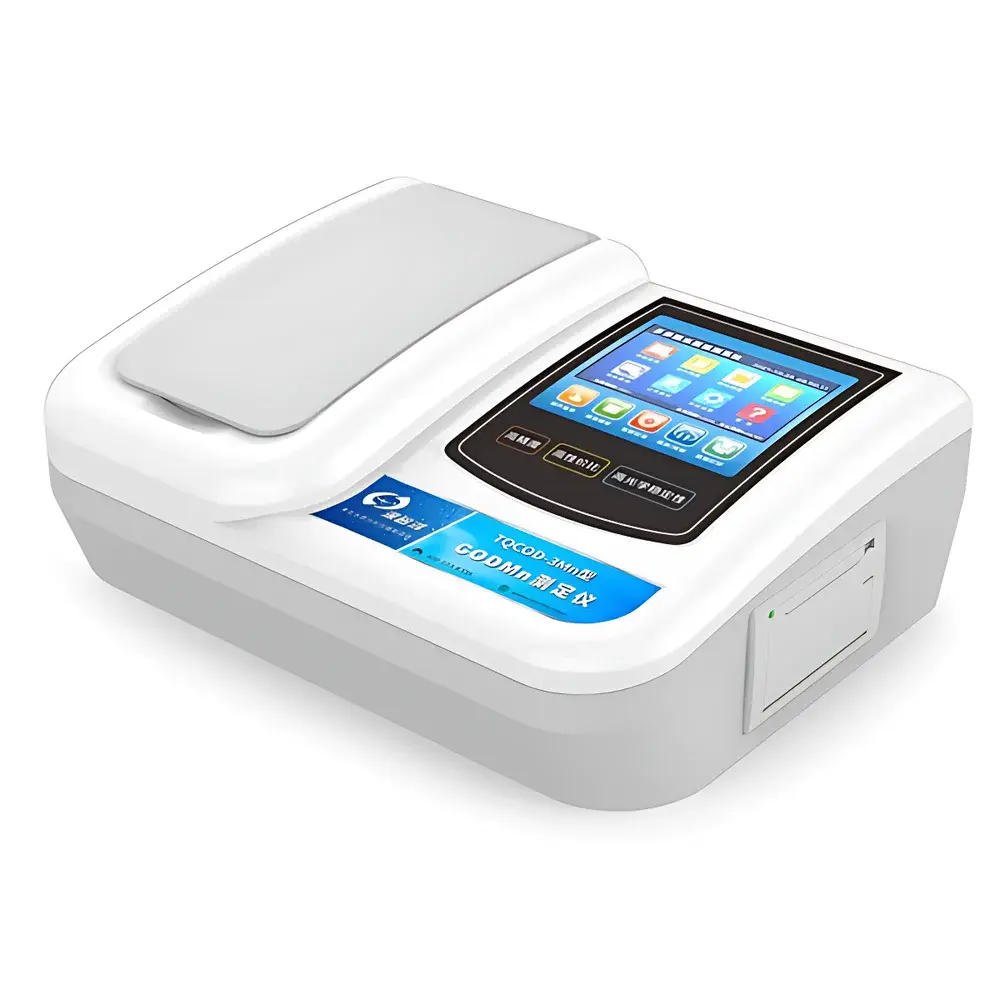
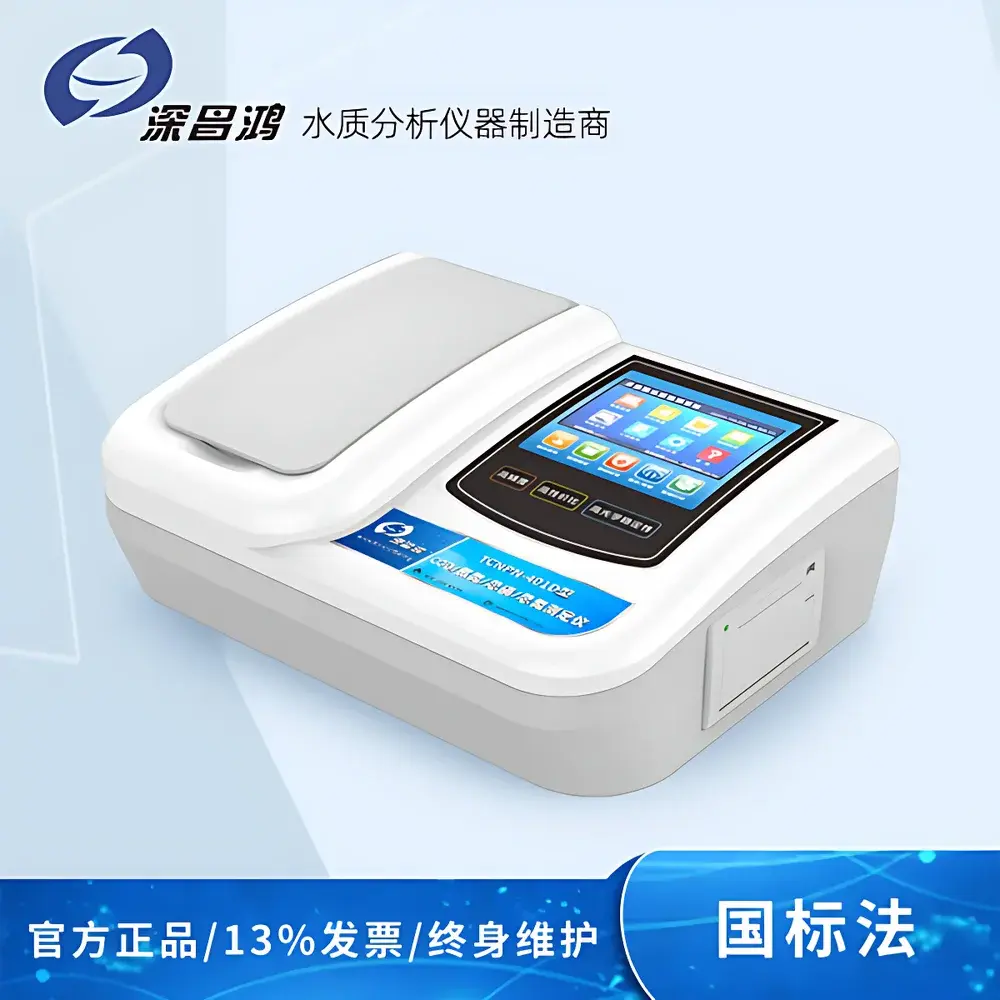
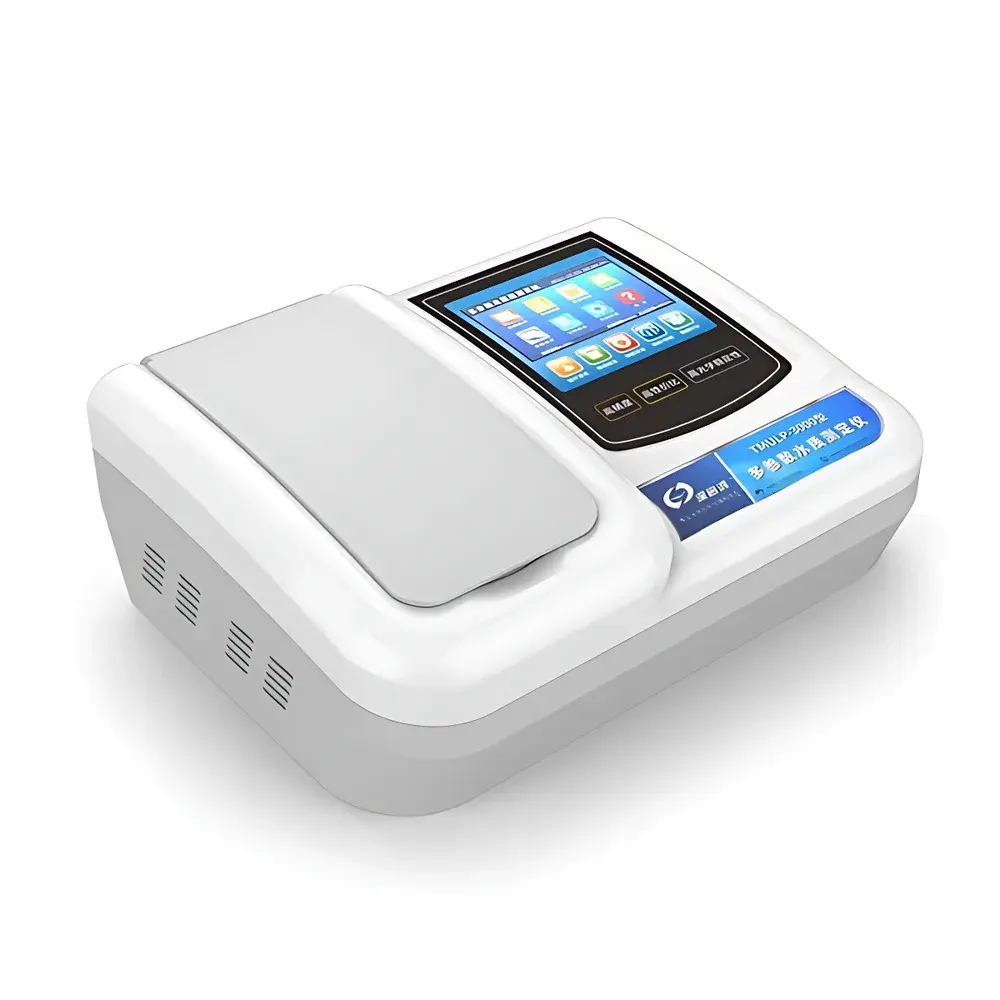
Shenchanghong TQCOD-3N Chemical Oxygen Demand (COD) Analyzer
| Brand | Shenchanghong |
|---|---|
| Origin | Guangdong, China |
| Manufacturer Type | Direct Manufacturer |
| Instrument Type | Laboratory Benchtop Analyzer |
| Measurement Principle | Rapid Catalytic Digestion Followed by Spectrophotometric Detection (Dichromate Method per HJ 399–2017) |
| Measurement Range | 5–2000 mg/L COD (dilutable for higher concentrations) |
| Accuracy | ≤ ±5 % of Full Scale |
| Repeatability | ±3 % RSD |
| Detection Limit | 0.2 mg/L COD |
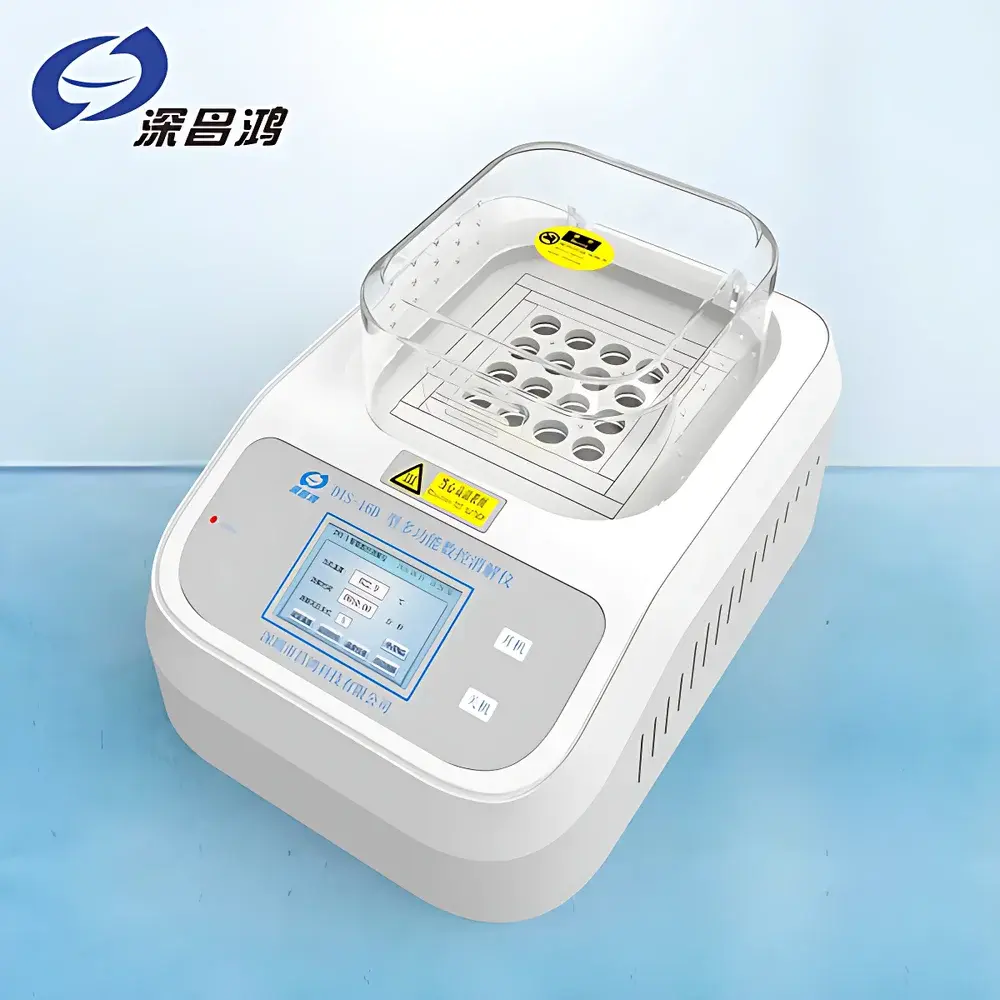
| Digestion Time | 15 min at 165 °C |
| Batch Capacity | 16 samples (optional configurations: 20/25/36 positions) |
| Chloride Interference Tolerance | ≤ 2000 mg/L Cl⁻ |
| Optical Stability | ≤ 0.002 A / 20 min |
| Temperature Control Range | Ambient to 200 °C (±0.5 °C accuracy) |
| Display | 7-inch Color TFT Touchscreen with Dual-Language UI (English & Chinese) |
| Data Storage | Up to 100,000 measurement records with timestamp, operator ID, calibration history, and curve metadata |
| Connectivity | USB 2.0 port for data export and PC software integration |
| Power Supply | AC 220 V ±10 %, 50 Hz |
| Dimensions (Analyzer) | 400 × 300 × 140 mm |
| (Digestion Unit) | 260 × 355 × 135 mm (excl. shield) |
| Net Weight (Analyzer) | 2.6 kg |
| (Digestion Unit) | 5.5 kg |
Overview
The Shenchanghong TQCOD-3N Chemical Oxygen Demand (COD) Analyzer is a laboratory-grade benchtop instrument engineered for precise, compliant, and high-throughput determination of chemical oxygen demand in water and wastewater samples. It implements the standardized dichromate oxidation method (aligned with China’s HJ 399–2017 and internationally comparable to ISO 6060 and ASTM D1252), combining sealed catalytic digestion at 165 °C with subsequent photometric quantification via cold-light narrow-band interference optics. Unlike integrated all-in-one systems, the TQCOD-3N employs a physically separated analyzer and digestion unit—minimizing thermal cross-talk and preserving long-term optical stability critical for regulatory-grade data integrity. Its dual-path architecture ensures reproducible absorbance measurements across extended operational cycles, supporting routine analysis in environmental monitoring labs, municipal wastewater treatment facilities, academic research settings, and industrial effluent QA/QC environments.
Key Features
- Modular design with independent spectrophotometer and digestion modules—eliminates thermal drift in optical path during simultaneous operation.
- Cold LED light source with 16-step adjustable intensity and narrow-band interference filters (center wavelength ±1 nm tolerance) enables dynamic range optimization without hardware recalibration.
- 7-inch capacitive color touchscreen with bilingual (English/Chinese) interface, built-in contextual help, and guided workflow navigation—reducing operator training time and procedural errors.
- Advanced temperature control system in the digestion module: multi-point non-linear compensation ensures ±0.5 °C accuracy across 165 °C setpoint; includes overtemperature cutoff (>200 °C) and auto-shutdown post-digestion.
- Comprehensive calibration management: stores full traceability metadata—including standard reference values, measured absorbances, calibration date/time, and operator ID—for each of up to 3,500 user-defined curves (250 factory preloaded).
- Dual-layer data security: local storage of 100,000 records with full audit trail (parameter name, concentration, unit, timestamp, operator code); supports GLP-compliant export via USB to external PCs.
- One-touch system recovery function restores factory defaults and user calibration databases following unexpected corruption or misconfiguration.
Sample Compatibility & Compliance
The TQCOD-3N accommodates standard 16 mm OD borosilicate glass digestion tubes and is validated for use with commercially available COD reagent kits conforming to HJ 399–2017 specifications. It tolerates chloride concentrations up to 2000 mg/L without requiring mercury sulfate masking—making it suitable for brackish influents, landfill leachate, and certain industrial discharges. All measurement protocols adhere to principles outlined in ISO/IEC 17025 for testing laboratories, and raw data structures support alignment with FDA 21 CFR Part 11 requirements when used with validated third-party LIMS integration. The instrument’s optical stability (≤0.002 A/20 min) and repeatability (±3 % RSD) meet internal QA benchmarks required for ISO 17025 accreditation audits.
Software & Data Management
Data acquisition and reporting are managed through embedded firmware with configurable report templates (PDF/CSV). USB connectivity enables direct transfer of measurement logs, calibration histories, and curve parameters to Windows-based desktop software included on supplied installation media. The software provides batch export, trend visualization, statistical summary (mean, SD, CV%), and customizable certificate generation—compatible with laboratory information management systems (LIMS) via delimited text import. Audit trails include immutable timestamps, user authentication codes, and version-stamped calibration events—supporting GxP-aligned documentation practices where required.
Applications
- Regulatory compliance monitoring of municipal and industrial wastewater discharge per national and provincial environmental standards.
- Process control in activated sludge, MBR, and anaerobic digestion systems—enabling rapid feedback on organic loading rates.
- Research applications in aquatic toxicology, biodegradability assessment, and advanced oxidation process (AOP) efficiency studies.
- Educational use in university environmental engineering and analytical chemistry laboratories—featuring intuitive interface and comprehensive calibration transparency.
- Third-party testing laboratories performing accredited COD analysis under CNAS or equivalent schemes.
FAQ
What digestion method does the TQCOD-3N employ?
It uses sealed-tube catalytic digestion with potassium dichromate in strong sulfuric acid medium at 165 °C for 15 minutes—fully compliant with HJ 399–2017.
Can the instrument handle high-chloride samples?
Yes—up to 2000 mg/L chloride without mercury-based masking agents, reducing hazardous waste generation and analytical complexity.
Is the calibration traceable to certified reference materials?
Calibration is performed using NIST-traceable or GBW-certified COD standards; all calibration events store reference values, measured absorbances, and operator IDs for full traceability.
Does the system support electronic signatures or 21 CFR Part 11 compliance?
While the device itself does not implement electronic signature logic, its structured data export format and immutable audit trail elements enable integration into validated Part 11–compliant LIMS or ELN platforms.
How many calibration curves can be stored and managed?
Up to 3,500 custom curves may be created, labeled, and archived—each retaining full calibration context including date, technician ID, and standard point details.
Related Products







