
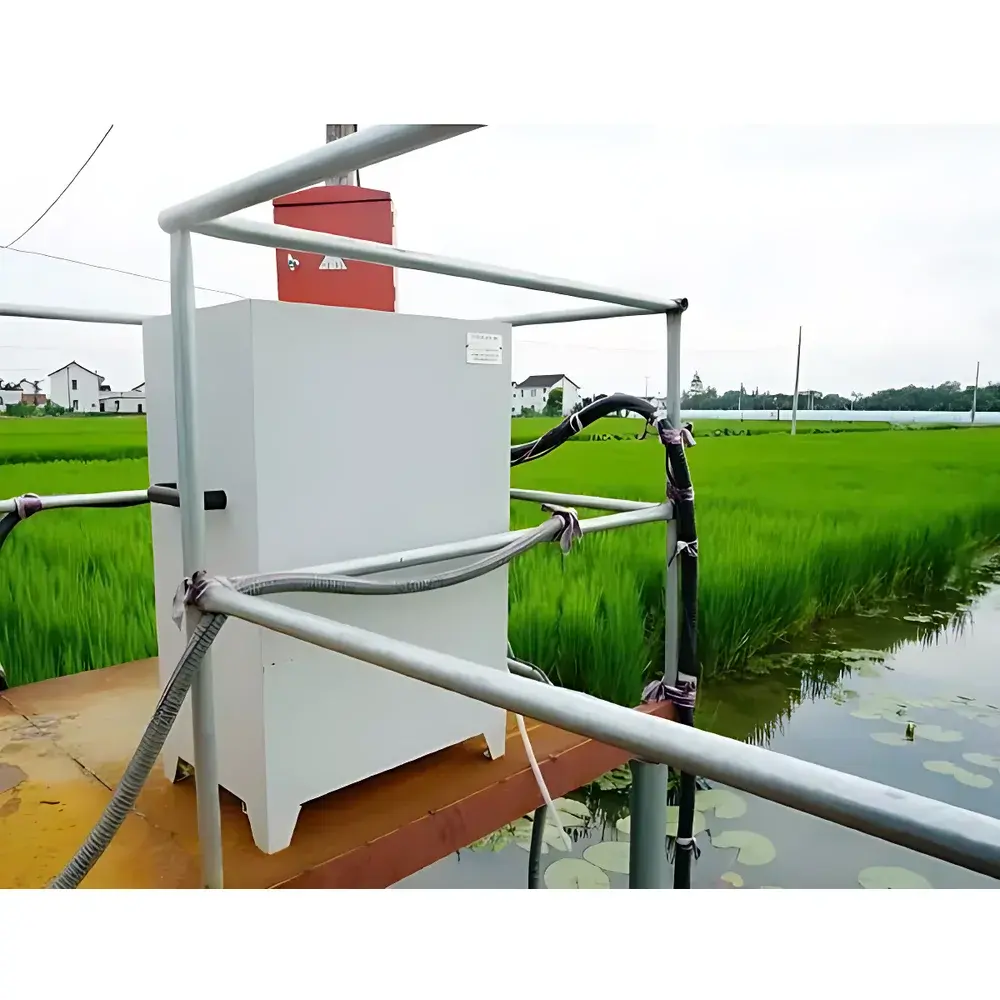
ZYKX ZYWNP-2 Universal Micro-Nano Bubble Generator
| Brand | ZYKX |
|---|---|
| Origin | Shanghai, China |
| Manufacturer Type | Authorized Distributor |
| Country of Origin | China |
| Model | ZYWNP-2 |
| Power Supply | 220 V |
| Rated Power | 0.37 kW |
| Average Flow Rate | 1.0 m³/h |
| Bubble Size Distribution Peak | 150 ± 30 nm |
| Bubble Concentration | 10⁷–10⁹ bubbles/mL |
| Zeta Potential | −30 to −40 mV |
| Dissolved Oxygen Increase | ≥30% |
| Operating Principle | Combined Mechanical Dispersion & Pressure-Saturation |
Overview
The ZYKX ZYWNP-2 Universal Micro-Nano Bubble Generator is an engineered solution for the controlled, scalable production of ultrafine bubbles (UFBs) in aqueous media. It operates on a dual-mechanism principle—integrating high-shear mechanical dispersion with pressurized gas dissolution—enabling instantaneous generation of stable nanoscale gaseous cavities with diameters predominantly within the 50–600 nm range. Unlike conventional fine bubble generators relying on porous membranes or electrolysis, this system avoids electrode degradation, membrane fouling, and chemical byproduct formation. Its core architecture is grounded in interfacial science principles developed by Professor Banglin Chen’s research group, specifically targeting nanoscale gas–liquid interface stabilization through hydrodynamic cavitation and rapid depressurization. The resulting UFB suspension exhibits extended residence time (>10 h in deionized water), high negative zeta potential (−30 to −40 mV), and enhanced oxidative capacity due to localized free radical generation at the bubble–water interface. These physicochemical attributes make the ZYWNP-2 suitable for applications demanding precise, repeatable, and contamination-free gas dispersion in liquid phases.
Key Features
- Physically driven bubble generation—no electrodes, membranes, or chemical additives required; eliminates risk of metal leaching or organic residue.
- Stable UFB output with modal diameter centered at 150 ± 30 nm, verified via nanoparticle tracking analysis (NTA) and dynamic light scattering (DLS).
- High bubble number density: 1 × 10⁷ to 1 × 10⁹ bubbles per milliliter under standard operating conditions (25 °C, air saturation, 1.0 m³/h flow).
- Integrated pressure-saturation chamber ensures uniform gas dissolution prior to cavitation-based nucleation, improving size distribution reproducibility across batches.
- Modular design compatible with continuous-flow or batch-mode operation; inlet/outlet ports conform to ISO 2852 sanitary clamp standards.
- Compliant with IP54 enclosure rating; CE-marked electrical components; all wetted surfaces constructed from ASTM A276 Type 316 stainless steel or PTFE-lined carbon steel.
Sample Compatibility & Compliance
The ZYWNP-2 is validated for use with potable water, municipal wastewater, nutrient solutions, seawater (with optional corrosion-resistant upgrades), and low-viscosity process streams (2% w/w), or aggressive solvents (e.g., acetone, THF). From a regulatory standpoint, the system supports GLP-compliant documentation workflows when paired with external data loggers. While not certified to ISO 22442 (for medical devices) or USP (for injectables), its operational parameters align with methodologies referenced in ISO/TS 20480-1:2017 (Nanotechnologies — Characterization of ultrafine bubbles in aqueous media) and ASTM D8017-16 (Standard Guide for Measuring Nanobubble Size Distribution). For environmental remediation projects, it meets functional equivalency requirements outlined in EPA Method 8270D for dissolved oxygen enhancement in in situ treatment zones.
Software & Data Management
The ZYWNP-2 operates as a standalone hardware platform without embedded firmware or proprietary software. All operational parameters—including inlet pressure (0.3–0.7 MPa), flow rate (0.8–1.2 m³/h), and gas–liquid ratio (adjustable via needle valve)—are manually regulated using calibrated analog instrumentation. For traceability and audit readiness, users are advised to integrate third-party industrial controllers (e.g., Siemens S7-1200 PLC) or SCADA systems compliant with IEC 62443-3-3. When used in GMP-regulated environments, full electronic records—including timestamps, operator IDs, and parameter setpoints—must be captured externally to satisfy FDA 21 CFR Part 11 requirements for electronic signatures and audit trails.
Applications
- Environmental Engineering: In situ oxygenation of anaerobic sediments, enhanced bioremediation of chlorinated hydrocarbons, and suppression of sulfate-reducing bacteria in contaminated aquifers.
- Aquaculture & Hydroponics: Dissolved oxygen enrichment without surface agitation; reduction of pathogenic biofilm formation on root surfaces and tank walls.
- Industrial Water Treatment: Pre-oxidation step in advanced oxidation processes (AOPs); improvement of coagulation efficiency in low-turbidity surface water.
- Oilfield Operations: Stabilized foam flooding fluid formulation for enhanced oil recovery (EOR); reduction of interfacial tension in heavy oil emulsions.
- Nanomaterial Synthesis: Template-assisted nucleation of metal oxide nanoparticles (e.g., TiO₂, Fe₃O₄) via reactive oxygen species generated at UFB interfaces.
FAQ
What gases can be used with the ZYWNP-2?
Air, oxygen, nitrogen, ozone, and carbon dioxide are routinely employed. Gas compatibility depends on solubility, compressibility, and downstream material compatibility—ozone requires upstream stainless steel and downstream ozone destruct units.
Is calibration required before first use?
No factory calibration is provided; however, users must verify flow rate using a certified magnetic flow meter and confirm inlet pressure with a Class 0.25 pressure transducer prior to commissioning.
Can the system operate continuously for >8 hours?
Yes—rated for Class B continuous duty (IEC 60034-1) with thermal protection on the motor windings and integrated cooling fins on the cavitation chamber housing.
Does the ZYWNP-2 meet explosion-proof requirements for hazardous areas?
Not inherently; optional ATEX-certified motor and purge-ventilated enclosures are available upon request (certification code: II 2G Ex db IIB T4 Gb).
How is bubble size distribution verified post-installation?
Users must perform independent characterization using NTA (e.g., Malvern Panalytical NanoSight NS300) or resonant mass measurement (Archimedes Particle Metrology), following ISO/TS 20480-2 protocols for sample preparation and dilution.



