
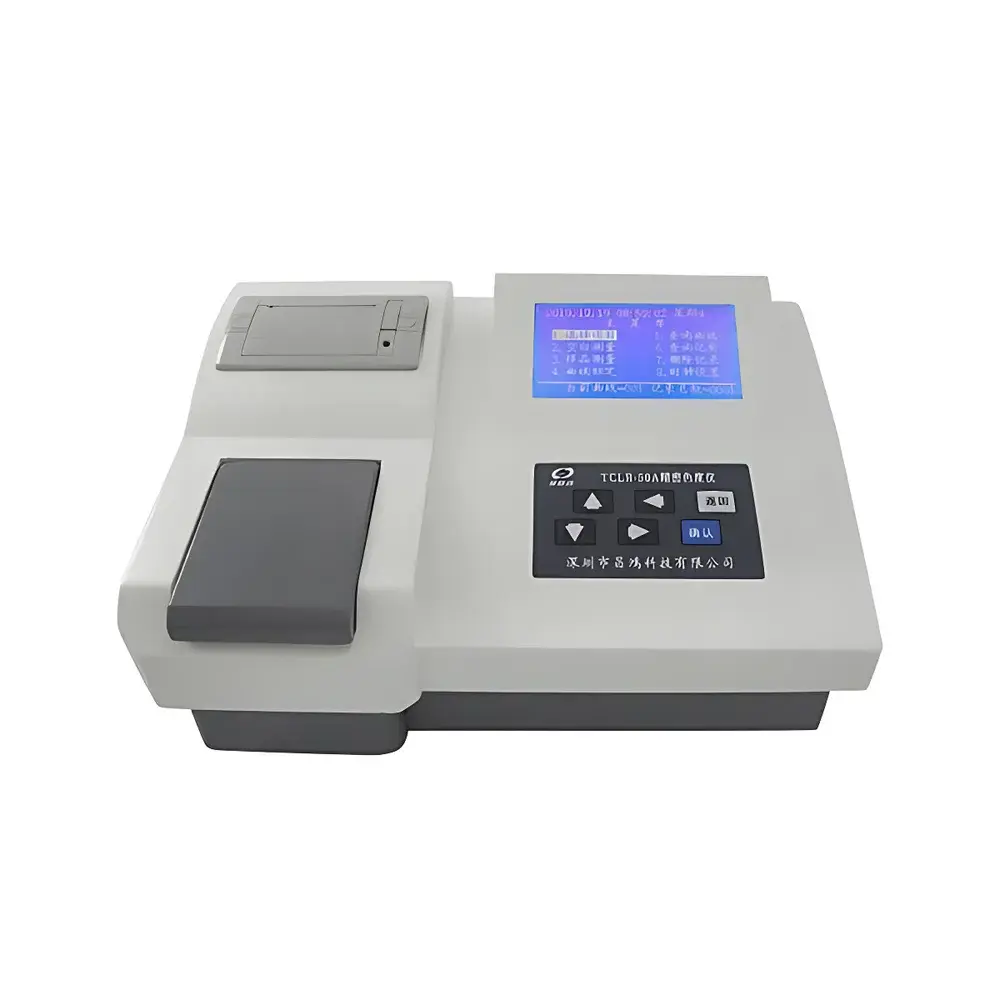
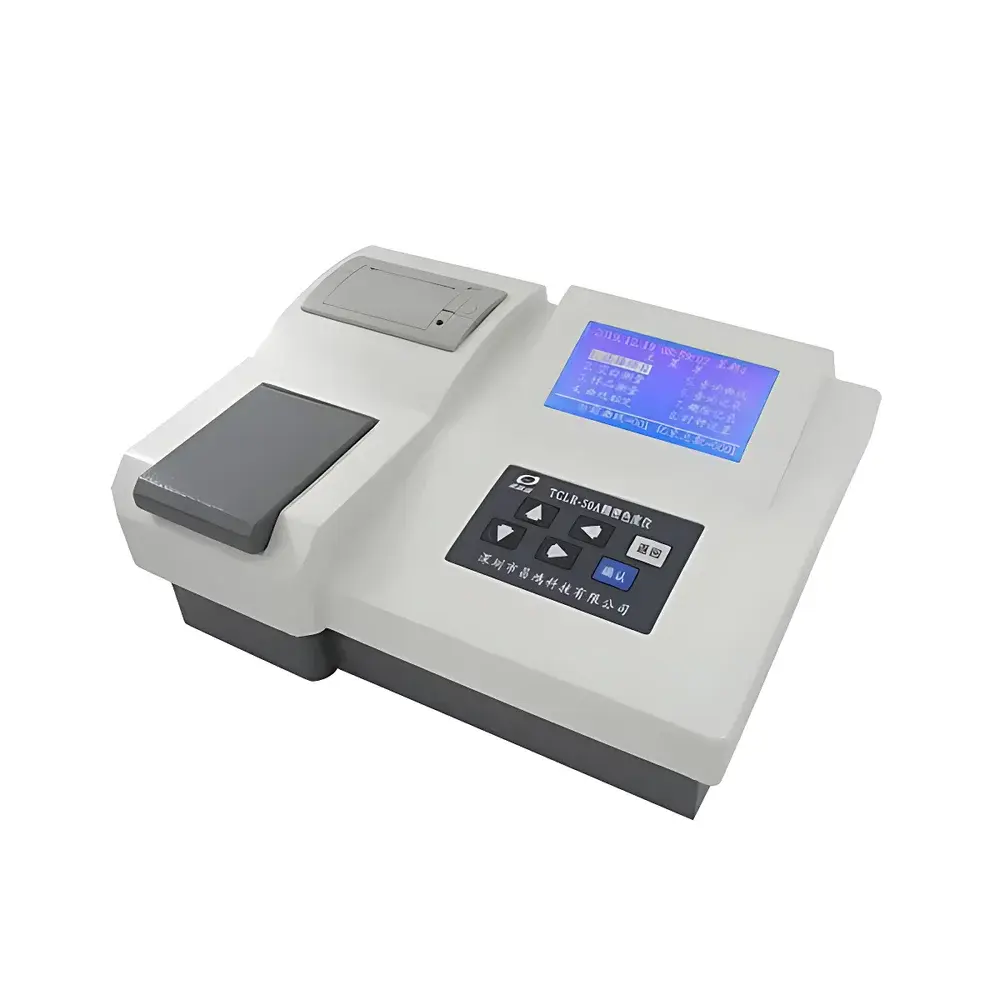
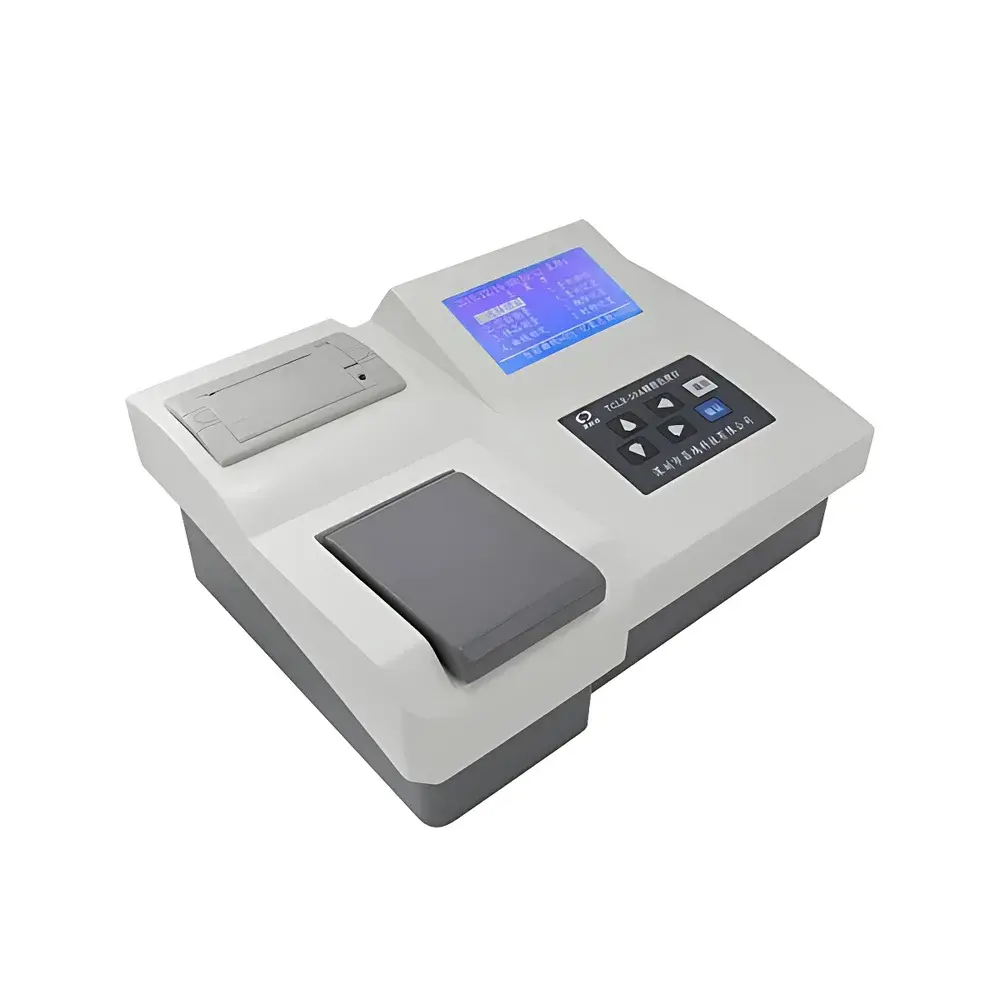
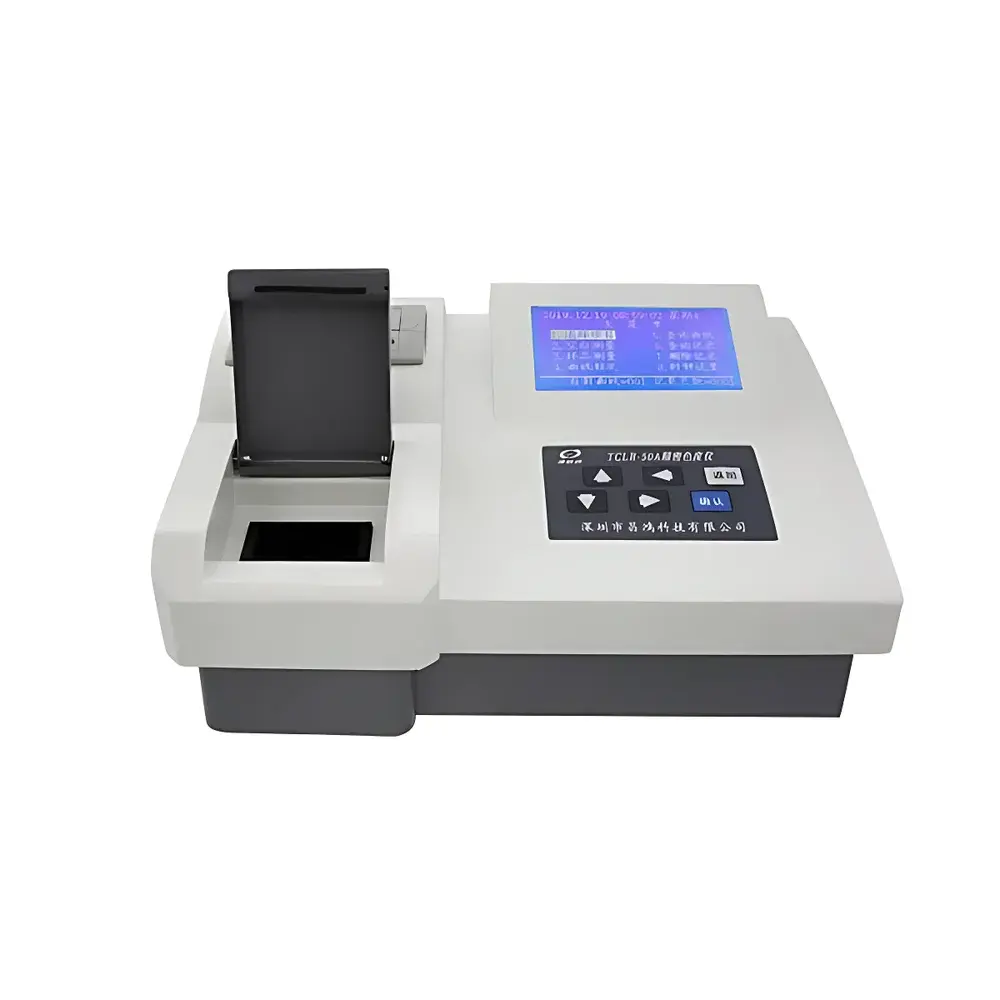
Shenchanghong TCLR-50A Precision Colorimeter
| Brand | Shenchanghong |
|---|---|
| Model | TCLR-50A |
| Measurement Range | 0.00–500 PCU |
| Resolution | 0.01 PCU |
| Accuracy | ±3% of full scale |
| Repeatability | ≤3% |
| Optical Drift | <0.002 A within 20 min |
| Dimensions | 340 × 250 × 130 mm |
| Weight | 4 kg |
| Operating Temperature | 5–40 °C |
| Relative Humidity | ≤85% |
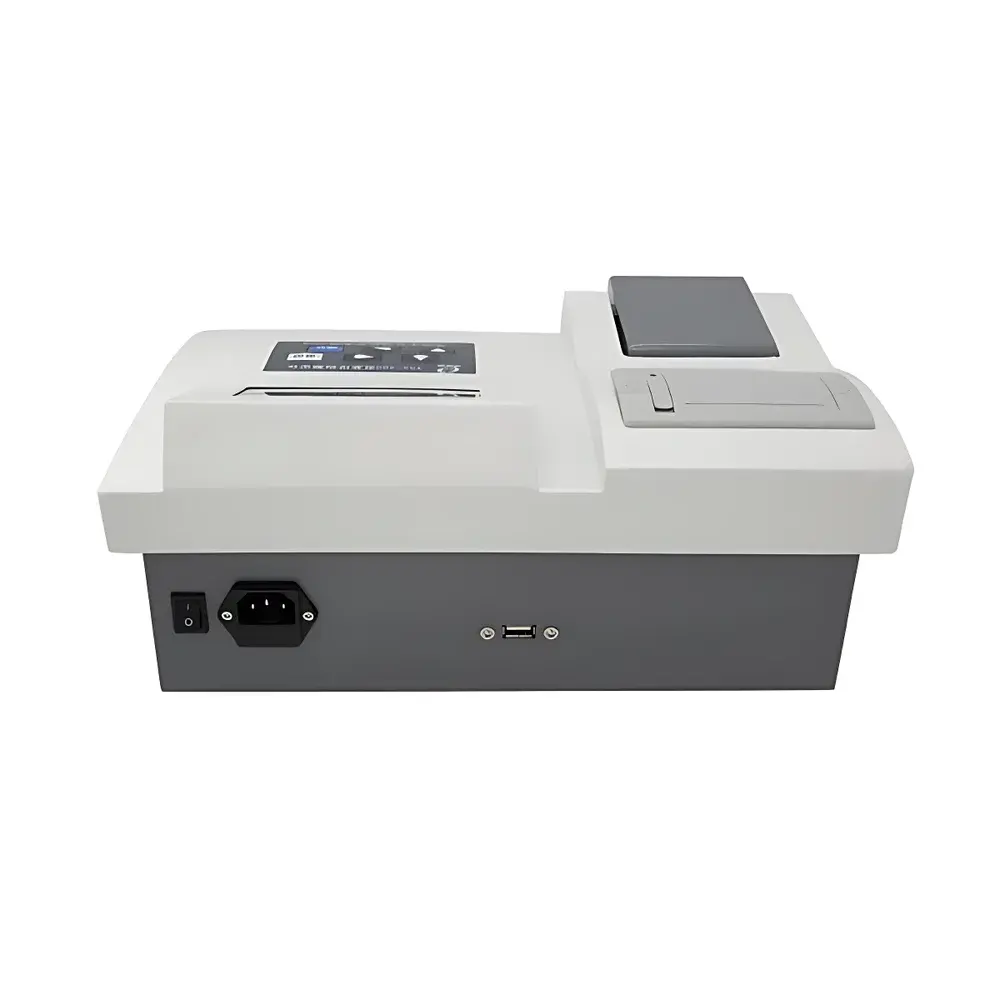
| Power Supply | AC (220 ± 22) V, (50 ± 0.5) Hz |
| Light Source | High-brightness, long-life (100,000 h) imported LED |
| Display | Large LCD with Chinese interface |
| Data Storage | 10 calibration curves + 500 measurement records |
| Connectivity | USB port for data export |
| Optional | Thermal printer support |
Overview
The Shenchanghong TCLR-50A Precision Colorimeter is a portable, laboratory-grade optical instrument engineered for accurate and repeatable colorimetric analysis of aqueous samples in compliance with standard methods for water quality assessment. Based on the principle of absorbance photometry at fixed wavelengths—optimized for platinum-cobalt (PCU) unit quantification—the TCLR-50A employs a stable, narrow-band LED light source coupled with precision optical filtering to minimize spectral interference and ensure high photometric integrity. Its design adheres to internationally recognized protocols for color measurement in environmental monitoring, including ISO 7887:2011 (Water quality — Examination of colour) and APHA Standard Methods 2120 B (Platinum-Cobalt Scale). The instrument delivers traceable, field-deployable performance for routine analysis of drinking water, surface water, groundwater, and treated effluents—supporting regulatory reporting under national water quality standards.
Key Features
- High-stability optical architecture featuring an imported long-life LED (rated >100,000 hours) and thermally compensated narrow-band interference filters, ensuring minimal photometric drift (<0.002 A over 20 minutes) and immunity to ambient light interference.
- Large backlit LCD display with intuitive Chinese-language menu navigation—designed for rapid operation by field technicians and lab personnel without specialized training.
- Embedded 16-bit low-power microcontroller system enabling responsive operation, robust data handling, and energy-efficient performance during extended battery-free AC operation.
- Durable housing constructed from injection-molded ABS with enhanced chemical resistance—suitable for use in humid or mildly corrosive environments typical of water treatment plants and environmental monitoring stations.
- Onboard memory stores up to 10 user-defined calibration curves and 500 measurement records with timestamping; all data retained during power interruption per non-volatile flash memory architecture.
- Integrated USB 2.0 interface compliant with CDC/ACM class drivers for direct connection to Windows-based PCs; supports bulk data export in CSV format for LIMS integration or QA/QC documentation.
Sample Compatibility & Compliance
The TCLR-50A is validated for use with clear to moderately turbid aqueous matrices, including potable water, raw surface water, groundwater, wastewater effluents, and process streams where color arises from dissolved organic matter (e.g., humic substances), industrial dyes, or metal complexes. Sample preparation follows standard pretreatment guidelines: filtration through 0.45 µm membrane filters to remove particulates prior to measurement. Instrument performance meets key metrological requirements outlined in ISO/IEC 17025:2017 for testing laboratories, and its operational parameters align with GLP principles for environmental testing. While not FDA 21 CFR Part 11–certified out-of-the-box, audit trails and electronic record integrity can be maintained via exported CSV logs synchronized with laboratory documentation systems.
Software & Data Management
The TCLR-50A operates autonomously without external software dependency. All calibration, measurement, and data review functions are executed locally via the onboard firmware. Calibration is performed using certified platinum-cobalt standard solutions (e.g., 5, 10, 20, 50, 100, 200, 500 PCU) traceable to NIST SRM equivalents. Linear or polynomial curve fitting options are available during calibration setup. Measurement results include sample ID, date/time stamp, operator code (manually entered), and deviation from calibration curve. USB data exports contain raw absorbance values, calculated PCU, and metadata—enabling traceability in accordance with ISO 17025 Clause 7.7 (Results Reporting) and EPA Method 180.1 requirements for color analysis.
Applications
- Routine compliance monitoring of drinking water per national standards (e.g., China’s GB 5749–2022, US EPA 180.1, EU Directive 98/83/EC).
- Process control in water treatment facilities—including coagulation optimization, activated carbon breakthrough detection, and disinfection by-product precursor tracking.
- Environmental field surveys assessing eutrophication impact, tannin leaching from forested watersheds, or industrial discharge characterization.
- Educational laboratories conducting quantitative spectrophotometric experiments aligned with APHA Standard Methods curriculum modules.
- QA/QC verification of color stability in pharmaceutical excipient solutions or cosmetic formulations where visual appearance is a critical quality attribute.
FAQ
What color scale does the TCLR-50A measure against?
The instrument is calibrated and reported exclusively in Platinum-Cobalt Units (PCU), conforming to the APHA/Hazen scale defined in ISO 7887 and Standard Methods 2120 B.
Is the TCLR-50A suitable for measuring colored wastewater with high turbidity?
It is recommended to pre-filter samples through a 0.45 µm membrane to eliminate scattering interference; the device is not designed for direct measurement of highly turbid or suspended-solid-laden matrices.
Does the instrument support multi-wavelength analysis or custom method programming?
No—the TCLR-50A is a dedicated single-wavelength (typically ~455 nm) PCU analyzer optimized for specificity and regulatory alignment; it does not offer spectral scanning or arbitrary wavelength selection.
Can measurement data be integrated into a LIMS environment?
Yes—CSV-formatted exports via USB are compatible with common LIMS platforms when paired with standardized import templates and metadata mapping rules.
What maintenance is required to ensure long-term accuracy?
Annual verification using certified PCU reference standards is recommended; optical path cleaning with lens-grade tissue and isopropyl alcohol every 3 months maintains baseline stability.



