
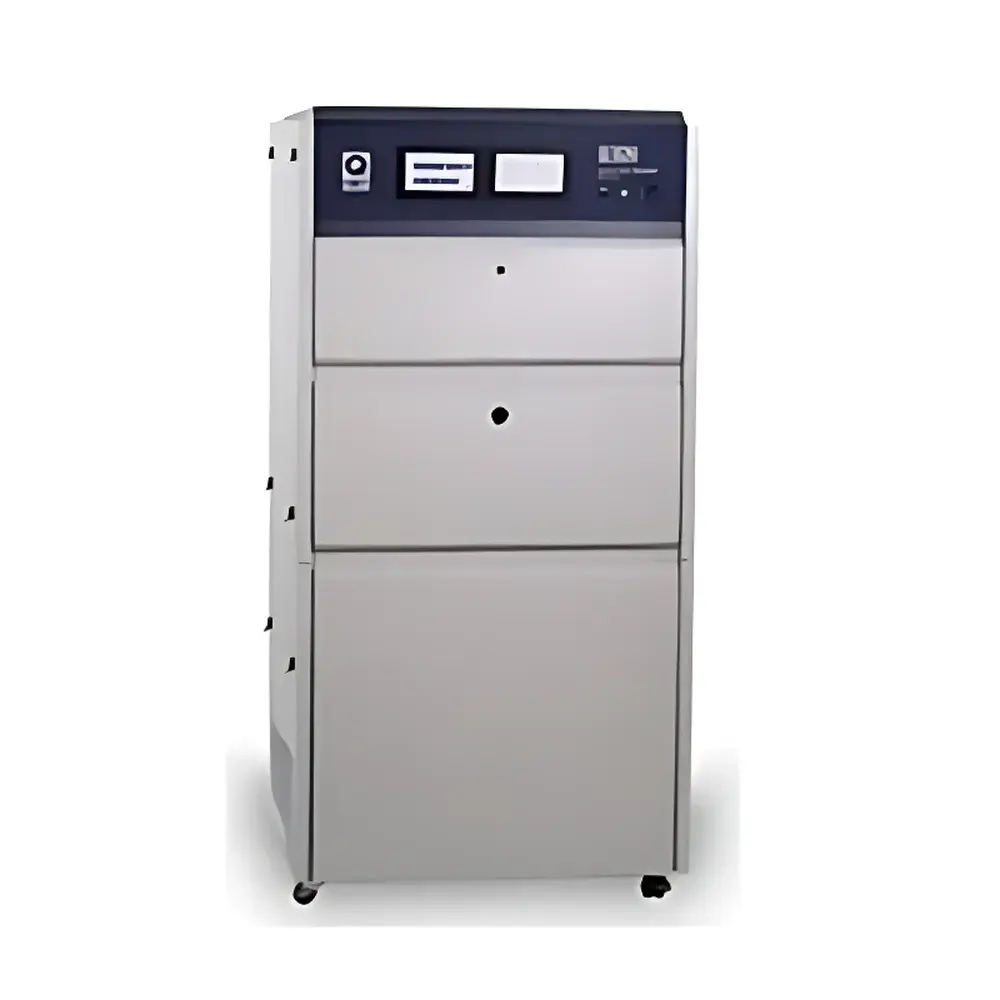
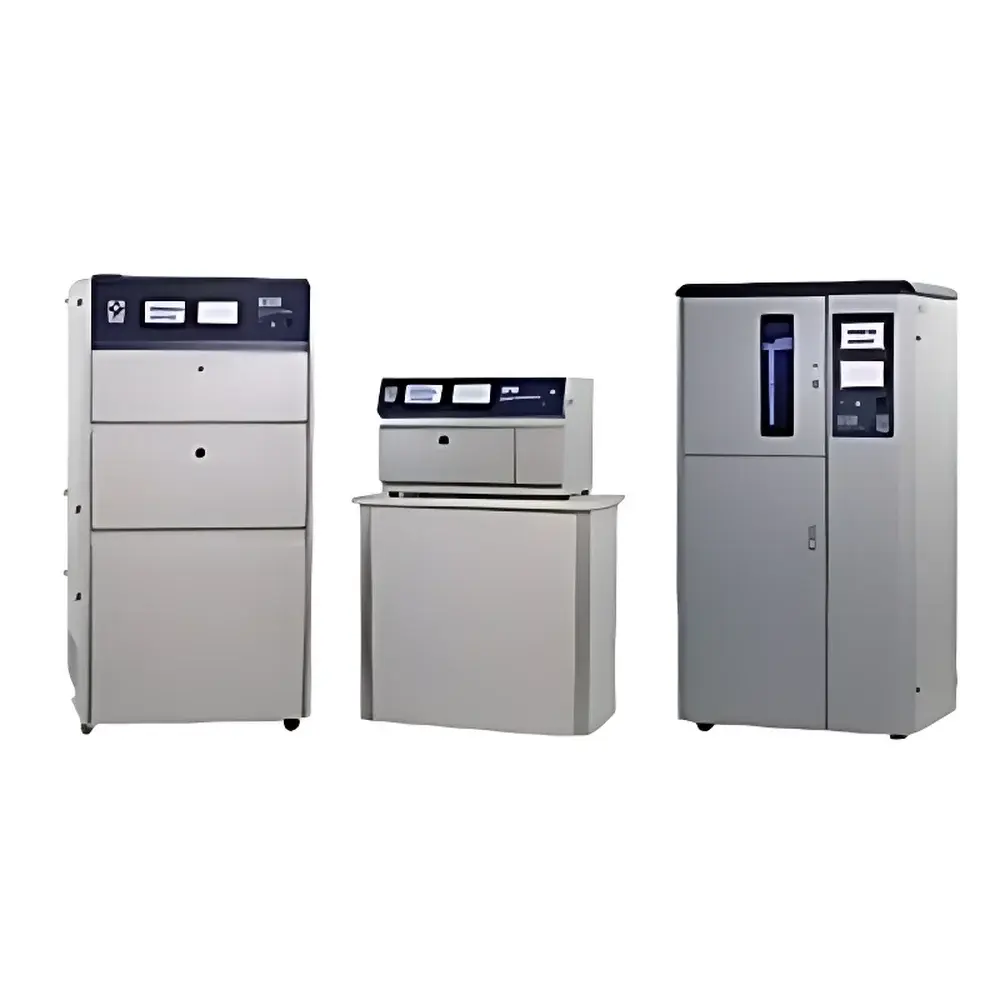
Q-LAB Q-SUN Xe-3-H Xenon Arc Weathering Test Chamber
| Brand | Q-LAB |
|---|---|
| Origin | USA |
| Model | Q-SUN Xe-3-H |
| Xenon Lamp Power | 1800 W |
| Irradiance Range | ≤1800 W/m² |
| Light Exposure Duration | 1–9999 h (continuously adjustable) |
| Relative Humidity Control | Up to 95% RH |
Overview
The Q-LAB Q-SUN Xe-3-H Xenon Arc Weathering Test Chamber is an engineered environmental simulation system designed to accelerate material degradation under controlled, reproducible conditions that replicate critical elements of natural outdoor exposure—specifically solar radiation (full-spectrum xenon arc), temperature, and relative humidity. Based on the fundamental principle of xenon arc irradiation, the chamber employs three vertically oriented 1800 W xenon lamps filtered through precision optical glass to deliver a spectral power distribution closely matching terrestrial sunlight (290–800 nm), including UV-A, UV-B, visible, and near-infrared regions. This photometric fidelity enables quantitatively meaningful correlation between accelerated test results and real-world service life for polymers, coatings, textiles, automotive components, and architectural materials. Unlike fluorescent UV or metal halide systems, xenon arc technology provides the only internationally accepted method (per ISO 4892-2, ASTM G155, SAE J2527, and AATCC TM16) for simulating full-spectrum solar stress—including photochemical, thermal, and hygrothermal aging mechanisms.
Key Features
- Triple 1800 W xenon lamp array with integrated air-cooled reflector geometry for uniform irradiance distribution across the specimen plane (±15% over 65 × 65 cm exposure area)
- Precise relative humidity control (10–95% RH) via steam injection and chilled mirror dew point sensing, compliant with ISO 4892-2 humidity cycling protocols
- Programmable light/dark cycles with exposure duration range from 1 hour to 9999 hours, supporting both continuous irradiation and complex multi-step sequences (e.g., light + spray → dark + condensation)
- Horizontal specimen mounting configuration optimized for realistic water retention during spray cycles—critical for evaluating blistering, delamination, and edge corrosion in automotive clearcoats and roofing membranes
- Onboard SOLAR EYE irradiance monitoring system with user-replaceable 340 nm, 420 nm, or TUV (300–400 nm) sensors; calibrated traceably to NIST-traceable standards via CR20 calibrator (A2LA/UKAS ISO/IEC 17025 accredited)
- Self-diagnostic controller with real-time system status logging, maintenance alerts, error code reporting, and automatic safety shutdown for lamp failure, overheating, or humidity sensor drift
Sample Compatibility & Compliance
The Q-SUN Xe-3-H accommodates flat-panel specimens up to 65 × 65 cm (25.6 × 25.6 in) and supports standardized sample holders per ASTM D6675, ISO 11341, and GB/T 16422.3. Its humidity control and optional spray modules meet requirements for testing under cyclic weathering conditions defined in ASTM D4329 (plastics), ISO 11507 (coatings), and IEC 61215 (photovoltaic modules). All operational parameters—including irradiance setpoint, black panel temperature, chamber air temperature, and RH—are continuously logged and exportable for GLP/GMP-compliant audit trails. The system architecture supports 21 CFR Part 11-ready software configurations when paired with Q-LAB’s SUNTEST™ Data Management Suite, enabling electronic signatures, role-based access control, and immutable data archiving.
Software & Data Management
Control and data acquisition are managed through Q-LAB’s proprietary touchscreen interface running embedded Linux OS. Test programs are created using intuitive drag-and-drop logic blocks—enabling precise definition of irradiance ramping, temperature ramps, humidity plateaus, and spray timing. Raw sensor data (irradiance, black panel temperature, chamber RH, ambient temperature) are sampled at 1 Hz and stored internally for ≥30 days. Export formats include CSV, PDF reports, and XML metadata files compatible with LIMS integration. Optional SUNTEST™ Cloud Service provides remote monitoring, email alerting for alarm conditions, and centralized fleet management for multi-chamber laboratories. All firmware updates are digitally signed and validated prior to installation to ensure integrity and regulatory compliance.
Applications
- Automotive OEMs and Tier-1 suppliers validating exterior trim, headlamp lenses, and interior dashboards per SAE J2412 and GMW14124
- Coating manufacturers qualifying architectural paints and industrial primers against ISO 11507 and ASTM D4587
- Photovoltaic module producers performing qualification testing per IEC 61215-2 MQT10 and UL 1703
- Textile and geotextile developers assessing colorfastness and tensile retention under tropical or desert climatic profiles
- Medical device packaging engineers verifying sterile barrier integrity after accelerated aging per ISO 11607-1
- Academic research labs conducting mechanistic studies on polymer photodegradation kinetics and hydrolytic chain scission pathways
FAQ
What spectral filters are available for the Q-SUN Xe-3-H, and how do they affect test relevance?
Three primary filter families are offered: Daylight Filter (Boron-silicate glass, approximating noon summer sun), Window Glass Filter (CIRA-type, simulating indoor透过 through window glass), and Extended UV Filter (quartz + special coating, enhancing short-wave UV for aggressive polymer testing). Selection must align with end-use exposure conditions and referenced test standards.
Is irradiance calibration required before each test cycle?
No—calibration is performed periodically (typically every 500–1000 lamp hours) using the CR20 calibrator. The SOLAR EYE sensor automatically compensates for lamp aging within its operational lifespan; recalibration ensures metrological traceability but does not interrupt routine operation.
Can the Q-SUN Xe-3-H operate without humidity control?
Yes—the RH system can be disabled while retaining full irradiance and temperature control. However, omission of humidity modulation invalidates compliance with any standard requiring hygrothermal cycling (e.g., ISO 4892-2 Cycle 1).
What maintenance intervals are recommended for optimal long-term performance?
Lamp replacement every 1500–2000 hours; air filter replacement every 3 months; SOLAR EYE sensor recalibration annually; full system verification (temperature, RH, irradiance uniformity) biannually per ISO/IEC 17025 internal audit guidelines.



