
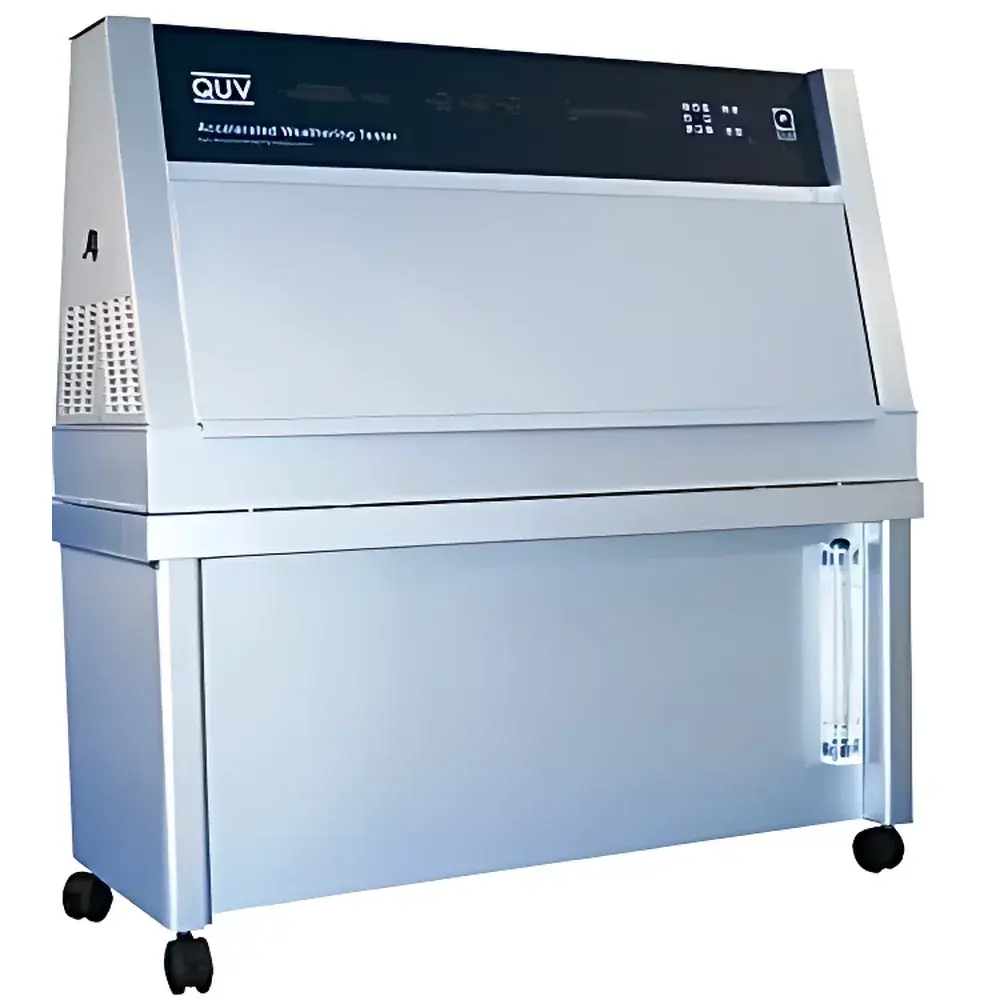
Q-LAB QUV/se UV Aging Test Chamber
| Brand | Q-LAB |
|---|---|
| Origin | USA |
| Model | Q-LAB-QUV/se |
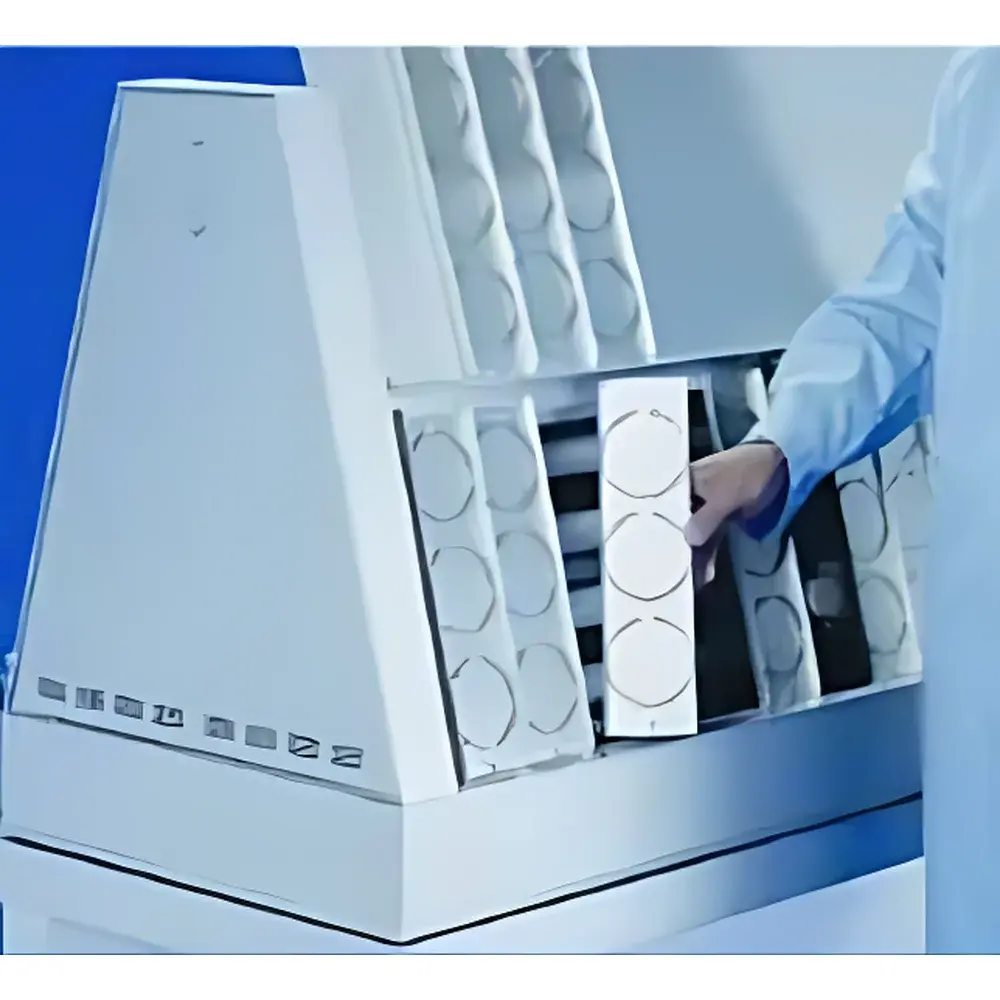
| Sample Capacity | 48 × 75 mm × 150 mm specimens |
| UV Lamp Options | UVA-340 (295–365 nm), UVB-313 (peak at 313 nm) |
| Condensation Humidity Simulation | Yes, via heated water pan |
| SOLAR EYE Irradiance Control System | Yes, with ISO-traceable calibration |
| Temperature Control | Black panel temperature range up to 80 °C, chamber air temperature up to 70 °C |
| Compliance | ASTM G154, ISO 4892-3, JIS D0205, SAE J2020, GB/T 14522, and other international UV weathering standards |
Overview
The Q-LAB QUV/se UV Aging Test Chamber is an industry-standard accelerated weathering instrument engineered for precision simulation of solar ultraviolet (UV) radiation effects on polymeric, coating, automotive, aerospace, and architectural materials. Based on the fundamental principle of controlled UV photodegradation—where short-wavelength UV photons (295–400 nm) drive photochemical bond scission in organic matrices—the QUV/se replicates the dominant degradation mechanism observed in real-world outdoor exposure. Unlike full-spectrum xenon arc testers, the QUV/se isolates UV stress using fluorescent lamp technology, enabling highly reproducible, cost-efficient, and rapid evaluation of material resistance to UV-induced chalking, gloss loss, color shift, cracking, and embrittlement. Its design reflects over four decades of empirical correlation development between laboratory UV exposure and field performance, making it the benchmark for regulatory-compliant durability assessment across global R&D and quality control laboratories.
Key Features
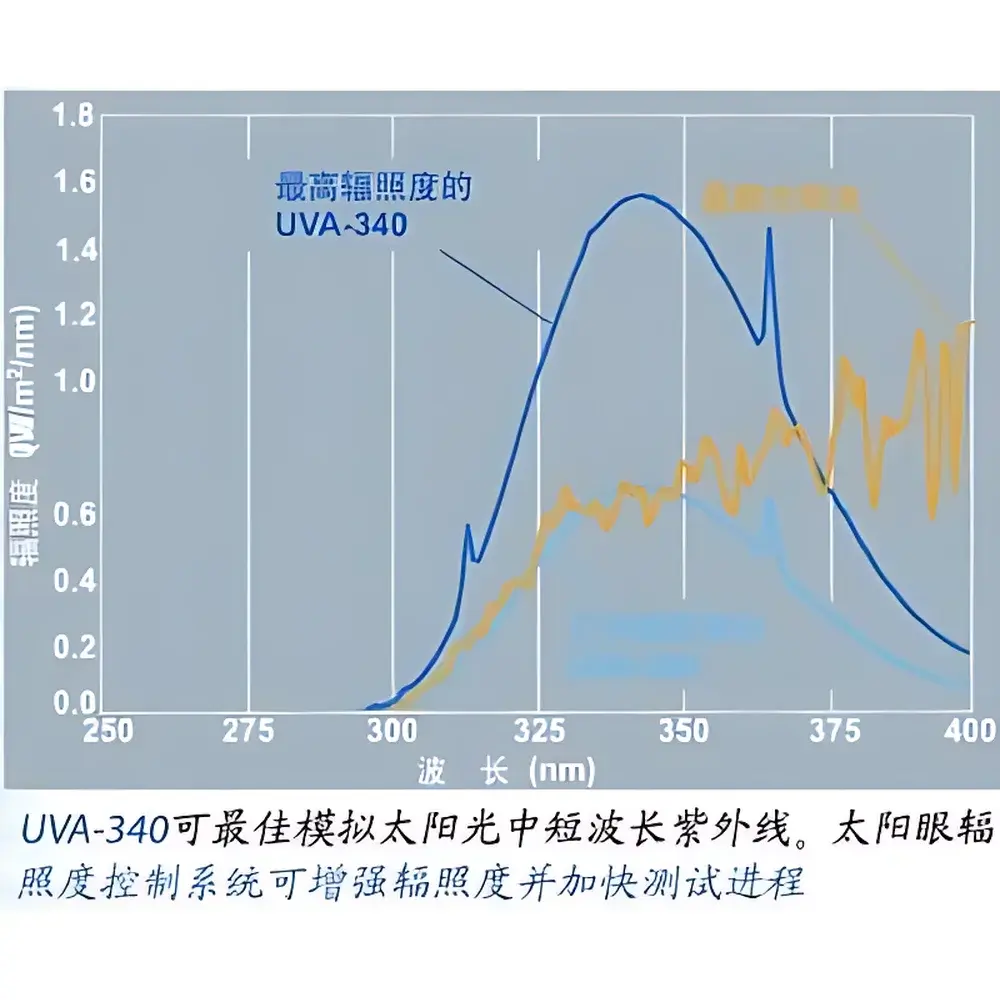
- SOLAR EYE Irradiance Control System: A closed-loop optical feedback mechanism continuously monitors UV irradiance (typically at 340 nm or 313 nm) using a calibrated sensor and dynamically adjusts lamp power to maintain setpoint intensity within ±3% tolerance—ensuring test consistency across lamp aging cycles.
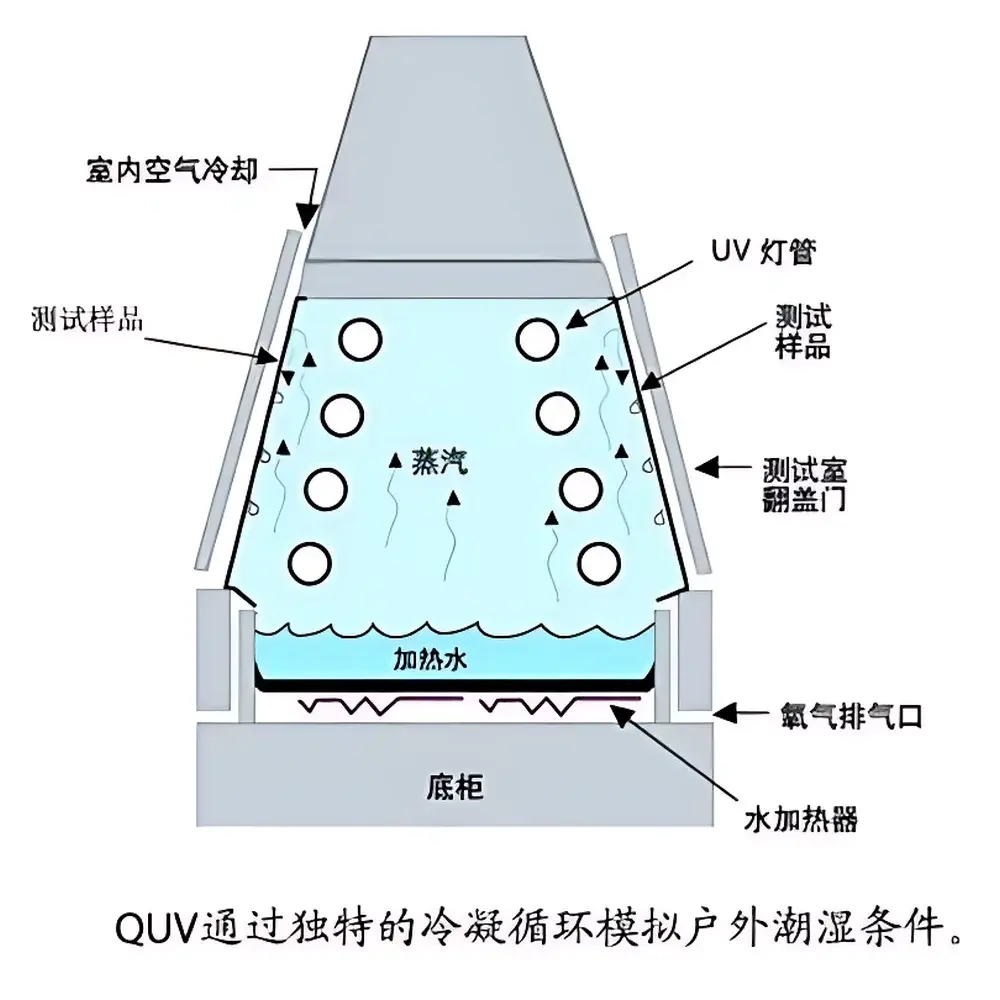
- Condensation-Driven Moisture Simulation: Employs a heated water reservoir beneath the specimen plane to generate saturated vapor, producing realistic dew-point condensation on sample surfaces for up to 16 hours per cycle—mimicking the primary moisture exposure mechanism in natural environments, as validated by ASTM G154 Annex A3.
- Thermal Management Architecture: Independent black panel thermometer (BPT) and chamber air temperature control allow precise regulation of surface temperature (up to 80 °C) and ambient thermal conditions—critical for accelerating thermo-oxidative degradation pathways without compromising spectral fidelity.
- Modular UV Lamp Compatibility: Supports interchangeable UVA-340 lamps (optimal for terrestrial sunlight simulation, 295–365 nm) and UVB-313 lamps (enhanced short-wave output for aggressive screening); all lamps exhibit minimal spectral drift over lifetime, preserving inter-laboratory reproducibility.
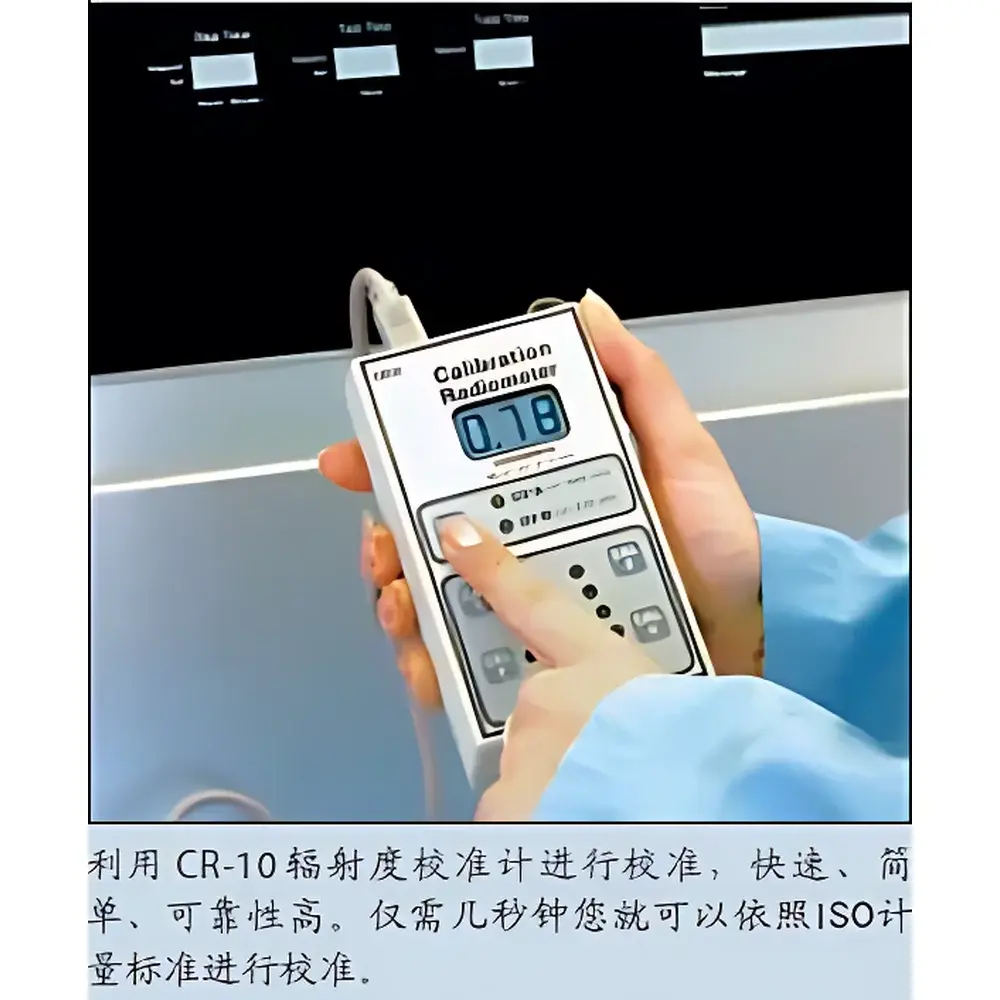
- ISO-Traceable Calibration Support: Fully compatible with the CR-10 radiometer and NIST-traceable calibration services, satisfying requirements for GLP/GMP audit readiness and ISO/IEC 17025 accreditation of testing laboratories.
Sample Compatibility & Compliance
The QUV/se accommodates up to 48 standard flat specimens measuring 75 mm × 150 mm (3″ × 6″) per cycle; custom fixtures support 3D components and non-planar geometries. Its mechanical design conforms to stringent safety and electromagnetic compatibility (EMC) directives (e.g., IEC 61000-6-3, UL 61010-1). The system meets or exceeds core international standards including ASTM G154 (Standard Practice for Operating Fluorescent Ultraviolet (UV) Lamp Apparatus for Exposure of Nonmetallic Materials), ISO 4892-3 (Plastics — Methods of exposure to laboratory light sources — Part 3: Fluorescent UV lamps), JIS D0205 (Automotive paint durability), SAE J2020 (Accelerated exposure of automotive exterior materials), and GB/T 14522 (Chinese national standard for UV aging of coatings). It is routinely deployed in FDA-regulated medical device packaging validation and automotive OEM Tier-1 supplier qualification protocols requiring documented traceability and repeatable exposure dosimetry.
Software & Data Management
The QUV/se operates via a dedicated microprocessor-based controller with password-protected parameter locking, real-time display of irradiance, BPT temperature, and condensation status. While the base unit does not include PC connectivity, optional data logging modules enable timestamped export of irradiance, temperature, and cycle phase data to CSV format for integration into LIMS or statistical process control (SPC) platforms. All calibration records—including SOLAR EYE sensor verification and CR-10 radiometer certification—are maintained in accordance with 21 CFR Part 11 principles when paired with compliant electronic record systems. Audit trails for method changes, calibration events, and user access are retained locally for ≥12 months, supporting GLP-compliant documentation workflows.
Applications
This chamber serves critical roles in polymer formulation development (e.g., stabilizer package optimization for PVC, polyolefins, and elastomers), automotive exterior component qualification (bumpers, trim, headlamp lenses), aerospace sealant and composite resin validation, architectural coating durability assessment (roof membranes, façade paints), and photovoltaic module encapsulant stability testing. Its high repeatability makes it ideal for comparative ranking of material batches, shelf-life prediction modeling, and failure mode analysis under controlled UV/humidity/temperature stress sequences. End-users include R&D labs at Fortune 500 chemical manufacturers, Tier-1 automotive suppliers, independent contract testing laboratories accredited to ISO/IEC 17025, and government metrology institutes conducting interlaboratory comparison studies.
FAQ
What UV spectral outputs are supported, and how do they differ in application?
The QUV/se accepts UVA-340 lamps (best match to terrestrial sunlight UV below 365 nm) for correlation-driven testing, and UVB-313 lamps (higher energy short-wave output) for rapid screening where acceleration outweighs spectral fidelity.
Does the QUV/se meet FDA or ISO 17025 requirements for regulated testing?
Yes—when operated with SOLAR EYE control, CR-10 calibration, and documented maintenance logs, it satisfies technical requirements for GLP, GMP, and ISO/IEC 17025-accredited laboratories performing UV aging assessments.
How is condensation humidity generated, and why is it more relevant than spray or immersion?
Condensation is formed by heating a water reservoir to create saturated vapor that condenses on cooler specimen surfaces—replicating natural dew formation, which accounts for >80% of daily moisture exposure in most climates, per ASTM G154 Annex A3.
Can the QUV/se be used for cyclic testing combining UV, condensation, and dark periods?
Yes—predefined or custom cycles may include UV irradiation, condensation-only, and dark (non-irradiated) phases, enabling simulation of diurnal environmental transitions.
Is third-party calibration and IQ/OQ/PQ validation support available?
Q-LAB-certified service partners provide installation qualification (IQ), operational qualification (OQ), performance qualification (PQ), and annual calibration services aligned with ISO/IEC 17025 and GxP expectations.



