
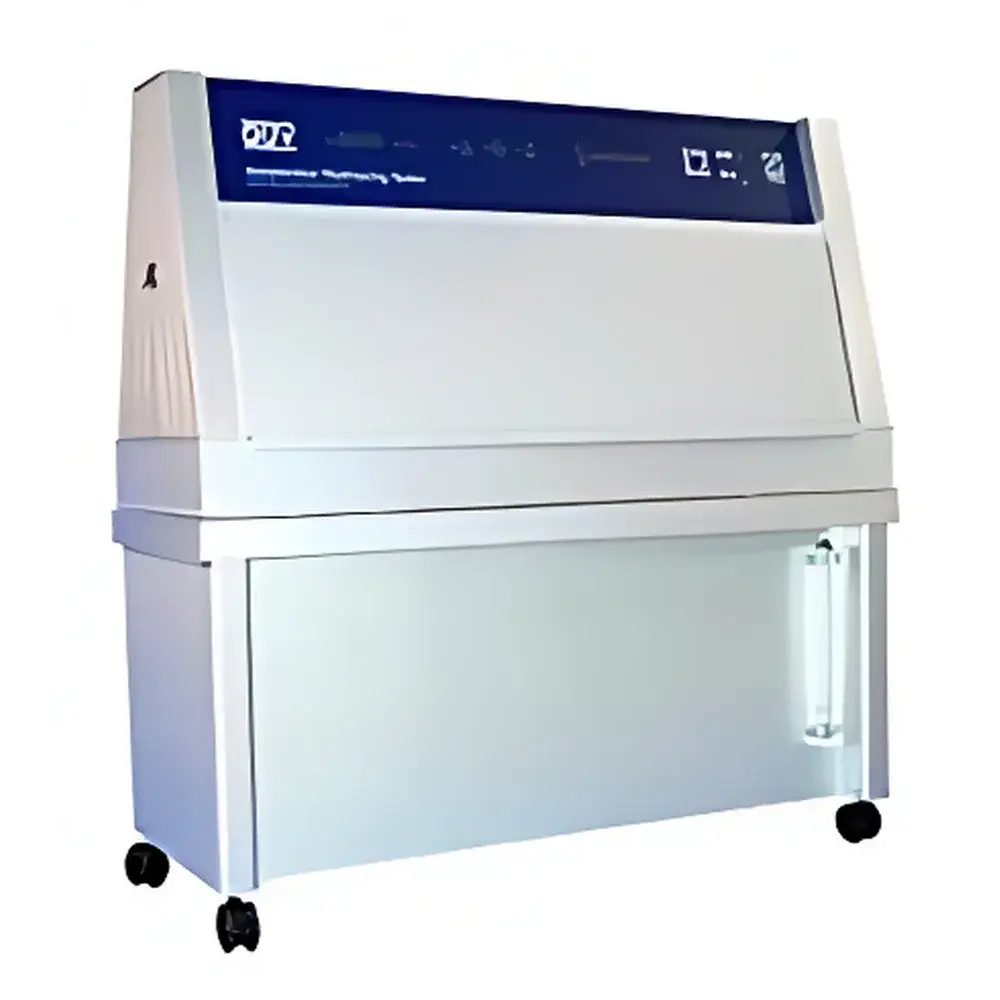
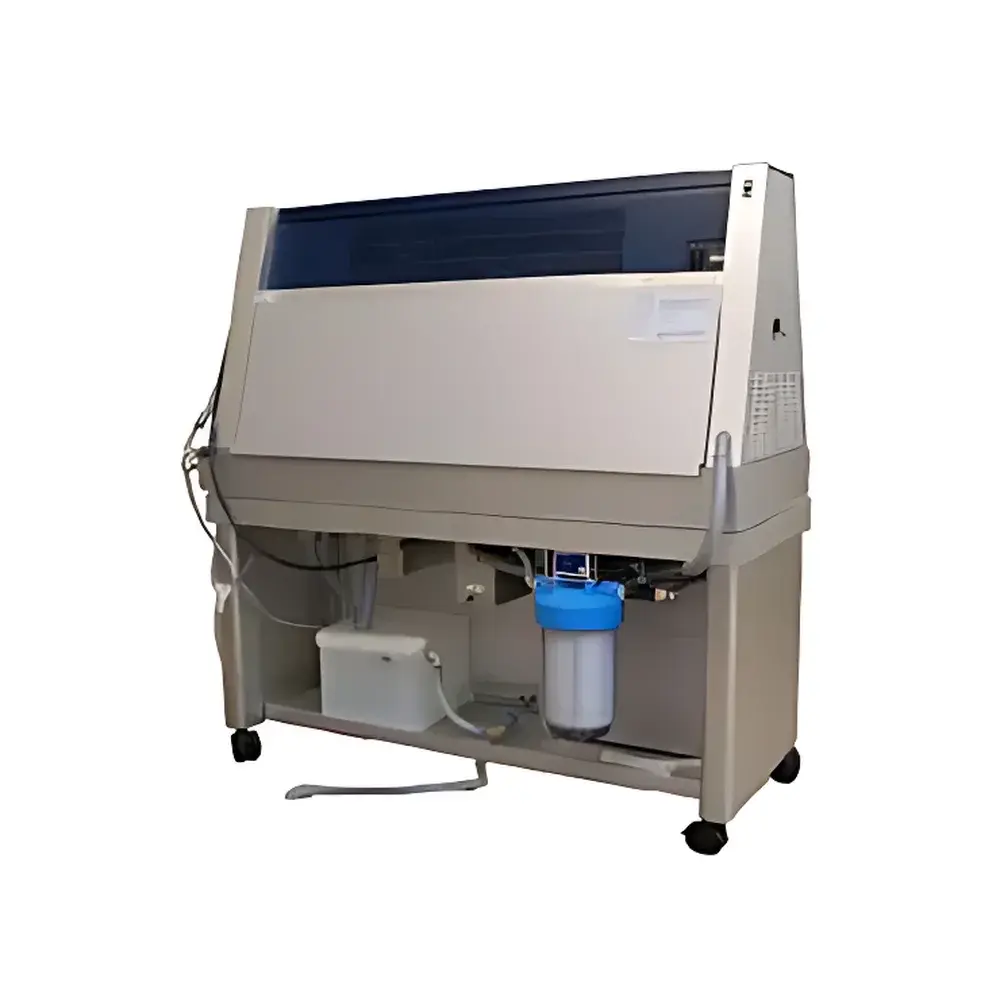
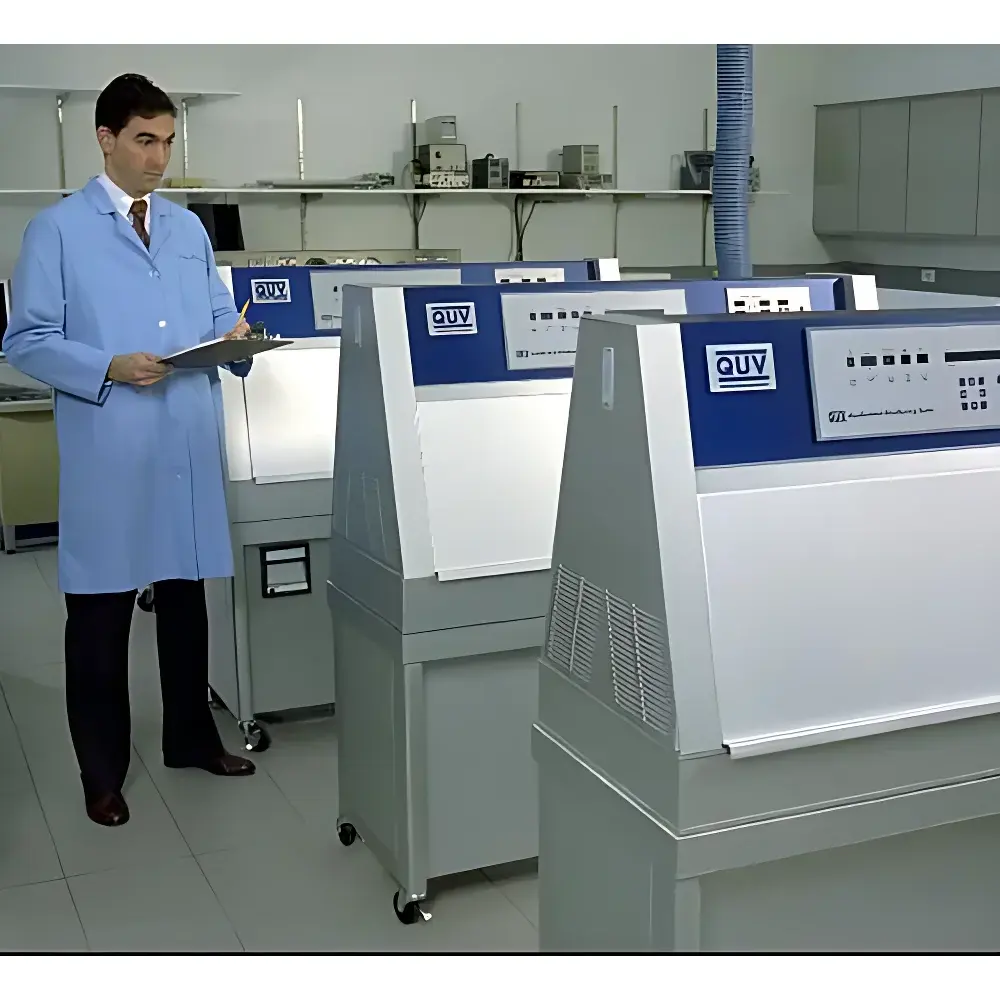
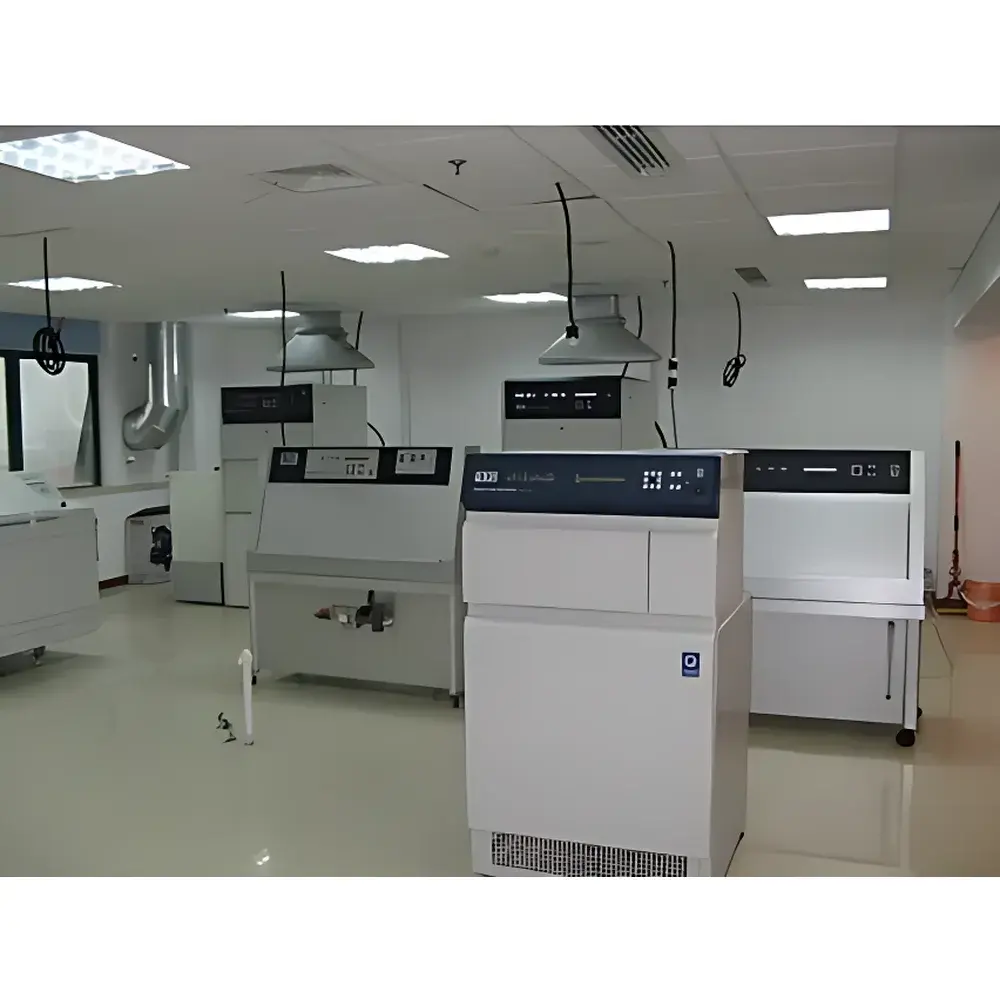
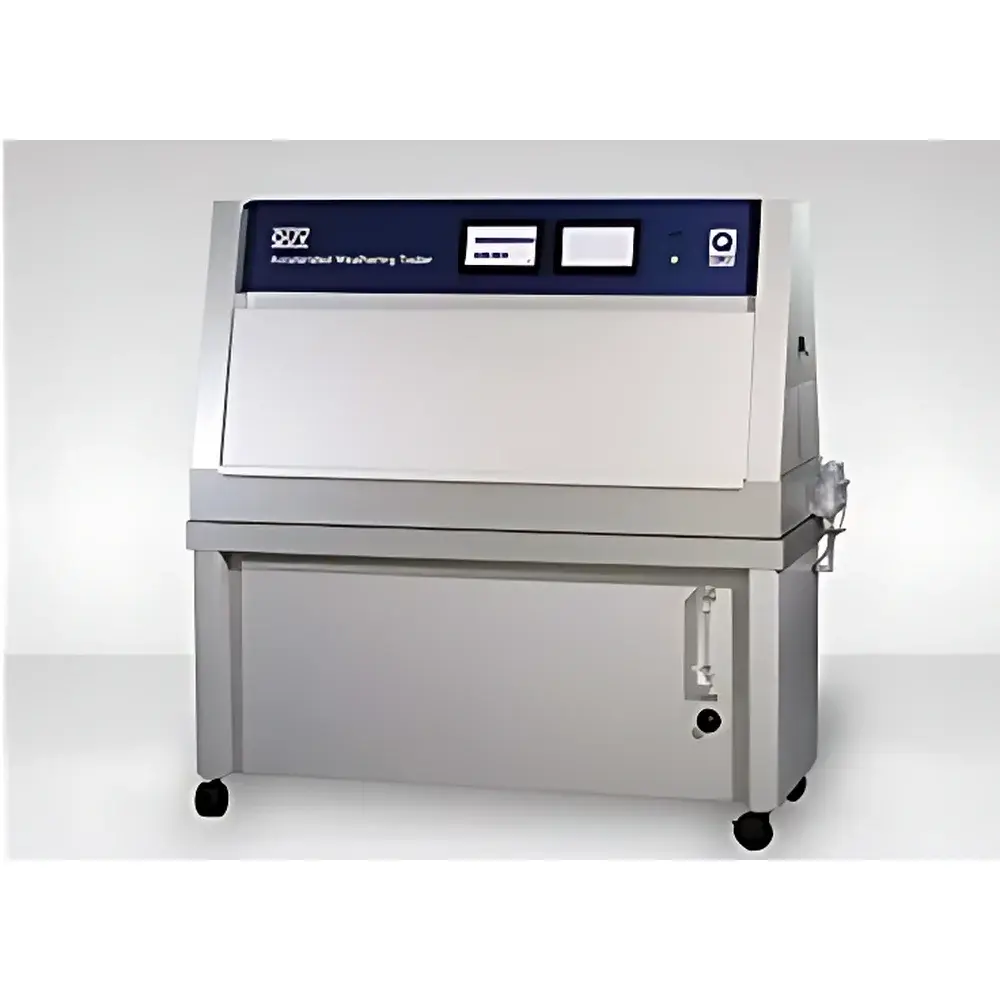
Q-LAB QUV/spray UV Aging Test Chamber
| Brand | Q-LAB |
|---|---|
| Origin | USA |
| Model | QUV/spray |
| UV Wavelength | 340 nm |
| Compliance | ASTM G151, ASTM G154, ISO 11507, ISO 4892-3, JIS D 0205, SAE J2020, GM 9125P, NACE TM-01-84, ANSI C57.12.28, UNE 53.104, and others |
| Irradiance Control | Solar Eye® closed-loop feedback system |
| Spray Function | Integrated deionized water spray cycle |
| Condensation | Yes |
| Lamp Type | UVA-340 (standard), UVB-313 (optional) |
| Sample Capacity | 48 specimens (75 × 150 mm) |
| Operating Temperature Range (Irradiation) | 45–80 °C |
| Operating Temperature Range (Condensation) | 40–60 °C |
| Power Supply | 120 V/60 Hz, 20 A or 230 V/50–60 Hz, 9 A |
| Water Consumption | 8 L/day (spray + condensation) |
| Lamp Lifetime | 5,000 h (UVA-340) |
Overview
The Q-LAB QUV/spray UV Aging Test Chamber is an industry-standard accelerated weathering instrument engineered for precision simulation of solar ultraviolet (UV) radiation, moisture condensation, and cyclic spray exposure. It operates on the principle of controlled UV irradiation using fluorescent UVA-340 lamps—spectrally calibrated to replicate the critical short-wavelength UV region (295–365 nm) of terrestrial sunlight—and integrates three distinct environmental stressors: UV irradiation, thermal cycling, and periodic liquid water application via a programmable spray system. Unlike xenon-arc or carbon-arc devices, the QUV/spray leverages narrow-band UV fluorescence to deliver high reproducibility in polymer degradation studies, particularly where photochemical pathways are dominated by UV-B and UV-A photons. Its design conforms to the core requirements of ASTM G154 (Standard Practice for Operating Fluorescent Ultraviolet (UV) Lamp Apparatus for Exposure of Nonmetallic Materials) and ISO 4892-3 (Plastics — Methods of exposure to laboratory light sources — Part 3: Fluorescent UV lamps), making it a primary tool for R&D laboratories, quality control departments, and regulatory compliance testing across coatings, automotive, aerospace, and building materials sectors.
Key Features
- Integrated Solar Eye® irradiance control system: A closed-loop optical feedback mechanism that continuously monitors and dynamically adjusts lamp output to maintain user-defined irradiance setpoints (e.g., 0.68 W/m²·nm at 340 nm), compensating for lamp aging, voltage fluctuations, and ambient temperature drift.
- Dual-mode moisture simulation: Combines non-pressurized condensation (via heated chamber walls and ambient humidity saturation) with programmable deionized water spray cycles—enabling realistic simulation of dew formation, rain washing, and thermal shock effects.
- Microprocessor-based controller with intuitive interface: Preloaded with standardized test cycles per ASTM D4587 (Coatings), ASTM D4329 (Plastics), and ISO 11507 (Paints and varnishes); supports custom program creation with up to 10-step sequences defining UV intensity, temperature, duration, and spray timing.
- Self-diagnostic architecture: Real-time monitoring of lamp status, chamber temperature uniformity, spray nozzle function, and water level; automatic error logging with alphanumeric fault codes and maintenance prompts.
- ISO-traceable calibration capability: Compatible with Q-Lab CR-10 radiometers, certified per ISO/IEC 17025 and traceable to NIST (National Institute of Standards and Technology); annual recalibration recommended to maintain compliance with ISO 9001 and GLP audit requirements.
Sample Compatibility & Compliance
The QUV/spray accommodates standard 75 × 150 mm flat specimens mounted on Q-Panel® aluminum substrate holders—designed to minimize thermal mass variation and ensure inter-laboratory result comparability. Irregular or thick samples may be accommodated with optional fixtures. The chamber meets the physical and operational criteria of over 40 international standards, including ASTM G151 (accelerated exposure apparatus), ASTM D3794 (latex paints), ISO 20340 (offshore protective coatings), JIS K 5600-7-8 (Japanese industrial paints), and NACE TM-01-84 (corrosion-resistant coatings). All test methods referenced require strict adherence to specimen mounting geometry, irradiance uniformity (±15% across sample plane), and temperature stability (±2 °C), all verified during factory acceptance testing and documented in the supplied Certificate of Conformance.
Software & Data Management
While the QUV/spray operates via embedded firmware without PC-dependent software, its controller logs timestamped operational data—including irradiance history, chamber temperature profiles, spray activation events, and fault records—for export via USB flash drive. Raw log files are structured in CSV format for integration into LIMS (Laboratory Information Management Systems) or statistical analysis platforms such as JMP or Minitab. For laboratories operating under FDA 21 CFR Part 11 or EU Annex 11 requirements, optional Q-Lab’s Q-Support™ validation package provides IQ/OQ documentation, electronic signature support, and audit trail generation—ensuring full traceability from test initiation to final report generation.
Applications
This instrument is routinely deployed in formulation development and durability validation for exterior automotive clearcoats (GMW14872), architectural elastomeric roof coatings (ASTM D6083), photovoltaic encapsulant materials (IEC 61215-2 MQT03), marine antifouling paints (ISO 20340), and medical device polymer housings (ISO 10993-12). Its ability to decouple UV dose from thermal load enables mechanistic studies of photooxidation kinetics, while the spray function supports evaluation of hydrolytic stability and surface erosion resistance—critical for silicone sealants (ASTM C1184) and structural adhesives (ASTM D5215).
FAQ
What UV spectral output does the QUV/spray provide?
The standard UVA-340 lamp delivers peak irradiance at 340 nm with a spectral match to solar UV below 365 nm per ASTM G155 Annex A1; optional UVB-313 lamps extend output to 280–360 nm for aggressive screening.
Is the spray function compatible with ASTM D4587 Cycle 3?
Yes—the QUV/spray implements ASTM D4587 Cycle 3 (4 hrs UV @ 60 °C, followed by 4 hrs condensation with optional 18-min spray at cycle start) with precise timing and water purity control (resistivity ≥ 1 MΩ·cm).
How often must the Solar Eye® sensor be recalibrated?
Q-Lab recommends annual recalibration of the CR-10 radiometer at an accredited Q-Lab service center to retain ISO/IEC 17025 traceability and satisfy internal QA audits.
Can the QUV/spray operate unattended over weekends?
Yes—its programmable auto-shutdown, audible alarm, and status display enable fully autonomous weekend runs; controller memory retains settings through power interruption.
Does the unit comply with GLP requirements for regulated testing?
When used with Q-Support™ validation documentation and CR-10 radiometer calibration records, the system satisfies GLP principles for equipment qualification, data integrity, and audit readiness.



