
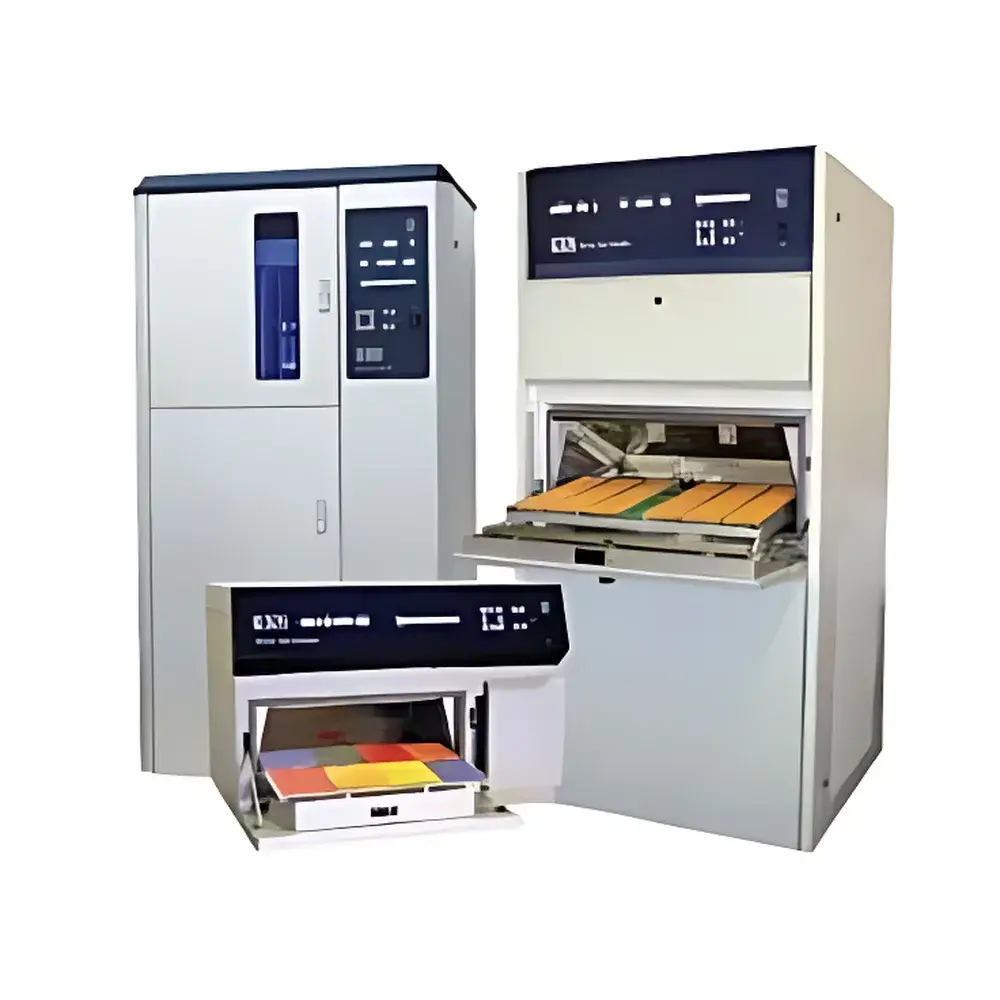
Q-LAB Q-SUN Xe-1-BC Xenon Arc Weathering Test Chamber
| Brand | Q-LAB |
|---|---|
| Origin | USA |
| Model | Q-SUN Xe-1-BC |
| Xenon Lamp Power | 1800 W |
| Sample Capacity | 17 specimens |
| Sample Tray Load Capacity | 14 kg (30 lbs) |
| Sample Area | 25 × 46 cm (d × w) |
| Sample Dimensions | 51 × 102 mm |
| Tilt Angle | 10° from horizontal |
| Lamp Type | Full-spectrum xenon arc lamp |
| Irradiance Calibration | AUTOCAL CR20 compliant with ISO standards |
| Black Panel Thermometer | CT202 |
| Water Supply Pressure | 2.1–6.2 bar (30–90 psi) |
| Water Purity | Dissolved solids <1 ppm, suspended silica <0.1 ppm |
| Water Consumption | 0.1 L/min (spray mode) |
| Dimensions (W×D×H) | 78 × 138 × 79 cm |
| Electrical Requirement | 208 V / 230 V |
Overview
The Q-LAB Q-SUN Xe-1-BC Xenon Arc Weathering Test Chamber is an internationally recognized, benchtop-scale accelerated weathering instrument engineered for precision simulation of solar radiation, temperature, and humidity stressors encountered in outdoor service environments. It employs a single 1800 W full-spectrum xenon arc lamp—optically filtered to replicate natural sunlight across UV, visible, and near-infrared wavelengths—to deliver photometrically accurate irradiance profiles. Unlike narrowband UV-only systems, the Xe-1-BC reproduces the complete solar spectrum (290–800 nm), enabling physicochemical degradation mechanisms—including photooxidation, pigment fading, polymer chain scission, and thermal-hygrometric embrittlement—to proceed under conditions closely aligned with real-world exposure. Its compact footprint and integrated refrigeration-ready architecture make it suitable for quality control laboratories, R&D facilities, and regulatory testing labs operating under ASTM G155, ISO 4892-2, and IEC 60068-2-5 compliance requirements.
Key Features
- Full-spectrum 1800 W xenon arc lamp with interchangeable optical filters (Daylight-Q, Windows-B/SL, Extended UV-Q/B, etc.) to match specific exposure conditions per ISO 4892-2, SAE J2527, or AATCC TM16 protocols.
- Standard Ethernet-enabled data acquisition system supporting continuous logging of irradiance (W/m²), black panel temperature (BPT), chamber air temperature, and relative humidity—traceable to NIST-calibrated sensors.
- Autonomous calibration support via Q-LAB’s AUTOCAL CR20 irradiance calibration system, ensuring long-term measurement stability and alignment with ISO 17025-accredited traceability requirements.
- 17-specimen capacity on a fixed-angle (10°) sample tray; accommodates standard 51 × 102 mm coupons or custom substrates up to 25 × 46 cm surface area and 14 kg total load.
- Multi-language user interface (English, French, Spanish, Italian, German) with intuitive touchscreen navigation and password-protected parameter locking for GLP/GMP audit readiness.
- Optional refrigerated cooling unit for low-temperature cycling applications, extending operational flexibility beyond ambient thermal limits.
Sample Compatibility & Compliance
The Q-SUN Xe-1-BC accepts rigid and semi-rigid flat specimens—including coated metals, automotive trim, architectural coatings, textiles, plastics, elastomers, and laminated safety glass—without requiring complex mounting fixtures. Its open-top design allows direct access to samples during exposure, facilitating periodic visual assessment, gloss measurement, or colorimetric evaluation using external instrumentation. The chamber meets critical regulatory and industry-standard test method requirements including ASTM G151 (standard practice for exposing non-metallic materials), ASTM G155 (xenon-arc exposure apparatus), ISO 4892-2 (plastics—methods of exposure to laboratory light sources), ISO 105-B02/B04/B06 (textile colorfastness), SAE J2412/J2527 (automotive interior/exterior components), PV 1303/PV 3929 (Volkswagen material specifications), and GB/T 8427–2019 (Chinese national standard for textile colorfastness to artificial light). All filter configurations are validated against spectral irradiance distribution tolerances defined in ISO 4892-2 Annex B.
Software & Data Management
Control and monitoring are managed through Q-LAB’s proprietary Q-SUN Software Suite, which supports real-time graphical display of all monitored parameters, programmable exposure cycles (irradiance setpoints, temperature ramps, humidity dwell periods), and automated event logging with timestamped metadata. Export functionality includes CSV and PDF report generation compatible with LIMS integration. Audit trails record all operator actions—including parameter changes, calibration events, and start/stop commands—in accordance with FDA 21 CFR Part 11 requirements when configured with electronic signature modules. Data integrity is reinforced by internal SD card backup and optional cloud synchronization for remote lab oversight.
Applications
- Accelerated color fade and gloss loss evaluation of automotive interior trims and exterior paints under simulated daylight and window-filtered spectra.
- UV resistance validation of architectural sealants, roofing membranes, and façade cladding materials per ASTM D4355 and ISO 11341.
- Textile colorfastness testing to artificial light (AATCC TM16, ISO 105-B02) using Windows-B/SL or Daylight-Q filters.
- Photostability screening of pharmaceutical packaging polymers and medical device housings under IEC 60601-1 environmental stress conditions.
- Material qualification for aerospace interior components per SAE AS5623 and Boeing D6-17487.
FAQ
What spectral filters are available for the Q-SUN Xe-1-BC, and how do they differ?
The Xe-1-BC supports five standardized optical filter configurations: Daylight-Q (295 nm cutoff, simulating unfiltered terrestrial sunlight), Windows-B/SL (300 nm cutoff, matching typical architectural glazing transmission), Daylight-B/B (290 nm cutoff, optimized for rotating rack instruments), Extended UV-Q/B (275 nm cutoff, emphasizing short-wave UV for aggressive automotive testing), and Windows-I/R (310 nm cutoff with infrared attenuation for lower specimen surface temperatures). Each filter is designed to meet specific spectral power distribution (SPD) tolerances outlined in ISO 4892-2.
Does the Xe-1-BC comply with FDA 21 CFR Part 11 for electronic records?
Yes—when deployed with Q-LAB’s optional Q-SUN Software Suite configured for 21 CFR Part 11 compliance, the system provides electronic signatures, role-based access control, and immutable audit trails for all exposure runs and calibration events.
Can the chamber operate without water spray?
Yes. The Xe-1-BC supports dry-cycle operation (no moisture introduction) or intermittent spray cycles synchronized with irradiance and temperature profiles. Spray duration, frequency, and water pressure are fully programmable.
Is black panel temperature (BPT) or black standard temperature (BST) measured?
The system uses a CT202 black panel thermometer conforming to ISO 4892-2 definitions for BPT measurement. BST capability requires optional sensor retrofitting and is not standard on the Xe-1-BC configuration.
What maintenance intervals are recommended for the xenon lamp and filters?
Q-LAB recommends lamp replacement every 1,500 hours of operation (or per irradiance decay thresholds defined in ISO 4892-2), and optical filter replacement every 2,000 hours or upon visible discoloration or transmittance deviation exceeding ±5% from baseline spectrophotometric verification.
Related Products



