
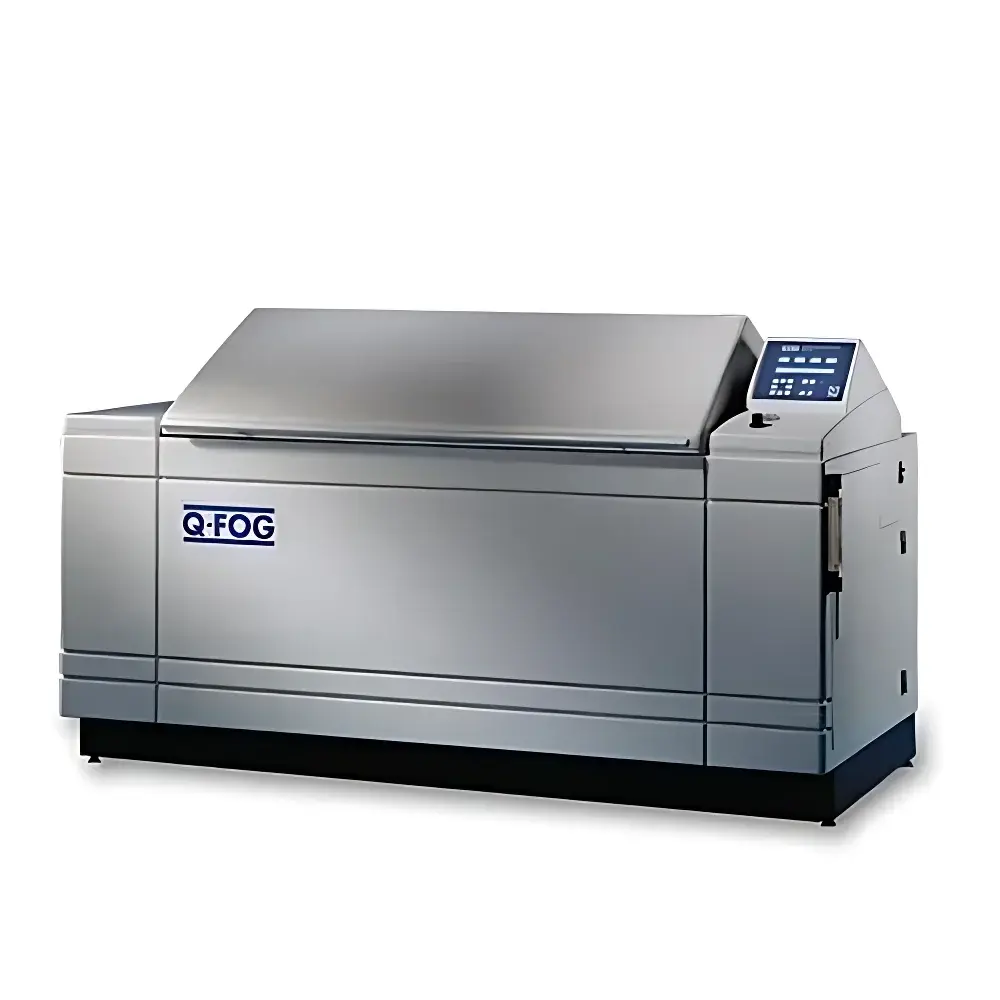
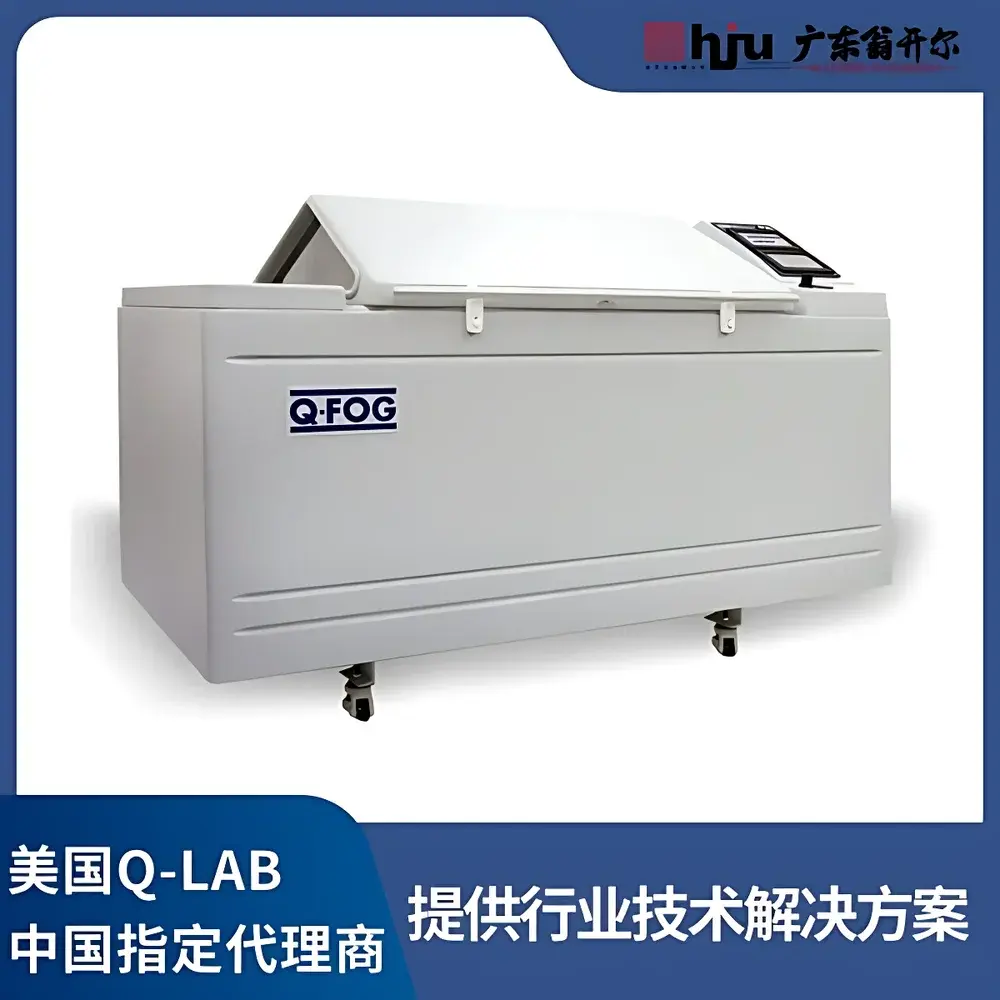
Q-Lab Q-FOG CCT Cyclic Corrosion Test Chamber
| Brand | Q-Lab |
|---|---|
| Origin | USA |
| Model | Q-FOG CCT |
| Spray Mode | Continuous Spray |
| Spray Rate | 1–5 L/h per 180 cm² |
| Nozzle Pressure | 0.7–1 kg/cm² |
| De-misting Method | Air-pressurized Exhaust |
| Temperature Range | 20–60 °C |
Overview
The Q-Lab Q-FOG CCT Cyclic Corrosion Test Chamber is an engineered environmental test system designed for high-fidelity simulation of real-world corrosion environments—particularly those encountered in automotive, aerospace, and industrial coating applications. Unlike conventional salt spray chambers operating solely under ASTM B117 conditions, the Q-FOG CCT implements programmable multi-phase cycles combining salt fog, high-humidity (95–100% RH), and elevated temperature control to replicate field-relevant degradation mechanisms. Its core architecture leverages a corrosion-resistant fiberglass-reinforced polymer (FRP) chamber body—eliminating internal steel structures that compromise long-term integrity—and integrates precision-controlled air heating, steam humidification, and variable-speed peristaltic dosing for reproducible salt deposition. The system complies with ISO 9227, ASTM G85 Annexes A1–A5, DIN 50021, BS 3900 F4/F9, and numerous OEM-specific specifications including GMW 14872 and Ford CETP 00.00-L-467.
Key Features
- Corrosion-resistant FRP construction: No internal metallic framework ensures structural longevity and eliminates secondary corrosion artifacts.
- Dual-mode humidity control: Integrated steam generator enables stable 95–100% RH operation at temperatures from 25–60 °C—critical for automotive cyclic corrosion testing (CCT).
- Precision salt delivery: Variable-speed peristaltic pump regulates salt solution flow to maintain consistent deposition rates (1–5 L/h per 180 cm²) across test cycles.
- Intelligent controller with self-diagnostic capability: Real-time fault logging, maintenance reminders, automatic safety shutdown, and configurable alarm thresholds ensure operational continuity and audit readiness.
- Observation-ready design: Side-mounted viewing window with integrated LED illumination allows visual monitoring without interrupting test conditions.
- Multi-language interface: Supports English, French, Spanish, German, and Italian for global laboratory deployment.
- Compressed air conditioning: Integrated oil/water separator and 5 µm particulate filtration ensure clean, stable atomization pressure (3–8 bar).
Sample Compatibility & Compliance
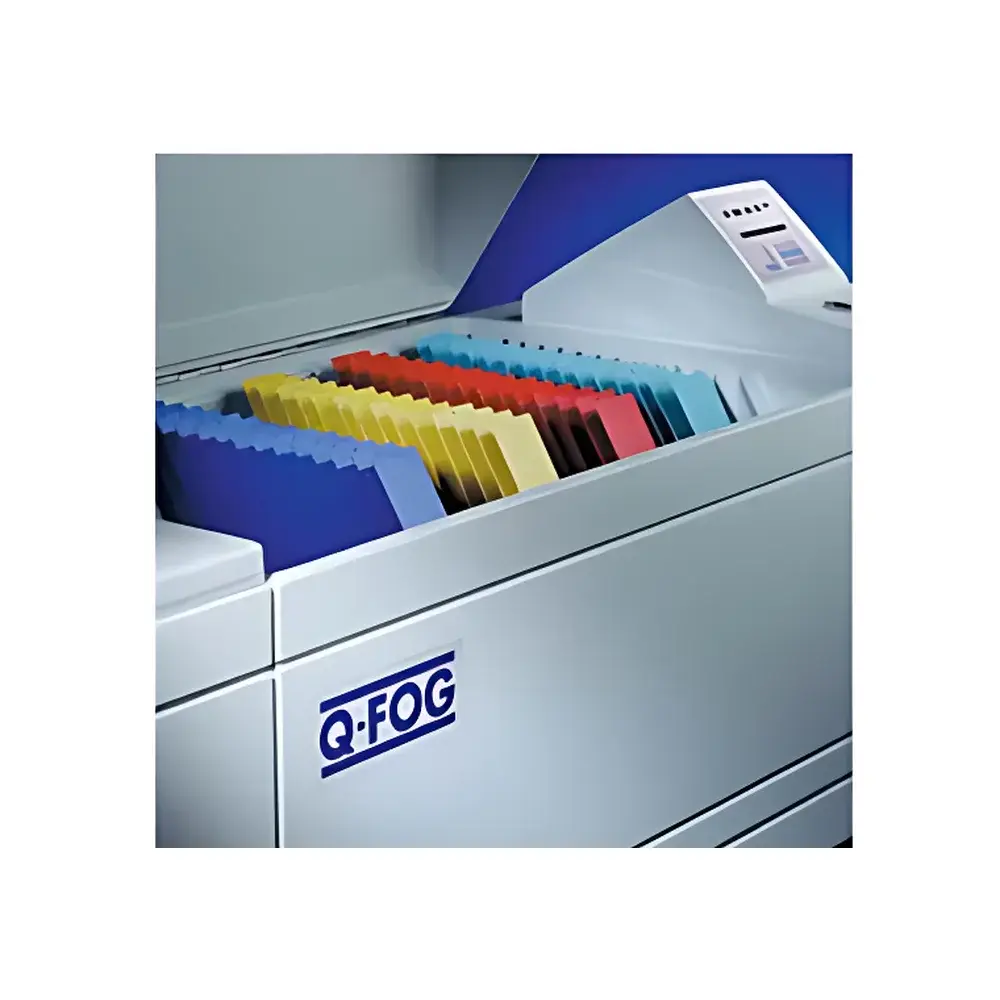
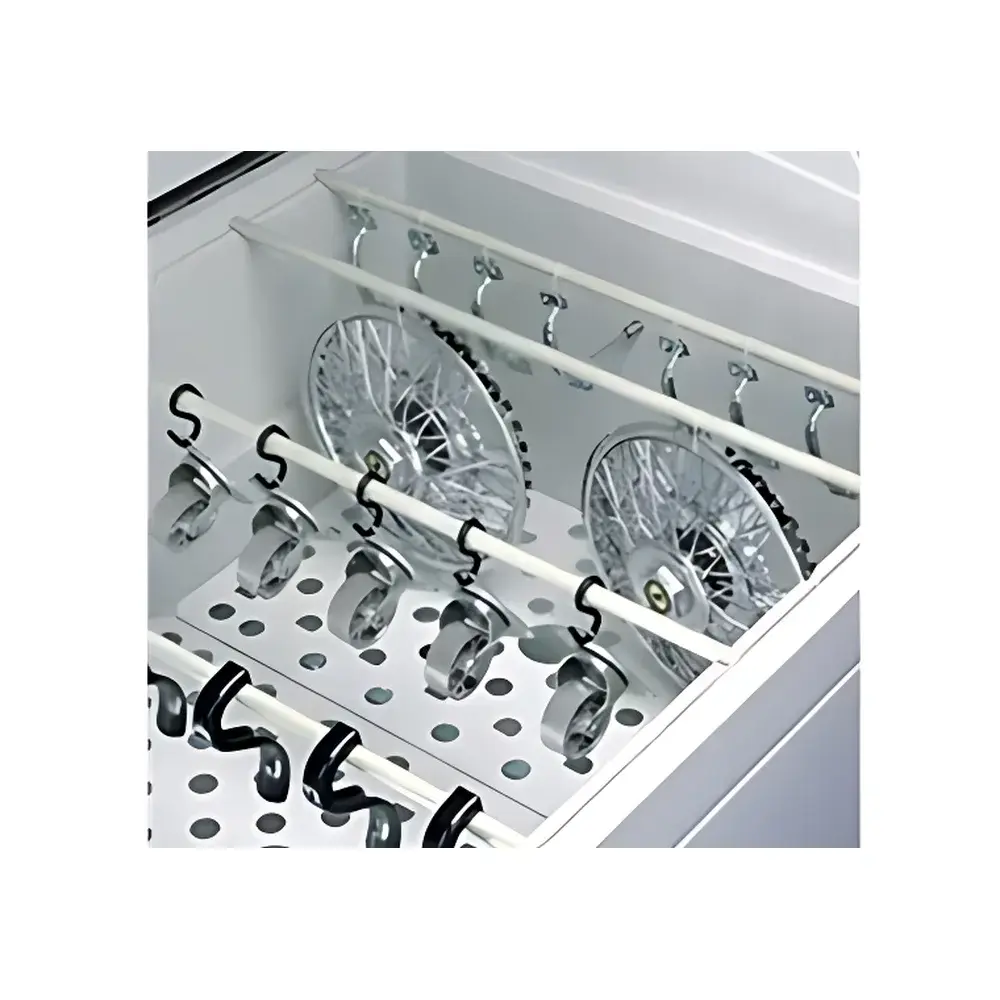
The Q-FOG CCT accommodates standard test specimens up to 100 × 300 mm (SSP/CCT 600) or 75 × 150 mm (SSP/CCT 1100), with modular rack systems supporting up to 160 specimen slots (CCT 1100). It is validated for use with deionized water (≥50 kΩ·cm resistivity, <8 ppm TDS) and ASTM D1193 Type IV reagent-grade sodium chloride solutions. The chamber meets stringent regulatory requirements for GLP-compliant corrosion testing, including full traceability of cycle parameters, time-stamped event logs, and user-accessible calibration records. It supports FDA 21 CFR Part 11–compatible data archiving when integrated with Q-Lab’s optional Q-FOG Data Logger software suite.
Software & Data Management
The embedded microprocessor-based controller stores up to 100 customizable test programs, each defining sequence timing, temperature ramps, humidity setpoints, and spray duration. All operational parameters—including chamber temperature, relative humidity, spray status, and alarm history—are logged at user-defined intervals (1–60 minute resolution) and exportable via USB or Ethernet. Optional Q-FOG Data Logger software provides CSV/Excel-compatible reports, graphical trend analysis, and secure database storage compliant with ISO/IEC 17025 documentation standards. Audit trails include operator ID, timestamped parameter changes, and firmware revision history—supporting IATF 16949 and VDA 6.3 process validation requirements.
Applications
The Q-FOG CCT is routinely deployed in R&D laboratories and quality assurance departments for accelerated evaluation of electroplated coatings, organic paint systems, galvanized substrates, and aluminum alloys. Its ability to replicate complex field exposure profiles makes it indispensable for validating corrosion resistance per OEM protocols such as Volkswagen PV 1210, Volvo VCS 1027.149, Renault D17-2028, and SAE J2334. In addition to automotive applications, it supports compliance testing for marine hardware (ISO 16701), architectural cladding (EN 13523-8), and electronic enclosures subjected to coastal or industrial atmospheres (IEC 60068-2-52).
FAQ
What standards does the Q-FOG CCT support?
ASTM B117, ASTM G85 (Annexes A1–A5), ISO 9227, DIN 50021, BS 3900 F4/F9, GMW 14872, Ford CETP 00.00-L-467, VW PV 1210, and over 40 additional OEM and international specifications.
Is deionized water required for operation?
Yes—minimum resistivity of 50 kΩ·cm and total dissolved solids <8 ppm are mandatory for steam generation and sensor reliability.
Can the Q-FOG CCT perform Prohesion testing?
Yes—the CCT model fully supports Prohesion cycles (alternating NaCl fog and dry-off phases) in addition to high-humidity CCT sequences.
What maintenance is required for long-term reliability?
Monthly inspection of peristaltic tubing, quarterly cleaning of steam generator elements, biannual verification of temperature/humidity sensors, and annual compressed air filter replacement per Q-Lab’s Maintenance Schedule M-104.
Does the system include remote monitoring capabilities?
Standard Ethernet port enables integration with facility SCADA systems; optional Q-FOG Cloud Connect module provides encrypted web-based access to real-time chamber status and historical logs.



