
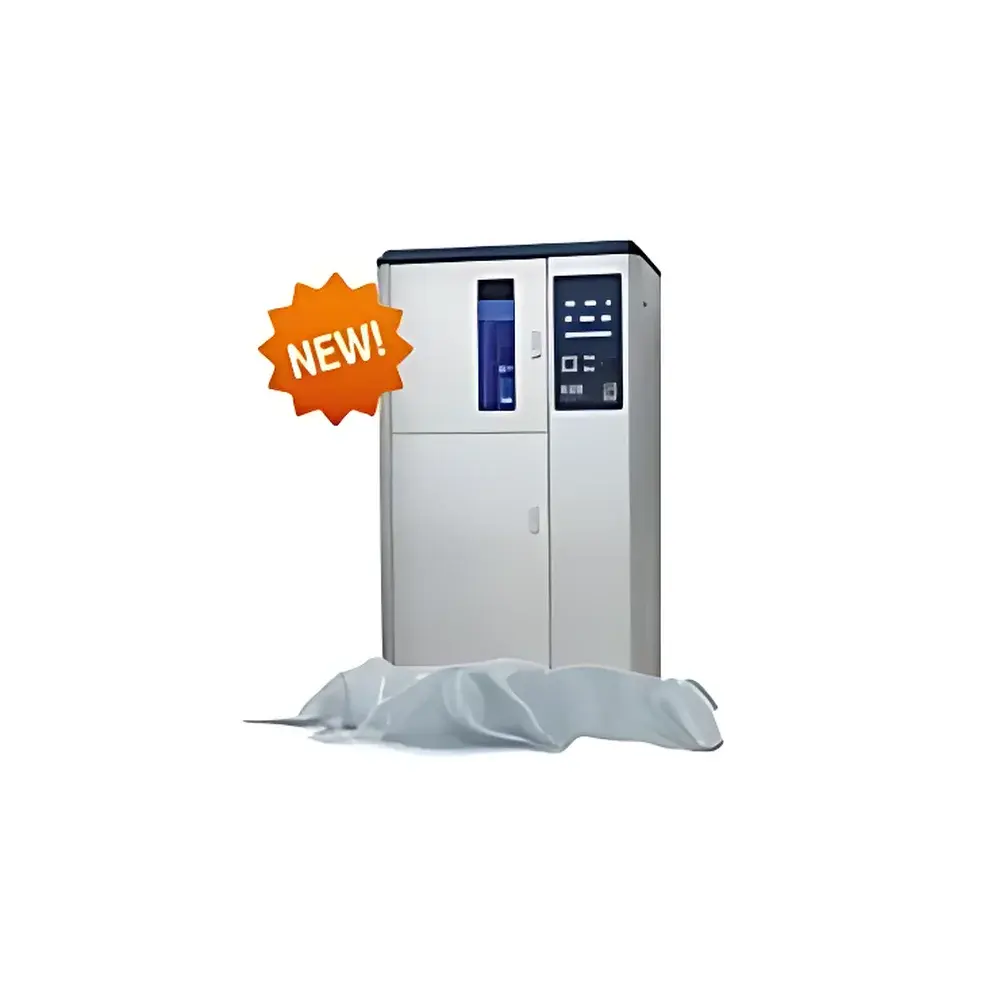
Q-Lab Xe-2-H Xenon Arc Weathering Test Chamber
| Brand | Q-Lab |
|---|---|
| Origin | USA |
| Model | Xe-2-H |
| Lamp Power | 1800 W (air-cooled xenon lamp) |
| Temperature Range | Ambient to 90°C (chamber air) |
| Humidity Range | 10–95% RH (controlled) |
| Black Panel Temperature Range | 35–110°C |
| Compliance | ASTM G155, ISO 4892-2, AATCC TM16, AATCC TM169, ISO 105-B02, IEC 60068-2-9, JIS D 0205, GB/T 16422.2 |
| Software Interface | Multi-language (English, French, Spanish, Italian, German) with Ethernet data logging |
| Calibration Support | NIST-traceable CT202 black panel thermometer & CR20 radiometer |
| Lamp Life | ~1500 hours |
Overview
The Q-Lab Xe-2-H Xenon Arc Weathering Test Chamber is an entry-level, drum-style accelerated weathering instrument engineered for precision simulation of full-spectrum solar radiation—including UV, visible, and near-infrared wavelengths—under controlled temperature, humidity, and irradiance conditions. Based on the well-established Q-SUN platform, the Xe-2-H employs a single 1800 W air-cooled xenon arc lamp to replicate natural sunlight more accurately than fluorescent UV or metal halide sources. Its optical system, combined with interchangeable filter combinations (e.g., Daylight-Q/B, Window Glass-Q/B), enables compliance with major international standards for photostability and weathering evaluation across polymers, coatings, textiles, automotive interiors, and architectural sealants. Unlike outdoor exposure—where samples receive only intermittent peak irradiance—the Xe-2-H delivers continuous, reproducible irradiance equivalent to midday summer sun (e.g., 0.35 W/m² @ 340 nm), enabling highly accelerated aging studies while maintaining spectral fidelity and environmental realism.
Key Features
- Single 1800 W air-cooled xenon lamp with ~1500-hour operational life—reducing cooling infrastructure requirements and long-term maintenance costs versus water-cooled alternatives
- Integrated humidity control (10–95% RH) and chamber air temperature regulation (ambient to 90°C), synchronized with black panel temperature monitoring (35–110°C)
- Optional water spray system (available on Xe-2-HS variant) for simulating thermal shock and surface wetting effects during cyclic exposure
- Drum-style sample carrier accommodating up to 52 standard 75 × 150 mm specimens or flexible custom fixtures; optimized for uniform irradiance distribution and minimal edge shadowing
- Intuitive multi-language touchscreen interface (English, French, Spanish, Italian, German) with real-time parameter display, programmable test cycles, and alarm-triggered event logging
- Built-in Ethernet port supporting automated data export, remote status monitoring, and integration into centralized lab information management systems (LIMS)
- Self-diagnostic firmware with predictive service alerts, lamp hour tracking, and fault-code reporting for GLP-compliant operation
- AUTO-CAL™ assisted calibration workflow—enabling rapid verification of black panel temperature sensors and irradiance sensors without external tools
Sample Compatibility & Compliance
The Xe-2-H supports flat, rigid, or semi-flexible specimens up to 3 mm thickness and 150 mm width, including textile swatches, painted panels, plastic sheets, elastomeric sealants, and coated substrates. Its design conforms to the geometric and irradiance uniformity requirements of ASTM G155 (Standard Practice for Operating Xenon Arc Light Apparatus for Exposure of Non-Metallic Materials) and ISO 4892-2 (Plastics — Methods of Exposure to Laboratory Light Sources — Part 2: Xenon-Arc Lamps). The instrument satisfies testing protocols specified in AATCC TM16 (Colorfastness to Light), AATCC TM169 (Weather Resistance of Textiles), ASTM D2565 (Plastics—Xenon-Arc Exposure), ASTM D3424 (Printing Inks—Lightfastness), and multiple ASTM C-series standards for sealant durability (C1257, C1442, C1519, C732, C734, C793). It also aligns with regulatory expectations for stability-indicating methods under ICH Q1B and supports audit-ready documentation for FDA 21 CFR Part 11–compliant environments when paired with validated software extensions.
Software & Data Management
Embedded firmware provides real-time monitoring of irradiance (W/m² @ 340 nm or 300–400 nm), chamber air temperature, relative humidity, and black panel temperature—with configurable setpoints, ramp rates, and dwell times per test phase. All operational parameters and sensor readings are timestamped and stored internally (≥30 days of continuous logging) and transmitted via Ethernet to external servers or LIMS platforms using standard TCP/IP protocols. Calibration records—including CT202 black panel thermometer and CR20 radiometer verification logs—are retained with NIST-traceable metadata. Q-Lab’s optional Q-Sun Software Suite (sold separately) enables advanced test method scripting, statistical trend analysis, pass/fail thresholding, and PDF report generation compliant with ISO/IEC 17025 documentation requirements. All calibration services are performed in Q-Lab’s A2LA-accredited laboratory (ISO/IEC 17025:2017) with direct traceability to NIST reference standards.
Applications
- Evaluation of color shift, chalking, cracking, gloss loss, and tensile degradation in automotive trim, exterior coatings, and polymer composites
- Assessment of photostability and fading resistance in dyed textiles, printed fabrics, and interior upholstery materials per AATCC TM16 and ISO 105-B02
- Accelerated durability screening of silicone, polyurethane, and polysulfide sealants used in façade and glazing systems (ASTM C1519, C1442)
- Stability testing of medical device packaging films, pharmaceutical primary containers, and UV-sensitive active ingredients
- Qualification of outdoor signage, photovoltaic encapsulants, and agricultural films subjected to prolonged solar exposure
- Correlation studies between laboratory xenon exposure and natural outdoor aging in diverse climatic zones (e.g., Arizona, Florida, Japan)
FAQ
What lamp type does the Xe-2-H use, and how is it cooled?
The Xe-2-H uses a single 1800 W air-cooled xenon arc lamp. No external water chiller is required, simplifying installation and reducing total cost of ownership.
Does the Xe-2-H support humidity control?
Yes—it features integrated humidity control ranging from 10% to 95% RH, fully synchronized with chamber temperature and irradiance profiles.
Can the Xe-2-H perform water spray cycles?
The base Xe-2-H model does not include water spray. That function is available exclusively on the Xe-2-HS variant.
How often must the irradiance and black panel sensors be calibrated?
Q-Lab recommends quarterly user verification using the CT202 thermometer and CR20 radiometer, with annual return-to-factory recalibration at Q-Lab’s ISO/IEC 17025-accredited lab.
Is the Xe-2-H compliant with FDA 21 CFR Part 11 requirements?
The instrument’s core firmware does not include electronic signature or audit trail functionality by default; however, when operated with validated Q-Sun Software Suite and appropriate procedural controls, it can support Part 11–compliant workflows in regulated environments.
What is the typical service life of the xenon lamp?
Under standard operating conditions (0.35 W/m² @ 340 nm, continuous mode), the lamp maintains stable output for approximately 1500 hours before requiring replacement.
Are filter options interchangeable between Xe-1 and Xe-2 models?
Yes—Q-Lab’s daylight, window glass, and extended UV filters are mechanically and optically compatible across all current Q-SUN xenon chamber platforms.



