
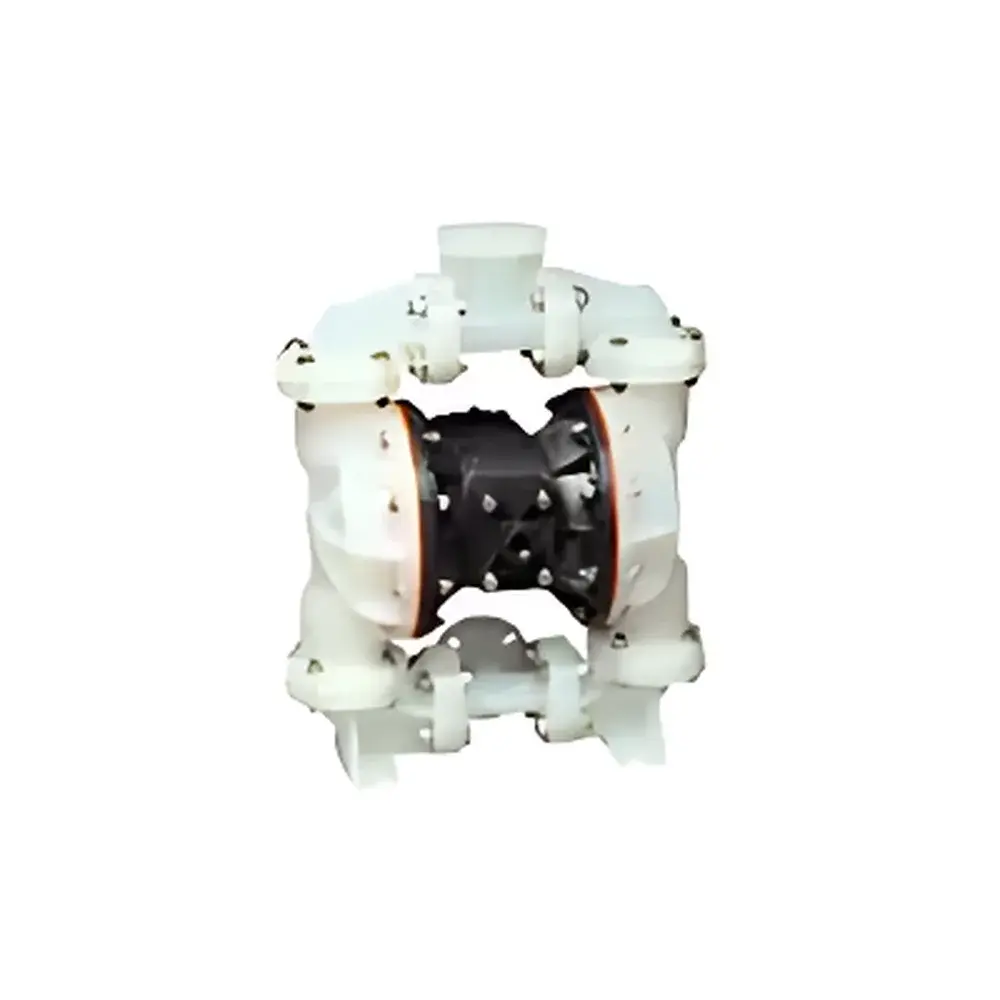
Warren Rupp SANDPIPER Pneumatic Diaphragm Pump – Standard Non-Metallic Ball-Valve Model
| Brand | Warren Rupp |
|---|---|
| Origin | USA |
| Product Type | Pneumatic Double-Diaphragm Pump (AODD) |
| Construction | Non-Metallic Wetted Parts |
| Valve Type | Ball Valve |
| Materials | Polypropylene / Kynar® (PVDF) / Conductive Acetal Housing |
| Certifications | ATEX, CSA, UL, CE, USDA-FSIS, FDA 21 CFR Part 11 Compliant Software Interface Available |
| Duty Cycle | Intermittent & On-Demand Operation |
| Dry-Run Capable | Yes |
| Self-Priming | Yes |
| Explosion-Proof Design | Yes |
| Flow Rate Range | Up to 120 GPM (454 L/min) |
| Max. Air Inlet Pressure | 125 PSI (8.6 bar) |
| Max. Fluid Temperature | 150°F (65°C) |
| Particle Handling | Suspended Solids ≤ 0.25" (6.4 mm) |
| Viscosity Range | Up to 20,000 cP |
Overview
The Warren Rupp SANDPIPER Pneumatic Diaphragm Pump – Standard Non-Metallic Ball-Valve Model is an air-operated double-diaphragm (AODD) pump engineered for reliable, maintenance-free transfer of aggressive, abrasive, shear-sensitive, or high-viscosity fluids in life science, pharmaceutical, bioprocessing, and laboratory-scale cryogenic circulation support applications. Unlike centrifugal or peristaltic pumps, this AODD design operates on positive displacement via reciprocating elastomeric diaphragms actuated by compressed air—eliminating mechanical seals, shafts, or rotating parts in contact with the process fluid. Its bolted, modular construction ensures full accessibility for inspection and rapid component replacement. The pump’s inherent dry-run capability, self-priming performance (up to 21 ft / 6.4 m suction lift), and zero-stall operation under dead-head conditions make it suitable for intermittent dosing, recirculation loops, and low-flow precision delivery in controlled-environment laboratories.
Key Features
- Bolted-frame architecture enabling full disassembly without specialized tools—critical for cleaning validation and residue-free changeover in GMP-compliant labs.
- Non-metallic wetted path constructed from chemically inert polymers: polypropylene (PP), Kynar® PVDF, or conductive acetal—resistant to strong acids, caustics, solvents, and oxidizers commonly used in cold-chain reagent preparation.
- Ball-valve configuration with replaceable TPE or PTFE seats and balls—optimized for low-clogging handling of slurries, cell suspensions, glycol-based cryogenic heat-transfer fluids, and particulate-laden media up to 6.4 mm diameter.
- Explosion-proof pneumatic actuation compliant with ATEX II 2 GD, CSA C22.2 No. 157, UL 508, and CE Machinery Directive—certified for Zone 1/21 hazardous areas where flammable vapors or dust may be present near low-temperature storage units or solvent-handling stations.
- No mechanical seals or lubricants required—eliminates risk of contamination in sterile or ultra-pure fluid circuits supporting cryogenic circulators or -80°C freezer coolant loops.
- Adjustable air supply control enables precise modulation of flow rate and discharge pressure without valves or bypass lines—ideal for integration into automated temperature-control systems requiring variable-speed fluid recirculation.
Sample Compatibility & Compliance
This pump is validated for use with a broad spectrum of life science-relevant fluids: aqueous buffers (pH 1–14), ethanol/water cryoprotectant mixtures, propylene glycol-based secondary coolants, enzyme solutions, microbial culture broths, and low-abrasion biological slurries. All elastomers—including TPE diaphragms and PTFE check valves—meet FDA 21 CFR §177.2600 for indirect food contact and USDA-FSIS acceptance for pharmaceutical-grade processing environments. Material certifications include USP Class VI cytotoxicity testing and ISO 10993-5 extractables profiling. The pump’s non-metallic construction avoids galvanic corrosion in mixed-fluid thermal management systems and complies with ASTM F2717-19 for integrity of single-use fluid paths in biomanufacturing support infrastructure.
Software & Data Management
While the base model operates pneumatically without embedded electronics, optional digital air control modules integrate with LabVIEW™, OPC UA, or Modbus TCP protocols for closed-loop flow regulation in automated cryogenic circulator systems. Audit-trail-capable firmware (FDA 21 CFR Part 11 compliant) logs air pressure setpoints, cycle counts, runtime hours, and maintenance alerts—supporting GLP/GMP documentation requirements. Remote monitoring interfaces enable predictive maintenance scheduling based on diaphragm flex-cycle accumulation and air-consumption drift analysis.
Applications
- Recirculation of heat-transfer fluids in laboratory-scale cryogenic constant temperature circulators operating between –80°C and +150°C.
- Transfer of pH-sensitive or oxygen-sensitive reagents into low-temperature storage vessels without cavitation or foaming.
- Dosing of viscous cryoprotectants (e.g., DMSO/glycerol blends) into biobanking workflows with minimal shear degradation.
- Backflushing of chilled water loops in ultra-low temperature freezers to prevent biofilm accumulation in stagnant zones.
- Safe handling of flammable solvents (e.g., acetone, isopropanol) during cold trap regeneration or solvent recovery in vacuum systems.
- Integration into ISO Class 5/7 cleanroom fluid distribution skids for sterile buffer preparation and cold-chain logistics support.
FAQ
Is this pump compatible with ultra-low temperature heat-transfer fluids such as ethylene glycol/water mixtures at –40°C?
Yes—the non-metallic materials retain flexibility and sealing integrity down to –40°C; however, fluid viscosity must remain below 20,000 cP at operating temperature to ensure reliable valve actuation.
Can it be installed vertically or submerged in coolant reservoirs?
It is rated for above-liquid installation only; submersion is not permitted due to air exhaust routing and lack of IP68 certification.
What maintenance intervals are recommended for GMP environments?
Diaphragms and ball valves should be replaced every 12 months or after 10,000 cycles—whichever occurs first—with full traceability documentation provided per ISO 9001 calibration records.
Does the pump meet FDA requirements for direct contact with pharmaceutical intermediates?
While wetted components comply with FDA 21 CFR §177.2600, direct product contact requires user-specific validation per ICH Q5C and USP ; no pre-certified drug-product contact claim is made by the manufacturer.
Is compressed air quality specified for laboratory use?
Yes—ISO 8573-1 Class 2:2:2 (oil-free, ≤0.1 µm particles, dew point –40°C) is required to prevent diaphragm swelling or valve sticking in humidity-controlled lab spaces.




