
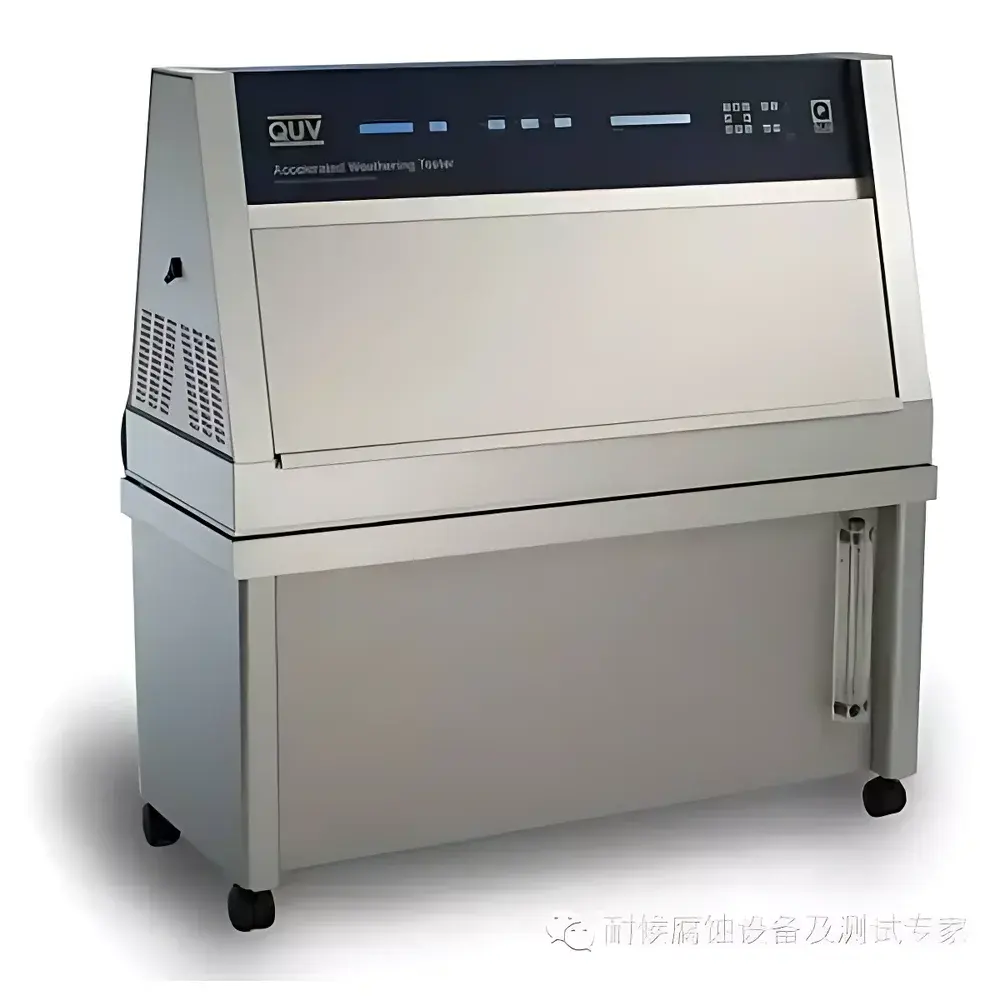
Q-LAB QUV Accelerated UV Weathering Tester
| Brand | Q-LAB |
|---|---|
| Origin | USA |
| Manufacturer Type | Authorized Distributor |
| Product Category | Imported |
| Model | QUV |
| Pricing | Upon Request |
| Exposure Time | Programmable |
| Irradiance Range | Adjustable |
| Lamp Power | Adjustable |
| Humidity Range | Programmable |
| Black Panel Temperature Range | Consult Technical Support |
| Chamber Temperature Range (°C) | Consult Technical Support |
| UV Wavelength Range | 320–400 nm |
| Internal Chamber Dimensions (L×W×H) | Consult Technical Support |
Overview
The Q-LAB QUV Accelerated UV Weathering Tester is an industry-standard benchtop environmental test chamber engineered for rapid, reproducible simulation of solar ultraviolet radiation and moisture-induced degradation mechanisms. Based on the fundamental principles of photochemical degradation—where short-wavelength UV photons (320–400 nm) induce bond scission in polymers, coatings, and organic pigments—the QUV system delivers controlled, repeatable exposure conditions aligned with internationally recognized accelerated weathering protocols including ASTM G154, ISO 4892-3, and SAE J2020. Unlike full-spectrum xenon arc testers, the QUV focuses specifically on the most damaging portion of terrestrial sunlight—the UV-B and UV-A bands—enabling high-throughput screening of material resistance to photolysis, chalking, gloss loss, color shift, and microcracking. Its proprietary condensation cycle replicates nocturnal dew formation through controlled water vapor saturation and surface cooling, while optional spray functionality introduces thermal shock and surface erosion dynamics observed under real-world diurnal cycling.
Key Features
- Standardized UV lamp arrays with spectral output traceable to NIST-calibrated reference standards, ensuring inter-laboratory comparability.
- Integrated black panel thermometer (BPT) monitoring with PID-controlled heating elements for precise specimen surface temperature regulation during irradiation.
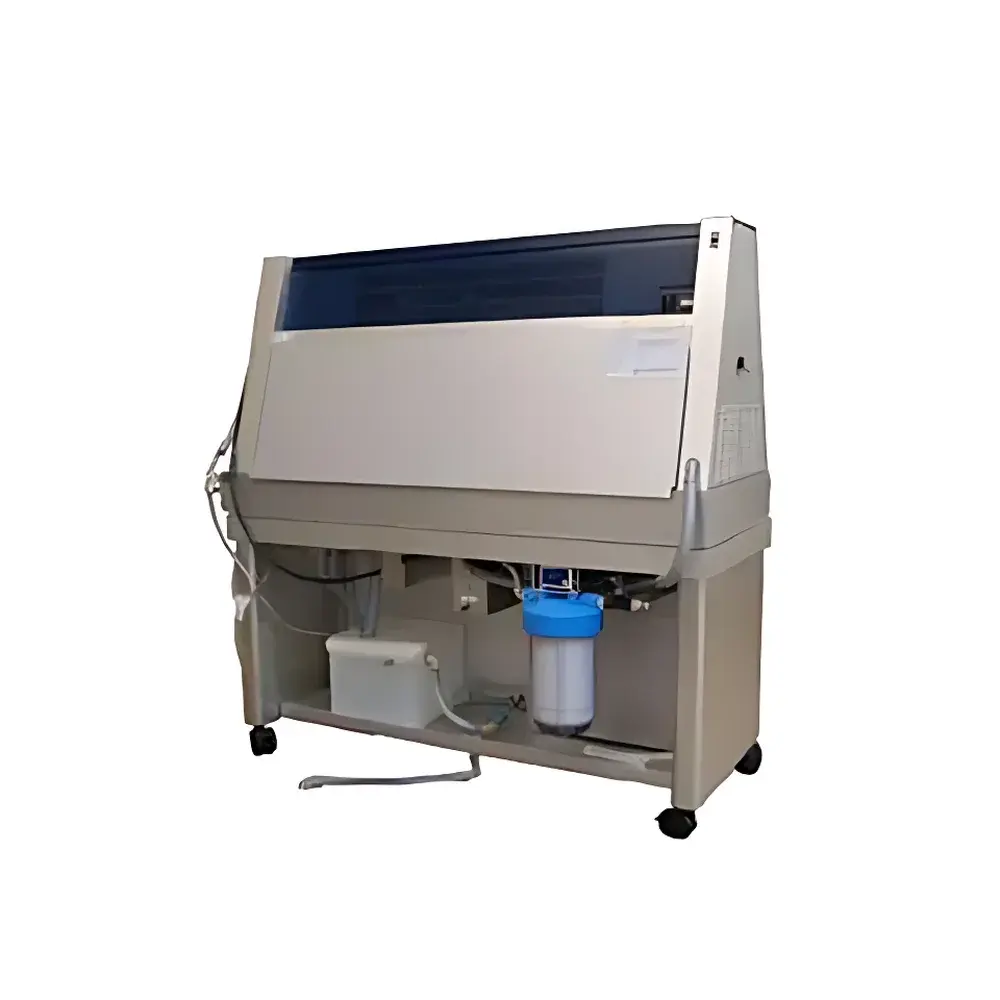
- Self-contained condensation system utilizing ambient tap water—no external chiller or humidifier required—designed for low-maintenance operation and extended service intervals.
- Externally mounted water level indicator and bottom-mounted heater element minimize scale buildup and maximize heater longevity (>1600 h lamp life achievable with irradiance calibration).
- Front-accessible, upward-swinging door architecture optimizes workspace ergonomics and reduces laboratory footprint (typical unit dimensions: 140 × 60 × 120 cm; net weight: 80 kg).
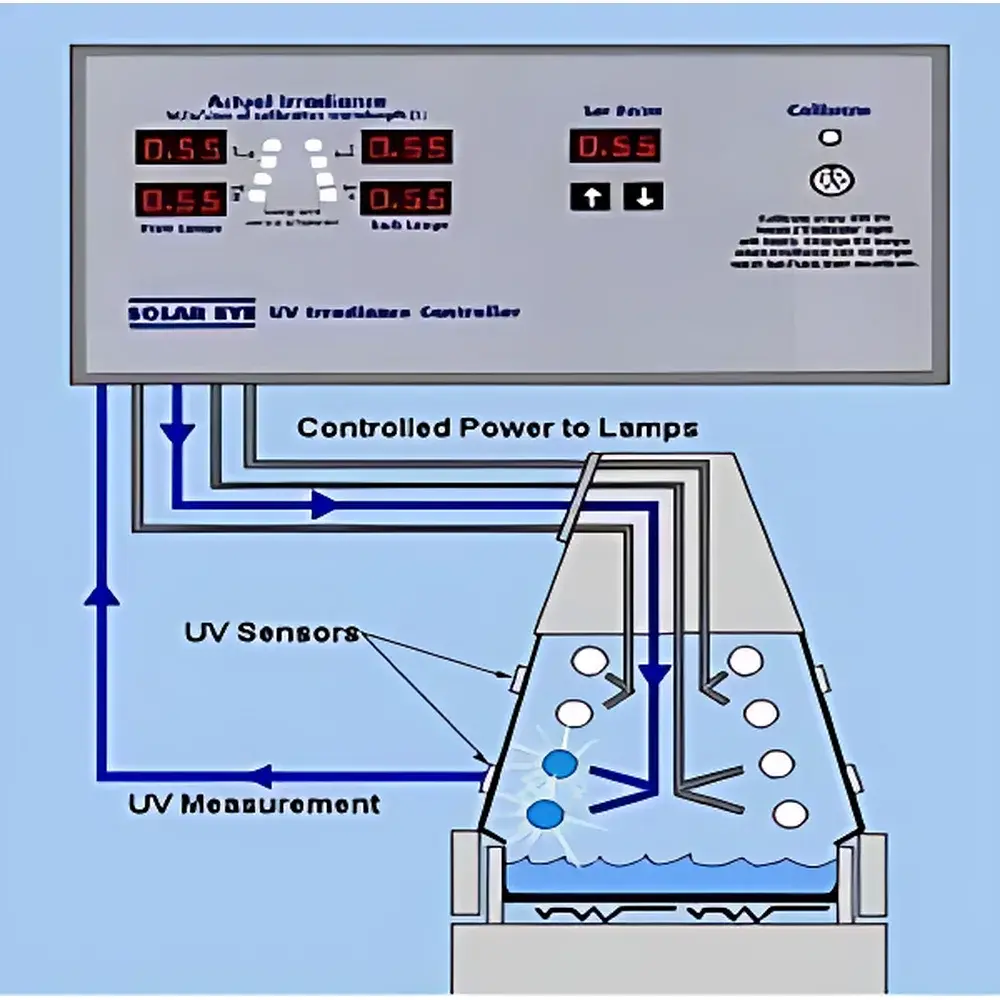
- Modular design supports three operational configurations: Standard (condensation only), Irradiance-Controlled (with calibrated UV sensor feedback loop), and Spray (integrated water nozzle array for thermal shock simulation).
- Intuitive programmable controller with password-protected parameter locking, alarm logging, and real-time irradiance/temperature/humidity trend display.
- Compliance-ready firmware architecture supporting audit trails, user access levels, and electronic signature capability per FDA 21 CFR Part 11 requirements when paired with validated software packages.
Sample Compatibility & Compliance
The QUV accommodates flat-panel specimens up to 75 mm thick with adjustable mounting fixtures compatible with standard ASTM D6675, ISO 11341, and GB/T 14522 test substrates. Sample racks are constructed from corrosion-resistant stainless steel (AISI 316) and feature quick-release clamps for rapid throughput. All models meet CE marking requirements for electromagnetic compatibility (EMC Directive 2014/30/EU) and low-voltage safety (LVD Directive 2014/35/EU). The system operates within Class II laboratory environments per ISO/IEC 17025:2017 accreditation guidelines when installed per Q-LAB’s site preparation specifications—including dedicated grounded 230 V ±10% single-phase supply (≥3 kVA stabilized power recommended), ambient temperature control (21–27 °C), and non-corrosive ambient air (no salt fog or acidic gas exposure permitted adjacent to unit).
Software & Data Management
Data acquisition and exposure protocol management are supported via Q-LAB’s proprietary SOLAR EYE™ software (v5.2+), which provides automated calibration validation, irradiance drift compensation, and exportable CSV/Excel reports compliant with GLP documentation standards. Raw sensor data—including real-time UV irradiance (W/m² @ 340 nm), black panel temperature (°C), chamber humidity (%RH), and spray cycle timestamps—is timestamped with millisecond resolution and stored locally with SHA-256 hash verification. Optional network-enabled versions support secure HTTPS-based remote monitoring and integration into enterprise LIMS platforms via RESTful API endpoints. All firmware updates undergo rigorous regression testing against ASTM G151–22 repeatability benchmarks prior to release.
Applications
The QUV serves as a primary qualification tool across aerospace OEM supply chains (e.g., Boeing D6-17487, Airbus AITM 1-0005), automotive Tier-1 material validation (SAE J2412, GMW14124), architectural coating durability assessment (AAMA 2605), and medical device polymer stability testing (ISO 10993-12). It is routinely employed to evaluate UV stabilizers in polyolefins, hydrolytic resistance of aliphatic polyurethanes, yellowing kinetics of optical adhesives, and adhesion retention of pressure-sensitive tapes after prolonged UV/humidity cycling. Its deterministic acceleration factor—typically 3–5× natural exposure depending on geographic latitude and material class—enables predictive lifetime modeling when correlated with field exposure data per ASTM G164 statistical methodology.
FAQ
What UV spectral distribution does the QUV replicate?
The QUV employs fluorescent UV-B (QUV/B) or UV-A (QUV/A) lamps conforming to ASTM G154 spectral classifications, delivering peak irradiance at 313 nm or 340 nm respectively—optimized for accelerated degradation of different polymer chemistries.
Can the QUV comply with ISO 4892-3 Cycle 1 and Cycle 2?
Yes—standard QUV models support both irradiance-controlled and time-controlled modes required for ISO 4892-3 Annex A and B procedures, with optional irradiance calibration kits traceable to NIST SRM 2242.
Is distilled or deionized water mandatory for condensation operation?
No—potable tap water (pH 6.0–8.0, 2–80 psi pressure) is fully acceptable; however, DI water reduces maintenance frequency by minimizing mineral deposits in the water reservoir.
How frequently must the UV sensors be recalibrated?
Q-LAB recommends annual calibration using a certified irradiance meter (e.g., Q-LAB UV Calibrator Model UC-10); field verification checks should be performed before each critical test campaign.
Does the QUV require dedicated exhaust ventilation?
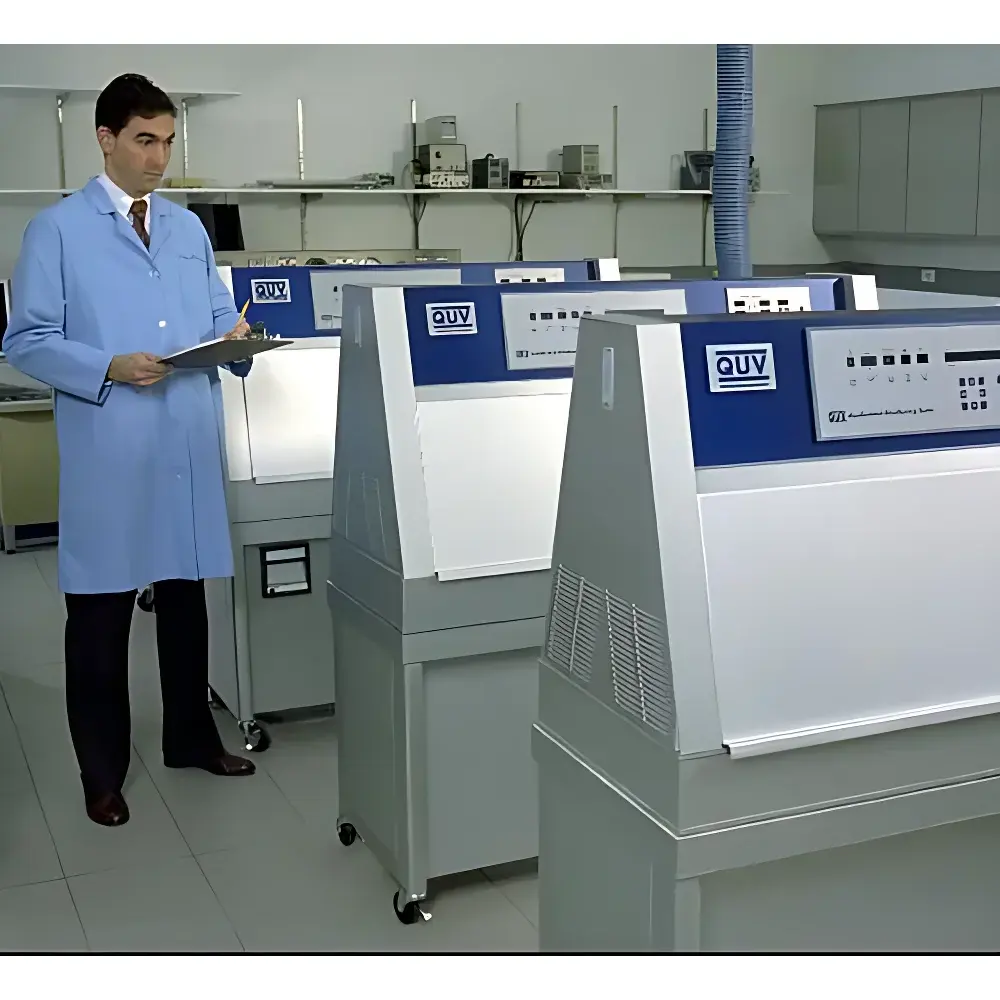
No—unlike xenon arc chambers, the QUV emits negligible ozone or VOCs and operates safely in standard air-conditioned laboratories without forced exhaust ducting.



