
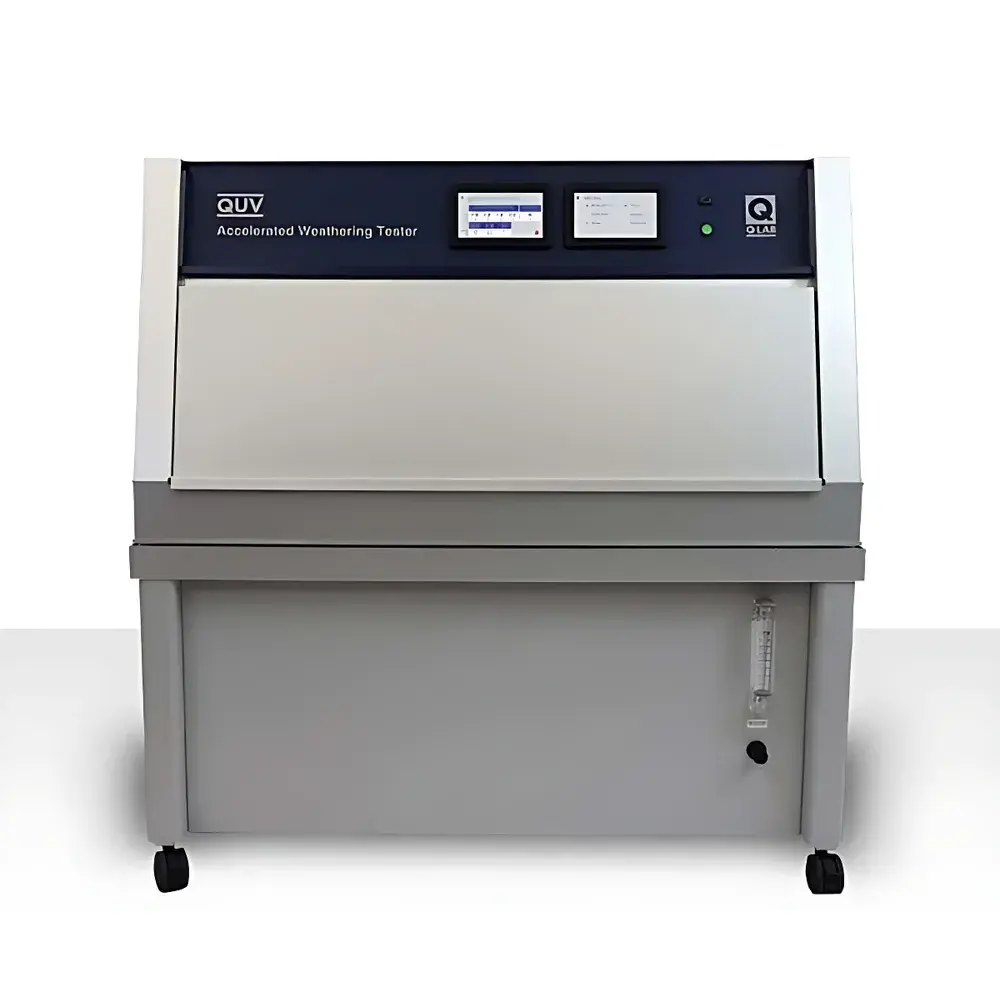
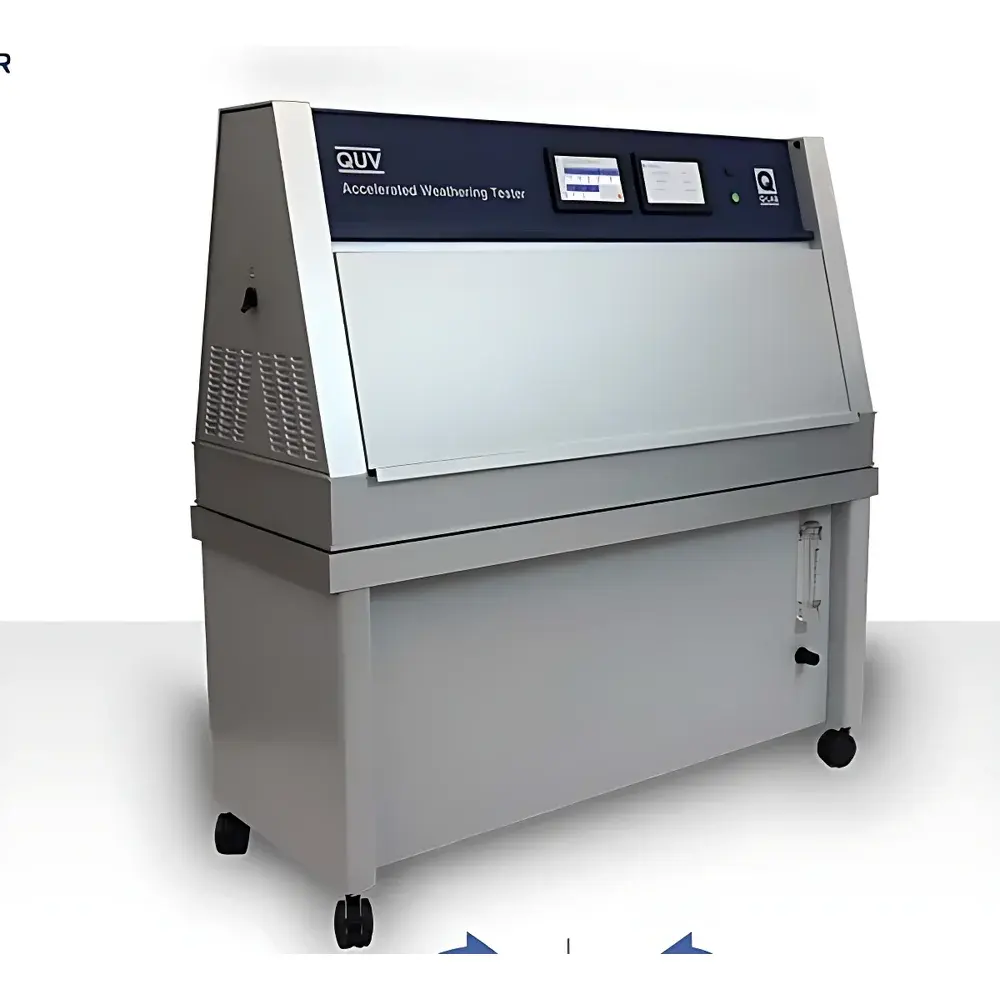
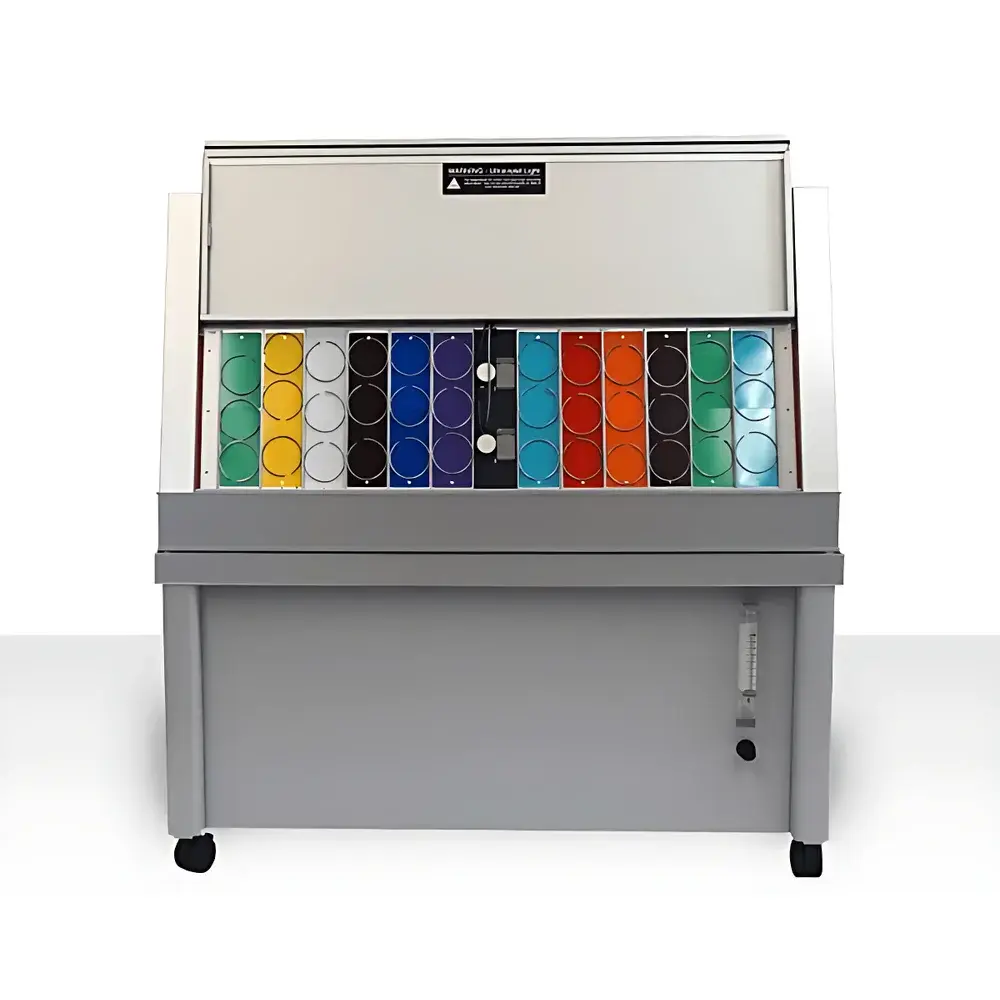
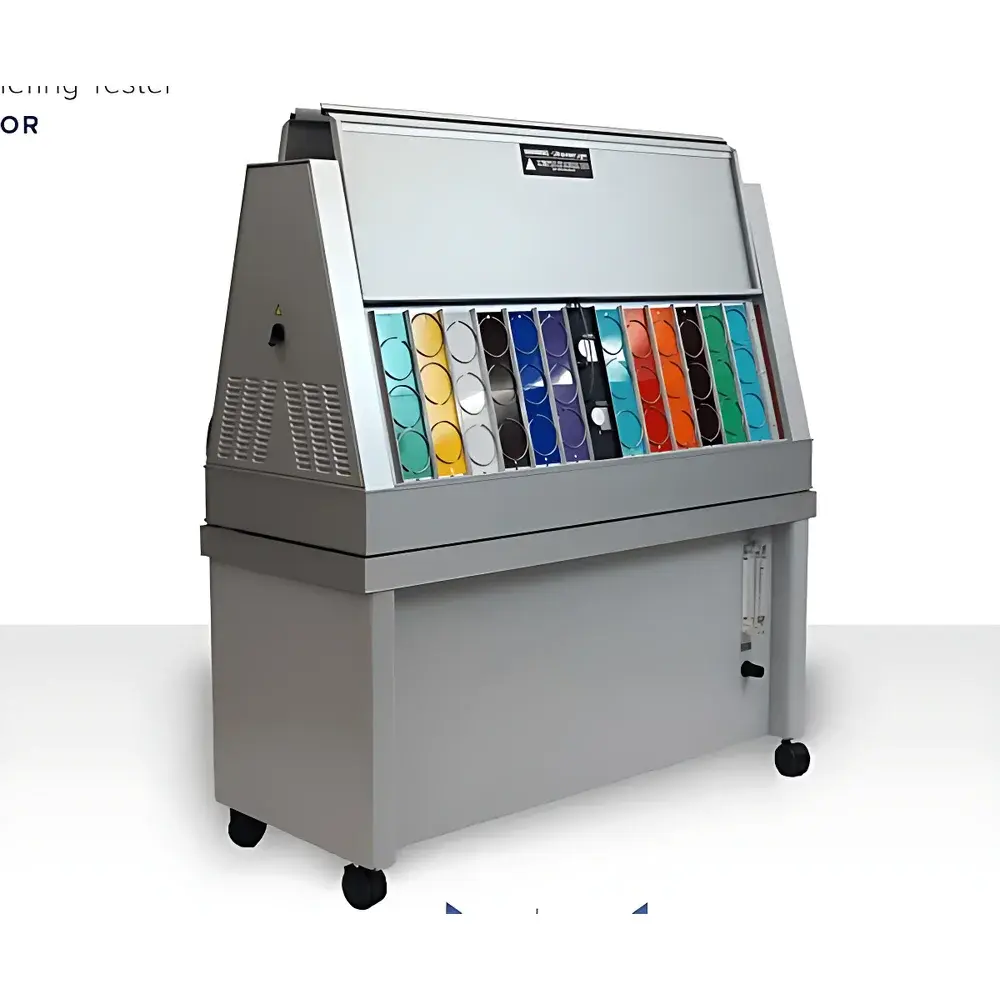
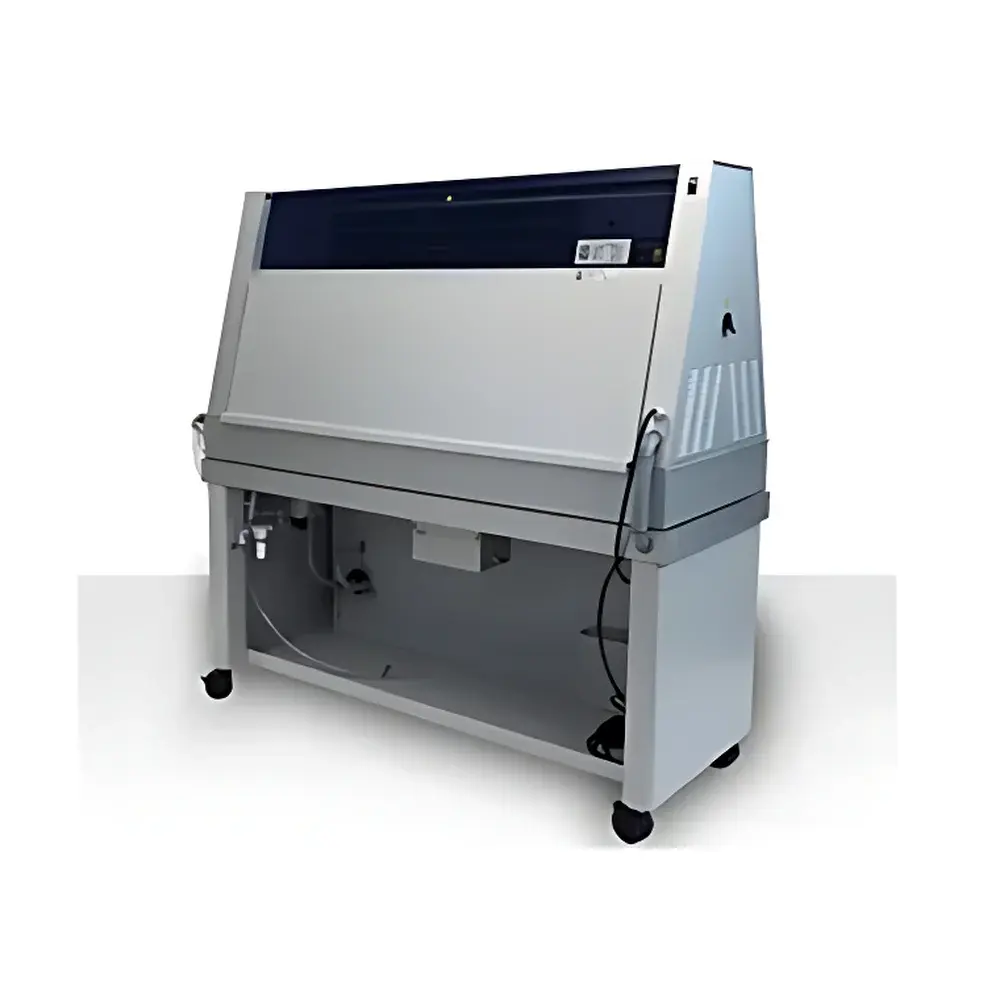
Q-LAB QUV/se, QUV/spray, QUV/cw, QUV/uvc Advanced UV Accelerated Weathering Test Chambers
| Brand | Q-LAB |
|---|---|
| Origin | USA |
| Model Variants | QUV/se, QUV/spray, QUV/cw, QUV/uvc |
| Lamp Power | 1800 W |
| Humidity Range | ≥95% RH |
| Black Panel Temperature Range | 45–80 °C |
| UV Wavelength | 340 nm (UVA-340) |
| Chamber Dimensions (L×W×H) | 137 × 53 × 135 cm |
| Test Duration Capability | Up to 5000 hours |
| Compliance | ASTM G154, ASTM G151, ISO 4892-3, JIS D0205, SAE J2020, ISO 11507, IEC 60335, AATCC TM186, and others |
Overview
The Q-LAB QUV series represents the globally recognized benchmark in accelerated UV weathering testing. Engineered for precision and reproducibility, these chambers employ fluorescent ultraviolet (UV) lamps—primarily UVA-340, UVB-313EL, UVA-351, or UVC-254—to simulate the most photochemically aggressive spectral regions of natural sunlight. Unlike broad-spectrum xenon arc systems, the QUV platform focuses on controlled short-wave UV irradiation (295–400 nm), where photodegradation of polymers, coatings, adhesives, and textiles is most pronounced. The core test methodology alternates between controlled UV exposure and moisture conditioning—either via condensation (mimicking dew formation) or water spray (simulating thermal shock and mechanical erosion). This cyclic stress protocol accelerates failure mechanisms such as chalking, cracking, gloss loss, color shift, and embrittlement—enabling laboratory-based prediction of multi-year outdoor performance in days or weeks. All QUV models are designed and validated to meet stringent international standards for accelerated exposure testing, supporting regulatory submissions, material qualification, and comparative durability benchmarking.
Key Features
- Three distinct moisture simulation modes: condensation-only (QUV/se, QUV/basic, QUV/cw), combined condensation + water spray (QUV/spray), or UVC-specific irradiation without moisture (QUV/uvc)
- SOLAR EYE irradiance control system (standard on QUV/se, QUV/spray, QUV/cw): closed-loop feedback regulation maintains setpoint UV intensity (e.g., 0.68 W/m²/nm at 340 nm) across lamp aging and voltage fluctuations
- Black panel temperature control (45–80 °C) with independent monitoring, ensuring accurate surface temperature replication during UV exposure
- High-reliability 1800 W UV lamp arrays with stable spectral output over lifetime; lamp types include UVA-340 (sunlight-critical UV), UVB-313EL (enhanced degradation), UVA-351 (through-glass), and UVC-254 (germicidal irradiation)
- Intuitive third-generation touchscreen controller with multilingual interface (English, French, Spanish, German, Italian, Japanese, Korean, Chinese), programmable storage for up to 13 test cycles, and non-volatile memory with battery backup
- Dual full-color displays with status LEDs for real-time parameter visualization, remote diagnostics, and fault logging compliant with GLP/GMP audit requirements
- Automated self-diagnostic routines, maintenance alerts, and AutoCal-compatible calibration interface for traceable irradiance verification per ISO/IEC 17025 and ASTM E2417 guidelines
Sample Compatibility & Compliance
The QUV accommodates flat, rigid, and three-dimensional specimens using standardized ASTM G154-compliant sample racks—including flat plate holders (three sizes), tensile bar fixtures for dog-bone polymer samples, adjustable 3D perforated panels (100 mm or 200 mm depth), and custom-engineered fixtures for irregular geometries (e.g., automotive trim, footwear, roofing membranes). All rack designs ensure consistent specimen-to-lamp distance (50 mm) and uniform irradiance distribution. The chamber complies with over 50 global test standards, including ASTM D4329 (plastics), ASTM D4587 (coatings), ISO 4892-3 (general methods), JIS K 5600-7-8 (paints), AATCC TM186 (textiles), IEC 60335 (appliance safety), and NACE TM01-84 (corrosion-resistant coatings). Its design supports FDA 21 CFR Part 11–ready data integrity when paired with Q-LAB’s optional Q-Support software suite.
Software & Data Management
Test parameters, irradiance values, black panel temperatures, and runtime logs are automatically recorded at user-defined intervals and stored internally with timestamped metadata. Data export is supported via USB flash drive in CSV or Excel-compatible formats for statistical analysis and report generation. Optional Q-Support software enables remote monitoring, centralized fleet management, electronic signature workflows, and audit-trail generation meeting GLP, GMP, and ISO 17025 documentation requirements. The SOLAR EYE system’s digital calibration records—including sensor serial numbers, calibration dates, and traceability to NIST-traceable reference standards—are embedded within each test file, ensuring full measurement traceability from lab to regulatory review.
Applications
The QUV series serves R&D, QC, and certification laboratories across industries requiring accelerated photostability validation. In automotive, it evaluates paint clearcoat durability, headlamp lens yellowing, and interior trim resistance to dashboard-level UV exposure. Coating manufacturers use it for ISO 11507-compliant qualification of architectural and industrial finishes. Polymer producers rely on ASTM D4674 protocols to assess polyolefin stabilization packages. Textile labs apply AATCC TM186 to quantify colorfastness of outdoor fabrics. Medical device firms validate packaging integrity under UVC germicidal lamp exposure using QUV/uvc. Renewable energy developers screen encapsulant yellowing in PV modules per IEC 61215. Each application leverages the QUV’s ability to isolate UV-driven degradation pathways—free from infrared heating artifacts common in xenon systems—thereby improving correlation with real-world field performance.
FAQ
What is the primary difference between QUV/se and QUV/spray?
QUV/se uses only condensation for moisture conditioning, while QUV/spray adds a programmable water spray system enabling thermal shock and mechanical erosion simulation alongside UV exposure.
Can QUV models be calibrated to national metrology standards?
Yes—SOLAR EYE sensors are compatible with Q-LAB’s UC Universal Calibrator, providing NIST-traceable irradiance calibration per ASTM E2417 and ISO/IEC 17025 requirements.
Which lamp type best replicates natural sunlight for outdoor durability testing?
UVA-340 lamps deliver the closest spectral match to terrestrial solar UV (295–365 nm), making them the preferred choice for ASTM G154 and ISO 4892-3 compliance.
Is humidity control limited to condensation in all QUV models?
No—only QUV/uvc excludes moisture simulation; QUV/se, QUV/basic, and QUV/cw use condensation exclusively, whereas QUV/spray supports both condensation and spray cycles.
How does the QUV ensure long-term test repeatability across multiple laboratories?
Through SOLAR EYE closed-loop irradiance control, standardized sample geometry, black panel temperature monitoring, and adherence to interlaboratory round-robin validated test protocols published by ASTM and ISO.



